
Artist reference · psychedelic imagery, skate art and murals
Chris Dyer's visual world connects intricate psychedelic characters with the surfaces and energy of skate art and murals. Dense ornament works best when a clear central presence keeps the image readable.
A visual introduction
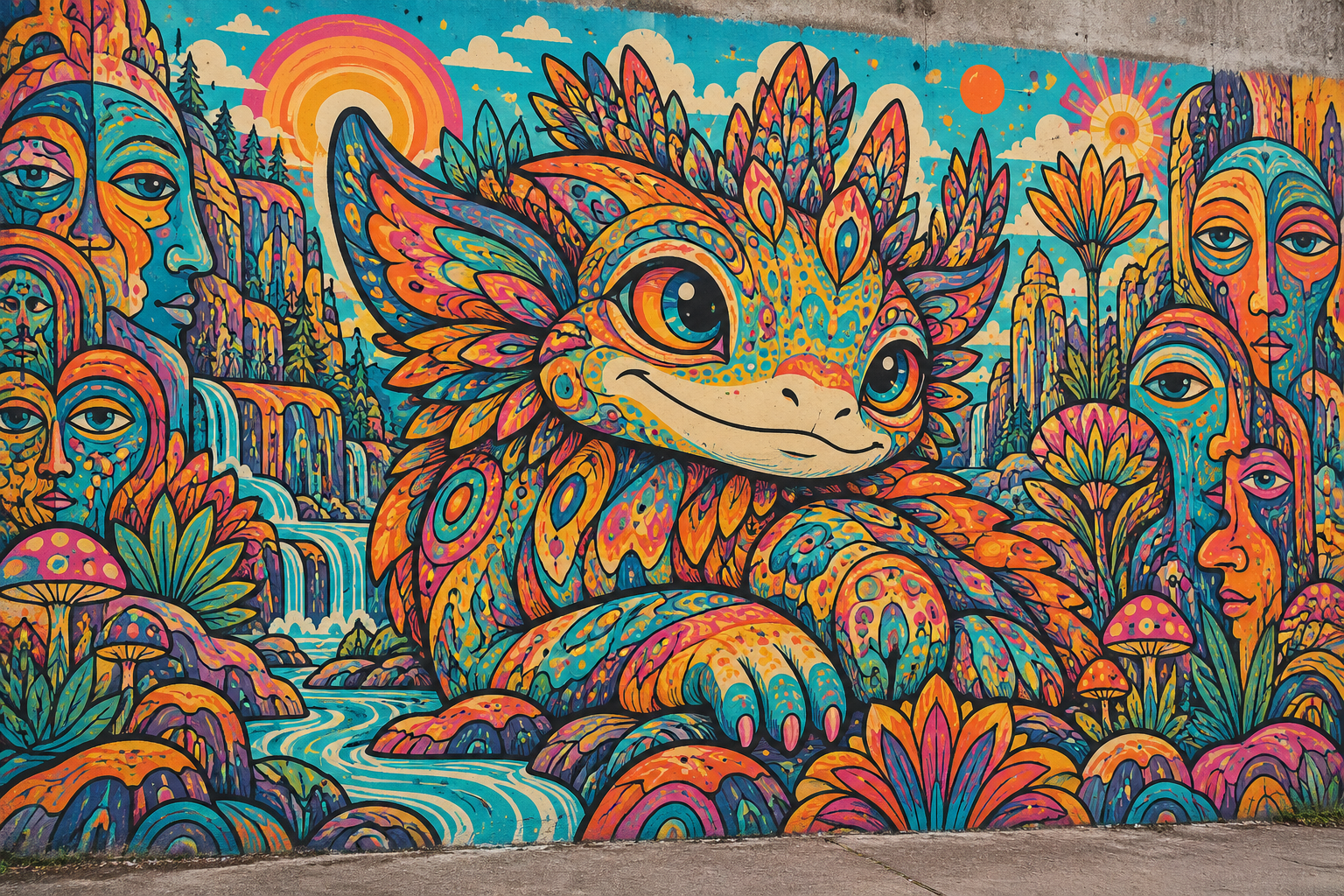
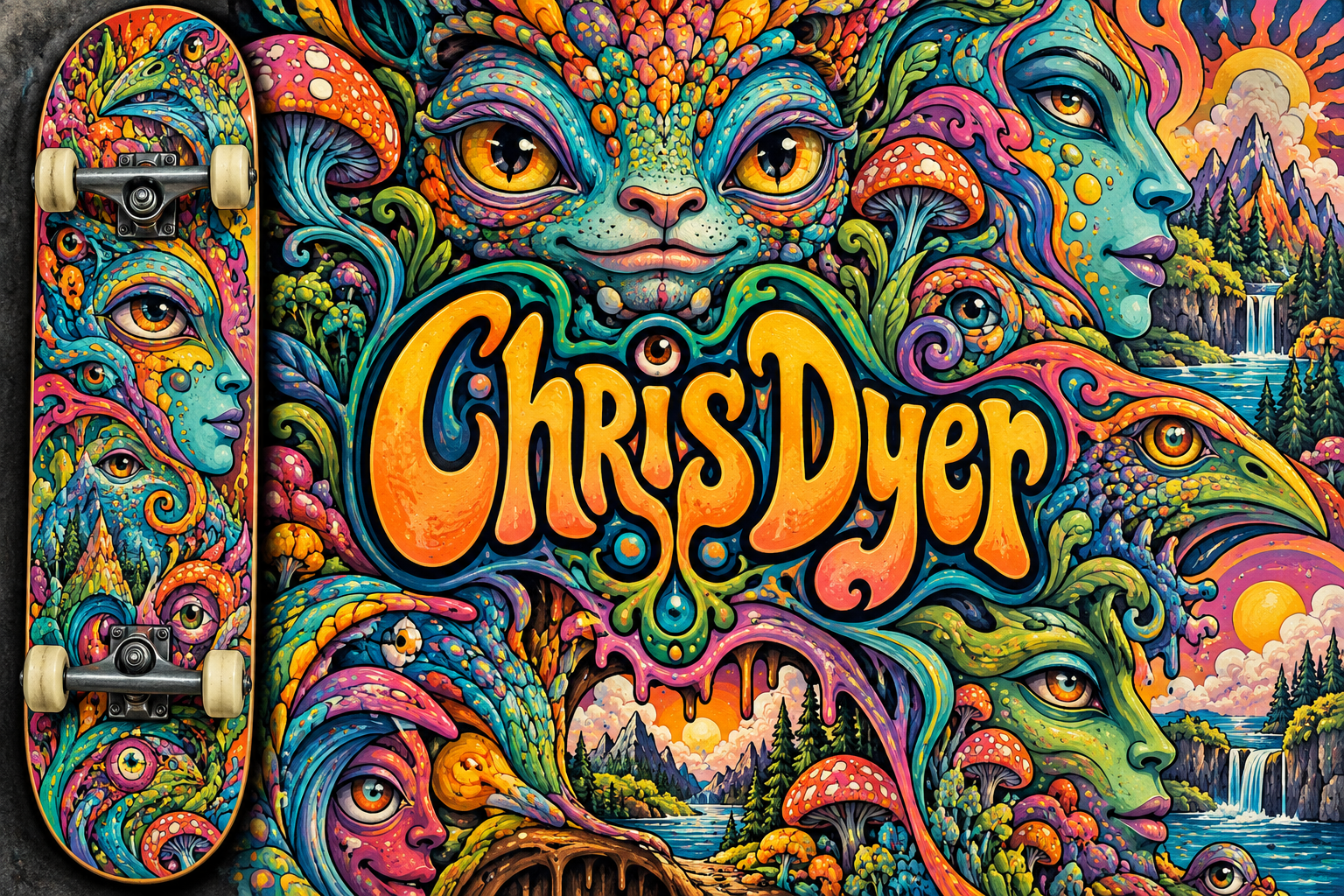
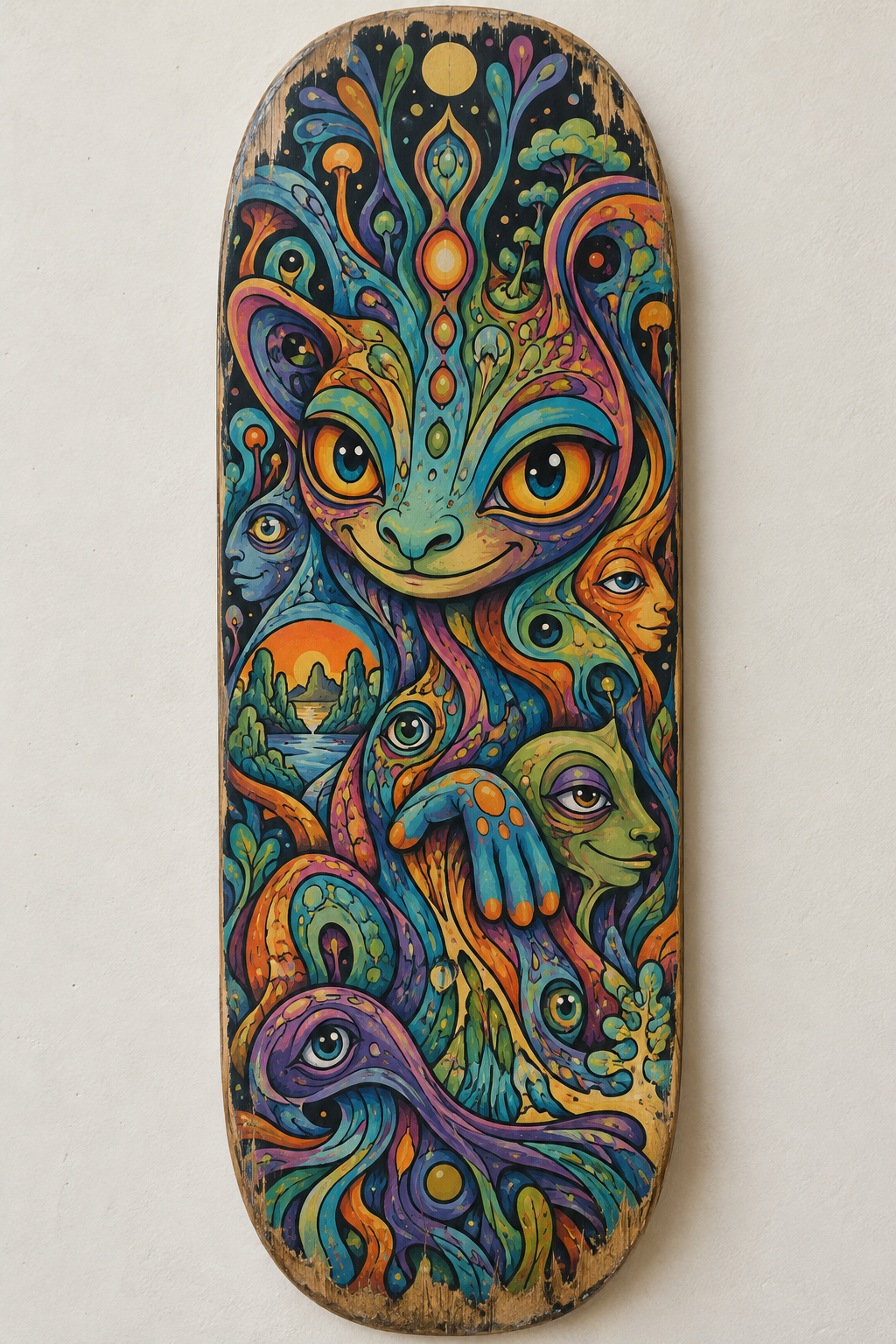
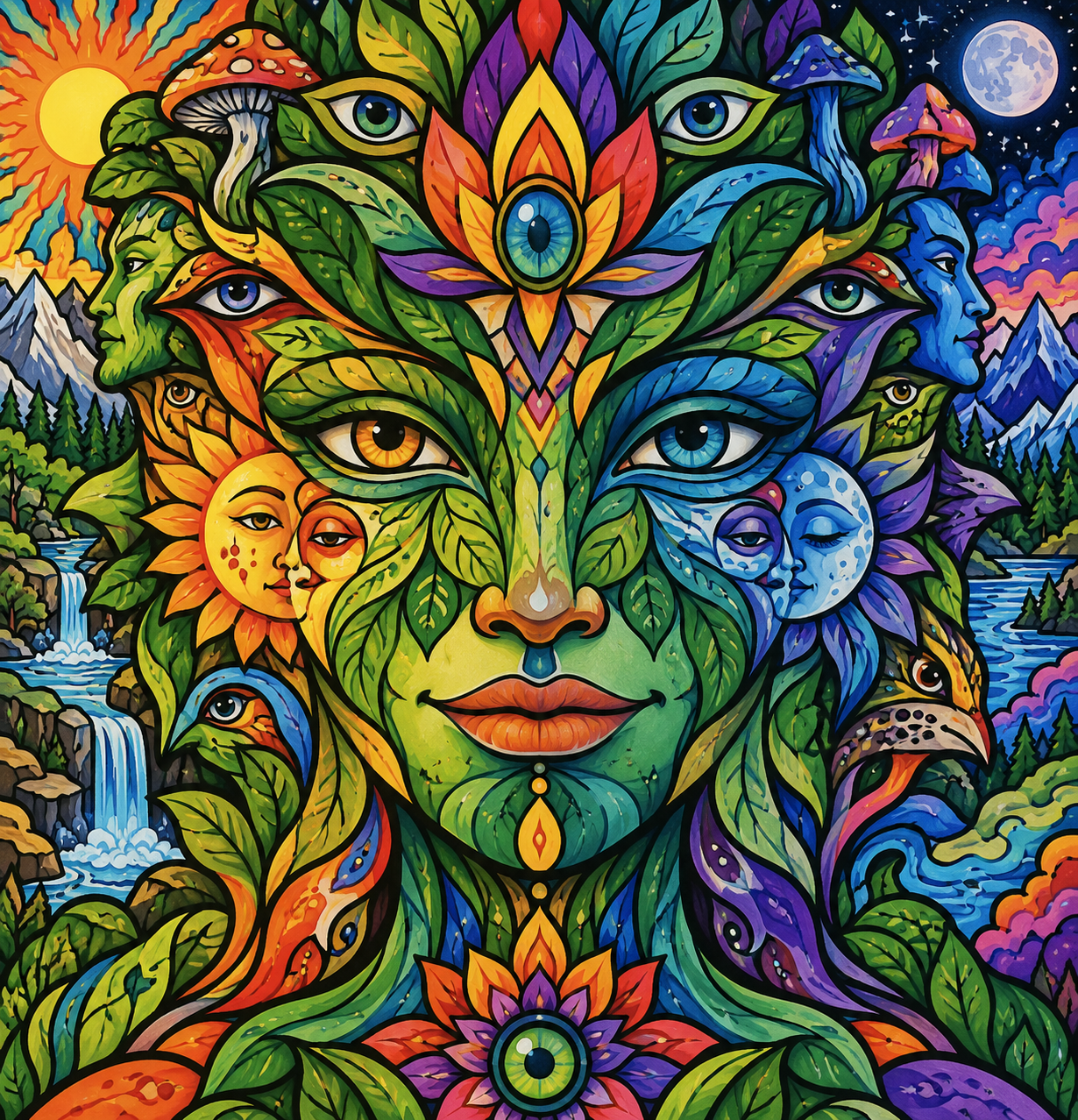
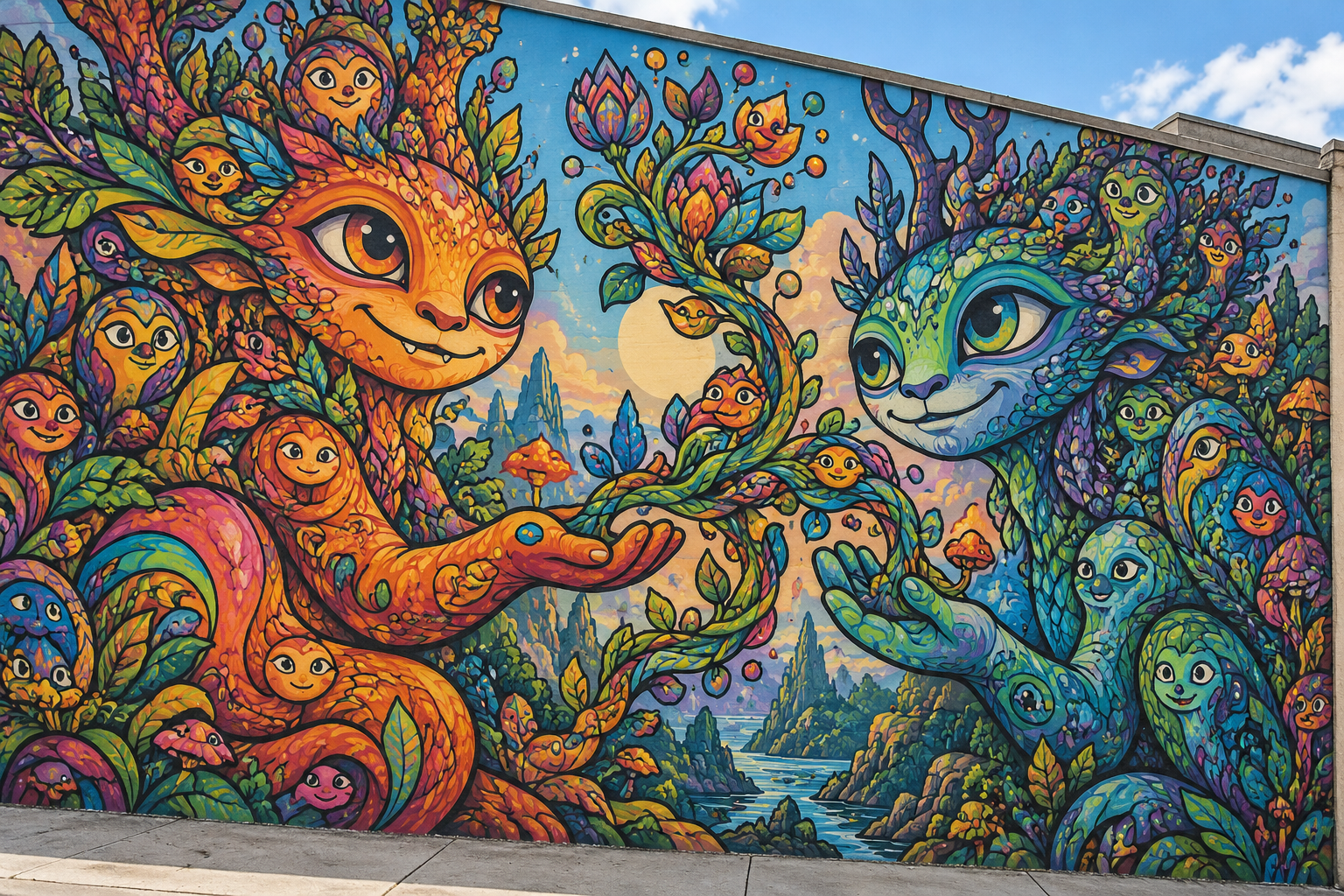
Five original AI-generated AOI interpretations: a dedicated banner, a centrally titled collage and three standalone studies. These are new illustrations, not historical objects or works by the referenced artist.
Select an image for a closer look. Use the thumbnails, arrow keys or a swipe to compare examples. Zoom in to inspect details, or share the image that inspires you.
Creative toolbox · take this style further
Choose an input and a destination. Search sends your words to the chosen site; Copy & open puts them on your clipboard to paste there.
Create with AI
Turn your chosen input into an image prompt or a new creative direction.
ChatGPT
Copy your input and paste it into a ChatGPT conversation or image request.
Copy & open ChatGPT (new tab)Claude · Anthropic
Develop an image prompt or explore the style in a new Claude conversation.
Copy & open Claude · Anthropic (new tab)Midjourney
Paste your input into the Imagine bar on the Create page.
Copy & open Midjourney (new tab)Adobe Firefly
Copy your input, open Firefly, and paste it into the prompt field.
Copy & open Adobe Firefly (new tab)Leonardo.Ai
Copy your input, open Leonardo, and paste it into the generation field.
Copy & open Leonardo.Ai (new tab)Image search
Find visual references. Short, concrete keywords usually work best.
Lexica
Search AI images and prompts using your selected input.
Search with this input Lexica (new tab)Pexels
Search the photo and video library. Short keywords often work best.
Search with this input Pexels (new tab)Pixabay
Search photos, illustrations and other images.
Search with this input Pixabay (new tab)Unsplash
Search photographs using the style name or your own keywords.
Search with this input Unsplash (new tab)Wikimedia Commons
Search photographs, artworks and historical images. Check each file for its source and reuse terms.
Search with this input Wikimedia Commons (new tab)Art & research
Explore artists, collections and the ideas behind a style.
Wikipedia
Search for background reading. A style may not have its own article.
Search with this input Wikipedia (new tab)WikiArt
Copy your input into WikiArt’s search to explore artists and artworks.
Copy & open WikiArt (new tab)Europeana
Paste your keywords into the search to explore European museum, library and archive collections.
Copy & open Europeana (new tab)Inspiration
Discover portfolios and visual ideas from creative communities.
Instagram hashtags
Search a hashtag made from your input: spaces and punctuation are removed. Instagram may require sign-in.
Search with this input Instagram hashtags (new tab)ArtStation
Paste your input into artwork search for concept art, environments, characters and visual development.
Copy & open ArtStation (new tab)Behance
Paste your input into project search for illustration, design and visual storytelling.
Copy & open Behance (new tab)A closer look
Strong outlines organize interlocking faces, organic loops and saturated color. Repeated eyes, petals and geometric accents create a lively rhythm across panels, boards or walls.
Start with the artist's own context
Dyer's biography describes growing up in Lima, later studying in Canada, and a longstanding connection with skateboarding. It also explains his use of broken skateboards as art surfaces and the relationship between his spiritual outlook, painting and street-art practice. These are specific biographical connections, not a generic origin story for all visionary imagery.
Consult his own portfolio for the range of media and compositions. AOI's generated studies are newly invented interpretations of selected visual principles. They are not works by Dyer, collaborations, commercial products or claims of endorsement. The distinction matters particularly when a recognizable artist's name is used as a visual reference.
Give the detail a central character
Start with a silhouette and a few large features. A face can remain friendly and legible even when smaller faces, leaves or loops are nested within it. The major eyes and mouth should have a hierarchy that survives reduction to thumbnail size.
Use repetition to connect regions rather than to cover every available gap. A curved line might become a cheek, a leaf and a border in succession. That transition gives the ornament a job. Avoid adding unrelated sacred emblems simply because they seem mystical; invent forms whose relationships you can explain visually.
Color needs structure
Choose a dominant warm-cool relationship, such as orange against turquoise, and use magenta or green as supporting accents. Dark outlines can keep neighboring colors separate, but outlines alone cannot rescue a composition in which every region demands equal attention.
Vary detail density. Give the focal face more controlled drawing and allow a surrounding field to become simpler or broader. On a wall, consider how the character will read from across the street. On a skateboard-shaped panel, let the long narrow surface influence the direction of the imagery.
Make the surface part of the study
The board, face and mural examples test three different formats. A board should have a coherent outline and visible material edges. A wall study should respect perspective and scale. The standalone face can explore symmetry while allowing deliberate differences that keep it alive.
Review nested facial forms carefully: an intentional extra eye should read as a motif, not an accidental anatomical fragment. Keep fingers, mouths and outer silhouettes clear where figures occur. Credit the reference artist and label the new image, while directing readers to the original portfolio for the artist's actual work.
A small poetic detour
Original words from the AOI studio.
Poetry
The board remembers motion
The wood has carried wheels and rain;
its edges keep the pavement's bite.
A painted creature wakes again
in orange, green and violet light.
A curve becomes a leaf, an eye,
a small doorway inside a grin.
The dark line lets the colors fly
and gathers all their voices in.
What once went rolling through the street
now sends the wall a different beat.
The prompt workshop
Original creative exercises. These prompts create new illustrations, not documentary evidence.
Design for a narrow surface
Create an original psychedelic creature on a worn skateboard-shaped wooden panel, with bold outlines, turquoise-orange color and a clear central face. No brand marks.
Let the board's shape guide the composition.
Build detail around a readable face
Invent a friendly visionary face made from organic loops, leaves and geometric petals, with controlled warm-cool contrast.
Make the main features readable at small size.
Translate a character to a wall
Design an imagined mural of two invented creatures linked by a flowing vine, with credible wall perspective and distinct silhouettes.
Label it as a concept, not an existing mural.
Your next inspiration
Discover another art style
Follow a visual thread to the next subject.
A smile from the studio
Jokes
The painted creature asked whether it had too many eyes. “Only if they all look in different directions,” said the artist. The creature considered this, rearranged three pupils, and immediately spotted the brush that had been missing since Tuesday.
Sources and further exploration
Chris Dyer — official biography, skate-art roots and artistic context