AOI creative concept · Paper and printed matter
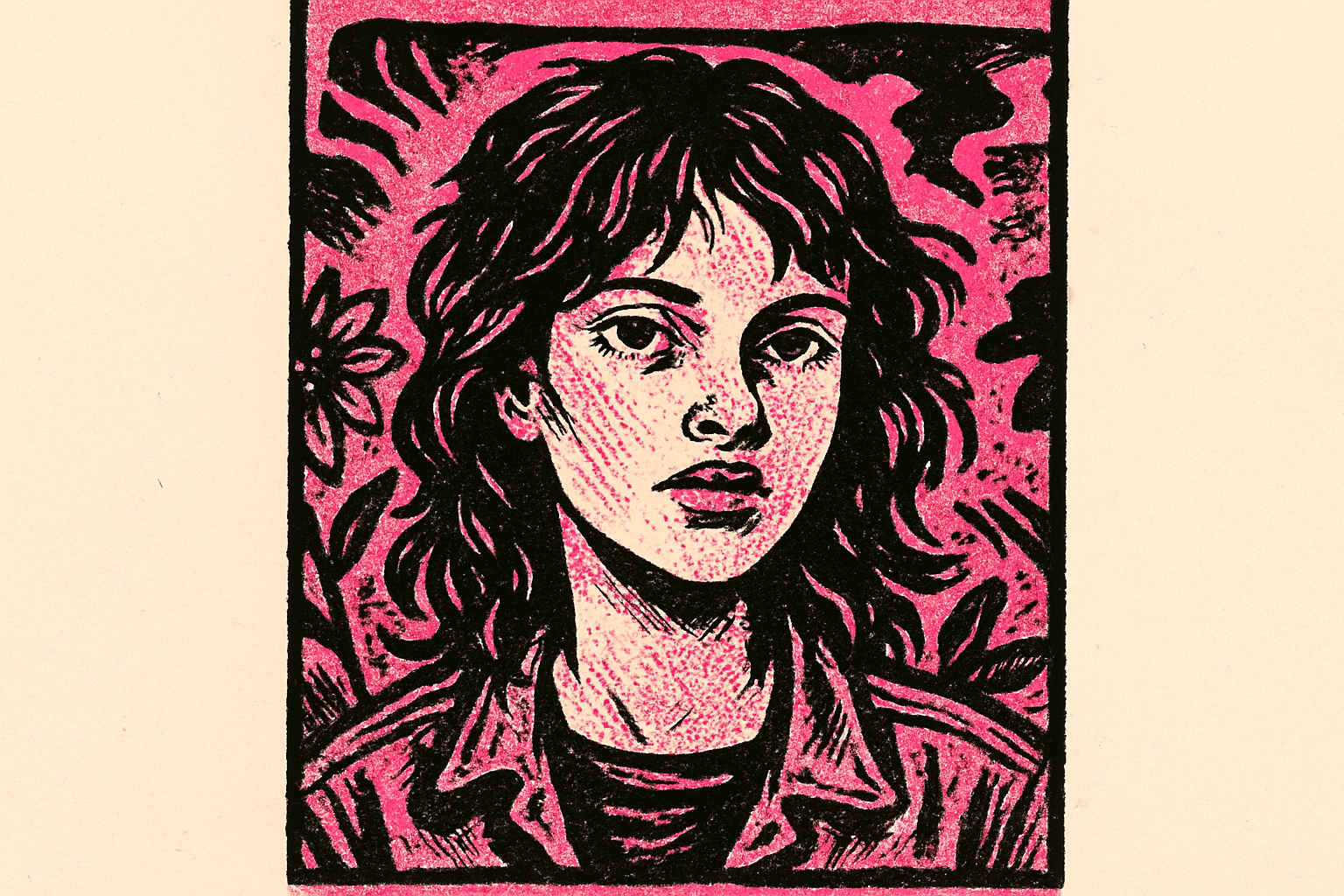
Give a portrait one crisp contour and two displaced carbon-like echoes, but allow the echoes to carry different expressions.
An AOI creative concept, not an established historical movement.
A closer look
Charcoal black, warm gray and one muted red mark; carbon-paper grain. The focal scene: a thoughtful seated portrait with two partial contour echoes.
The edge sets the rule
Give a portrait one crisp contour and two displaced carbon-like echoes, but allow the echoes to carry different expressions. The central face remains readable while the offset marks suggest hesitation or competing moods. This is an invented drawing exercise, not a psychological diagnostic.
Arrange the paper scene
Draw a seated adult in three-quarter view against untouched paper. Keep the near eye, nose and mouth aligned in the primary charcoal shape. Shift one secondary contour slightly upward into a raised brow and another downward into a lowered chin. Reserve the darkest marks for the main face so the echoes never become three equally solid people.
Where the illusion weakens
Misregistration alone is insufficient: each displacement must change a gesture the viewer can name. If the eyes multiply into a confusing mask, remove one echo or let it appear only around the jaw and shoulder.
Technique notes
Move the expressive displacement from the face to a pair of hands resting on a table, keeping the head entirely still.
When prompting an image model, spell out the rule and visible relationships. The invented style name alone is not a reliable instruction. Compare outputs against the critique above and revise the specific failed relationship.
The prompt workshop
Original creative exercises. These prompts create new illustrations, not documentary evidence.
Start with the defining rule
Create an original illustration of a thoughtful seated portrait with two partial contour echoes. Give a portrait one crisp contour and two displaced carbon-like echoes, but allow the echoes to carry different expressions. The central face remains readable while the offset marks suggest hesitation or competing moods. This is an invented drawing exercise, not a psychological diagnostic. Use charcoal black, warm gray and one muted red mark; carbon-paper grain. Keep the composition readable, with a clear focal area and quiet surrounding space. No lettering, signatures or watermark.
Build the fuller composition
Create an original Carbon Echo Portraiture composition. Draw a seated adult in three-quarter view against untouched paper. Keep the near eye, nose and mouth aligned in the primary charcoal shape. Shift one secondary contour slightly upward into a raised brow and another downward into a lowered chin. Reserve the darkest marks for the main face so the echoes never become three equally solid people. Use charcoal black, warm gray and one muted red mark; carbon-paper grain. Preserve the defining constraint: Give a portrait one crisp contour and two displaced carbon-like echoes, but allow the echoes to carry different expressions. Avoid decorative clutter, readable text and watermarks.
Try a deliberate variation
Create an experimental illustration based on this rule: Give a portrait one crisp contour and two displaced carbon-like echoes, but allow the echoes to carry different expressions. The central face remains readable while the offset marks suggest hesitation or competing moods. This is an invented drawing exercise, not a psychological diagnostic. Variation: Move the expressive displacement from the face to a pair of hands resting on a table, keeping the head entirely still. Use charcoal black, warm gray and one muted red mark; carbon-paper grain. Make the changed relationship unmistakable while keeping supporting details restrained. No captions, signatures or watermark.
Look closer
Explore the image gallery
Select an image to enlarge it. Browse with the arrows, and press Escape to return.
Your next inspiration
Discover another art style
Follow a visual thread to the next subject.
Woodcut: A Celebration in Grain and Grooves
Related visual vocabulary from the existing AOI catalogue.