
Historical artistic tradition
Byzantine art joins sacred images, imperial display and everyday objects across a long and changing history. Learn how mosaics, icons, manuscripts and reliefs organize light, space and meaning.
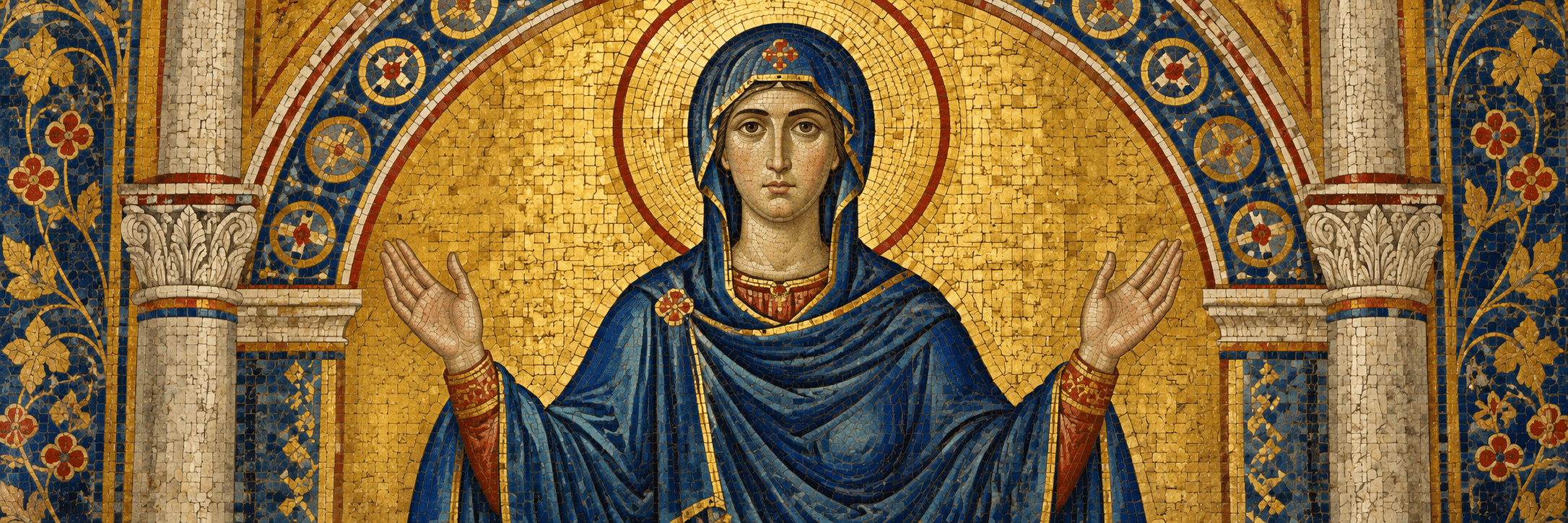
A visual introduction
Select an image for a closer look. Use the thumbnails, arrow keys or a swipe to compare examples. Zoom in to inspect details, or share the image that inspires you.
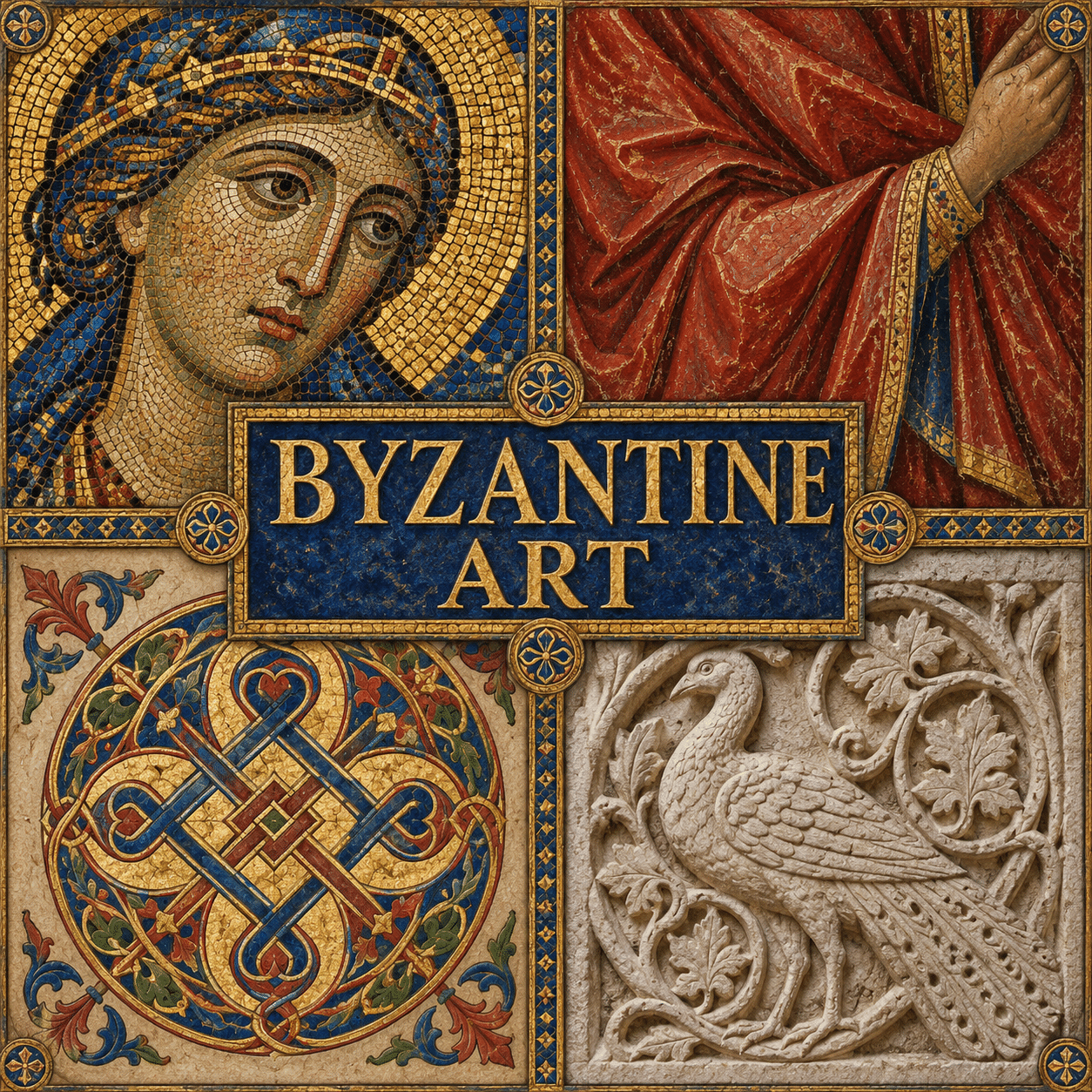
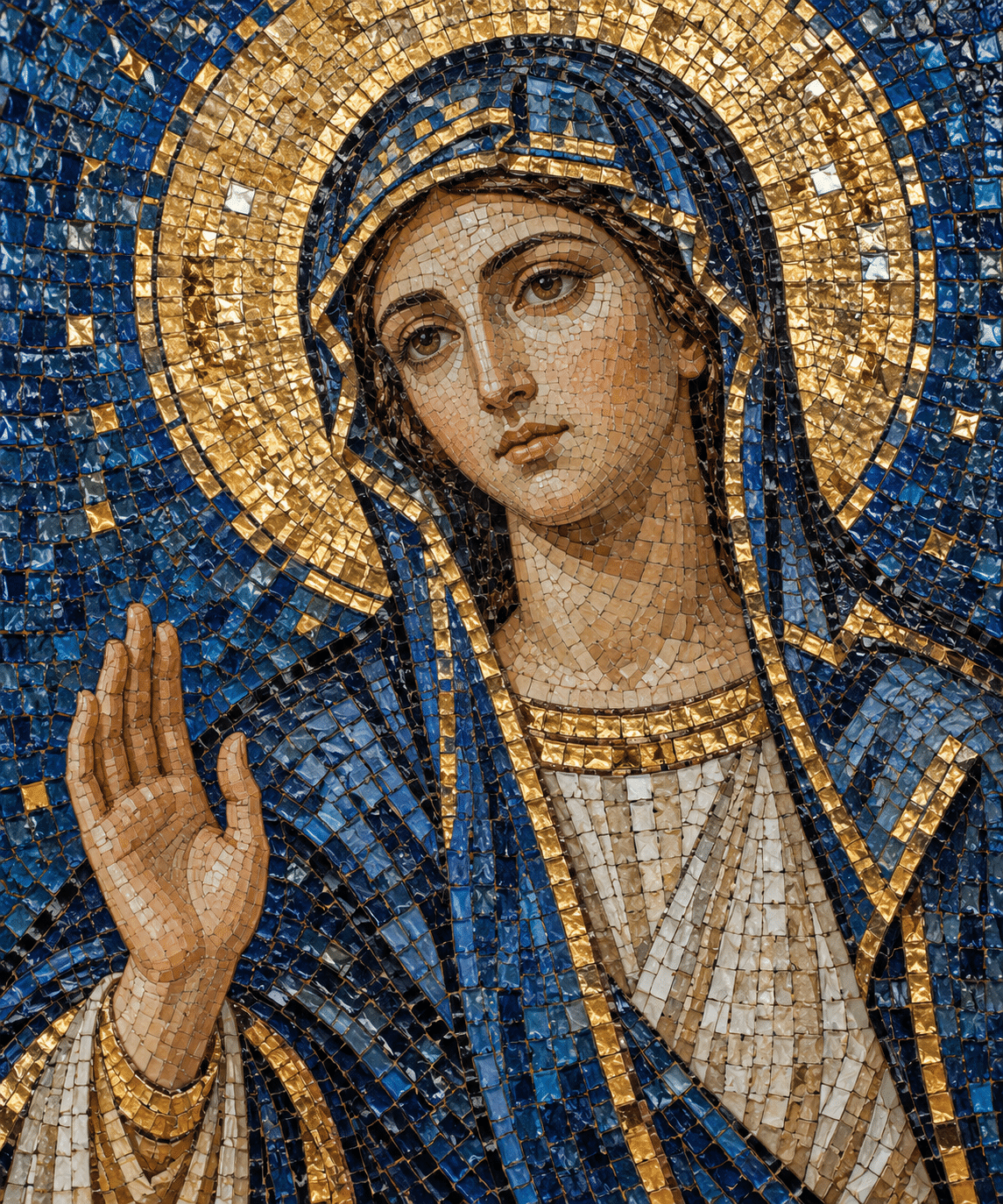
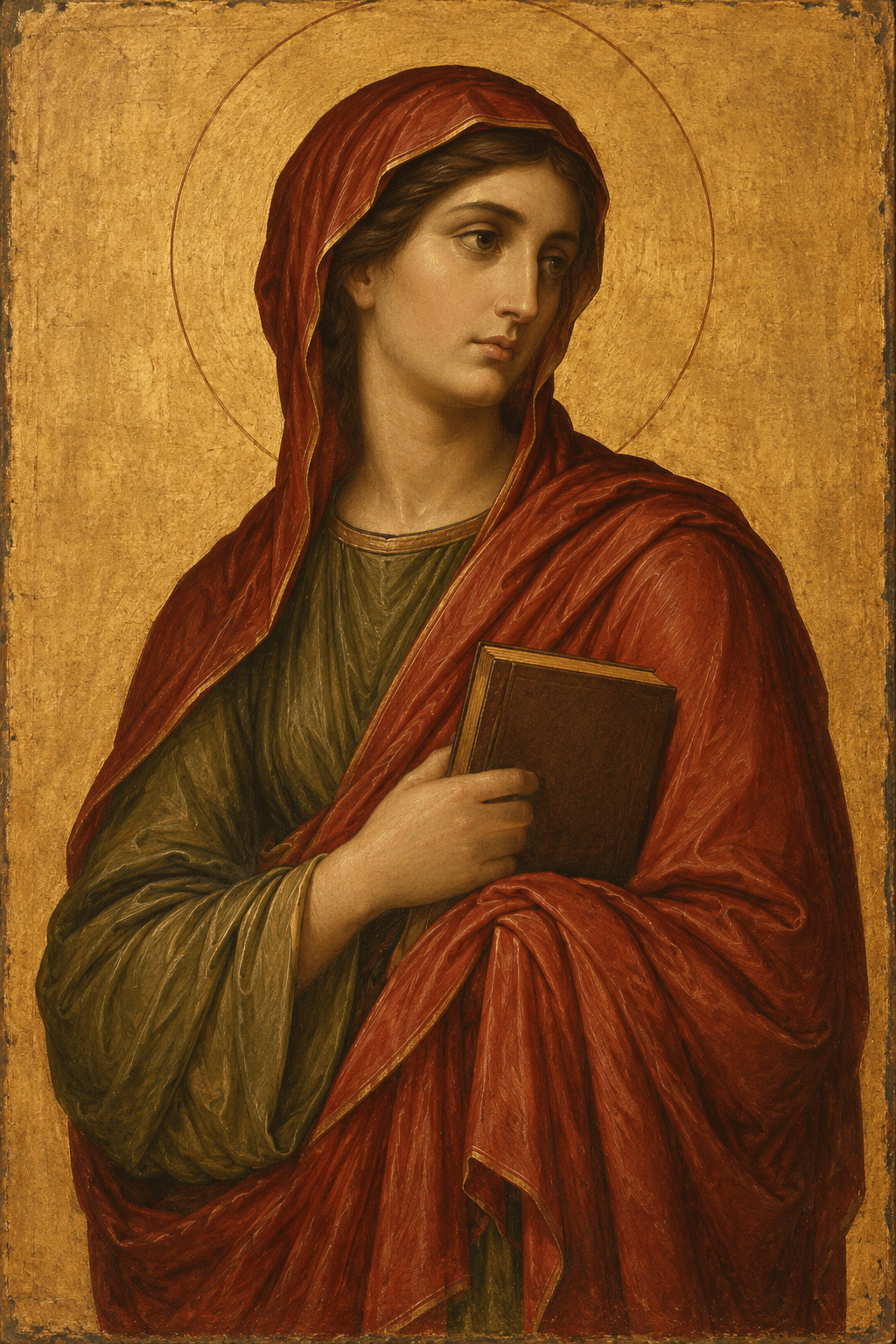


Creative toolbox · take this style further
Choose an input and a destination. Search sends your words to the chosen site; Copy & open puts them on your clipboard to paste there.
Create with AI
Turn your chosen input into an image prompt or a new creative direction.
ChatGPT
Copy your input and paste it into a ChatGPT conversation or image request.
Copy & open ChatGPT (new tab)Claude · Anthropic
Develop an image prompt or explore the style in a new Claude conversation.
Copy & open Claude · Anthropic (new tab)Midjourney
Paste your input into the Imagine bar on the Create page.
Copy & open Midjourney (new tab)Adobe Firefly
Copy your input, open Firefly, and paste it into the prompt field.
Copy & open Adobe Firefly (new tab)Leonardo.Ai
Copy your input, open Leonardo, and paste it into the generation field.
Copy & open Leonardo.Ai (new tab)Image search
Find visual references. Short, concrete keywords usually work best.
Lexica
Search AI images and prompts using your selected input.
Search with this input Lexica (new tab)Pexels
Search the photo and video library. Short keywords often work best.
Search with this input Pexels (new tab)Pixabay
Search photos, illustrations and other images.
Search with this input Pixabay (new tab)Unsplash
Search photographs using the style name or your own keywords.
Search with this input Unsplash (new tab)Wikimedia Commons
Search photographs, artworks and historical images. Check each file for its source and reuse terms.
Search with this input Wikimedia Commons (new tab)Art & research
Explore artists, collections and the ideas behind a style.
Wikipedia
Search for background reading. A style may not have its own article.
Search with this input Wikipedia (new tab)WikiArt
Copy your input into WikiArt’s search to explore artists and artworks.
Copy & open WikiArt (new tab)Europeana
Paste your keywords into the search to explore European museum, library and archive collections.
Copy & open Europeana (new tab)Inspiration
Discover portfolios and visual ideas from creative communities.
Instagram hashtags
Search a hashtag made from your input: spaces and punctuation are removed. Instagram may require sign-in.
Search with this input Instagram hashtags (new tab)ArtStation
Paste your input into artwork search for concept art, environments, characters and visual development.
Copy & open ArtStation (new tab)Behance
Paste your input into project search for illustration, design and visual storytelling.
Copy & open Behance (new tab)A closer look
Luminous tesserae and gold grounds; measured gesture; frontal presence; rhythmic drapery; hierarchical arrangements; richly worked surfaces whose appearance changes with light and distance.
An empire, many artistic practices
Byzantine art refers to the arts associated with the Eastern Roman Empire and its cultural networks, rather than one uniform decorative style. The Metropolitan Museum places Byzantium within the broad span from Constantinople’s foundation as an imperial capital in 330 to its conquest in 1453. Its inhabitants understood themselves as Romans; “Byzantine” is a later historical designation.
Painting, architecture and mosaic are only part of the picture. Manuscripts, metalwork, enamel, carved objects and textiles also carried religious, political and domestic meanings. The Benaki Museum’s collection usefully places ecclesiastical and secular objects together. An account that treats every Byzantine work as a gold-backed saint misses much of this material world.
Presence is a compositional decision
Many familiar sacred images prioritize an encounter with a figure over a view into everyday space. Frontality, a steady gaze and a measured gesture can hold attention without theatrical action. A hierarchy of size or placement may communicate importance rather than optical distance. This is a different pictorial objective from a camera-like snapshot; it should not be described as an inability to draw.
Read the image through relationships. An arch may frame a head, repeated folds may direct the eye toward a hand, and a symmetrical arrangement may be interrupted by a small expressive turn. Not every work is frontal or symmetrical. Narrative scenes can use overlapping figures, architecture and complex movement. Compare particular objects before treating any visual feature as universal.
Light belongs to the material
A mosaic is assembled from tesserae: small pieces whose edges, angles and colours affect the whole surface. In an interpretation, allow the pieces to remain visible and let reflected light vary across them. A smooth metallic gradient cannot explain the same material effect. Gold can function as an enveloping luminous field rather than a conventional sky.
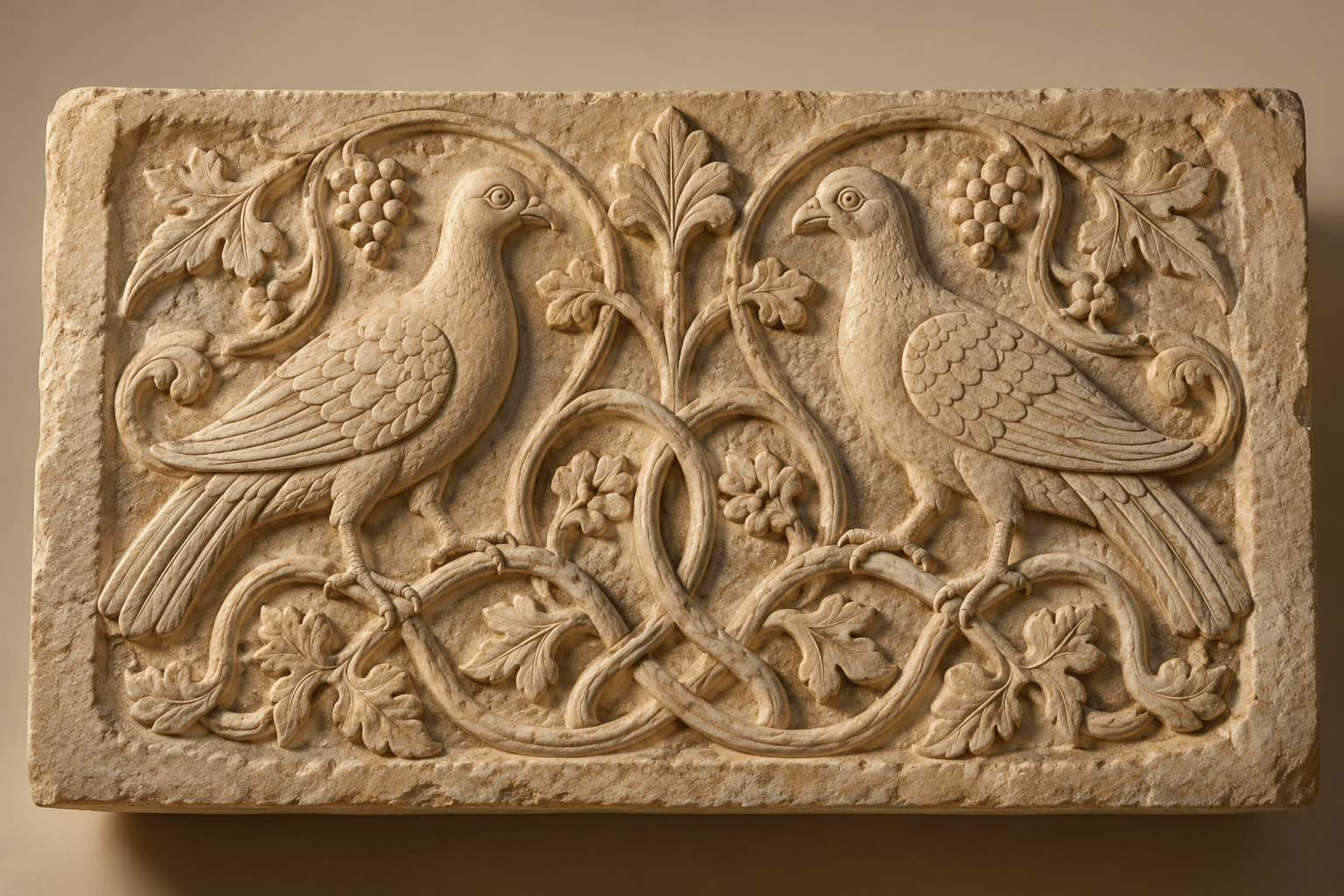
An icon painted on a panel presents another surface logic. Contour, layered colour and highlights can articulate a face or garment without the broken reflections of mosaic. A carved relief depends on shallow depth and cast shadow. Distinguishing these media produces more convincing images than asking for a general “Byzantine texture” over every subject.
Icons, debate and historical change
Icons are sacred images, not simply a synonym for any old panel painting. The Met’s account of iconoclasm explains that images existed in several media and became the subject of sustained religious and political controversy. Their significance involves use, belief and setting as well as appearance. A generated devotional-looking image is not an authenticated historical icon.
The tradition changed over centuries and across regions. Avoid combining unrelated motifs and then assigning the result a precise medieval date. If the purpose is a contemporary visual study, say so clearly. If the purpose is historical reconstruction, specify a researched object, period and context, and acknowledge what remains conjectural.
From looking to making
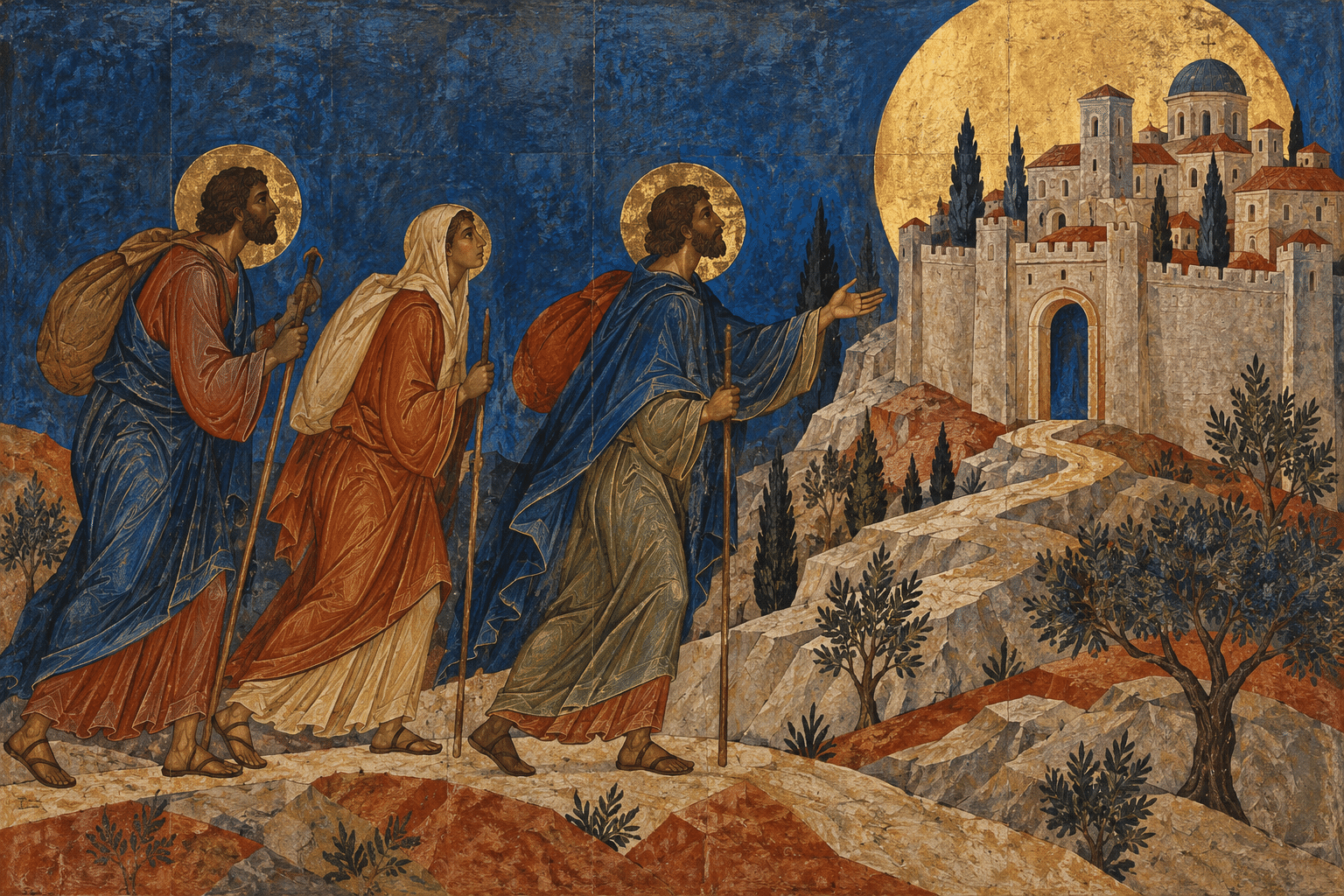
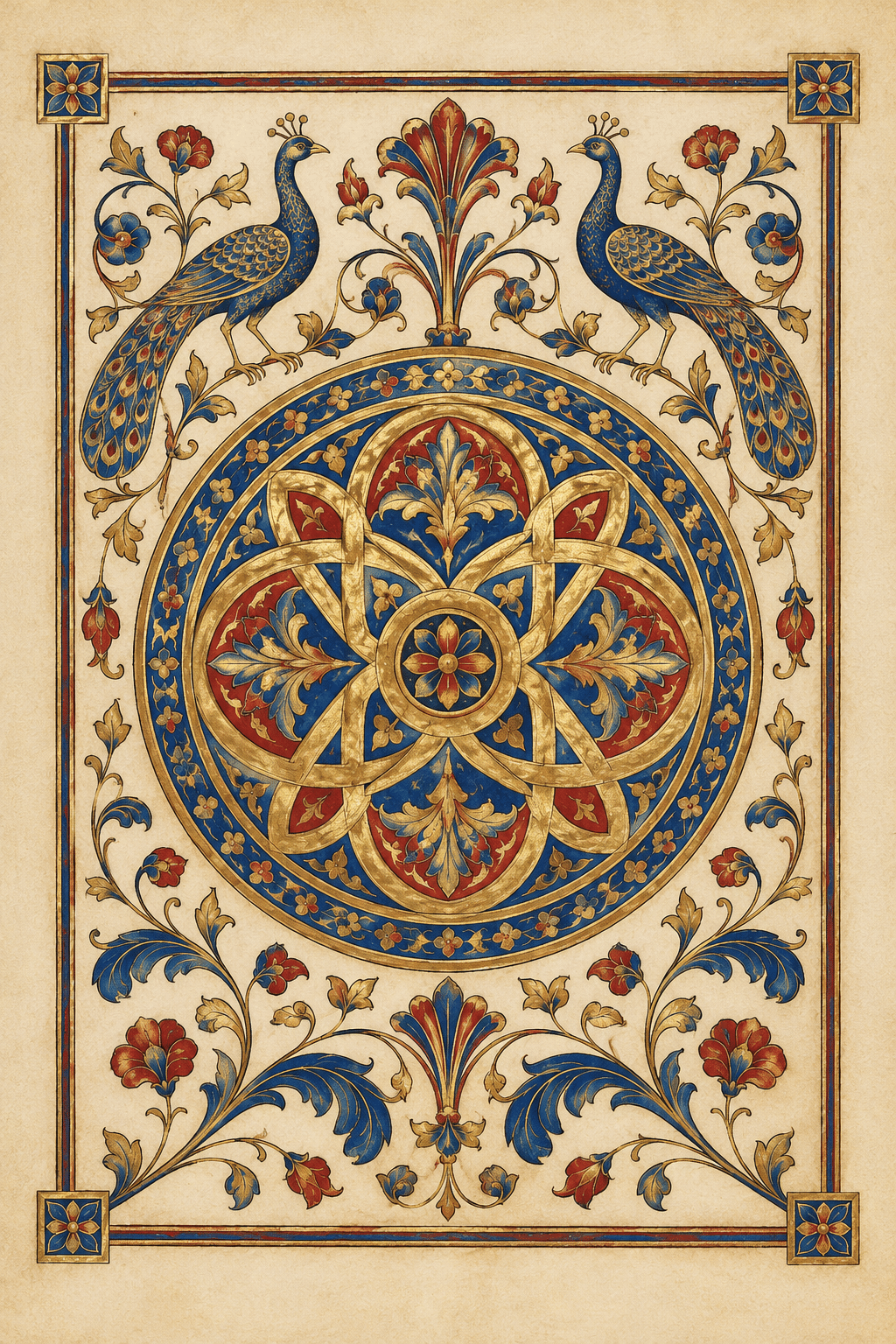
The new gallery offers original interpretive studies of mosaic light, painted drapery, a narrative arrangement, ornamental manuscript structure and shallow relief. They are AI-generated illustrations, not photographs of museum objects. Their variety is intended to show different material problems rather than imply that five images represent an entire civilization.
Useful prompt language names the medium, figure arrangement, ground, lighting and degree of depth. “Uneven glass tesserae, restrained frontal arrangement and a luminous gold field” is more informative than “ancient opulence.” Keep invented inscriptions out unless their language and meaning have been checked. Separate the visual exercise from claims of sacred authority or archaeological provenance.
Positive editorial assessment — AI-authored
The most compelling Byzantine works make a surface feel active without dissolving its order. Small shifts in light, gesture and rhythm can sustain prolonged looking. Their integration of image, object and architectural setting also challenges the habit of judging art only as an isolated framed picture.
Critical editorial assessment — AI-authored
Contemporary imitation often stops at gold, halos and decorative borders. That formula flattens historical differences and can turn meaningful imagery into atmosphere. Improve an interpretation by selecting a specific medium and compositional problem, reducing ornamental clutter and explaining the limits of the comparison.
Neutral editorial assessment — AI-authored
Byzantine art is a broad historical field with religious and secular dimensions. Its visual principles can inform contemporary illustration, but formal resemblance does not establish historical accuracy. Study individual objects, their materials and their settings alongside any general account of the tradition.
A small poetic detour
Original words from the AOI studio.
Poetry
A thousand edges hold the light,
no single piece contains the day.
The gold grows quiet, then grows bright
as footsteps change the place we stay.
A fold directs the patient eye;
a hand completes an inward arc.
The wall does not become the sky,
yet keeps a brightness in the dark.
The prompt workshop
Original creative exercises. These prompts create new illustrations, not documentary evidence.
Mosaic light
Original contemporary study inspired by Byzantine mosaic: a quiet frontal robed figure beneath a simple arch, uneven gold and blue glass tesserae, restrained gesture, varied reflected light. No copied artwork, inscription, signature or claim of historical authenticity.
A narrative arrangement
Original Byzantine-informed narrative composition of three robed travellers beside a stylized walled city, rhythmic gestures and compressed architectural space, mineral blue and muted red with limited gold, clearly a modern AI interpretation.
Change the material
An original shallow carved stone relief of interlacing vines and paired birds, restrained bilateral composition, pale warm stone, soft side light revealing tool-like facets. Explore a Byzantine-informed ornamental vocabulary without fake museum labels.
Your next inspiration
Discover another art style
Follow a visual thread to the next subject.
International Gothic: Courtly Elegance and Observed Detail
Compare sacred imagery across distinct historical settings.
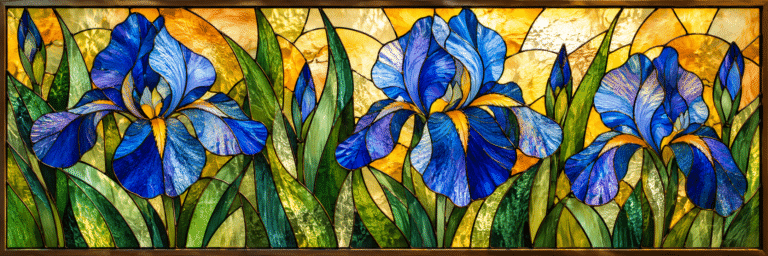
Stained Glass Art: Drawing with Colour and Transmitted Light
Explore light and architectural images in another medium.
A smile from the studio
Jokes
The tessera asked for a solo exhibition. The mosaic suggested that its strongest work was collaborative.