
Material-based visualization and art practice
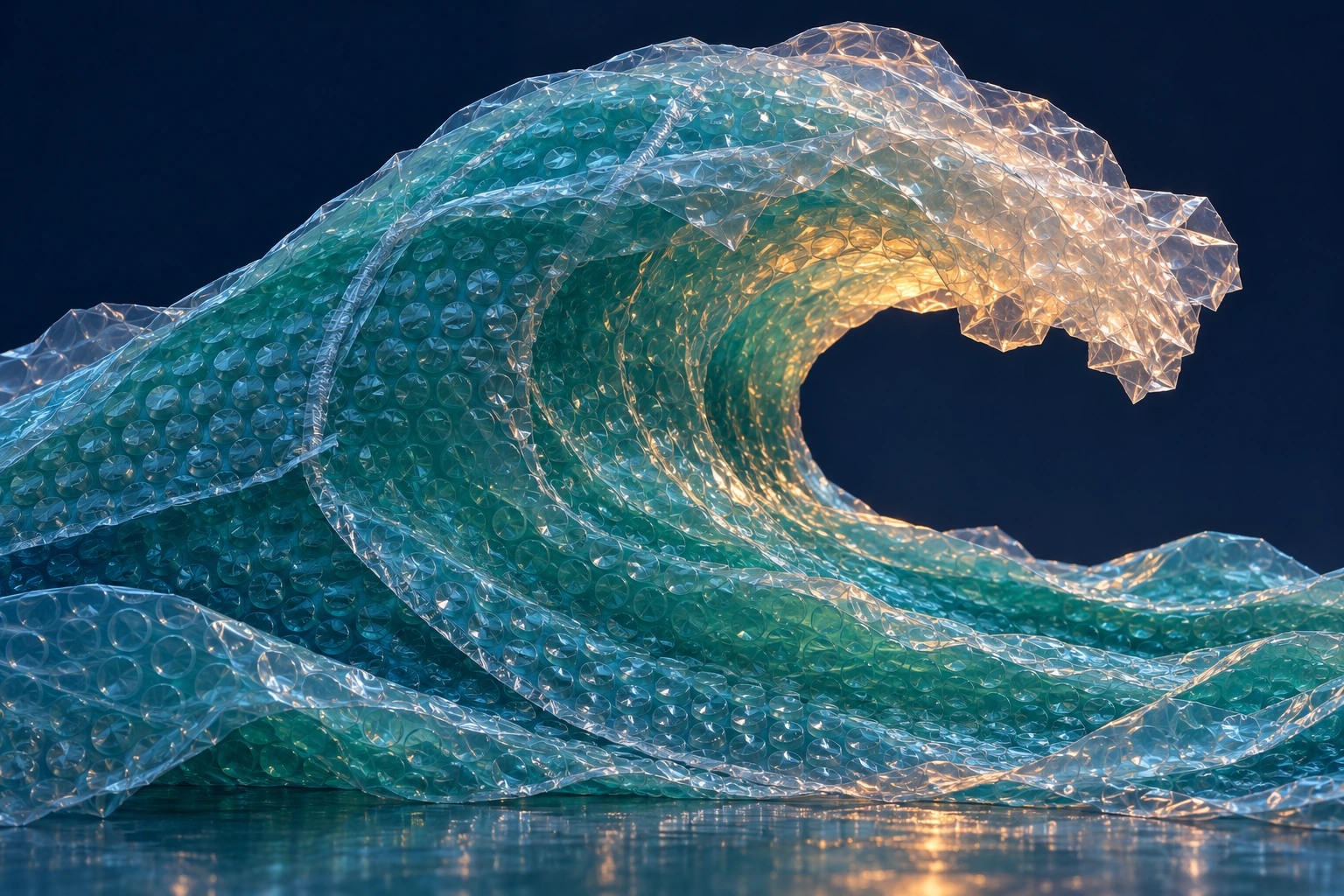
A wave curls from a sheet of trapped air. A pear has seams where its skin overlaps. Bubblewrap visualization makes the connected cells and thin film do the image-making, turning an ordinary packing material into structure, colour and light.
A visual introduction
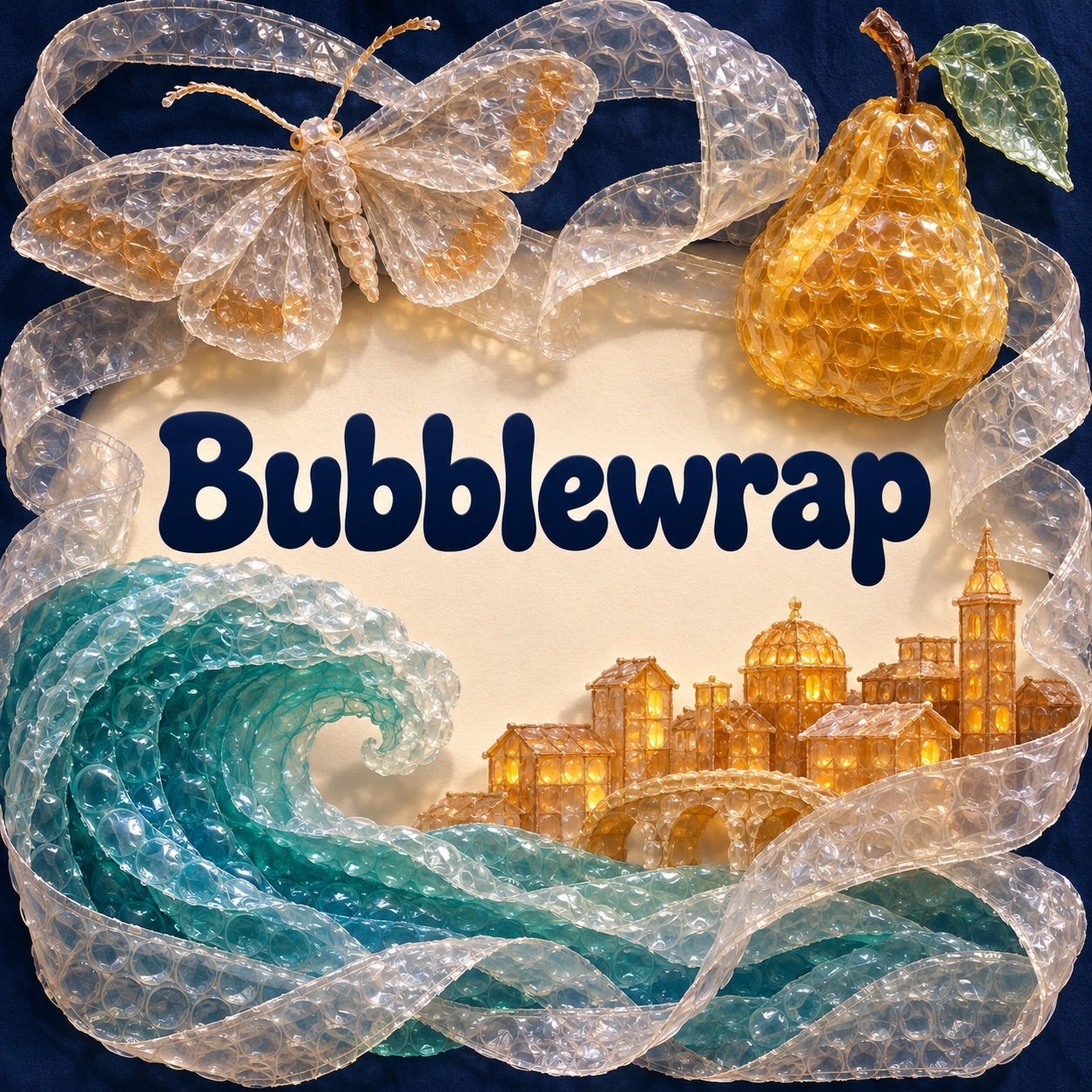
Five original AI-generated interpretations include a wave banner, centrally titled collage, pear-shaped construction, cell-based koi picture and translucent moth. These images imagine material artworks.
Select an image for a closer look. Use the thumbnails, arrow keys or a swipe to compare examples. Zoom in to inspect details, or share the image that inspires you.
Creative toolbox · take this style further
Choose an input and a destination. Search sends your words to the chosen site; Copy & open puts them on your clipboard to paste there.
Create with AI
Turn your chosen input into an image prompt or a new creative direction.
ChatGPT
Copy your input and paste it into a ChatGPT conversation or image request.
Copy & open ChatGPT (new tab)Claude · Anthropic
Develop an image prompt or explore the style in a new Claude conversation.
Copy & open Claude · Anthropic (new tab)Midjourney
Paste your input into the Imagine bar on the Create page.
Copy & open Midjourney (new tab)Adobe Firefly
Copy your input, open Firefly, and paste it into the prompt field.
Copy & open Adobe Firefly (new tab)Leonardo.Ai
Copy your input, open Leonardo, and paste it into the generation field.
Copy & open Leonardo.Ai (new tab)Image search
Find visual references. Short, concrete keywords usually work best.
Lexica
Search AI images and prompts using your selected input.
Search with this input Lexica (new tab)Pexels
Search the photo and video library. Short keywords often work best.
Search with this input Pexels (new tab)Pixabay
Search photos, illustrations and other images.
Search with this input Pixabay (new tab)Unsplash
Search photographs using the style name or your own keywords.
Search with this input Unsplash (new tab)Wikimedia Commons
Search photographs, artworks and historical images. Check each file for its source and reuse terms.
Search with this input Wikimedia Commons (new tab)Art & research
Explore artists, collections and the ideas behind a style.
Wikipedia
Search for background reading. A style may not have its own article.
Search with this input Wikipedia (new tab)WikiArt
Copy your input into WikiArt’s search to explore artists and artworks.
Copy & open WikiArt (new tab)Europeana
Paste your keywords into the search to explore European museum, library and archive collections.
Copy & open Europeana (new tab)Inspiration
Discover portfolios and visual ideas from creative communities.
Instagram hashtags
Search a hashtag made from your input: spaces and punctuation are removed. Instagram may require sign-in.
Search with this input Instagram hashtags (new tab)ArtStation
Paste your input into artwork search for concept art, environments, characters and visual development.
Copy & open ArtStation (new tab)Behance
Paste your input into project search for illustration, design and visual storytelling.
Copy & open Behance (new tab)A closer look
Keep the small air cells visibly joined by a continuous film. Show how the sheet bends, where edges overlap and how light travels through it. Those decisions make the material convincing across a whole image.
From cushioning to an image-making material
This guide uses Bubblewrap for a material-based visualization approach. Its forms are built from sheets of connected air cells, or its pictures resolve through colour assigned to those cells. AOI’s examples explore that premise through generated artworks.
Sealed Air’s account dates Alfred Fielding and Marc Chavannes’s textured-wallpaper experiment to 1957 and the company’s founding to 1960. The manufacturer uses BUBBLE WRAP as a brand name. That documented material history gives context to the familiar sheet without establishing a single art movement around it.
A documented artistic practice
Bradley Hart’s own statement describes constructing pictures by injecting paint into individual bubble-wrap cells. He discusses how an image resolves at a distance and how physical material can disappear into a screen reproduction. His statement hosted by Sponder Gallery also explains the excess paint that accumulates behind an injected work and the related Impression produced from it.
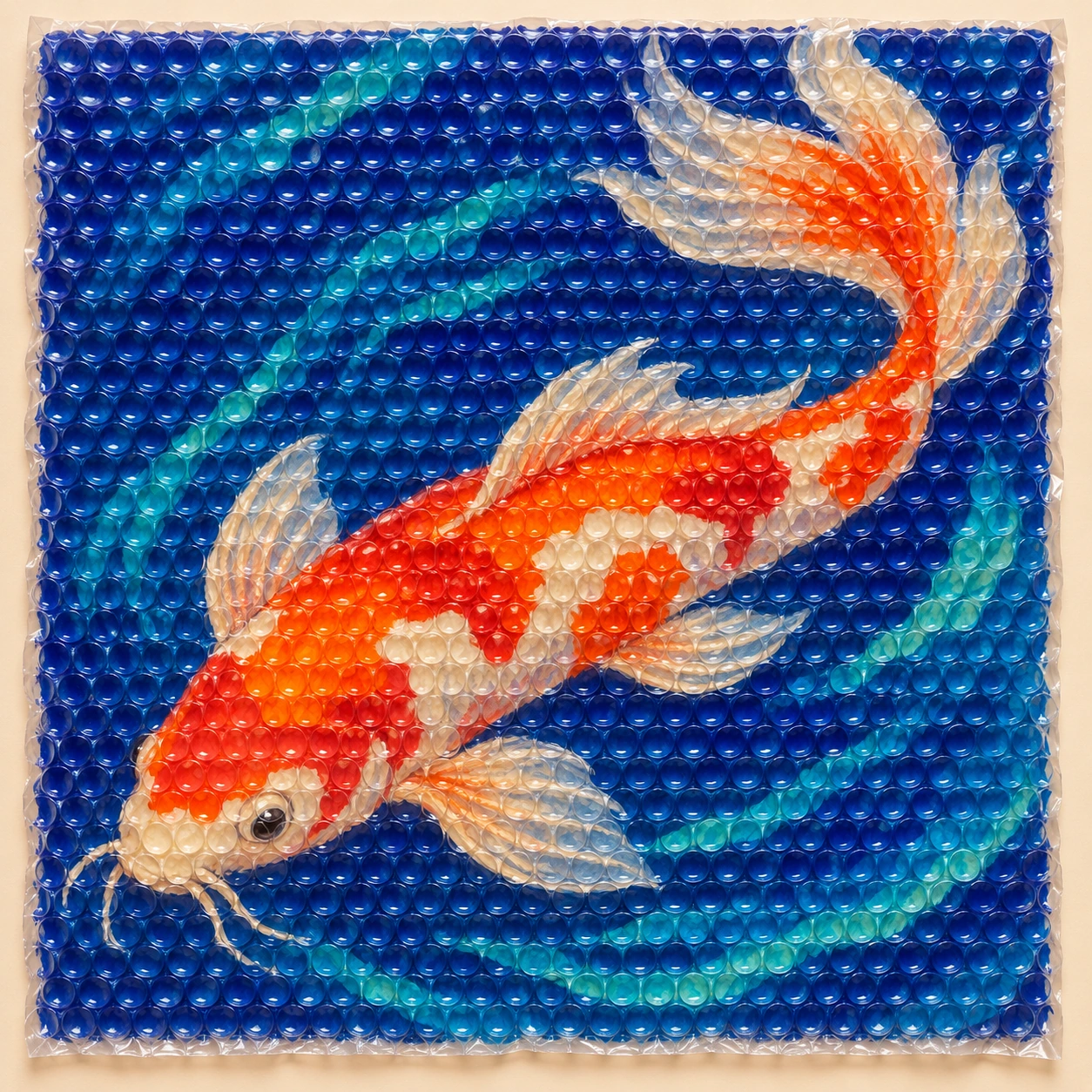
Hart provides a specific named reference for cell-based image construction. The koi shown here is an original generated interpretation of that broader material possibility. The wave, pear and moth explore imagined sheet constructions. Their captions describe the visible material logic and their generated provenance.
Choose what the sheet is doing
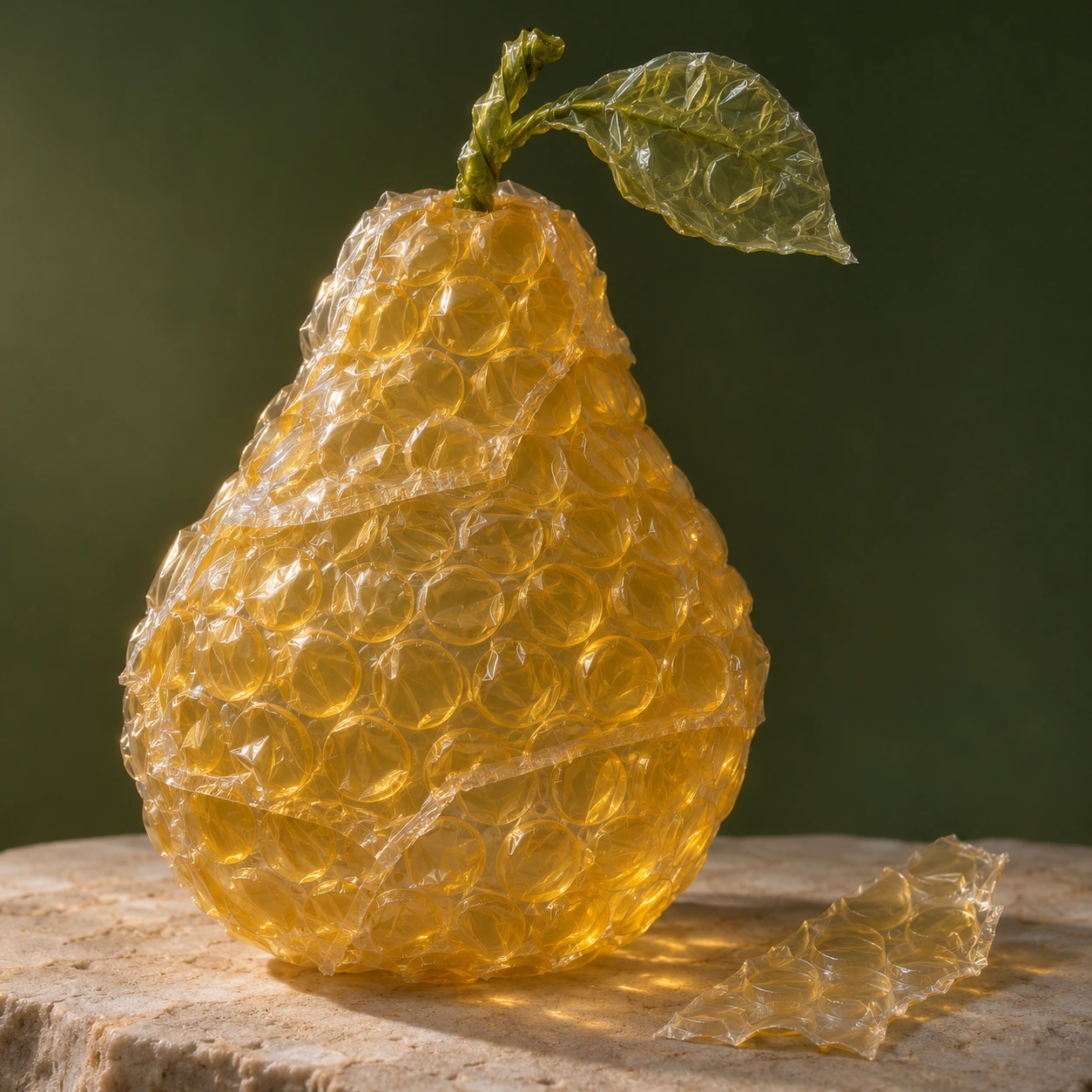
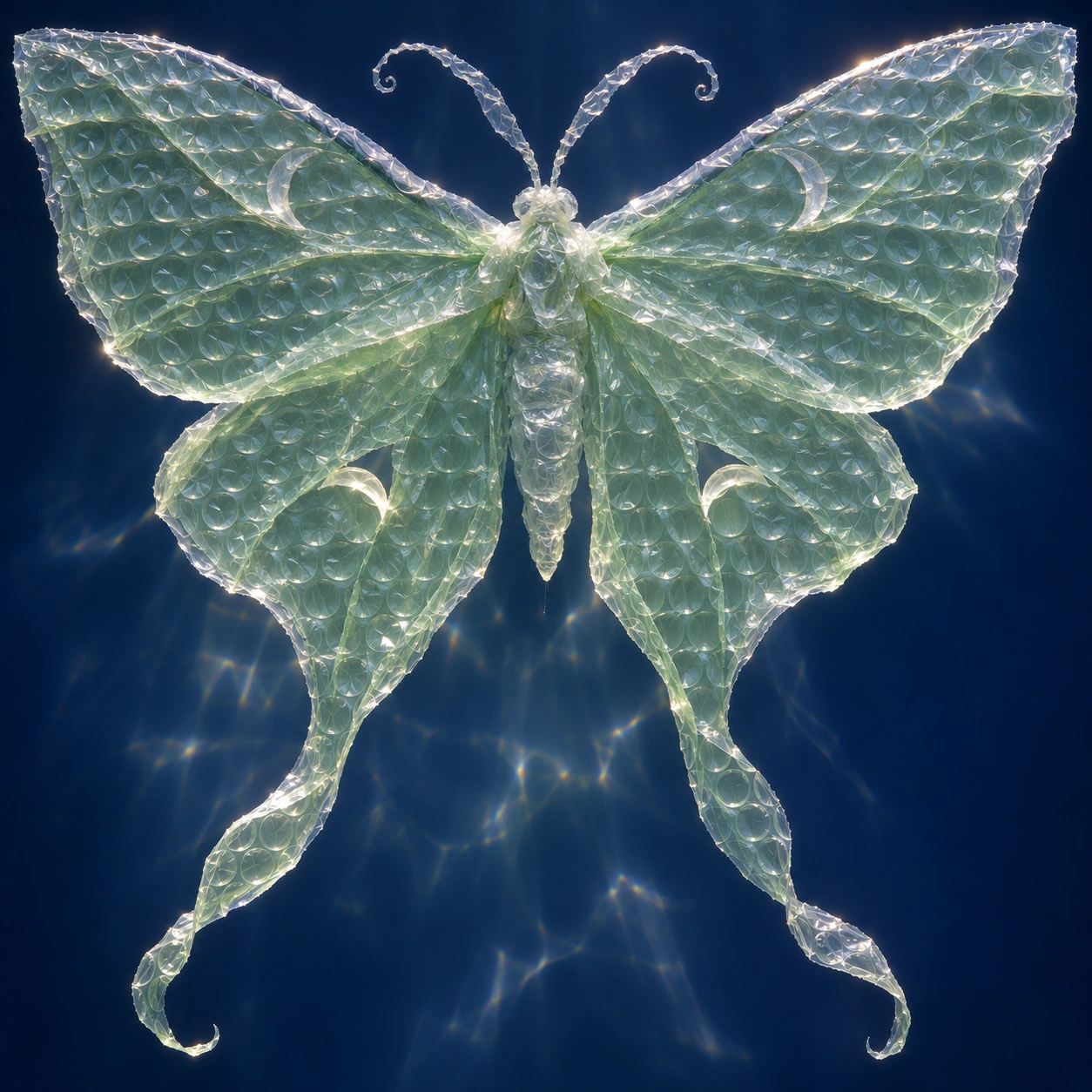
A folded or joined sheet can describe volume. In the pear study, amber-tinted cells follow the curved form, while overlaps and a small loose scrap make the construction legible. The moth uses cut wing outlines and narrow film bridges to suggest delicacy. The wave gathers multiple curved layers around a large opening.
A flat sheet can also organize a picture. Assigning colour to individual cells creates a field that reads differently at close and distant viewing. The koi study lets the fish emerge from orange, cream and blue areas while reflections keep the domes visible. An image-maker can decide how coarse those units should be.
A third route uses the sheet as a surface for impressions or printing. That would emphasize transferred marks on another support. The visual studies in this guide concentrate on the sheet itself, with its cells carrying the form or colour.
Make air and plastic readable
Describe the scale of the cells relative to the whole object. Small repeated domes make a pear feel constructed from packaging. Larger inflated forms lead toward the visual language explored in the Inflatable Balloon guide. Keep the repetition consistent enough that the viewer can follow it across a fold.
Use a grazing or rear light to catch thin rims, seams and cut edges. Leave some quiet dark areas between the brightest reflections. If every cell shines equally, the surface can become an undifferentiated field of glare. In the wave, the amber crest gives the eye a destination inside the cooler teal structure.
Transparency needs evidence of overlap. Two layers can deepen the colour, an edge can double, and a fold can interrupt a row. Those small irregularities make the imagined material more persuasive. A perfectly smooth contour with identical highlights everywhere tends to erase the sheet’s character.
Prompts that describe construction
Start with one recognizable subject and state how it is assembled. Ask for connected small air cells, visible film bridges, cut edges and overlapping sheets. Then specify whether the colour belongs to tinted film, paint-filled cells or reflected light. Give the background enough contrast to reveal the clear edges.
Review the finished image at two scales. First check the overall silhouette. Then inspect several areas for continuous sheet structure and believable joins. A generator may turn the cells into beads or make the whole surface resemble thick glass. Adjust the material description and light when that happens.
For an actual studio construction, the generated image serves as a visual proposal. Support, joining and colour application would need physical trials with the chosen material. A light-looking generated wing can still require substantial support when built.
Where the material carries meaning
Bubble-wrap imagery can suggest protection, shipping, stored memories, fragility or the urge to touch. Choose the association that fits the subject. The pear makes a familiar organic volume feel carefully preserved. The moth gives a disposable-looking sheet an elaborate and vulnerable silhouette.
Keep the composition simple enough to let the material remain legible. A single strong form can carry thousands of repeated cells. If a thumbnail loses every seam and highlight, move closer or simplify the background. The pleasure is in recognizing both the subject and what it appears to be made from.
A small poetic detour
Original words from the AOI studio.
Poetry
The pear keeps summer in small rooms.
The moth unfolds its borrowed air.
A wave forgets to fall apart
and holds the evening in its seam.
What travelled once around a parcel
now gives the light a place to stay.
The prompt workshop
Original creative exercises. These prompts create new illustrations, not documentary evidence.
Begin with a joined volume
Create a studio image of an amber pear assembled entirely from connected small-cell bubble-wrap sheets. Show overlapping seams, a folded green film leaf and one loose cut scrap. Light the domes from the side against dark olive, with thin transparent film between them.
Build a picture cell by cell
Imagine a square bubble-wrap sheet whose individually coloured cells form an orange-and-cream koi in cobalt water. Retain a visible sheet edge and small highlights on each dome. Keep the fish recognizable at a distance and the material readable close up.
Make a light-bearing creature
Construct an imagined pale jade moth from cut bubble-wrap sheets. Keep four complete wings, narrow trailing tails, joined film bridges and visible cut edges. Use backlighting against midnight blue to reveal the thin material and leave the full silhouette inside the frame.
Your next inspiration
Discover another art style
Follow a visual thread to the next subject.
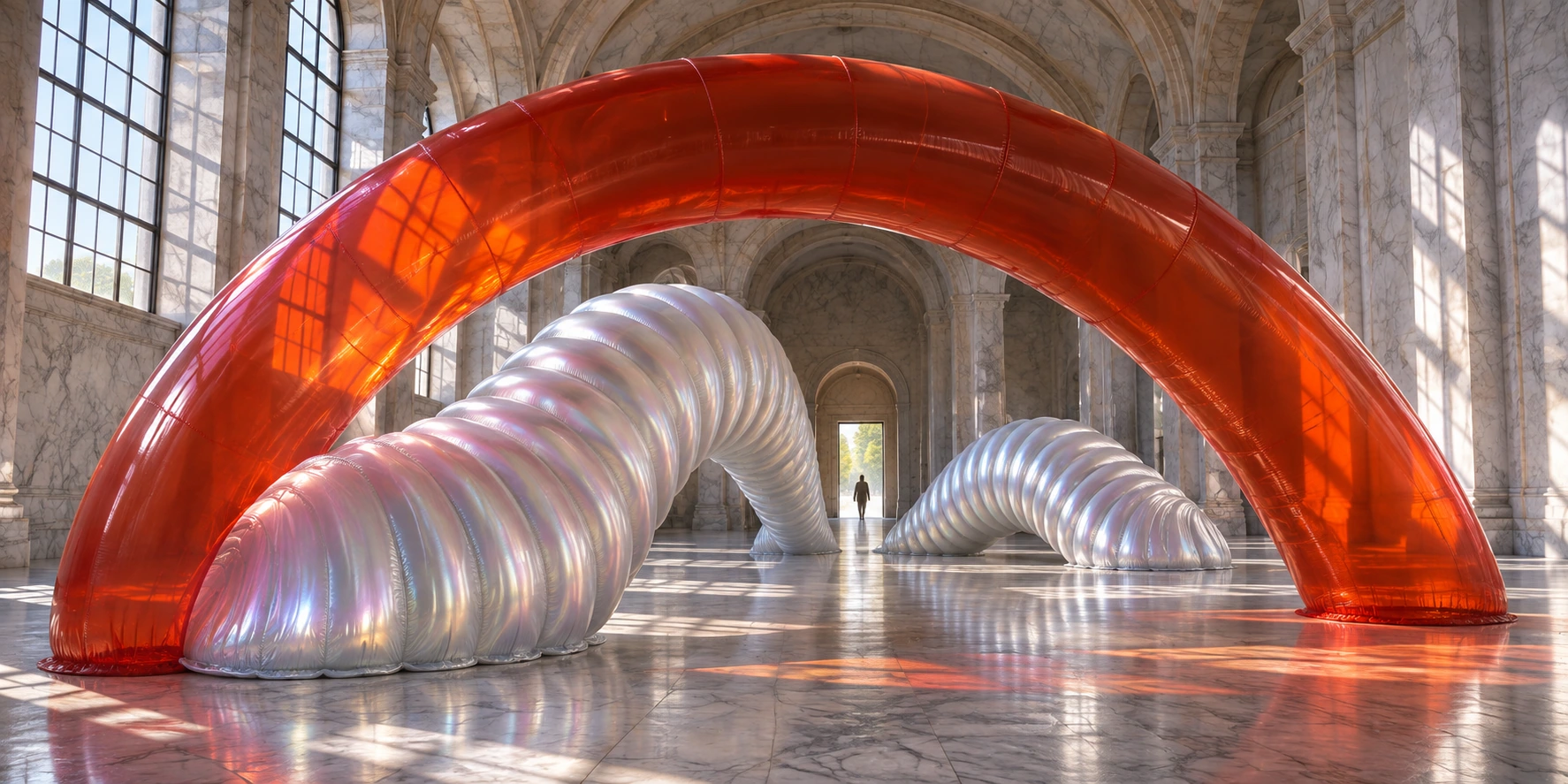
Inflatable and Balloon Forms: Pressure, Softness and Scale
Compare larger inflated forms with the small connected cells of bubble-wrap sheets.
People & works to explore
References discussed in this article. Consult the sources below for context.
Artists and practitioners
Bradley Hart
Paintings and other works
Bradley Hart’s Injection and Impression works, described in his artist statements
A smile from the studio
Jokes
The sculpture arrived exceptionally well protected. Unpacking stopped when we realized the packaging had entered the exhibition.