
Tonal intaglio printmaking
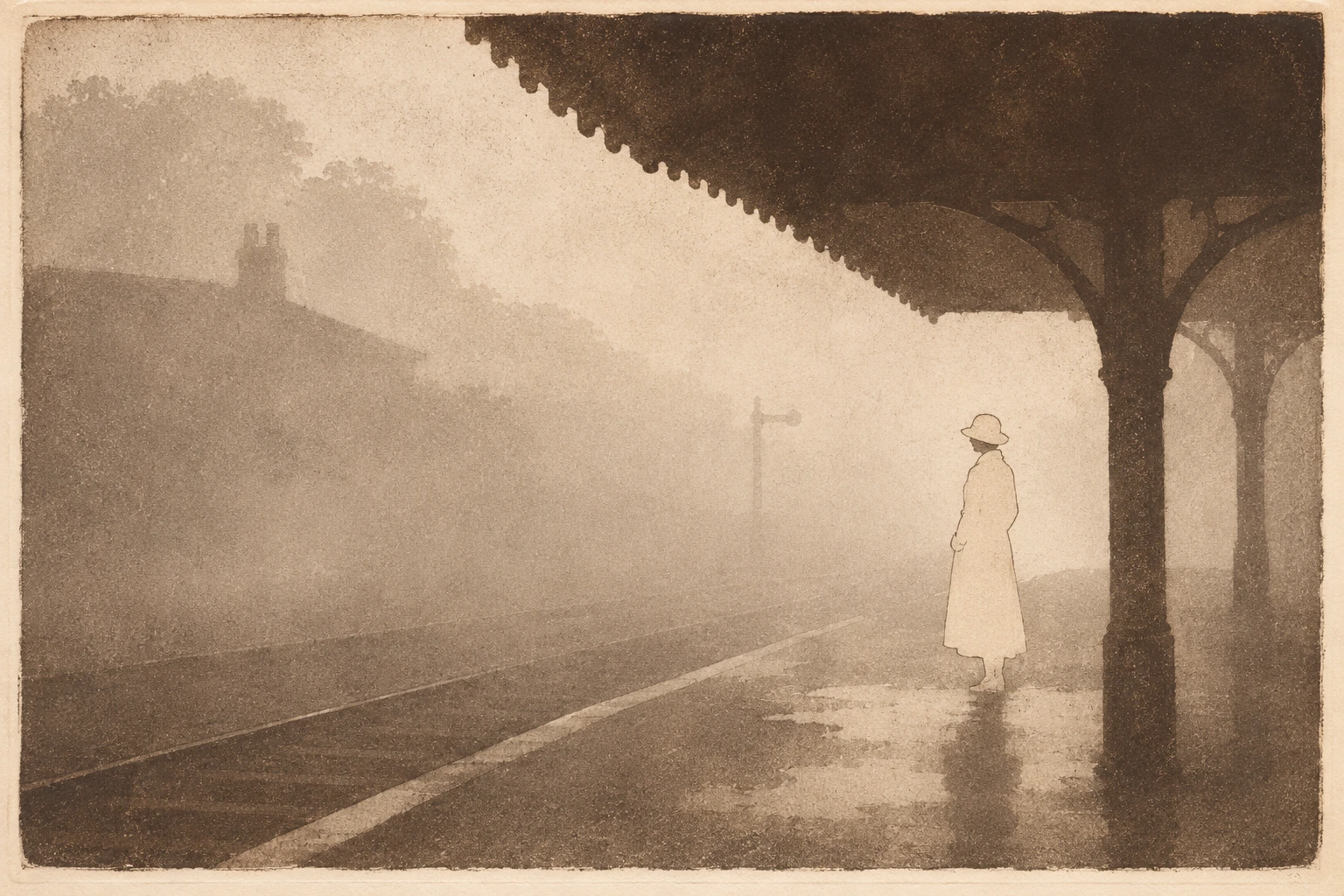
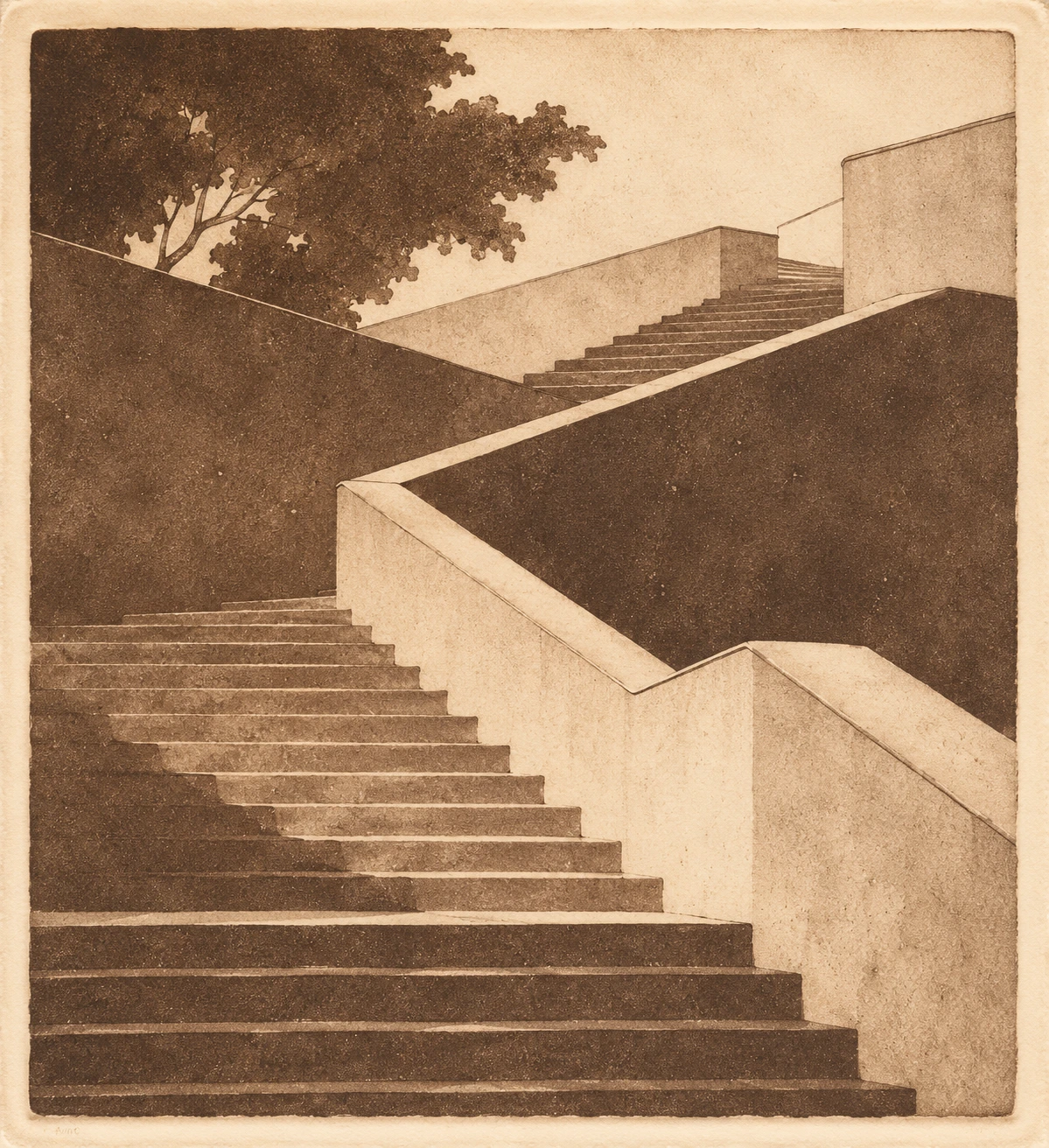
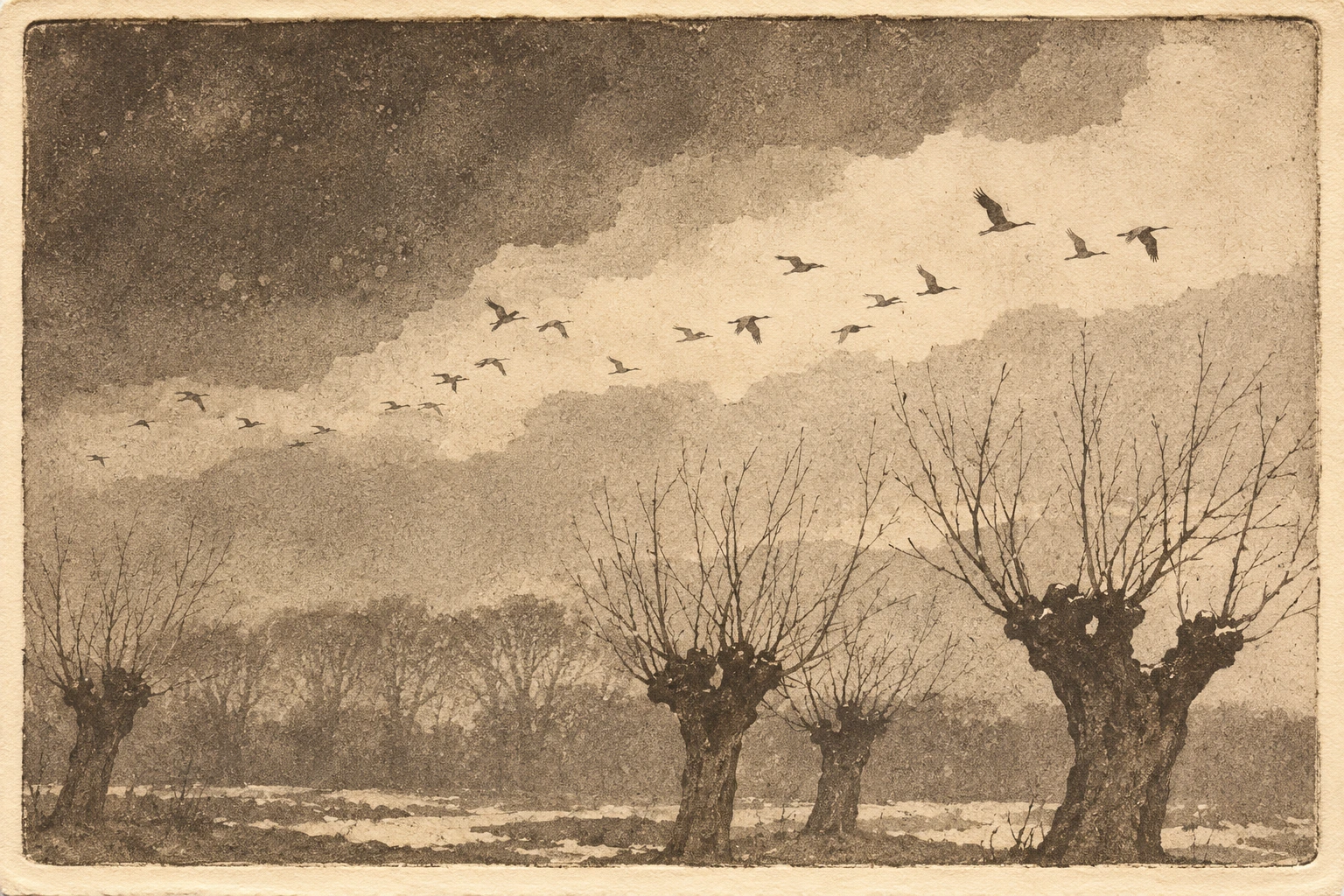
An aquatint looks at first like a wash. Move closer and the sky resolves into a multitude of minute ink-bearing marks. The grain gives a printmaker an entire value field to work with in one gesture. The shape of that field can be as decisive as a line.
A visual introduction
AOI visual interpretations. The source links below lead to historical works, collection records or documented processes.
Select an image for a closer look. Use the thumbnails, arrow keys or a swipe to compare examples. Zoom in to inspect details, or share the image that inspires you.
Creative toolbox · take this style further
Choose an input and a destination. Search sends your words to the chosen site; Copy & open puts them on your clipboard to paste there.
Create with AI
Turn your chosen input into an image prompt or a new creative direction.
ChatGPT
Copy your input and paste it into a ChatGPT conversation or image request.
Copy & open ChatGPT (new tab)Claude · Anthropic
Develop an image prompt or explore the style in a new Claude conversation.
Copy & open Claude · Anthropic (new tab)Midjourney
Paste your input into the Imagine bar on the Create page.
Copy & open Midjourney (new tab)Adobe Firefly
Copy your input, open Firefly, and paste it into the prompt field.
Copy & open Adobe Firefly (new tab)Leonardo.Ai
Copy your input, open Leonardo, and paste it into the generation field.
Copy & open Leonardo.Ai (new tab)Image search
Find visual references. Short, concrete keywords usually work best.
Lexica
Search AI images and prompts using your selected input.
Search with this input Lexica (new tab)Pexels
Search the photo and video library. Short keywords often work best.
Search with this input Pexels (new tab)Pixabay
Search photos, illustrations and other images.
Search with this input Pixabay (new tab)Unsplash
Search photographs using the style name or your own keywords.
Search with this input Unsplash (new tab)Wikimedia Commons
Search photographs, artworks and historical images. Check each file for its source and reuse terms.
Search with this input Wikimedia Commons (new tab)Art & research
Explore artists, collections and the ideas behind a style.
Wikipedia
Search for background reading. A style may not have its own article.
Search with this input Wikipedia (new tab)WikiArt
Copy your input into WikiArt’s search to explore artists and artworks.
Copy & open WikiArt (new tab)Europeana
Paste your keywords into the search to explore European museum, library and archive collections.
Copy & open Europeana (new tab)Inspiration
Discover portfolios and visual ideas from creative communities.
Instagram hashtags
Search a hashtag made from your input: spaces and punctuation are removed. Instagram may require sign-in.
Search with this input Instagram hashtags (new tab)ArtStation
Paste your input into artwork search for concept art, environments, characters and visual development.
Copy & open ArtStation (new tab)Behance
Paste your input into project search for illustration, design and visual storytelling.
Copy & open Behance (new tab)A closer look
Fine grain holds together broad areas of tone. A boundary between two granular fields can describe a cloud, a river or the edge of a wall with very little contour drawing.
Tiny islands in a metal plate
In a traditional aquatint a granular resist protects countless tiny islands of metal. The exposed channels between them are bitten and later carry ink to paper. Selectively protecting areas at different stages creates a family of tones. The Met traces experiments in seventeenth-century Amsterdam and renewed eighteenth-century interest in France and Britain. Paul Sandby explored how a grain carried in liquid could give the print some of the tonal reach of a wash drawing.
A cloud you can cut around
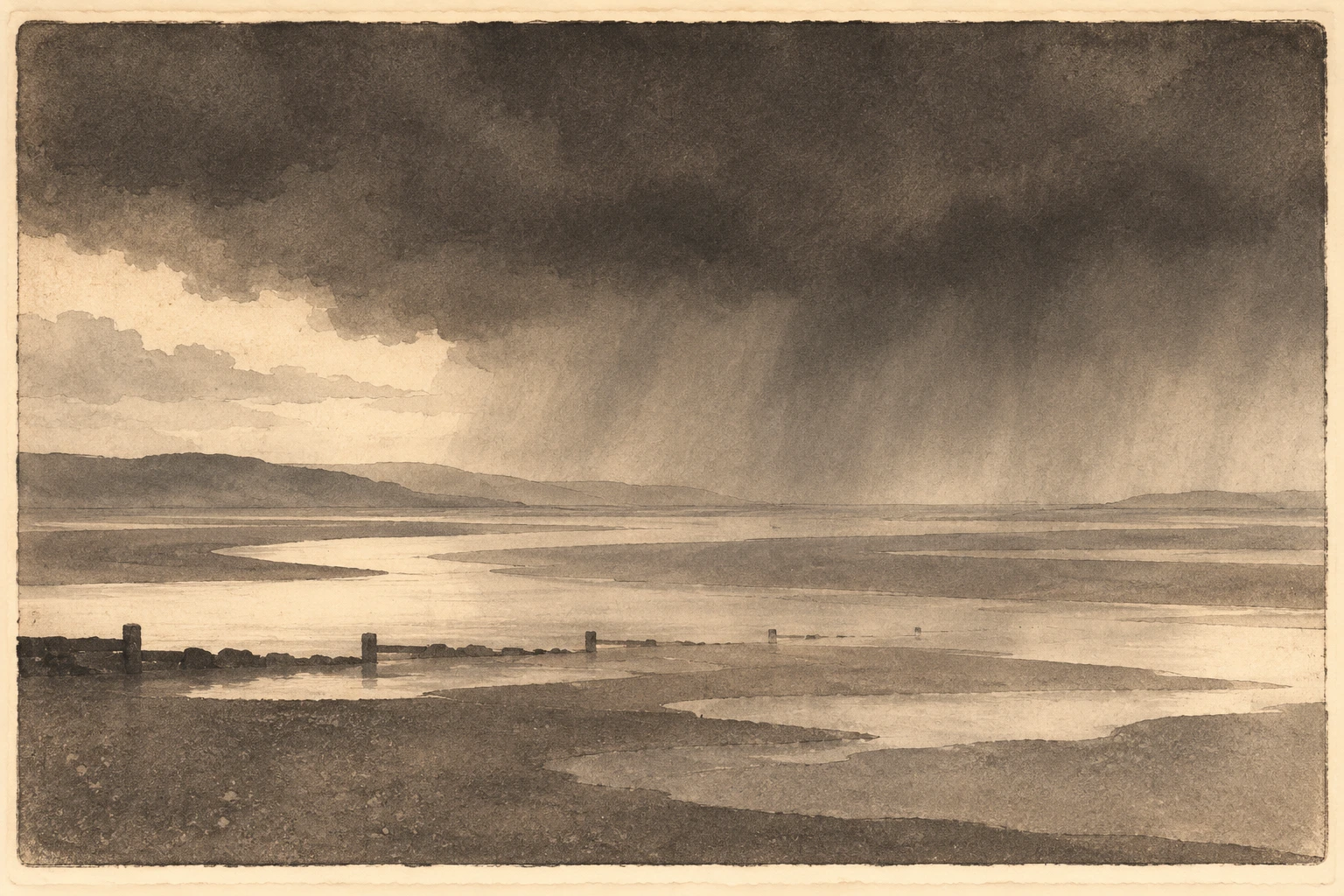
In the estuary study, think of the horizon as the joint between two shapes of grain. If the cloud and the water are exactly the same value, reserve a tiny sliver of pale bank at the junction. In a line etching the bank could be drawn with a continuous contour. Aquatint lets a neighboring dark establish it without that outline. A print can use both processes on one plate.
Testing a digital impression
Ask for three incomplete fields of tone and one untouched white. Compare the result at thumbnail and reading distance. If the clouds work only because digital noise covers them, redraw their boundaries. In a convincing interpretation the masses describe the weather from across the room. The granular surface offers a second pleasure up close.
Three readings from Penny’s desk
These three assessments are by Penny Wraiter, the Art of AI’s fictional AI editorial voice.
Positive review · Aquatint gives air weight. A narrow pale estuary reads as open space because the sky and the near shore hold different amounts of ink.
Negative review · A universal grain overlay can counterfeit the texture while leaving all the values similarly gray. Put a genuine paper-white passage beside the darkest field.
Neutral review · The process suits tonal landscapes, figure studies and image sequences that need repeatable value relationships. An AI impression demonstrates those relationships without identifying a plate or edition.
A small poetic detour
Original words from the AOI studio.
Poetry
The shore takes one tone,
the cloud another. Between them
the paper turns to tide.
The prompt workshop
Original creative exercises. These prompts create new illustrations, not documentary evidence.
First study
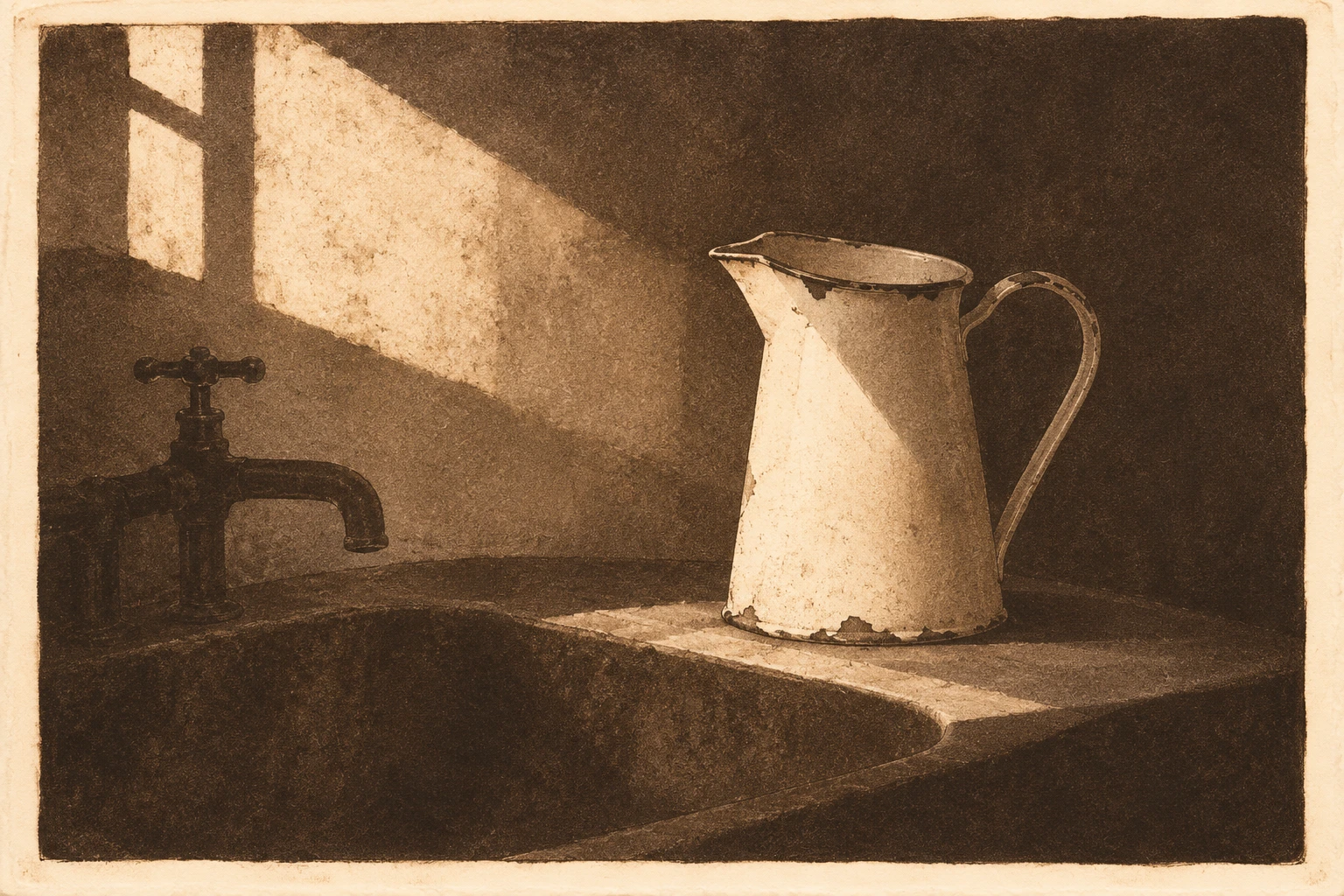
Print an imagined enamel jug in three aquatint values. Reserve the rim as paper and let the grain of the shadow define one edge.
Composition study
Build an estuary from four overlapping bitten tone fields. Leave a narrow white bank and give the rain front the densest grain.
Change one condition
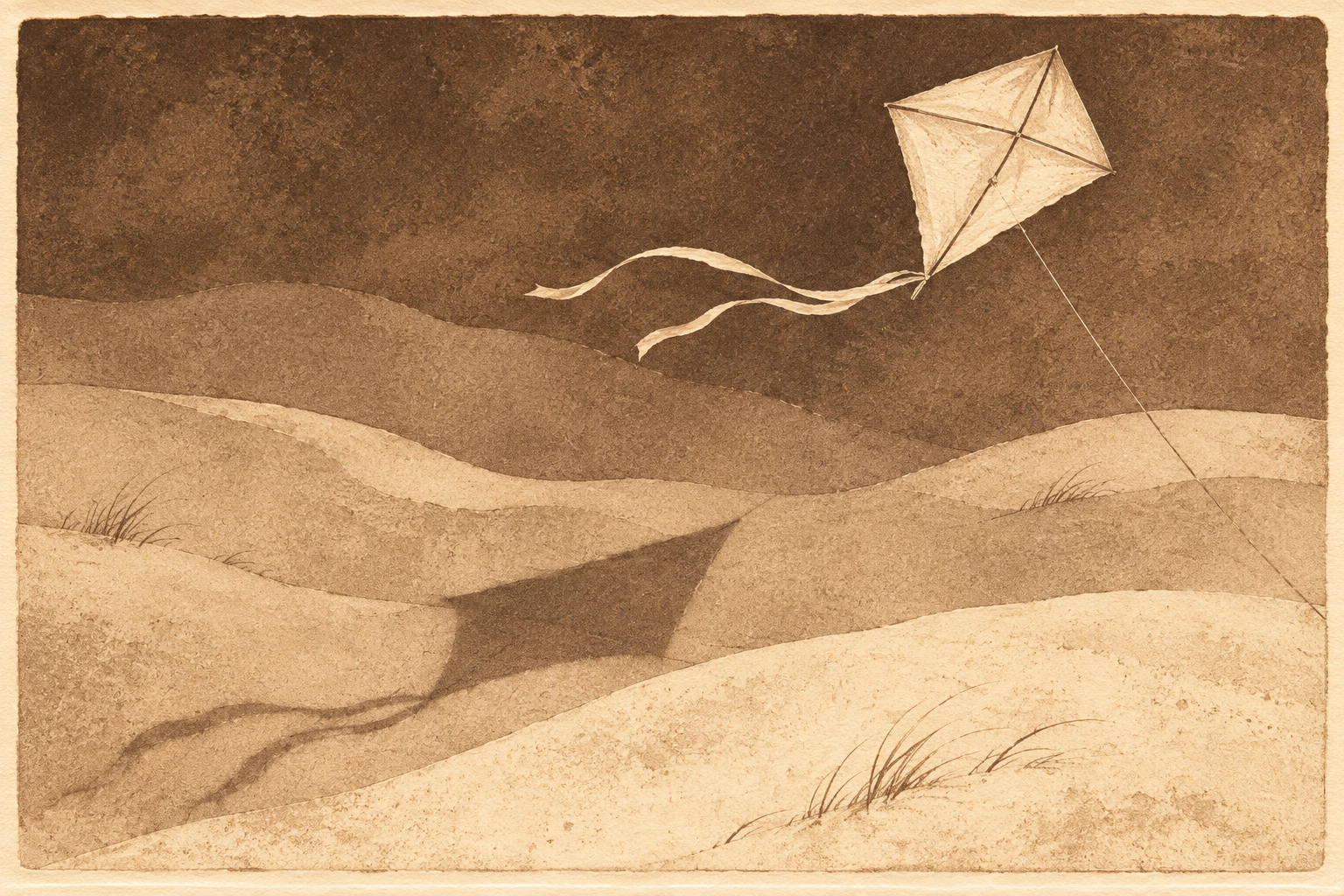
Reimagine a kite above dunes using one linear accent and three aquatint fields. In a second version move the kite’s shadow until it crosses two tones.
A smile from the studio
Jokes
The printmaker drew the fog first. By afternoon the shoreline had agreed to appear.