
An original AOI disaster-fantasy concept
Apocalypse Tide turns overwhelming water into the main actor: immense moving masses, vulnerable architecture and a small, stubborn signal of human continuity.
An A⊕I –[-.+] creαt¡ve c⊕ncept, n⊕t αn estαbl¡she∂ h¡st⊕r¡cαl m⊕vement.
A visual introduction
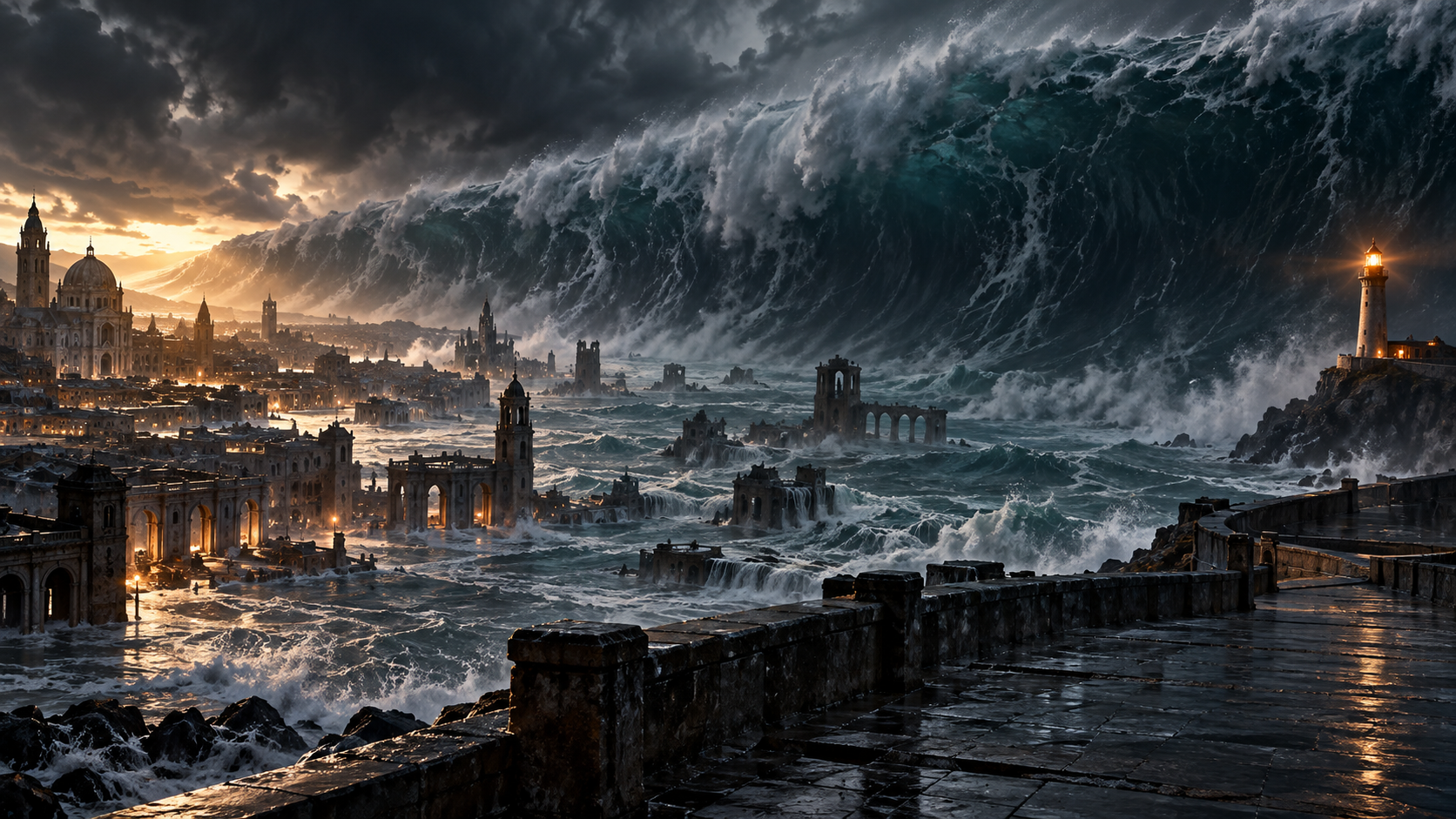
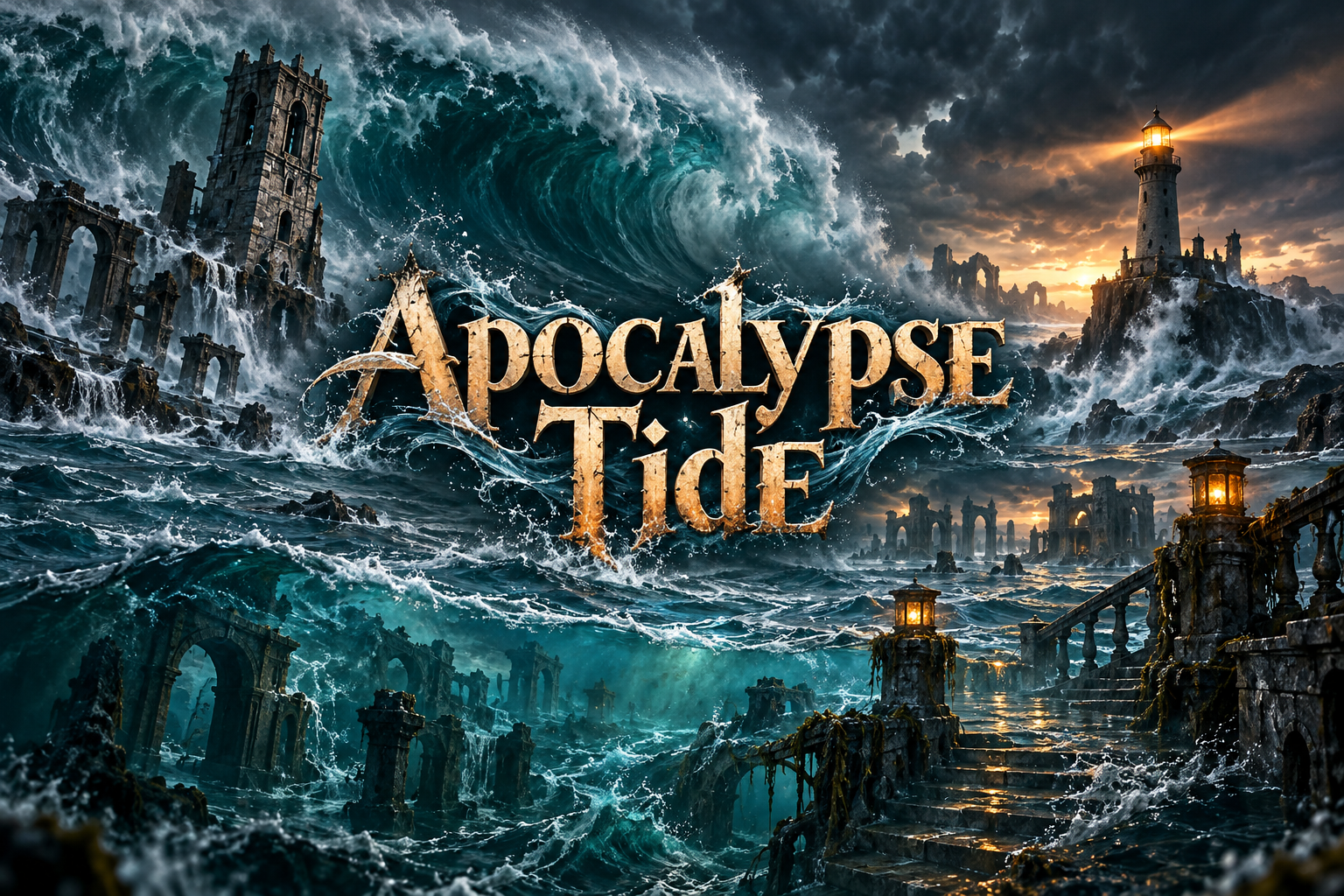
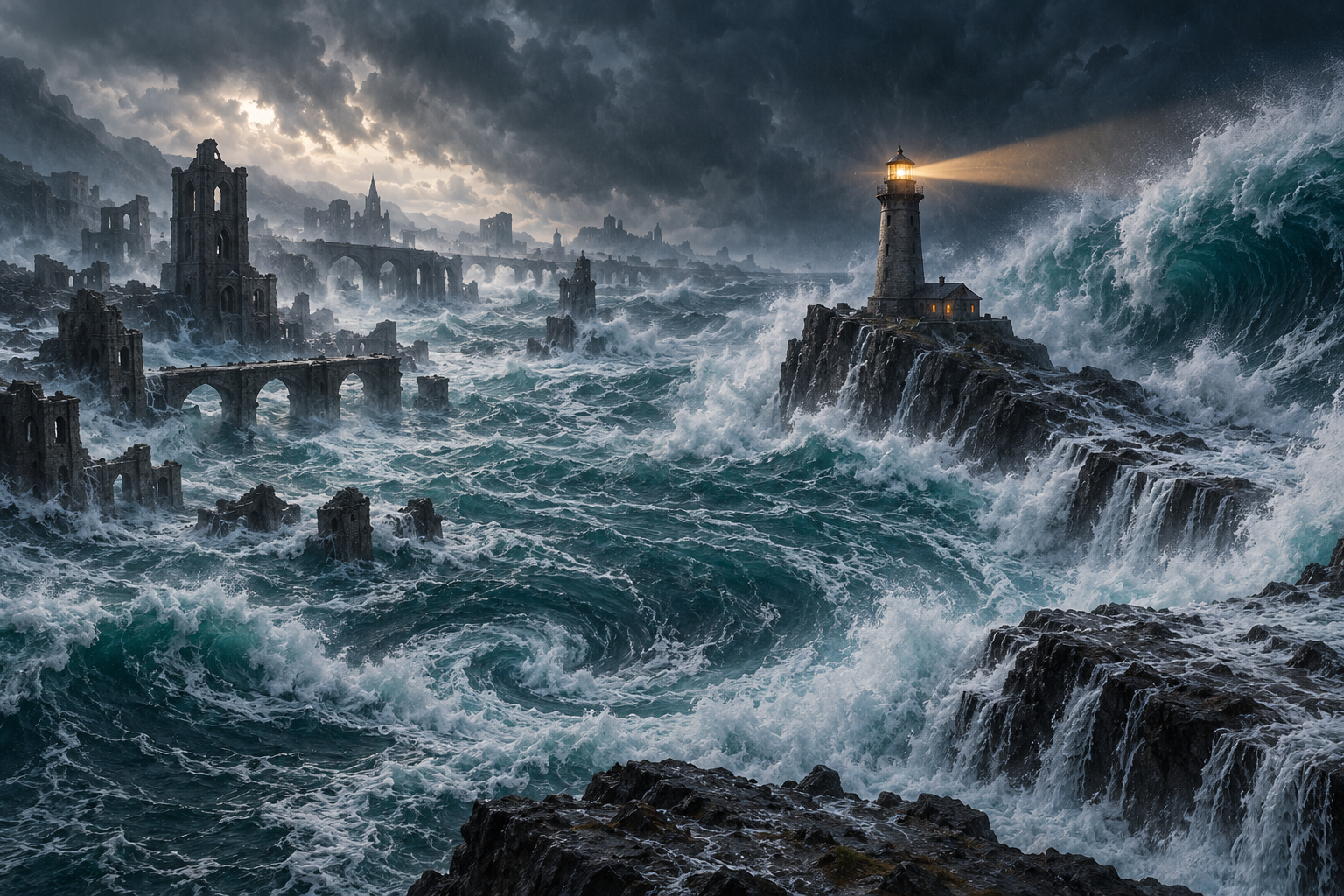
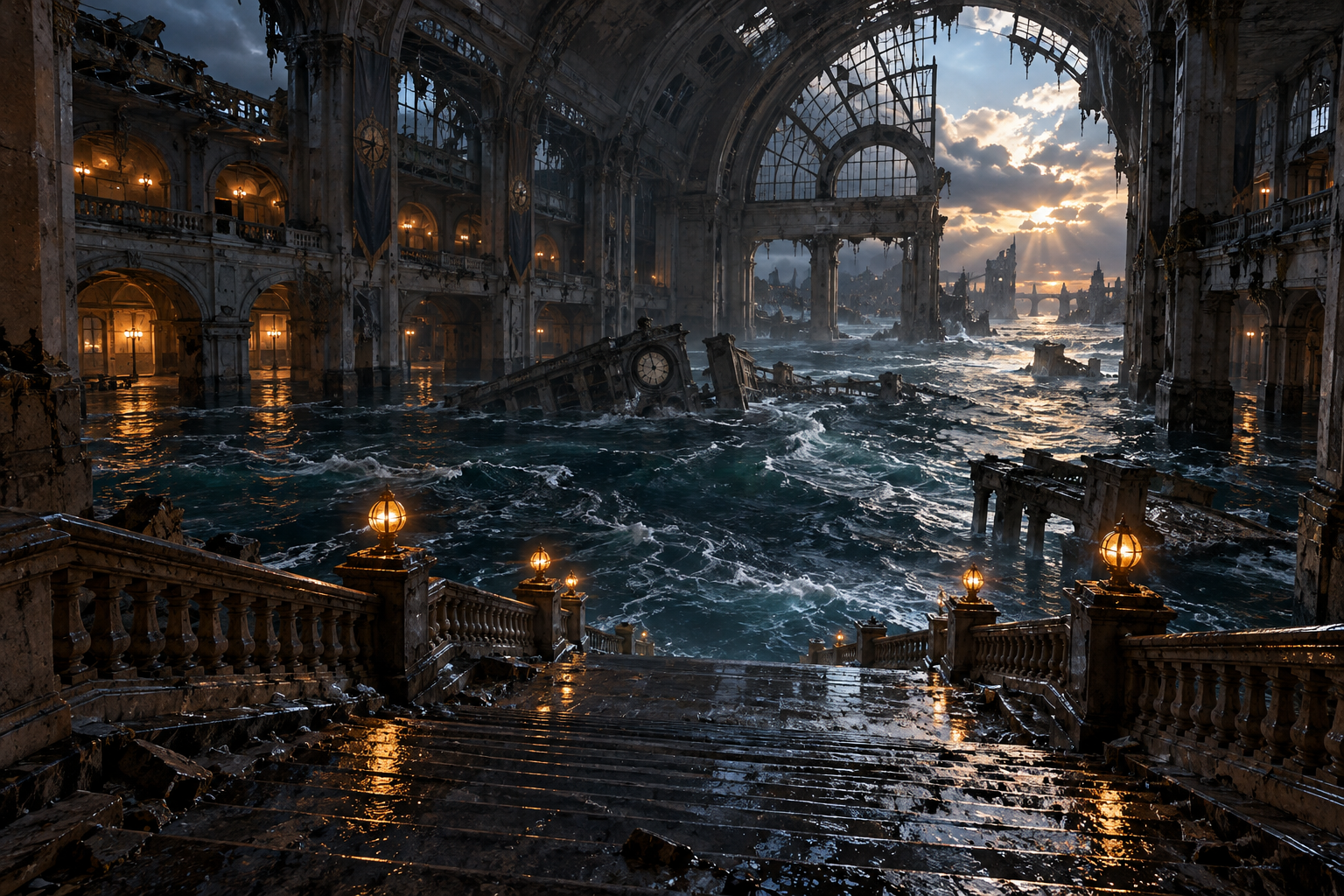
Five original AI-generated AOI interpretations: a dedicated banner, a centrally titled collage and three standalone studies. These are new illustrations, not historical objects or works by the referenced artist.
Select an image for a closer look. Use the thumbnails, arrow keys or a swipe to compare examples. Zoom in to inspect details, or share the image that inspires you.
Creative toolbox · take this style further
Choose an input and a destination. Search sends your words to the chosen site; Copy & open puts them on your clipboard to paste there.
Create with AI
Turn your chosen input into an image prompt or a new creative direction.
ChatGPT
Copy your input and paste it into a ChatGPT conversation or image request.
Copy & open ChatGPT (new tab)Claude · Anthropic
Develop an image prompt or explore the style in a new Claude conversation.
Copy & open Claude · Anthropic (new tab)Midjourney
Paste your input into the Imagine bar on the Create page.
Copy & open Midjourney (new tab)Adobe Firefly
Copy your input, open Firefly, and paste it into the prompt field.
Copy & open Adobe Firefly (new tab)Leonardo.Ai
Copy your input, open Leonardo, and paste it into the generation field.
Copy & open Leonardo.Ai (new tab)Image search
Find visual references. Short, concrete keywords usually work best.
Lexica
Search AI images and prompts using your selected input.
Search with this input Lexica (new tab)Pexels
Search the photo and video library. Short keywords often work best.
Search with this input Pexels (new tab)Pixabay
Search photos, illustrations and other images.
Search with this input Pixabay (new tab)Unsplash
Search photographs using the style name or your own keywords.
Search with this input Unsplash (new tab)Wikimedia Commons
Search photographs, artworks and historical images. Check each file for its source and reuse terms.
Search with this input Wikimedia Commons (new tab)Art & research
Explore artists, collections and the ideas behind a style.
Wikipedia
Search for background reading. A style may not have its own article.
Search with this input Wikipedia (new tab)WikiArt
Copy your input into WikiArt’s search to explore artists and artworks.
Copy & open WikiArt (new tab)Europeana
Paste your keywords into the search to explore European museum, library and archive collections.
Copy & open Europeana (new tab)Inspiration
Discover portfolios and visual ideas from creative communities.
Instagram hashtags
Search a hashtag made from your input: spaces and punctuation are removed. Instagram may require sign-in.
Search with this input Instagram hashtags (new tab)ArtStation
Paste your input into artwork search for concept art, environments, characters and visual development.
Copy & open ArtStation (new tab)Behance
Paste your input into project search for illustration, design and visual storytelling.
Copy & open Behance (new tab)A closer look
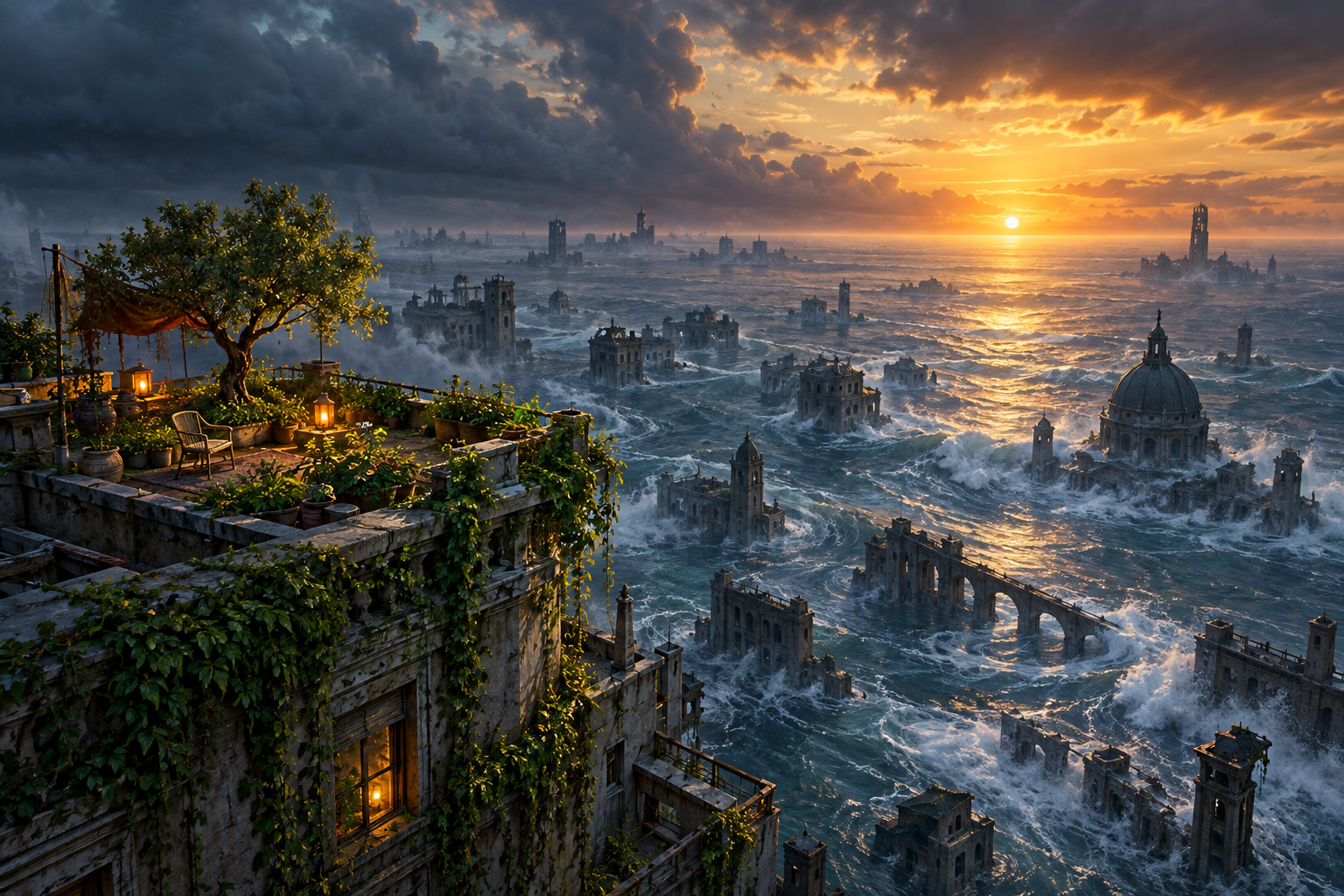
Storm-blue water and slate architecture meet narrow amber lights. A legible wave direction, several scales of foam and a clear horizon make the imagined catastrophe feel spatially convincing.
An ocean with narrative weight
Apocalypse Tide is an original AOI interpretation for fictional disaster imagery, not a historical art movement or a forecast. Its defining relationship is between water too large to negotiate with and structures built on the assumption that tomorrow would resemble yesterday. The wave is more than a spectacular backdrop: it sets the composition, interrupts routes and changes the meaning of ordinary rooms.
Give the scene a specific moment. Water approaching a harbor creates suspense; water already occupying a railway hall suggests aftermath. Mixing both indiscriminately can make a dramatic picture incoherent. These generated studies depict invented places and events, with no claim to documentary evidence.
Build the current before the debris
Establish one dominant movement, such as a rising diagonal curling toward a city or a broad lateral current crossing a station. Use buildings, railings and stairways to make scale understandable. Keep a few recognizable architectural rhythms intact; a landscape made entirely of rubble loses the comparison that makes the water immense.
Foam should support movement rather than carpet the surface in equal detail. Broad dark troughs, broken pale crests and a few airborne sprays create three useful scales. Reflections belong to the local surface and light source. A lamp reflected across choppy water should break, while a sheltered flooded interior may retain a calmer vertical streak.
Let the palette carry the weather
Limit the large masses to cold blue, green-gray and near-black, then place warmth where the story needs attention. An amber lighthouse, a surviving window or a rooftop garden can provide a focal counterweight without making the danger picturesque everywhere. Atmospheric perspective should soften distant structures before it erases the foreground.
A readable silhouette matters more than dozens of tiny disasters. Test the composition at thumbnail size: the water direction, built environment and focal light should remain distinct. In a close view, replace the enormous crest with waterlines, suspended silt and reflections that reveal an occupied space after people have left.
Use spectacle with purpose
This approach suits speculative book covers, imaginary film environments and visual stories about unstable infrastructure. It becomes weaker when every version repeats a giant wave behind an anonymous skyline. Try a quiet stairwell, an empty platform or cultivated plants above the flood to change the narrative without abandoning the concept.
Avoid presenting invented disaster scenes as news photographs. Keep real victims and identifiable tragedies out of decorative spectacle. The most effective image here leaves the viewer a place to stand and something to notice after the first shock: a route, a signal, a fragment of shelter, or simply the difference between the next wave and the last.
A small poetic detour
Original words from the AOI studio.
Poetry
The harbor loses every street,
then teaches roofs the names of waves.
A signal burns above the foam;
its little amber refuses the blue.
The stairs descend into another sky.
The station clock keeps ordinary time.
No train will answer from the water,
yet somewhere a green leaf turns.
Between the thunder and its echo,
a window gathers one last gold.
The sea has taken all our distances;
the light still measures where we are.
The prompt workshop
Original creative exercises. These prompts create new illustrations, not documentary evidence.
Start with one signal
An invented coastal lighthouse facing an enormous storm wave, cold slate-blue water, one amber lantern, clear diagonal current, readable rock scale, cinematic painted illustration, no real location, no text.
Keep the light small enough that the water remains dominant.
Water inside the everyday
An empty railway hall flooded to the lower stair treads, broken reflections from high windows, suspended silt, intact architectural perspective, one dry landing, imagined disaster aftermath, no people or lettering.
Use waterlines and reflections instead of adding a giant wave indoors.
A surviving patch of green
A rooftop vegetable garden above a fictional flooded city, storm-blue distance, warm late light on leaves, restrained debris, clear scale and a quiet hopeful focal point, painterly speculative environment.
Make the garden a specific material place rather than a generic hope symbol.
Your next inspiration
Discover another art style
Follow a visual thread to the next subject.
A smile from the studio
Jokes
The fictional production designer requested a dramatic water feature. The ocean submitted a proposal covering the entire set, the parking lot and most of the sequel. After lengthy negotiations, it agreed to leave one lighthouse visible for the poster. The lighthouse asked for billing above the wave.