
Artist reference · exuberant abstract painting and printmaking
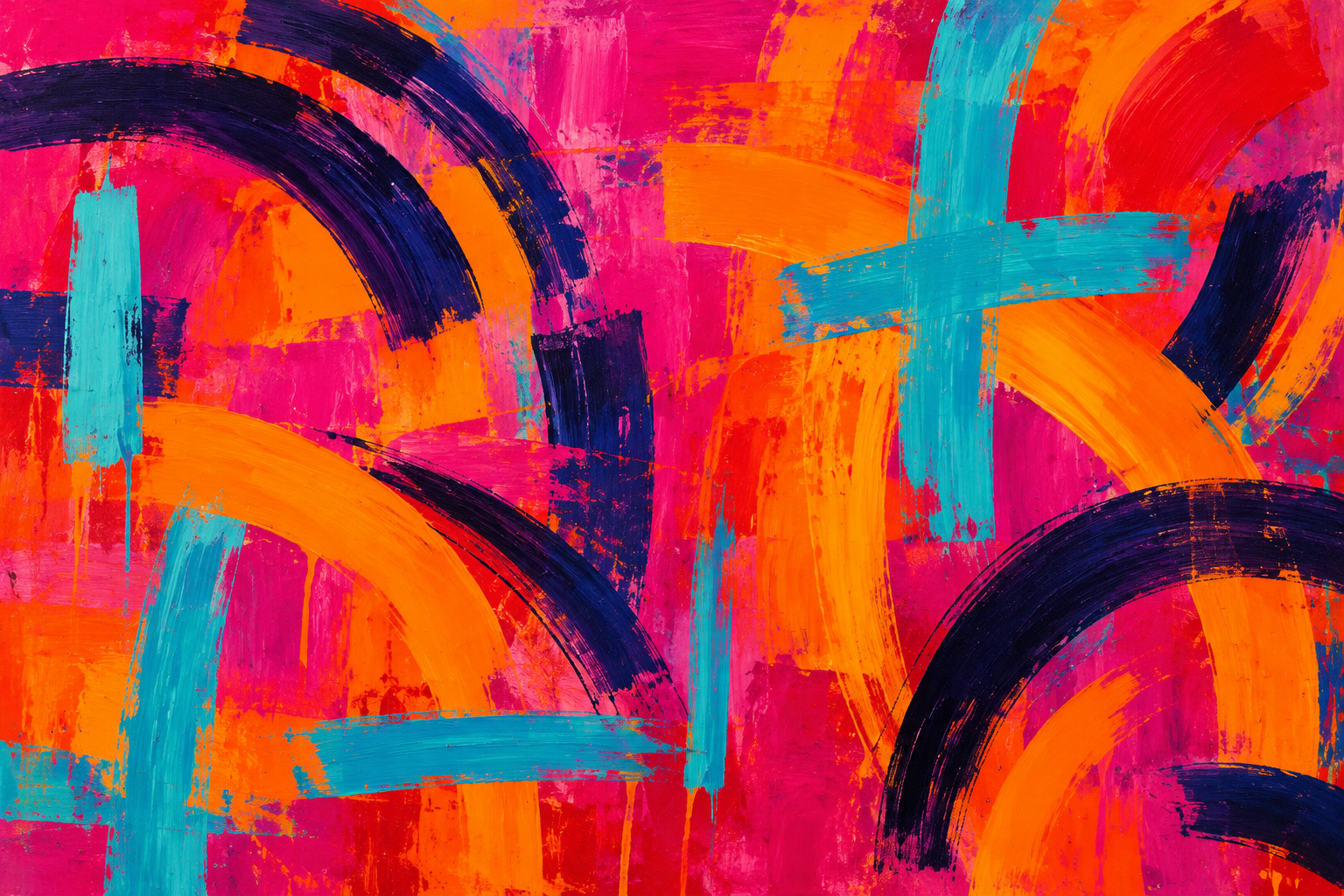
Albert Irvin's art offers a lesson in energetic color relationships: sweeping arcs, bars and repeated marks build a picture that feels spontaneous while remaining carefully balanced.
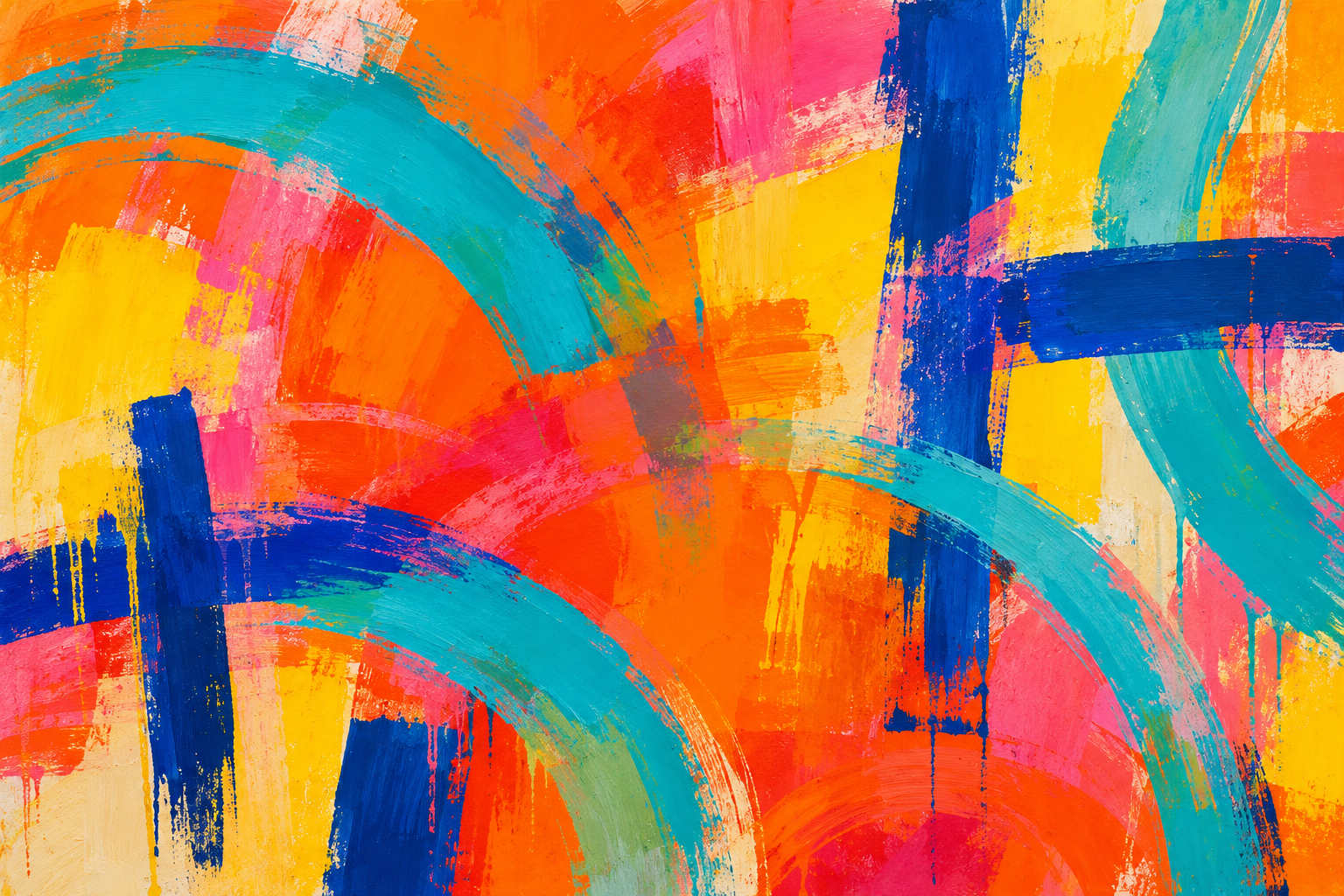
A visual introduction
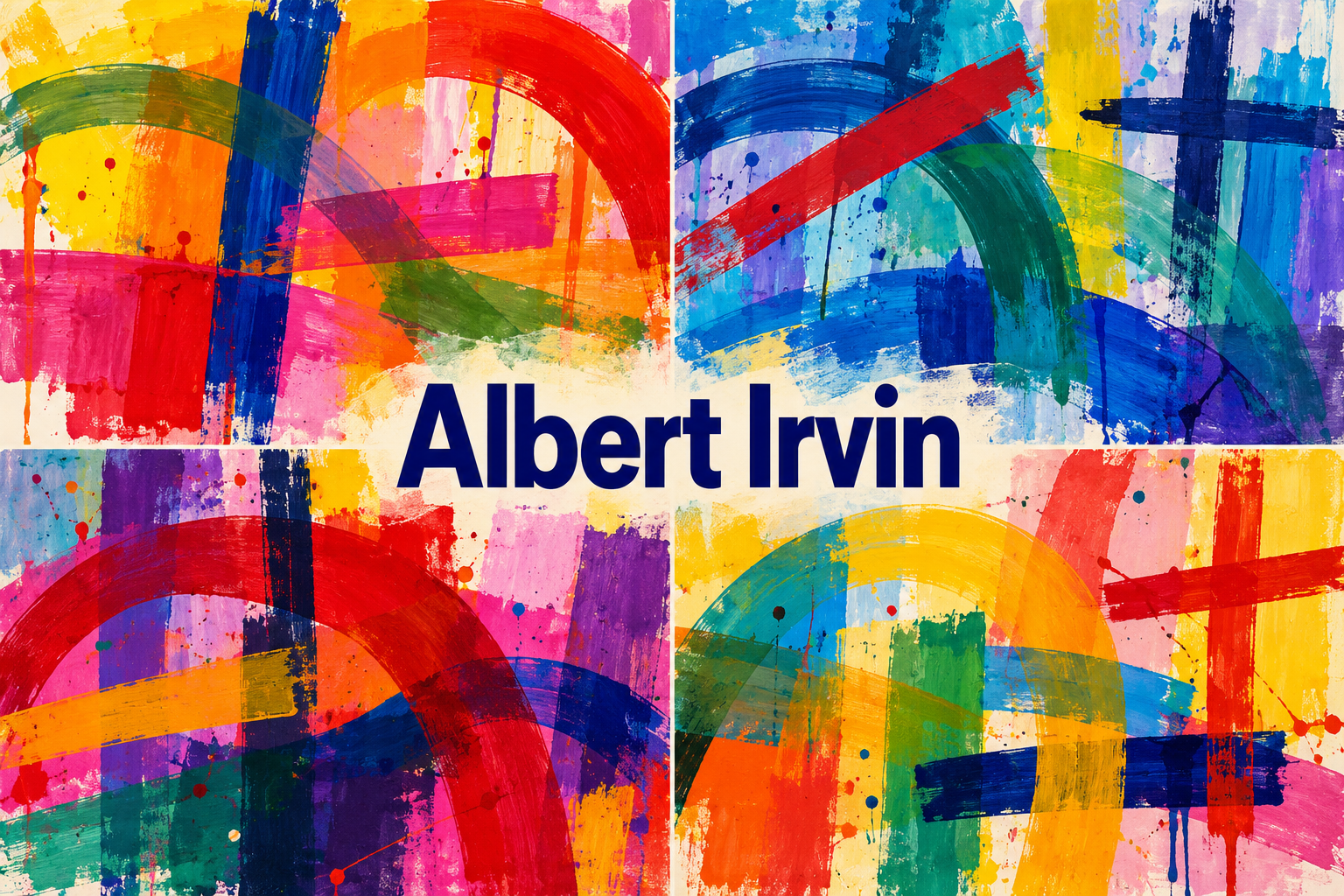
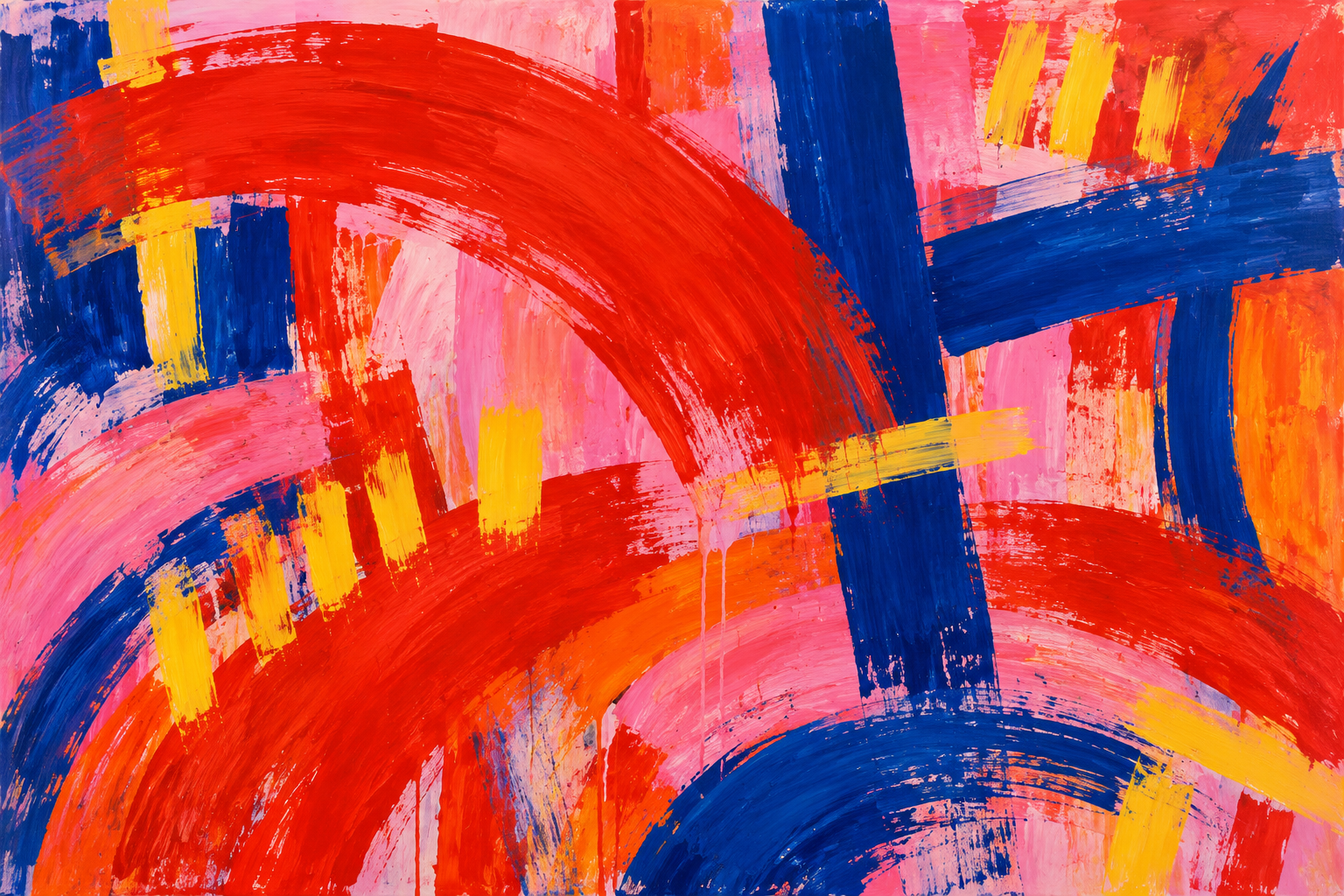
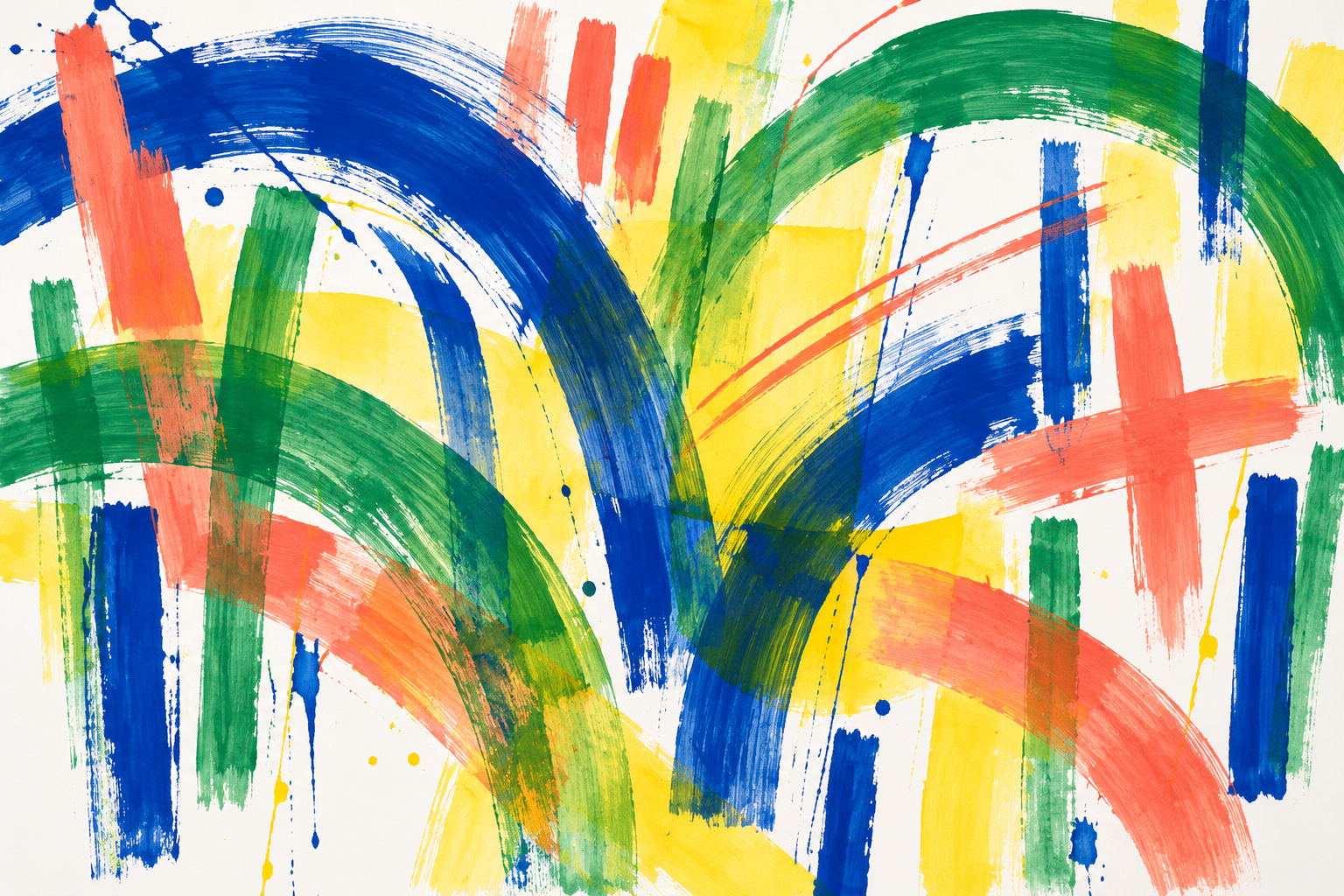
Five original AI-generated AOI interpretations: a dedicated banner, a centrally titled collage and three standalone studies. These are new illustrations, not historical objects or works by the referenced artist.
Select an image for a closer look. Use the thumbnails, arrow keys or a swipe to compare examples. Zoom in to inspect details, or share the image that inspires you.
Creative toolbox · take this style further
Choose an input and a destination. Search sends your words to the chosen site; Copy & open puts them on your clipboard to paste there.
Create with AI
Turn your chosen input into an image prompt or a new creative direction.
ChatGPT
Copy your input and paste it into a ChatGPT conversation or image request.
Copy & open ChatGPT (new tab)Claude · Anthropic
Develop an image prompt or explore the style in a new Claude conversation.
Copy & open Claude · Anthropic (new tab)Midjourney
Paste your input into the Imagine bar on the Create page.
Copy & open Midjourney (new tab)Adobe Firefly
Copy your input, open Firefly, and paste it into the prompt field.
Copy & open Adobe Firefly (new tab)Leonardo.Ai
Copy your input, open Leonardo, and paste it into the generation field.
Copy & open Leonardo.Ai (new tab)Image search
Find visual references. Short, concrete keywords usually work best.
Lexica
Search AI images and prompts using your selected input.
Search with this input Lexica (new tab)Pexels
Search the photo and video library. Short keywords often work best.
Search with this input Pexels (new tab)Pixabay
Search photos, illustrations and other images.
Search with this input Pixabay (new tab)Unsplash
Search photographs using the style name or your own keywords.
Search with this input Unsplash (new tab)Wikimedia Commons
Search photographs, artworks and historical images. Check each file for its source and reuse terms.
Search with this input Wikimedia Commons (new tab)Art & research
Explore artists, collections and the ideas behind a style.
Wikipedia
Search for background reading. A style may not have its own article.
Search with this input Wikipedia (new tab)WikiArt
Copy your input into WikiArt’s search to explore artists and artworks.
Copy & open WikiArt (new tab)Europeana
Paste your keywords into the search to explore European museum, library and archive collections.
Copy & open Europeana (new tab)Inspiration
Discover portfolios and visual ideas from creative communities.
Instagram hashtags
Search a hashtag made from your input: spaces and punctuation are removed. Instagram may require sign-in.
Search with this input Instagram hashtags (new tab)ArtStation
Paste your input into artwork search for concept art, environments, characters and visual development.
Copy & open ArtStation (new tab)Behance
Paste your input into project search for illustration, design and visual storytelling.
Copy & open Behance (new tab)A closer look
Broad saturated color fields are crossed by arcs, bars and clustered accents. Overlapping marks, exposed ground and shifts between dense and open areas create rhythm without a literal scene.
An artist, not a filter name
Albert Irvin (1922–2015) was a British painter whose estate describes a move away from figuration toward abstraction during the mid-1950s. His practice included painting, watercolor, gouache and screenprinting. The estate records his adoption of acrylic in the early 1970s and work with Advanced Graphics London from 1980. Those materials matter because the painted and printed works do not all behave alike.
This entry studies selected visual principles from that practice. The generated illustrations are new AOI interpretations, not paintings by Irvin, authenticated reproductions or reconstructions of named works. Look at the estate's examples alongside these studies to see the difference between an artist's individual decisions and a simplified vocabulary for experimentation.
Energy needs an underlying structure
Start with the major color relationships rather than a bag of decorative marks. A broad warm field might be interrupted by a cool arc, while a repeated dark shape establishes a beat. The picture needs unequal intervals: a crowded passage becomes more energetic when another area remains comparatively open. An all-over distribution can still have hierarchy.
Arcs suggest movement across the surface; bars can interrupt or stabilize that movement. Small cross-like or petal-like accents may create a secondary rhythm, but they should not become a checklist imposed on every image. Change their orientation, spacing and scale. A deliberate interruption in a repeated sequence often contributes more than another dozen marks.
Paint and print offer different evidence
For an acrylic-inspired study, describe broad strokes, overlapping opaque and translucent passages, visible edges and small variations where a mark thins. Avoid making every shape equally smooth. The generated surface can suggest material behavior, but it does not establish that real paint was applied. Keep that distinction visible in the caption.
A screenprint-inspired variation should rely more on the interaction of bounded color shapes, overlaps and the paper field. Do not add random registration errors to make it look artisanal. A crisp edge can be intentional, while a soft edge in a painting may help one color passage recede. Material cues should support the particular composition rather than serve as a universal authenticity effect.
Compose an original response
Try one dominant hue, one strong countercolor and a smaller accent before expanding the palette. Make a large gestural sweep, interrupt it with a slower shape, then adjust the remaining empty space. At thumbnail size, the image should retain a directional relationship rather than collapse into confetti. At closer range, differences in mark density should reward attention.
This approach is useful for studying abstract composition, lively editorial imagery and color-led visual experiments. Its common failure is mistaking enthusiasm for indiscriminate saturation. A successful response gives each mark a reason to exist while accepting that the image need not describe an object or conceal a coded story. Study the work; then make a new set of decisions.
A small poetic detour
Original words from the AOI studio.
Poetry
A red field opens like a room.
A blue arc crosses without knocking.
Yellow arrives in several voices,
each one a little out of step.
The brush leaves evidence of turning.
The paper keeps a place for air.
A dark bar gathers up the rhythm;
a small bright mark lets it escape.
Nothing here must become a window.
Nothing here must explain the sun.
The colors meet, depart, return,
and make their movement into space.
The prompt workshop
Original creative exercises. These prompts create new illustrations, not documentary evidence.
A large gesture and a pause
An original energetic abstract acrylic-style painting, a broad coral field interrupted by one cobalt arc, small yellow accents, visible stroke edges, unequal open spaces, no recognizable objects, no text or signature.
Study the relationship between the large sweep and the empty intervals.
A printed rhythm
Original abstract screenprint-like composition, overlapping turquoise, orange and violet shapes, rhythmic bars and curved marks, warm white paper visible, precise flat color boundaries, no copy of an existing artwork.
Let overlaps and the ground establish depth without adding simulated paint texture.
Change the tempo
An original abstract painting with a dense cluster of short magenta and blue marks on one side and two broad slow yellow sweeps across an open field, varied scale and directional rhythm, no text.
Reduce small marks if they obscure the larger color structure.
Your next inspiration
Discover another art style
Follow a visual thread to the next subject.
A smile from the studio
Jokes
At the composition meeting, the red field requested more room. Blue proposed a sweeping intervention, yellow submitted six small amendments, and the dark bar insisted on keeping everyone grounded. The unpainted space said nothing. It turned out to be the only participant whose contribution everyone needed.
Sources and further exploration
Albert Irvin estate — biography and the development of his practice
Estate timeline, 1970–1989 — acrylic and screenprinting context