
Designer-related aesthetic · sculptural garment construction
Aitor Throup's work invites us to begin with a moving body and ask what a garment could become around it. This guide examines anatomy, sculptural construction and narrative purpose, then translates those ideas into original speculative fashion studies.
A visual introduction
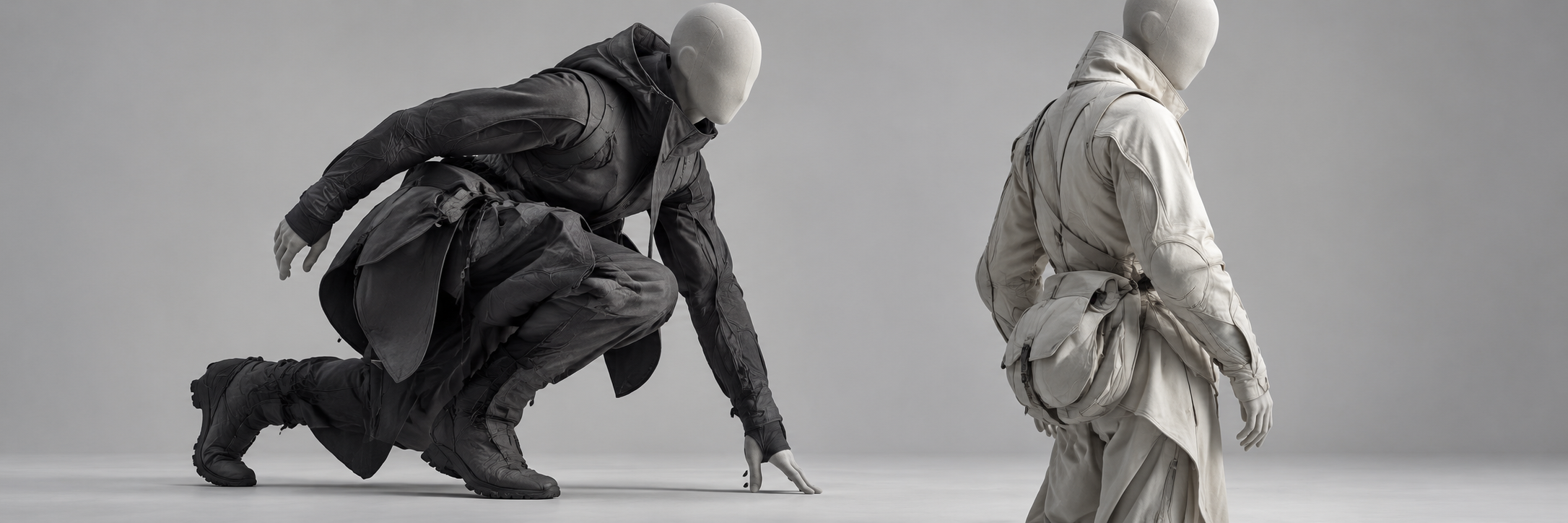
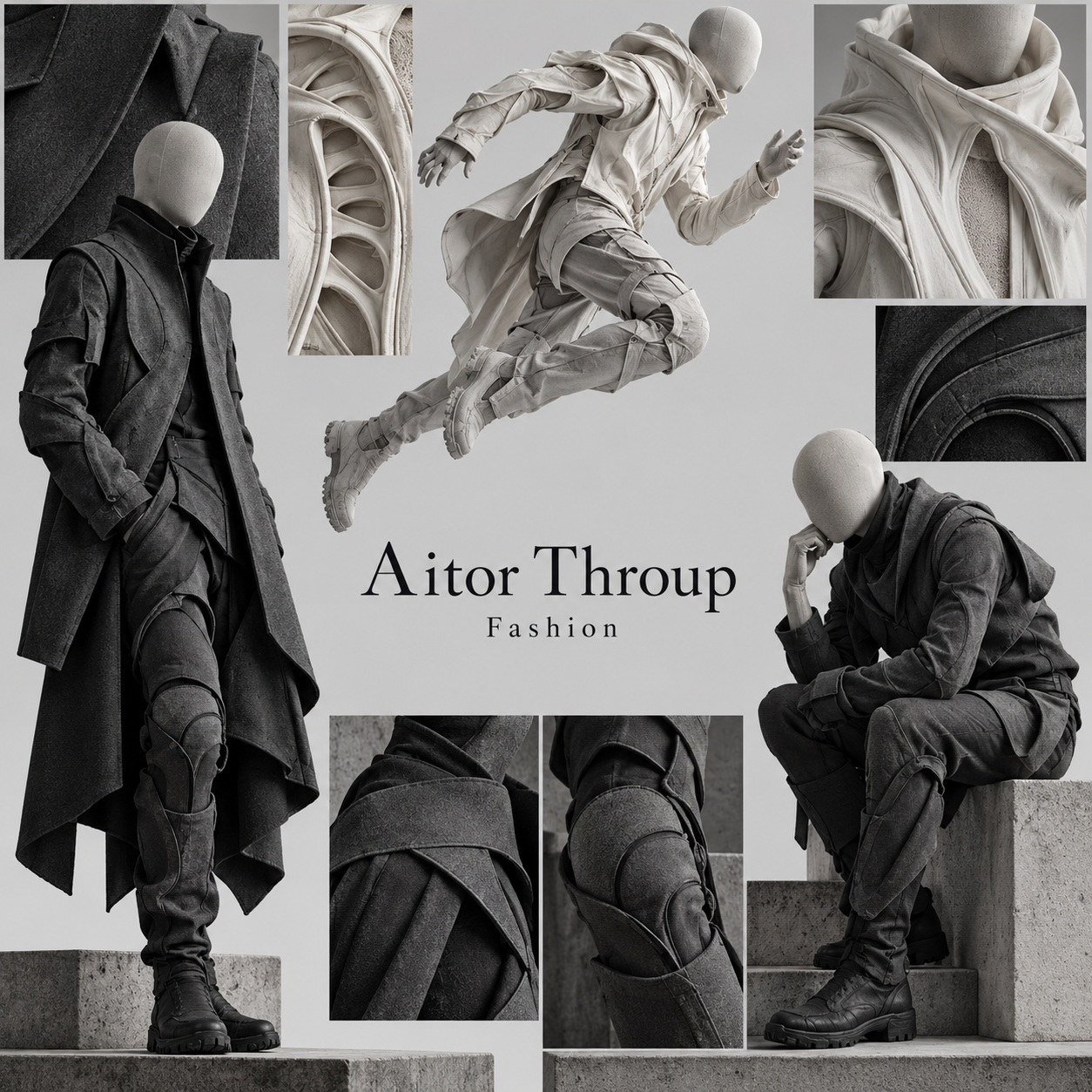
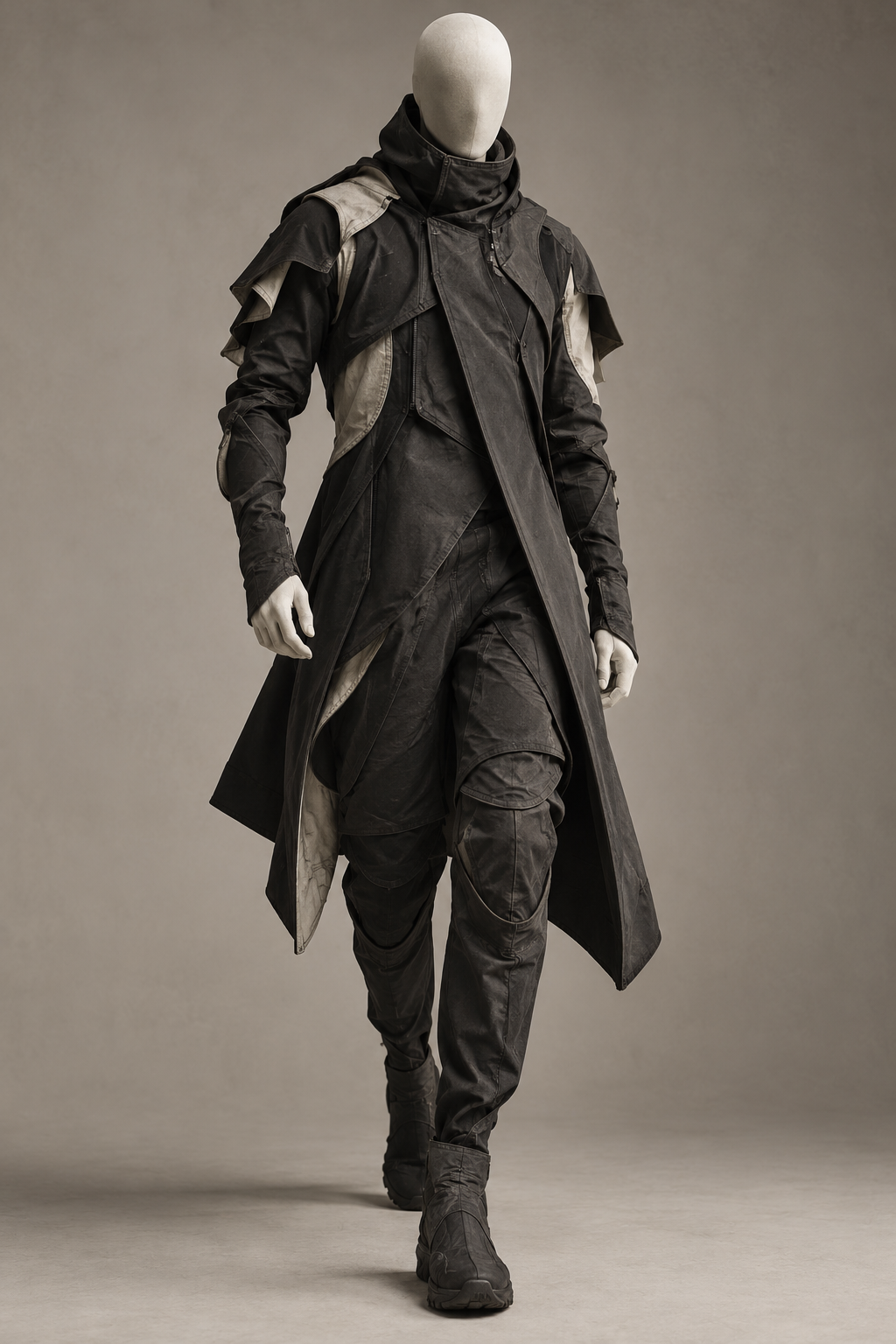
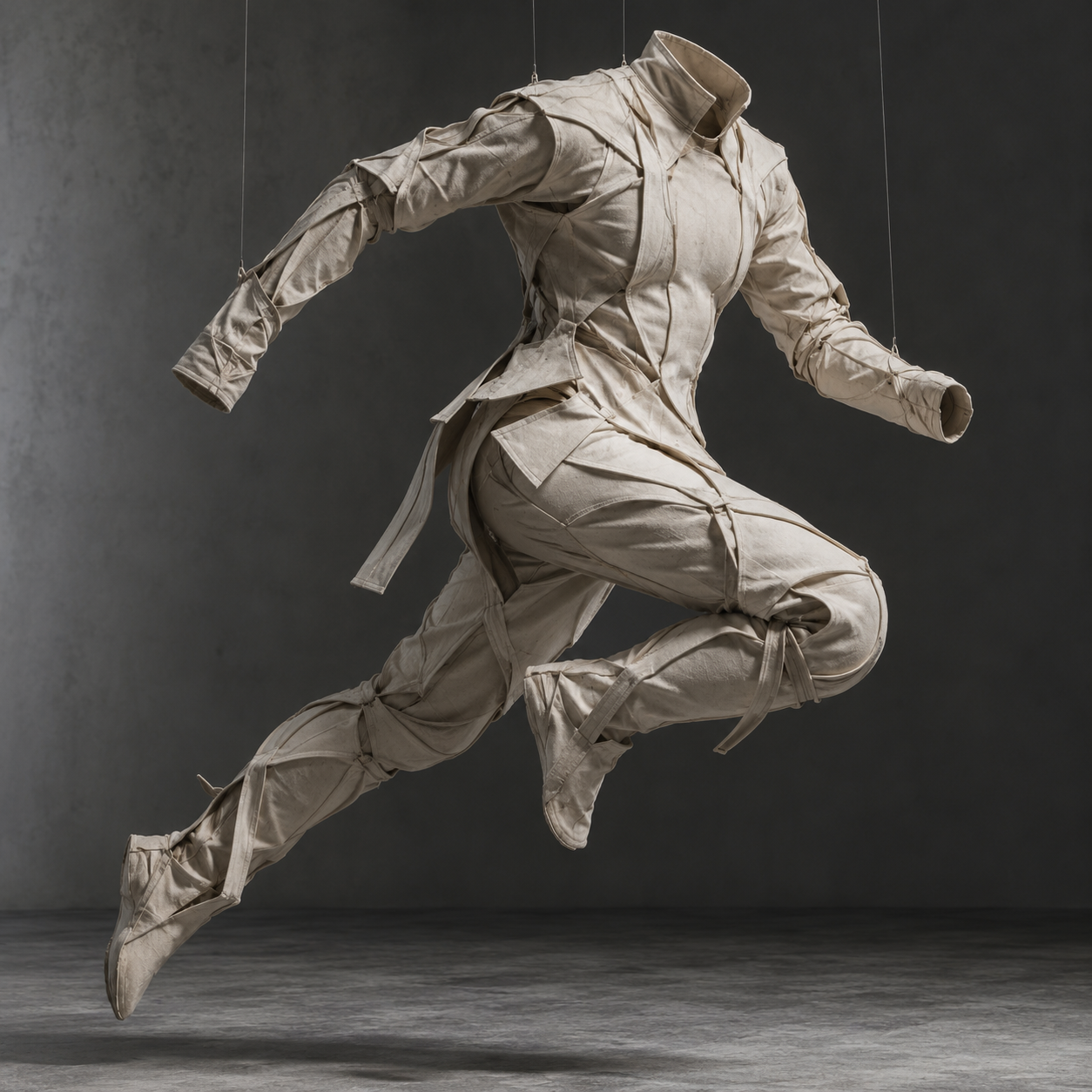
Five original AI-generated AOI interpretations: a dedicated banner, a centrally titled collage and three standalone studies.
Select an image for a closer look. Use the thumbnails, arrow keys or a swipe to compare examples. Zoom in to inspect details, or share the image that inspires you.
Creative toolbox · take this style further
Choose an input and a destination. Search sends your words to the chosen site; Copy & open puts them on your clipboard to paste there.
Create with AI
Turn your chosen input into an image prompt or a new creative direction.
ChatGPT
Copy your input and paste it into a ChatGPT conversation or image request.
Copy & open ChatGPT (new tab)Claude · Anthropic
Develop an image prompt or explore the style in a new Claude conversation.
Copy & open Claude · Anthropic (new tab)Midjourney
Paste your input into the Imagine bar on the Create page.
Copy & open Midjourney (new tab)Adobe Firefly
Copy your input, open Firefly, and paste it into the prompt field.
Copy & open Adobe Firefly (new tab)Leonardo.Ai
Copy your input, open Leonardo, and paste it into the generation field.
Copy & open Leonardo.Ai (new tab)Image search
Find visual references. Short, concrete keywords usually work best.
Lexica
Search AI images and prompts using your selected input.
Search with this input Lexica (new tab)Pexels
Search the photo and video library. Short keywords often work best.
Search with this input Pexels (new tab)Pixabay
Search photos, illustrations and other images.
Search with this input Pixabay (new tab)Unsplash
Search photographs using the style name or your own keywords.
Search with this input Unsplash (new tab)Wikimedia Commons
Search photographs, artworks and historical images. Check each file for its source and reuse terms.
Search with this input Wikimedia Commons (new tab)Art & research
Explore artists, collections and the ideas behind a style.
Wikipedia
Search for background reading. A style may not have its own article.
Search with this input Wikipedia (new tab)WikiArt
Copy your input into WikiArt’s search to explore artists and artworks.
Copy & open WikiArt (new tab)Europeana
Paste your keywords into the search to explore European museum, library and archive collections.
Copy & open Europeana (new tab)Inspiration
Discover portfolios and visual ideas from creative communities.
Instagram hashtags
Search a hashtag made from your input: spaces and punctuation are removed. Instagram may require sign-in.
Search with this input Instagram hashtags (new tab)ArtStation
Paste your input into artwork search for concept art, environments, characters and visual development.
Copy & open ArtStation (new tab)Behance
Paste your input into project search for illustration, design and visual storytelling.
Copy & open Behance (new tab)A closer look
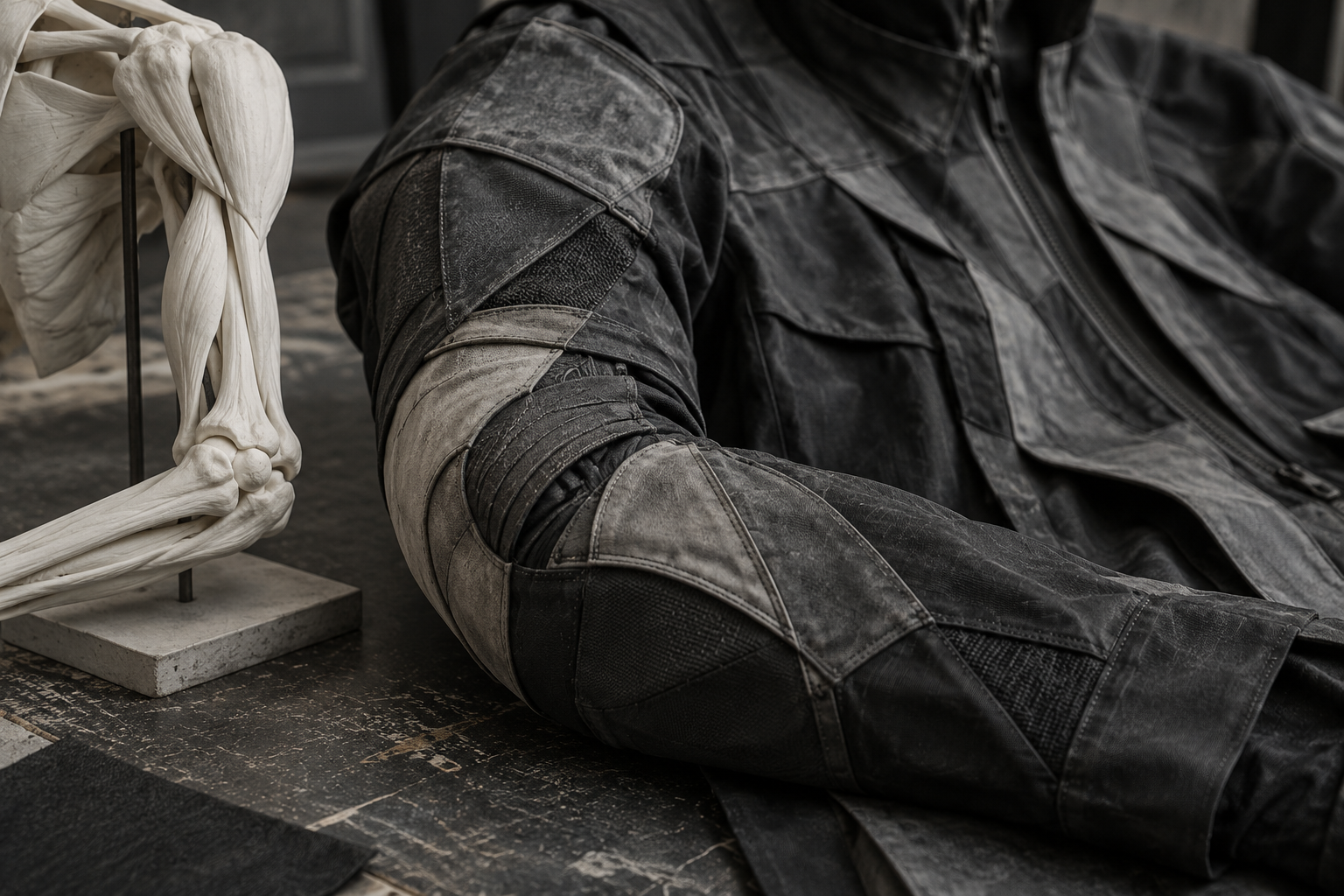
Articulated volumes, shaped joints, layered panels and tension around the body; restrained colour lets silhouette, seams and the relationship between clothing and pose carry the image.
Start with the body
In his direct interview with Sabukaru, Throup discusses beginning with the body rather than conventional garment blocks. That distinction is useful when reading the work: clothing can emerge from anatomy, movement and an object's specific purpose. The result is not simply an unusual jacket silhouette. It is a way of asking why a sleeve bends, where a panel opens and how a sculptural form relates to a person.
An evolving object rather than a seasonal effect
In a 2012 Dazed interview, Throup describes developing product archetypes and conceptually justifying the objects he makes. The Westminster Menswear Archive's ULTRA VEIL exhibition material likewise presents prototypes, drawings and sculptural development as part of his practice. These sources support a process-led reading. They do not make every faceless mannequin, dark garment or technical pocket a Throup design; those are visual devices that can appear in many kinds of fashion imagery.
Read the joint before the decoration
For an original study, decide on the body's action first. A walking pose asks different questions of the knee and hip than a seated or suspended pose. Put seams and folds where the fabric appears to change direction. The charcoal coat example uses layered shoulders and shaped lower sections to reinforce a forward step. Its value lies in the relationship between cut and posture, rather than the quantity of panels.
Use the studio as an analytical space
A neutral setting makes garment volume easier to compare. The suspended bone-white study removes facial expression and keeps attention on an implied body in motion. The close detail moves from whole silhouette to elbow construction, while the banner contrasts a compressed pose with an upright one. These are original AI-generated interpretations, not photographs of Throup's garments or claims that the illustrated patterns could be manufactured without further design work.
Colour, material and common shortcuts
Charcoal and bone white are useful here because they reveal folds through light and shadow. They are an editorial choice, not a rule governing the designer's entire output. Avoid making every seam glow or treating technical clothing as automatic armour. Likewise, a covered face can concentrate attention on form, but it should not replace a coherent garment. Inspect the shoulder, elbow, crotch and knee as connected constructions rather than isolated impressive details.
Apply the thinking, retain your authorship
This reference is valuable for costume exploration, speculative product studies and sculpture-informed fashion illustration. Build an original design brief around one action or narrative requirement, then judge each visible element against it. The Midlibrary page is a useful prompt benchmark, while the interviews and archive are stronger sources for the designer's actual practice. Keep that distinction when sharing images: name the inspiration, label the study and avoid presenting a generated outfit as an authentic product.
A small poetic detour
Original words from the AOI studio.
Poetry
The elbow makes a proposal
Before the cloth, a shoulder turns in air.
Before the seam, a knee begins to bend.
A paper shape discovers something there:
a line that has a movement to defend.
The empty sleeve remembers where to reach.
The coat can hold a gesture in its grain.
We let the body quietly teach
what all those careful pieces should explain.
The prompt workshop
Original creative exercises. These prompts create new illustrations, not documentary evidence.
Design around one movement
Create an original sculptural coat for an adult mannequin taking one step. Use articulated shoulder and knee zones, believable fabric tension and a neutral studio. No branding.
Begin with pose and function, then decide the panels.
Turn clothing into a spatial study
Imagine a bone-white canvas garment suspended in a running pose, with thin support wires and clear seam articulation. Emphasize how the empty garment implies a moving body.
This is a speculative construction study, not an existing designer product.
Test one joint
Create a close study of an original jacket elbow with layered panels. Compare an extended and bent configuration under the same light.
A plausible transition matters more than extra straps.
Your next inspiration
Discover another art style
Follow a visual thread to the next subject.


A smile from the studio
Jokes
The jacket arrived at the fitting with a compelling backstory, an anatomical diagram and three pages explaining the elbow. The wearer asked whether it had a pocket for keys. After a thoughtful silence, the design team agreed that keys were a valid narrative constraint.
Sources and further exploration
Sabukaru interviews Aitor Throup — anatomy, process and garment design
Dazed interviews Throup — archetypes and conceptual justification
Westminster Menswear Archive — ULTRA VEIL and the development process
Midlibrary — compare the AI prompt reference with documented design practice