
PRODAT / AOI studio formulation: changing motion
Acceleration is an AOI visual method developed for PRODAT Informatik GmbH: it makes a change in motion readable through successive phases, changing intervals and a stable reference. Its concern is how movement changes within an image. Accelerationism, by contrast, examines systems that intensify and the consequences of that intensification.
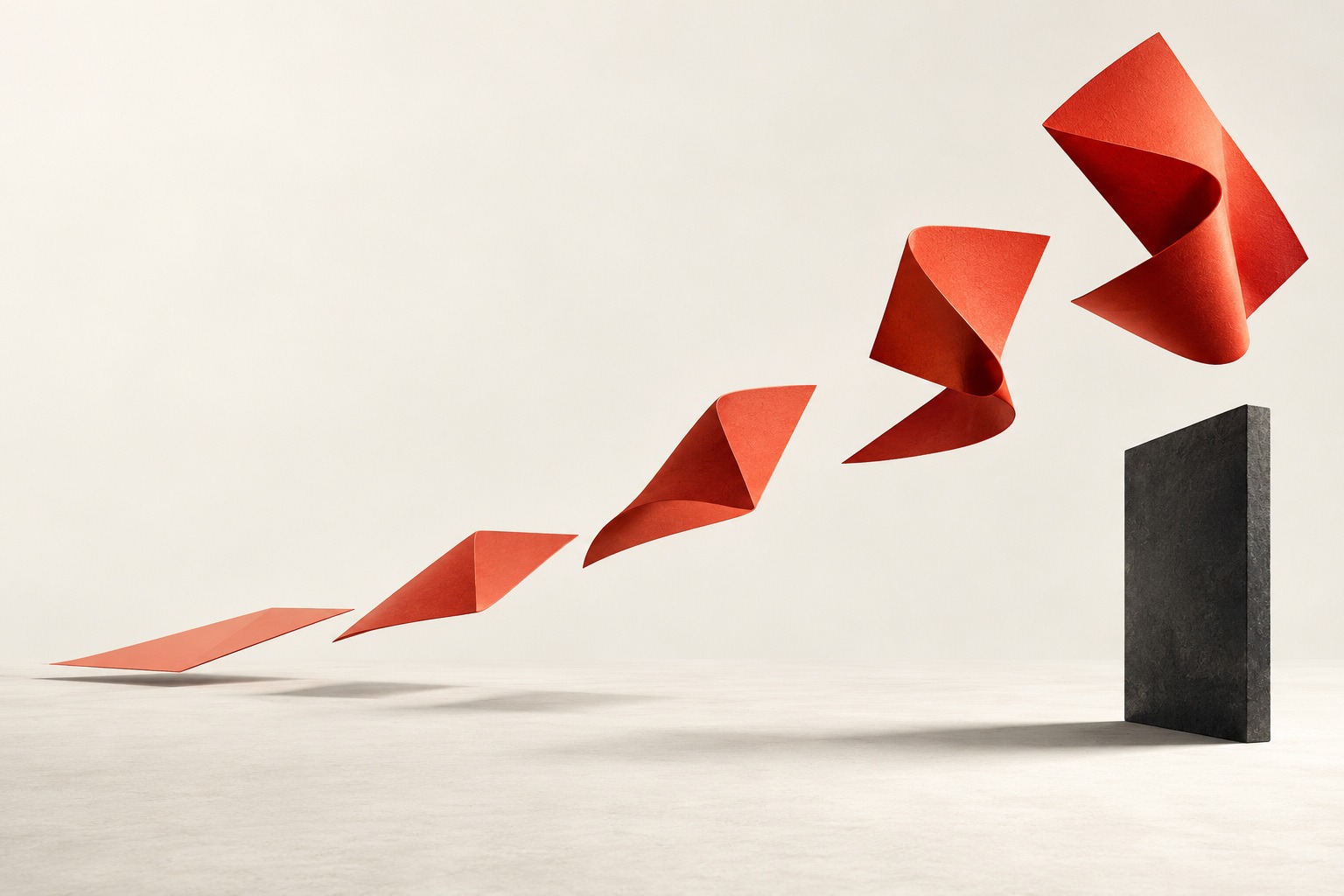
A visual introduction
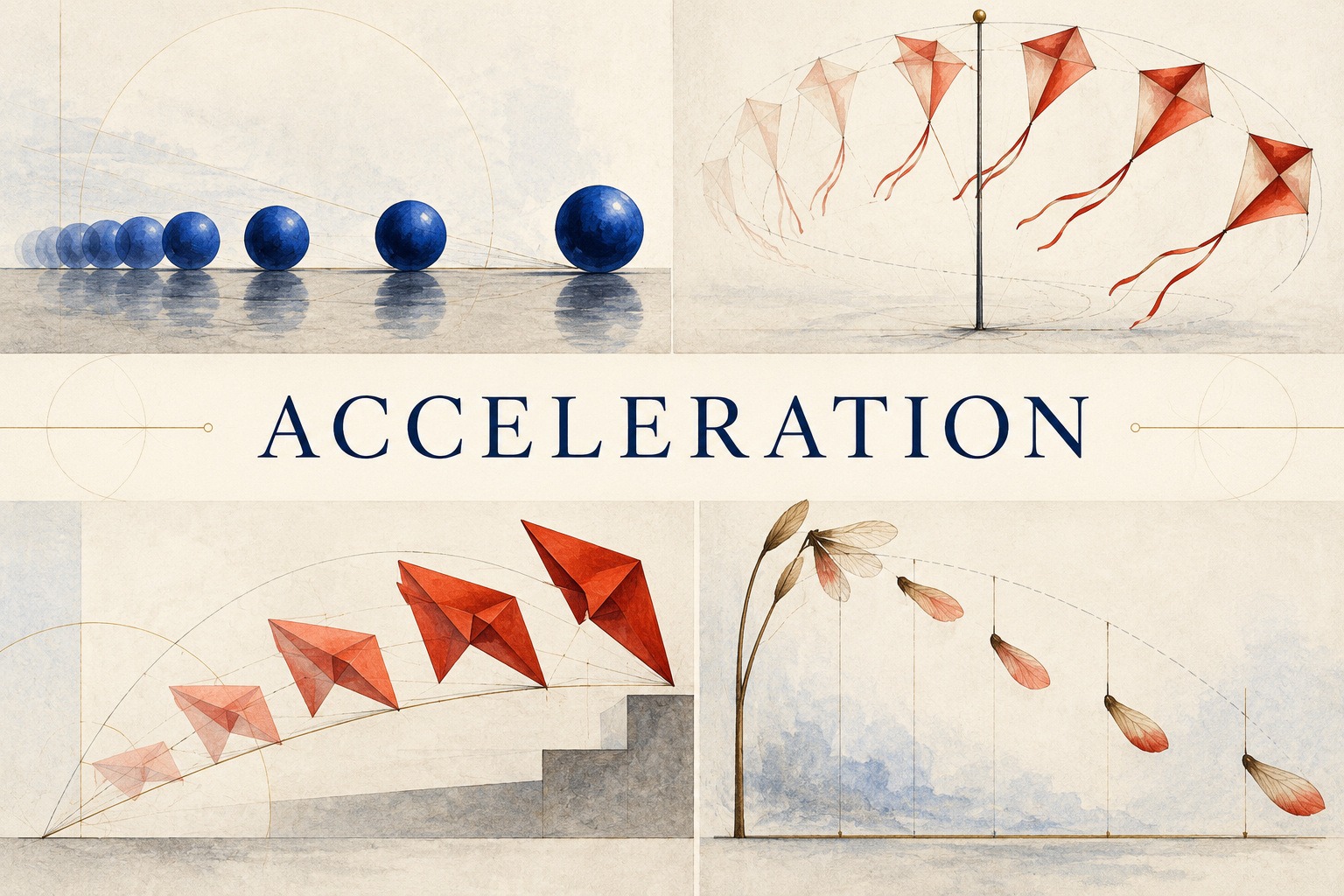
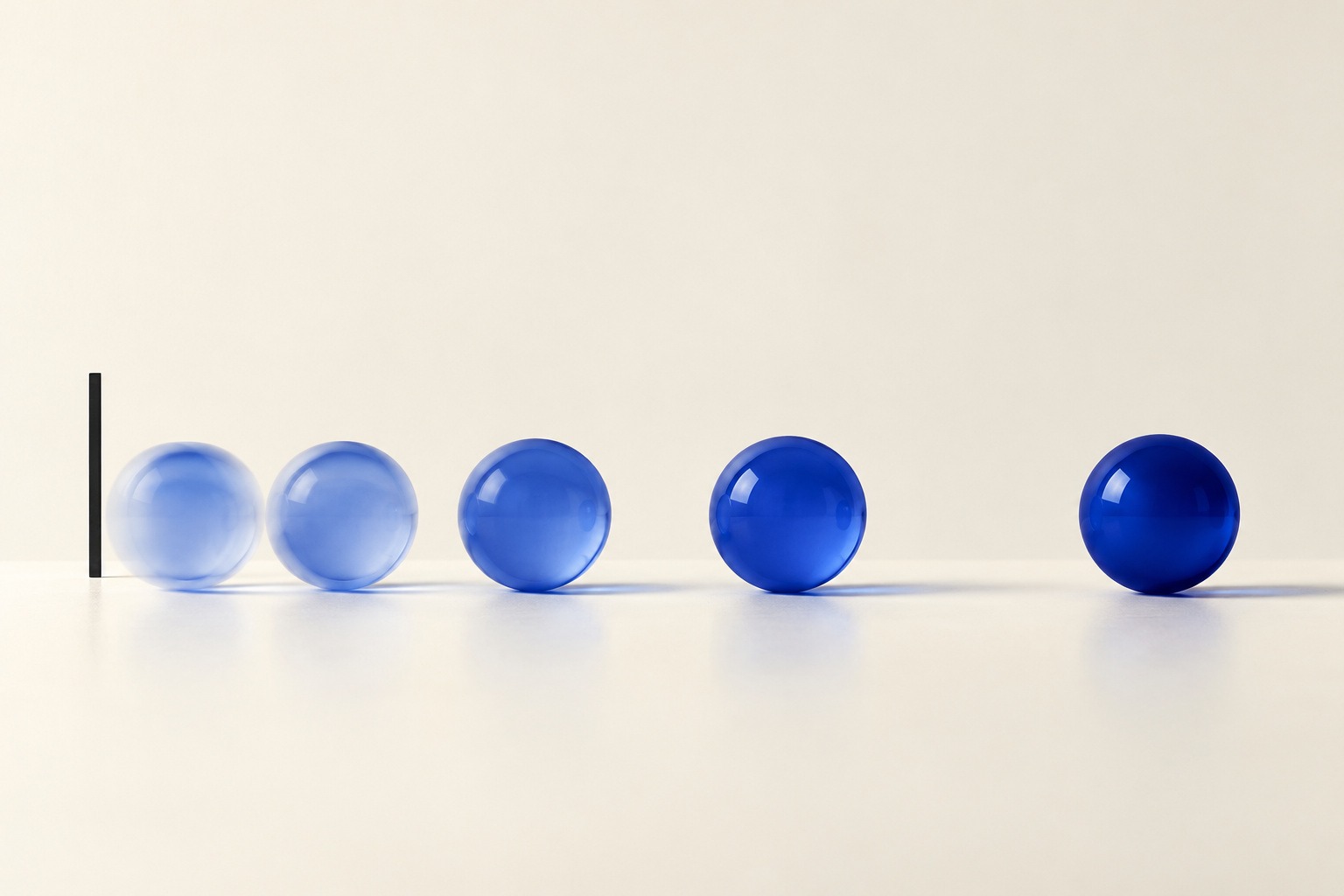
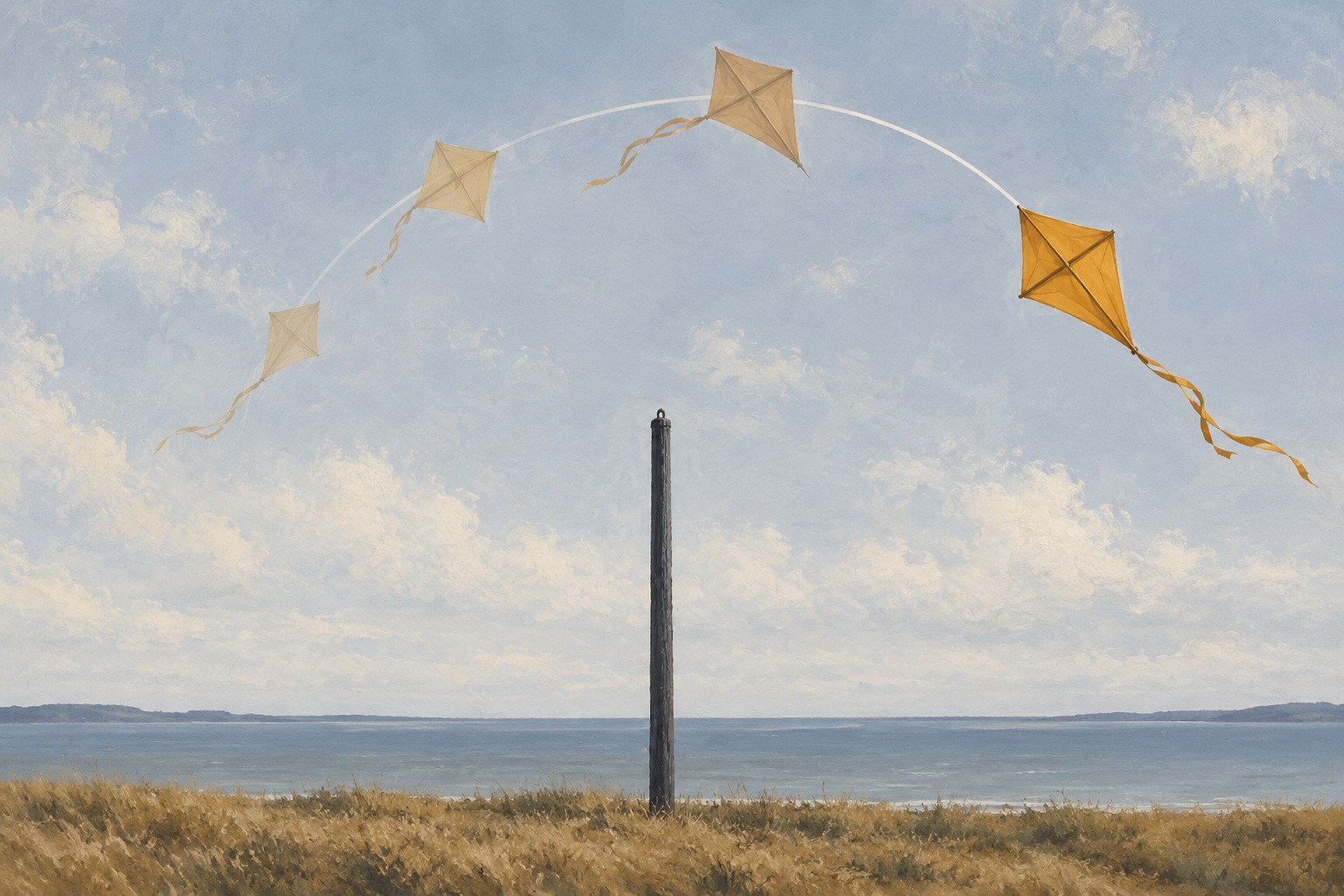
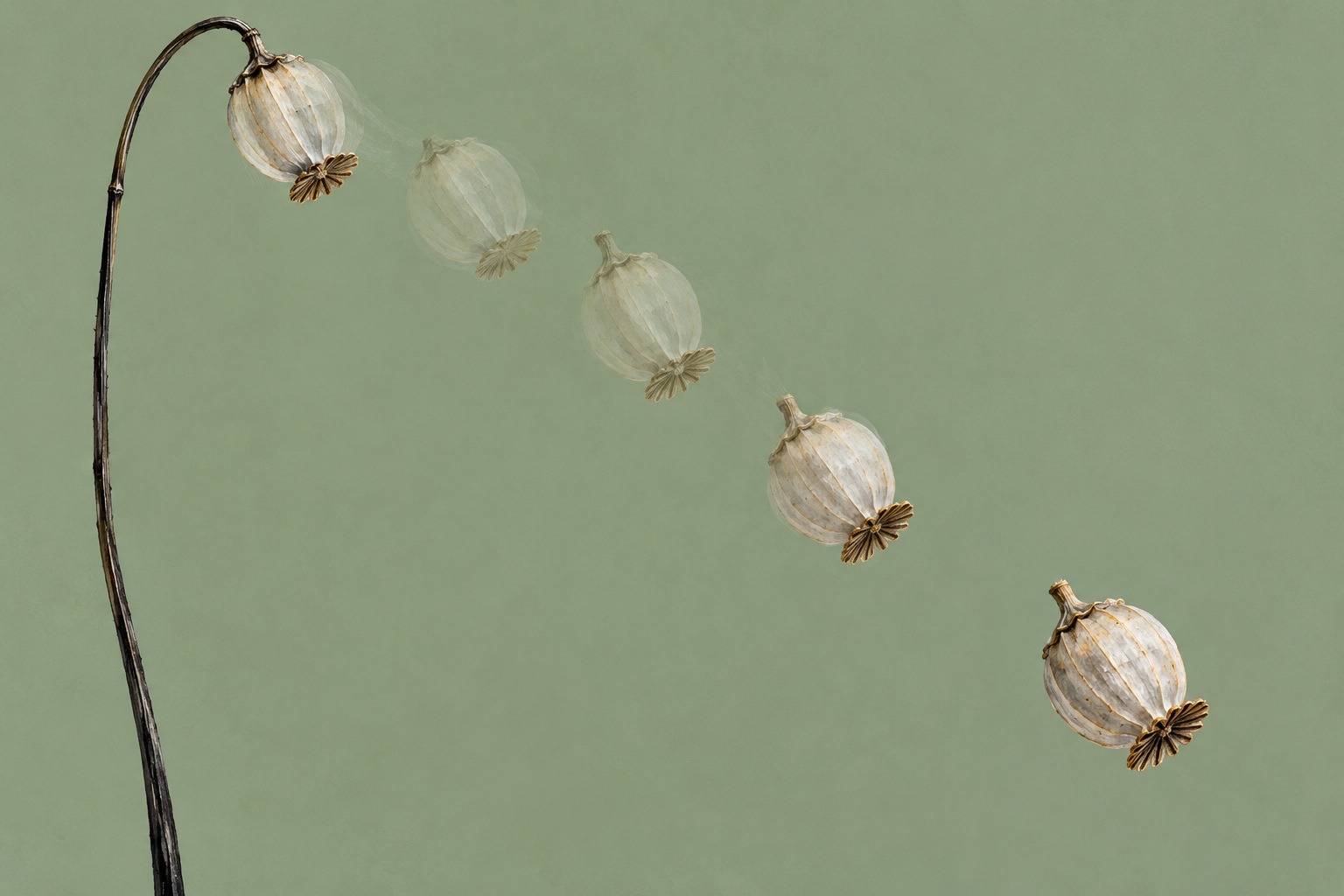
Five generated interpretations show changing intervals, orientation and opacity against stable references. They are compositional studies, not photographs or scientifically measured motion sequences.
Select an image for a closer look. Use the thumbnails, arrow keys or a swipe to compare examples. Zoom in to inspect details, or share the image that inspires you.
Creative toolbox · take this style further
Choose an input and a destination. Search sends your words to the chosen site; Copy & open puts them on your clipboard to paste there.
Create with AI
Turn your chosen input into an image prompt or a new creative direction.
ChatGPT
Copy your input and paste it into a ChatGPT conversation or image request.
Copy & open ChatGPT (new tab)Claude · Anthropic
Develop an image prompt or explore the style in a new Claude conversation.
Copy & open Claude · Anthropic (new tab)Midjourney
Paste your input into the Imagine bar on the Create page.
Copy & open Midjourney (new tab)Adobe Firefly
Copy your input, open Firefly, and paste it into the prompt field.
Copy & open Adobe Firefly (new tab)Leonardo.Ai
Copy your input, open Leonardo, and paste it into the generation field.
Copy & open Leonardo.Ai (new tab)Image search
Find visual references. Short, concrete keywords usually work best.
Lexica
Search AI images and prompts using your selected input.
Search with this input Lexica (new tab)Pexels
Search the photo and video library. Short keywords often work best.
Search with this input Pexels (new tab)Pixabay
Search photos, illustrations and other images.
Search with this input Pixabay (new tab)Unsplash
Search photographs using the style name or your own keywords.
Search with this input Unsplash (new tab)Wikimedia Commons
Search photographs, artworks and historical images. Check each file for its source and reuse terms.
Search with this input Wikimedia Commons (new tab)Art & research
Explore artists, collections and the ideas behind a style.
Wikipedia
Search for background reading. A style may not have its own article.
Search with this input Wikipedia (new tab)WikiArt
Copy your input into WikiArt’s search to explore artists and artworks.
Copy & open WikiArt (new tab)Europeana
Paste your keywords into the search to explore European museum, library and archive collections.
Copy & open Europeana (new tab)Inspiration
Discover portfolios and visual ideas from creative communities.
Instagram hashtags
Search a hashtag made from your input: spaces and punctuation are removed. Instagram may require sign-in.
Search with this input Instagram hashtags (new tab)ArtStation
Paste your input into artwork search for concept art, environments, characters and visual development.
Copy & open ArtStation (new tab)Behance
Paste your input into project search for illustration, design and visual storytelling.
Copy & open Behance (new tab)A closer look
Repeated forms change their spacing, orientation or extent along a clear path. One stable edge or object anchors the sequence, while selective overlaps and restrained trails connect its phases.
Depict the change, not merely the speed
A fast-looking picture is not necessarily a picture of acceleration. In physical terms, acceleration is a change in velocity, including a change of direction. In a still image, the viewer needs a convention for reading successive moments. This formulation uses a repeated subject or mark whose spacing, rotation or extent changes against a stable reference.
A sequence of positions with widening gaps can suggest increasing speed when the positions represent equal time steps. The equal-time assumption matters: widening gaps alone could instead describe perspective, changing scale or unrelated objects. A curved route can suggest directional change even if the gaps remain equal. The article uses these ideas as compositional tools, not as measurements derived from generated pictures.
A contemporary formulation and historical comparisons
This October 2026 AOI formulation is developed for PRODAT Informatik GmbH. Its explicit rule is to pair a legible sequence with a change in that sequence and an anchor against which the change can be perceived. The name remains an ordinary word with uses in science and culture. The attribution concerns this studio proposal and its studies; no legal registration or invention of motion imagery is asserted.
Historical artists explored related questions long before this proposal. The Guggenheim describes Giacomo Balla’s Abstract Speed + Sound of 1913–14 through the effects of a passing car on its surroundings. Its fractured forms offer a useful comparison for translating movement into a static surface. Balla belongs to Futurism, which has its own history and ideological context. He is not a member of this AOI formulation, and the two labels should not be substituted for one another.
Visual grammar: sequence, change, anchor
Choose a path that can be followed without explanation. Show a small number of phases with enough difference to be counted as successive states, while preserving a feature that identifies them as the same subject. Change one principal variable: the distance between phases, their orientation, their extension or their overlap. A fixed horizon, support, doorway or background grid can anchor the reading.
Keep the sharpest edge on the phase that matters most. Earlier phases may become more transparent or simpler, but avoid fading every edge into equal blur. A trail can connect phases without replacing them. At thumbnail size the path should remain clear; at full size the viewer should be able to explain what changed. If all intervals look alike, the study may depict steady motion rather than acceleration.
Palette, medium and distinct applications
Color can distinguish stages without requiring a rainbow. A cool-to-warm transition, a single saturated endpoint or changing opacity may suffice. Preserve contrast between the moving sequence and its reference. A monochrome drawing can be particularly effective because the spacing becomes impossible to hide behind color effects.
Try a ball gathering speed along a surface, a swimmer turning through water or a hanging form passing through a curved path. An abstract study can use a widening sequence of folded planes. These subjects share a rule without sharing a motif. Physical drawings, layered transparencies and digital composites offer different ways to show phases; generated images remain interpretive illustrations rather than accurate recordings of an actual event.
The boundary with Accelerationism
Acceleration asks what changes in a visible motion sequence. Accelerationism asks what happens when a social, economic or technical system reinforces and intensifies its own activity. A row of widening gaps belongs to the first problem. A production loop that produces increasing congestion, waste or unequal waiting times belongs to the second. Motion trails alone do not establish an accelerationist argument.
Use the prompt vocabulary successive phases, changing intervals, directional turn, stable reference and selective trail. Avoid generic racing lights, arbitrary duplicates and claims of scientifically exact trajectories without a specified model. A useful final test is to remove the title: can a viewer still locate the beginning, the change and the reference? If so, the visual method has done more than announce that the image is energetic.
About this guide
This AI-authored AOI guide appears under Penny Wraiter, AOI’s editorial persona. Sources support the historical context; exercises, prompts and poetry are original editorial interpretations. Image captions distinguish generated studies from documented works.
A small poetic detour
Original words from the AOI studio.
Poetry
The first small interval stays near,
The next has found a wider place;
A still edge makes the change appear,
And gives the moving shape its pace.
The path bends back upon the light,
The speed may hold, the heading goes;
A picture keeps the change in sight,
By giving motion something close.
The prompt workshop
Original creative exercises. These prompts create new illustrations, not documentary evidence.
Make widening intervals visible
Original Acceleration study: five successive positions of one cobalt sphere move left to right along a pale horizontal plane, increasing gaps between phases, one stable dark vertical marker. Earlier phases translucent, final sphere sharply defined, no labels or text.
Show a change of direction
An original graphic study of a swimmer turning beneath water: three successive simplified body positions follow a broad curved path, the pool wall remains fixed, restrained overlapping translucent shapes, deep teal and pale aqua, no extra limbs within any individual phase, no lettering.
Translate motion into abstraction
Five folded paper-like planes sweep along a rising arc, changing orientation in clear stages against a still charcoal rectangle. Ivory, muted red and gray, one sharp endpoint, broad quiet background, no random blur or text.
A smile from the studio
Jokes
The blur insisted it was accelerating. The intervals asked to see the evidence.