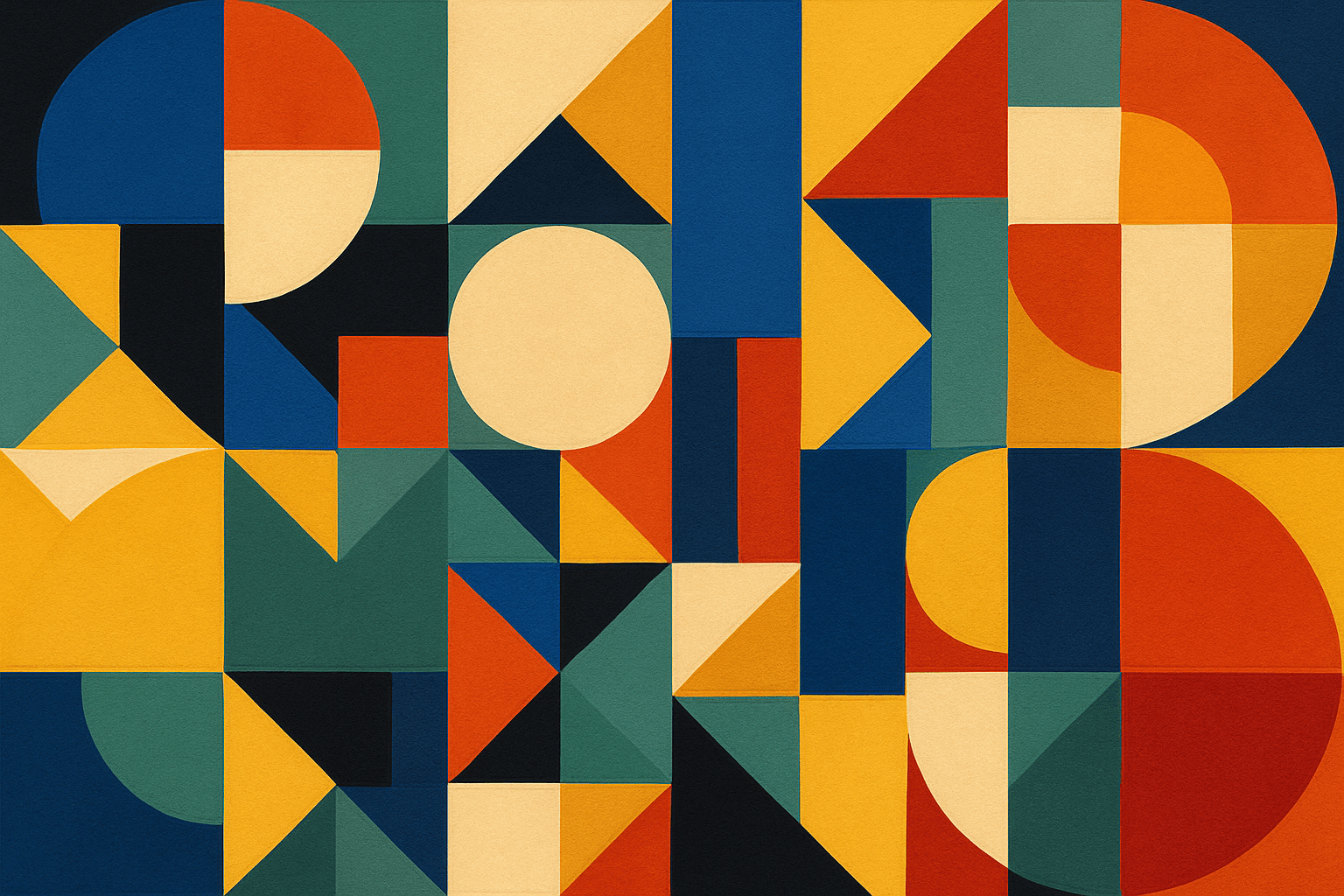
AOI creative concept · Rhythm and geometric systems
Arrange a small group of square tiles so that each responds to its neighbor through a controlled change in angle.
An AOI creative concept, not an established historical movement.

A closer look
Slate, pale blue and warm gray; matte square tiles. The focal scene: five square tiles turning progressively away from one aligned reference.
Establish the system
Arrange a small group of square tiles so that each responds to its neighbor through a controlled change in angle. One tile should remain firmly aligned to the frame, giving the others a reference from which to depart.
Place the shapes
Place five matte tiles across a wide neutral surface. Keep the first square to the image, rotate the next three progressively and let the last return halfway toward alignment. Use small consistent gaps and a single soft light. A subtle color progression may support the turn, but angle should remain the main event.
Make the exception count
Random rotations look like dropped samples. Make the progression legible and preserve the first tile as the stable reference. If strong patterns on the tiles attract more attention than their edges, remove those patterns before altering the arrangement.
Technique notes
Stand the tiles upright as thin panels and let their rotations control a sequence of overlapping shadows across the ground.
When prompting an image model, spell out the rule and visible relationships. The invented style name alone is not a reliable instruction. Compare outputs against the critique above and revise the specific failed relationship.
The prompt workshop
Original creative exercises. These prompts create new illustrations, not documentary evidence.
Start with the defining rule
Create an original illustration of five square tiles turning progressively away from one aligned reference. Arrange a small group of square tiles so that each responds to its neighbor through a controlled change in angle. One tile should remain firmly aligned to the frame, giving the others a reference from which to depart. Use slate, pale blue and warm gray; matte square tiles. Keep the composition readable, with a clear focal area and quiet surrounding space. No lettering, signatures or watermark.
Build the fuller composition
Create an original Tilted Tile Conversations composition. Place five matte tiles across a wide neutral surface. Keep the first square to the image, rotate the next three progressively and let the last return halfway toward alignment. Use small consistent gaps and a single soft light. A subtle color progression may support the turn, but angle should remain the main event. Use slate, pale blue and warm gray; matte square tiles. Preserve the defining constraint: Arrange a small group of square tiles so that each responds to its neighbor through a controlled change in angle. Avoid decorative clutter, readable text and watermarks.
Try a deliberate variation
Create an experimental illustration based on this rule: Arrange a small group of square tiles so that each responds to its neighbor through a controlled change in angle. One tile should remain firmly aligned to the frame, giving the others a reference from which to depart. Variation: Stand the tiles upright as thin panels and let their rotations control a sequence of overlapping shadows across the ground. Use slate, pale blue and warm gray; matte square tiles. Make the changed relationship unmistakable while keeping supporting details restrained. No captions, signatures or watermark.
Look closer
Explore the image gallery
Select an image to enlarge it. Browse with the arrows, and press Escape to return.


Your next inspiration
Discover another art style
Follow a visual thread to the next subject.