AOI creative concept · Small objects and domestic worlds
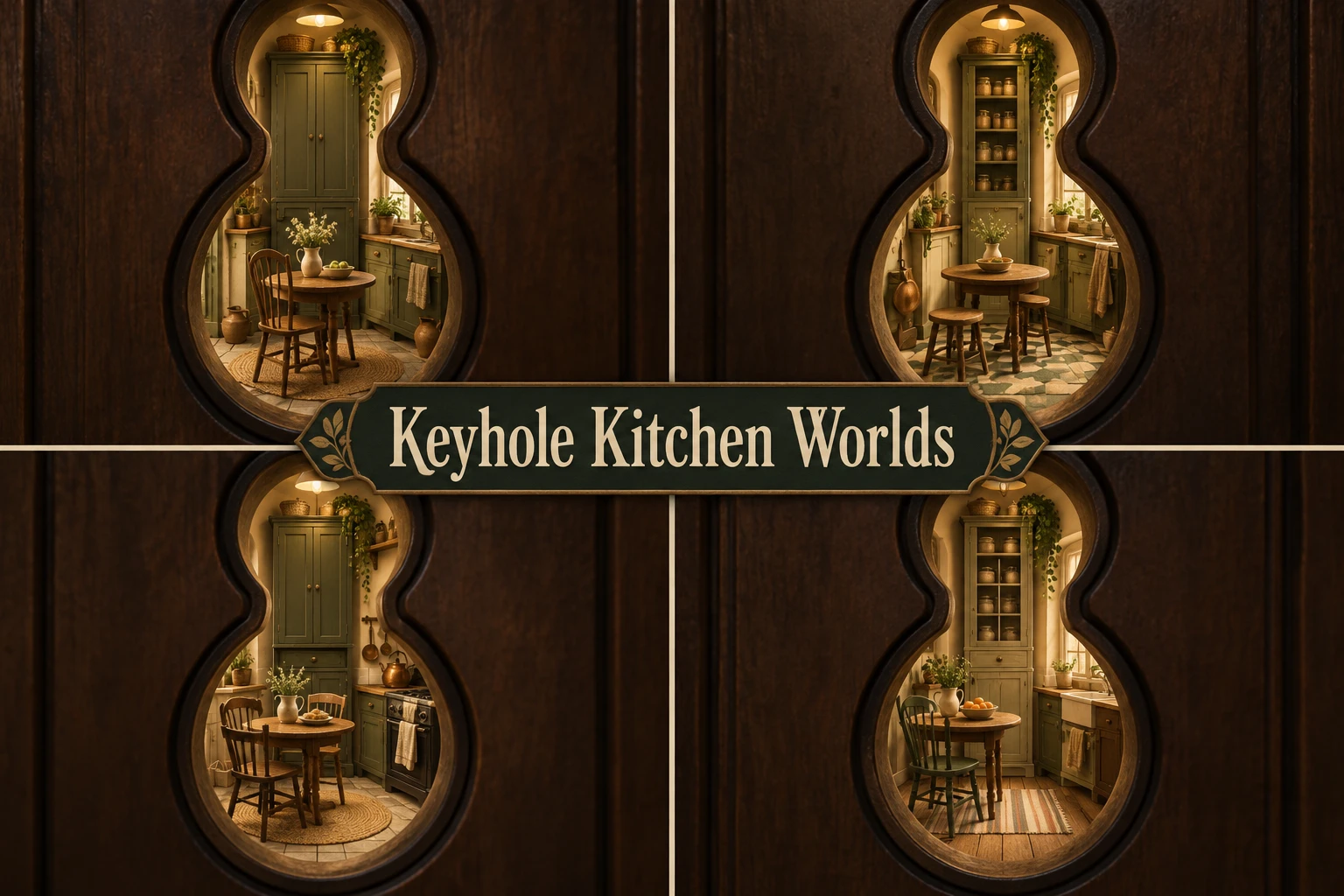
Frame an entire invented kitchen through a keyhole-shaped opening, allowing the narrow neck and broad lower circle to divide the room's functions.
An AOI creative concept, not an established historical movement.
A closer look
Dark brown, warm cream and muted green; thick aperture with miniature interior. The focal scene: an empty kitchen composed specifically for a keyhole-shaped opening.
Change the scale
Frame an entire invented kitchen through a keyhole-shaped opening, allowing the narrow neck and broad lower circle to divide the room's functions. The aperture must shape the composition rather than simply crop a complete scene arbitrarily.
Set the small stage
Place a tall cupboard in the narrow upper part of the keyhole and a small round table in the wider lower area. Keep the opening's edge thick and dark so it reads as a physical barrier. Use a warm interior light and leave the surrounding door plain. Only a few objects are needed to establish the kitchen.
Keep the ordinary object visible
If important objects are cut off accidentally, redesign the room around the aperture. Avoid a voyeuristic narrative involving real people; an empty invented interior keeps attention on framing and scale. The table and cupboard should make the keyhole's geometry feel inevitable.
Technique notes
Replace the kitchen with a tiny greenhouse, putting a tall plant in the narrow neck and a shallow basin in the lower circle.
When prompting an image model, spell out the rule and visible relationships. The invented style name alone is not a reliable instruction. Compare outputs against the critique above and revise the specific failed relationship.
The prompt workshop
Original creative exercises. These prompts create new illustrations, not documentary evidence.
Start with the defining rule
Create an original illustration of an empty kitchen composed specifically for a keyhole-shaped opening. Frame an entire invented kitchen through a keyhole-shaped opening, allowing the narrow neck and broad lower circle to divide the room's functions. The aperture must shape the composition rather than simply crop a complete scene arbitrarily. Use dark brown, warm cream and muted green; thick aperture with miniature interior. Keep the composition readable, with a clear focal area and quiet surrounding space. No lettering, signatures or watermark.
Build the fuller composition
Create an original Keyhole Kitchen Worlds composition. Place a tall cupboard in the narrow upper part of the keyhole and a small round table in the wider lower area. Keep the opening's edge thick and dark so it reads as a physical barrier. Use a warm interior light and leave the surrounding door plain. Only a few objects are needed to establish the kitchen. Use dark brown, warm cream and muted green; thick aperture with miniature interior. Preserve the defining constraint: Frame an entire invented kitchen through a keyhole-shaped opening, allowing the narrow neck and broad lower circle to divide the room's functions. Avoid decorative clutter, readable text and watermarks.
Try a deliberate variation
Create an experimental illustration based on this rule: Frame an entire invented kitchen through a keyhole-shaped opening, allowing the narrow neck and broad lower circle to divide the room's functions. The aperture must shape the composition rather than simply crop a complete scene arbitrarily. Variation: Replace the kitchen with a tiny greenhouse, putting a tall plant in the narrow neck and a shallow basin in the lower circle. Use dark brown, warm cream and muted green; thick aperture with miniature interior. Make the changed relationship unmistakable while keeping supporting details restrained. No captions, signatures or watermark.
Look closer
Explore the image gallery
Select an image to enlarge it. Browse with the arrows, and press Escape to return.

Your next inspiration
Discover another art style
Follow a visual thread to the next subject.