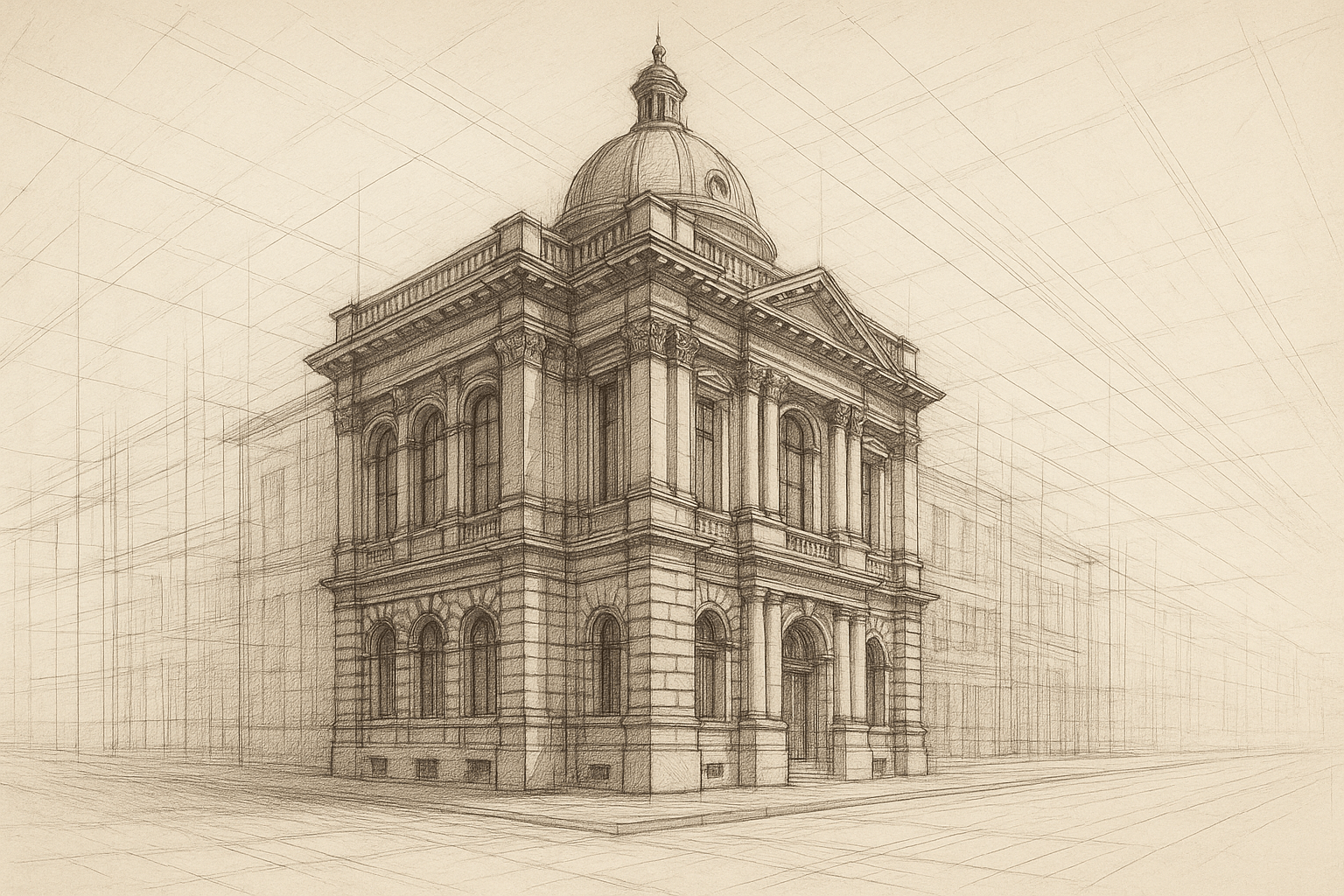
AOI creative concept · Architectural impossibilities
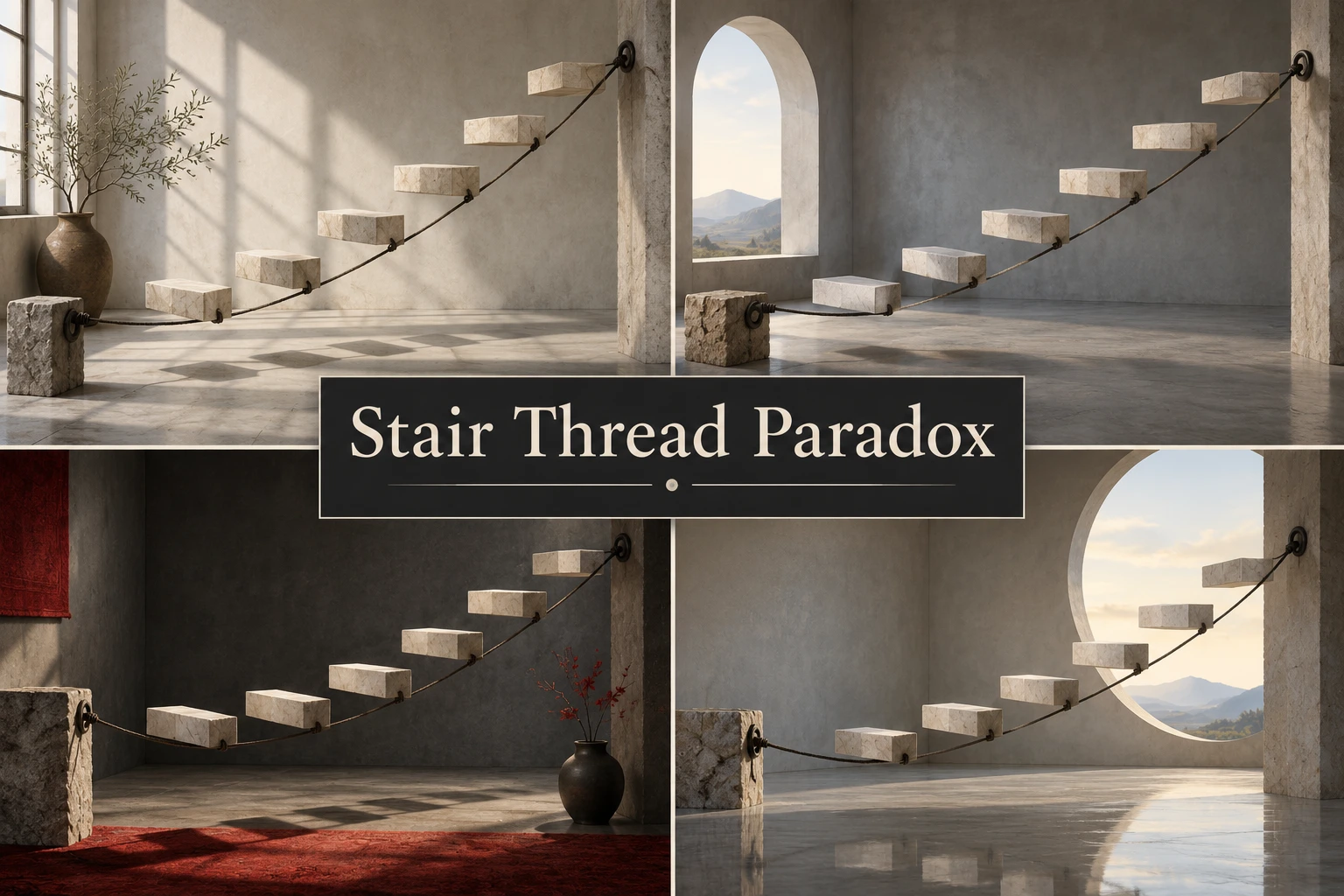
Draw a staircase whose steps are supported by one visibly continuous thread.
An AOI creative concept, not an established historical movement.
A closer look
Pale stone, charcoal and optional red; rigid blocks with taut thread. The focal scene: six steps suspended along one sagging thread.
One precise impossibility
Draw a staircase whose steps are supported by one visibly continuous thread. The steps can remain rigid, but their support should sag or tighten in response to the arrangement. The impossibility is concentrated in material, not in incoherent stair geometry.
Build the model
Place six pale steps rising diagonally across an empty room. Run a dark thread beneath their outer corners and anchor it clearly at both ends. Let the middle steps dip slightly where the thread sags. Keep a simple wall line behind them to establish level and make the deviation visible.
Keep the contradiction readable
If the thread is too thin to follow, the stairs appear to float arbitrarily. Increase its contrast before adding more steps. Do not describe the structure as buildable engineering; it is a visual proposition about weight and a deliberately inadequate support.
Technique notes
Use translucent steps and a thick red thread, allowing the support to show through the treads while preserving the same two anchor points.
When prompting an image model, spell out the rule and visible relationships. The invented style name alone is not a reliable instruction. Compare outputs against the critique above and revise the specific failed relationship.
The prompt workshop
Original creative exercises. These prompts create new illustrations, not documentary evidence.
Start with the defining rule
Create an original illustration of six steps suspended along one sagging thread. Draw a staircase whose steps are supported by one visibly continuous thread. The steps can remain rigid, but their support should sag or tighten in response to the arrangement. The impossibility is concentrated in material, not in incoherent stair geometry. Use pale stone, charcoal and optional red; rigid blocks with taut thread. Keep the composition readable, with a clear focal area and quiet surrounding space. No lettering, signatures or watermark.
Build the fuller composition
Create an original Stair Thread Paradox composition. Place six pale steps rising diagonally across an empty room. Run a dark thread beneath their outer corners and anchor it clearly at both ends. Let the middle steps dip slightly where the thread sags. Keep a simple wall line behind them to establish level and make the deviation visible. Use pale stone, charcoal and optional red; rigid blocks with taut thread. Preserve the defining constraint: Draw a staircase whose steps are supported by one visibly continuous thread. Avoid decorative clutter, readable text and watermarks.
Try a deliberate variation
Create an experimental illustration based on this rule: Draw a staircase whose steps are supported by one visibly continuous thread. The steps can remain rigid, but their support should sag or tighten in response to the arrangement. The impossibility is concentrated in material, not in incoherent stair geometry. Variation: Use translucent steps and a thick red thread, allowing the support to show through the treads while preserving the same two anchor points. Use pale stone, charcoal and optional red; rigid blocks with taut thread. Make the changed relationship unmistakable while keeping supporting details restrained. No captions, signatures or watermark.
Look closer
Explore the image gallery
Select an image to enlarge it. Browse with the arrows, and press Escape to return.
Your next inspiration
Discover another art style
Follow a visual thread to the next subject.