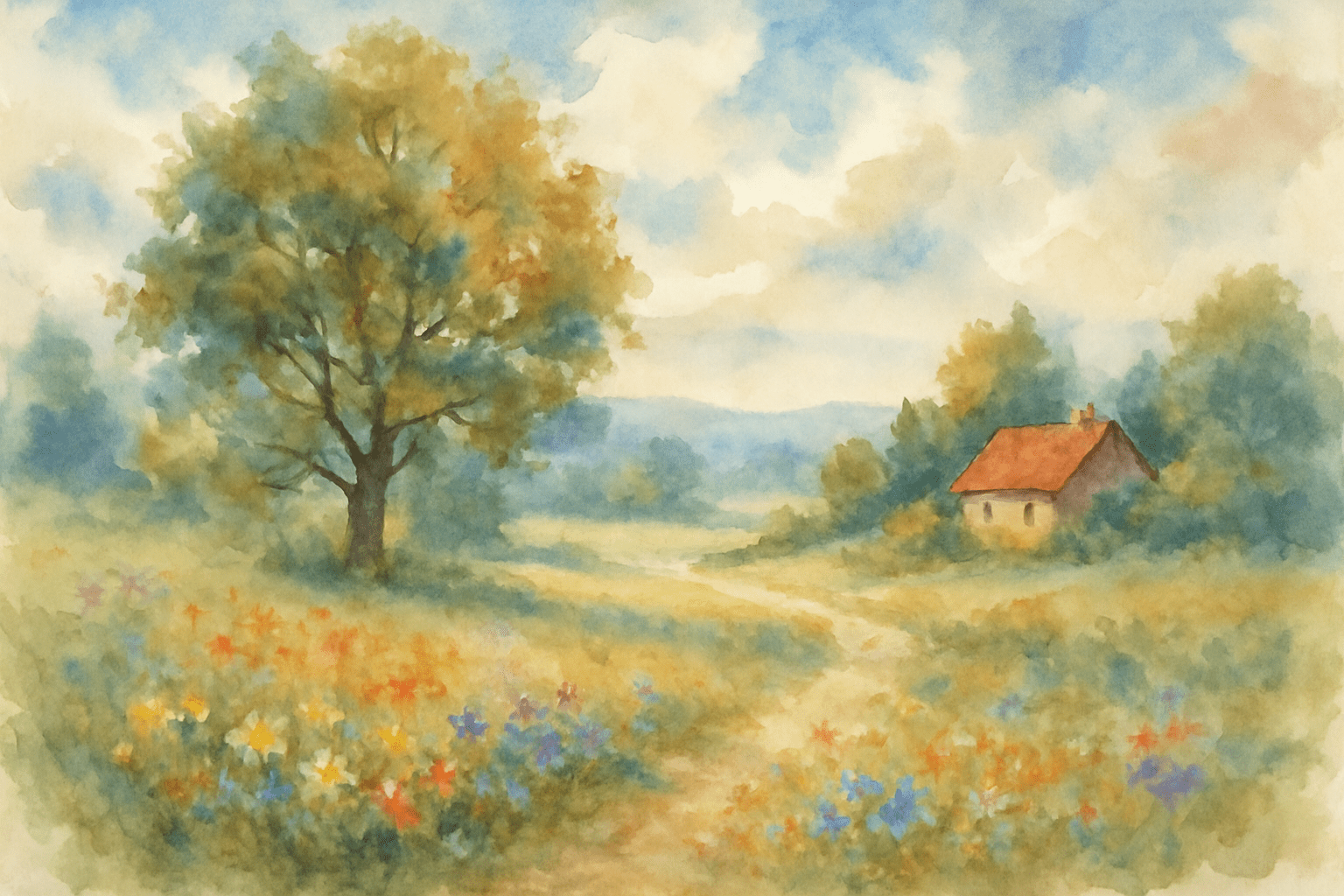
AOI creative concept · Paper and printed matter
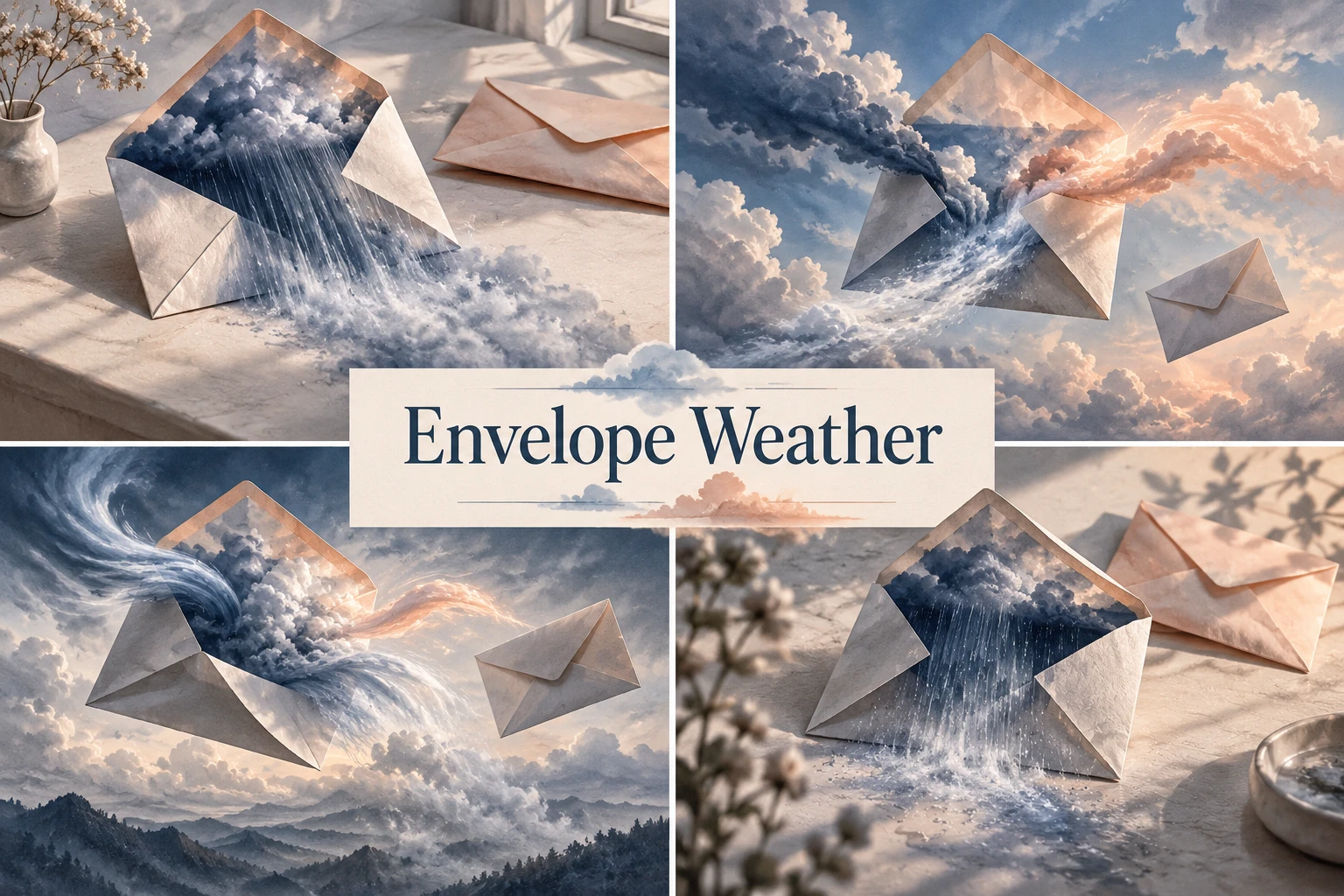
Use opened envelopes as small weather systems: each flap directs a different gust, rain band or cloud edge.
An AOI creative concept, not an established historical movement.
A closer look
Pearl gray, storm blue and faded peach; paper with soft atmospheric washes. The focal scene: an open envelope releasing a contained rain band.
The edge sets the rule
Use opened envelopes as small weather systems: each flap directs a different gust, rain band or cloud edge. The envelope geometry remains recognizable, while its empty interior behaves as a pocket of atmosphere rather than a container for a message.
Arrange the paper scene
Place one open envelope diagonally on a pale desk. Allow a dense rain band to emerge from the triangular interior and dissolve before reaching the lower corner. Keep a dry, sharply lit flap in the foreground. Add only one secondary envelope, partly closed, to create a quieter counterweight without turning the image into a stationery catalog.
Where the illusion weakens
If weather simply floats above the paper, strengthen its attachment to a fold or opening. Keep address areas blank. A useful image makes the folded structure responsible for the storm's direction, rather than treating it as a convenient prop.
Technique notes
Replace rain with a narrow stream of drifting snow that collects only along the envelope seams and leaves the desk clear.
When prompting an image model, spell out the rule and visible relationships. The invented style name alone is not a reliable instruction. Compare outputs against the critique above and revise the specific failed relationship.
The prompt workshop
Original creative exercises. These prompts create new illustrations, not documentary evidence.
Start with the defining rule
Create an original illustration of an open envelope releasing a contained rain band. Use opened envelopes as small weather systems: each flap directs a different gust, rain band or cloud edge. The envelope geometry remains recognizable, while its empty interior behaves as a pocket of atmosphere rather than a container for a message. Use pearl gray, storm blue and faded peach; paper with soft atmospheric washes. Keep the composition readable, with a clear focal area and quiet surrounding space. No lettering, signatures or watermark.
Build the fuller composition
Create an original Envelope Weather composition. Place one open envelope diagonally on a pale desk. Allow a dense rain band to emerge from the triangular interior and dissolve before reaching the lower corner. Keep a dry, sharply lit flap in the foreground. Add only one secondary envelope, partly closed, to create a quieter counterweight without turning the image into a stationery catalog. Use pearl gray, storm blue and faded peach; paper with soft atmospheric washes. Preserve the defining constraint: Use opened envelopes as small weather systems: each flap directs a different gust, rain band or cloud edge. Avoid decorative clutter, readable text and watermarks.
Try a deliberate variation
Create an experimental illustration based on this rule: Use opened envelopes as small weather systems: each flap directs a different gust, rain band or cloud edge. The envelope geometry remains recognizable, while its empty interior behaves as a pocket of atmosphere rather than a container for a message. Variation: Replace rain with a narrow stream of drifting snow that collects only along the envelope seams and leaves the desk clear. Use pearl gray, storm blue and faded peach; paper with soft atmospheric washes. Make the changed relationship unmistakable while keeping supporting details restrained. No captions, signatures or watermark.
Look closer
Explore the image gallery
Select an image to enlarge it. Browse with the arrows, and press Escape to return.
Your next inspiration
Discover another art style
Follow a visual thread to the next subject.
Woodcut: A Celebration in Grain and Grooves
Related visual vocabulary from the existing AOI catalogue.