AOI creative concept · Paper and printed matter
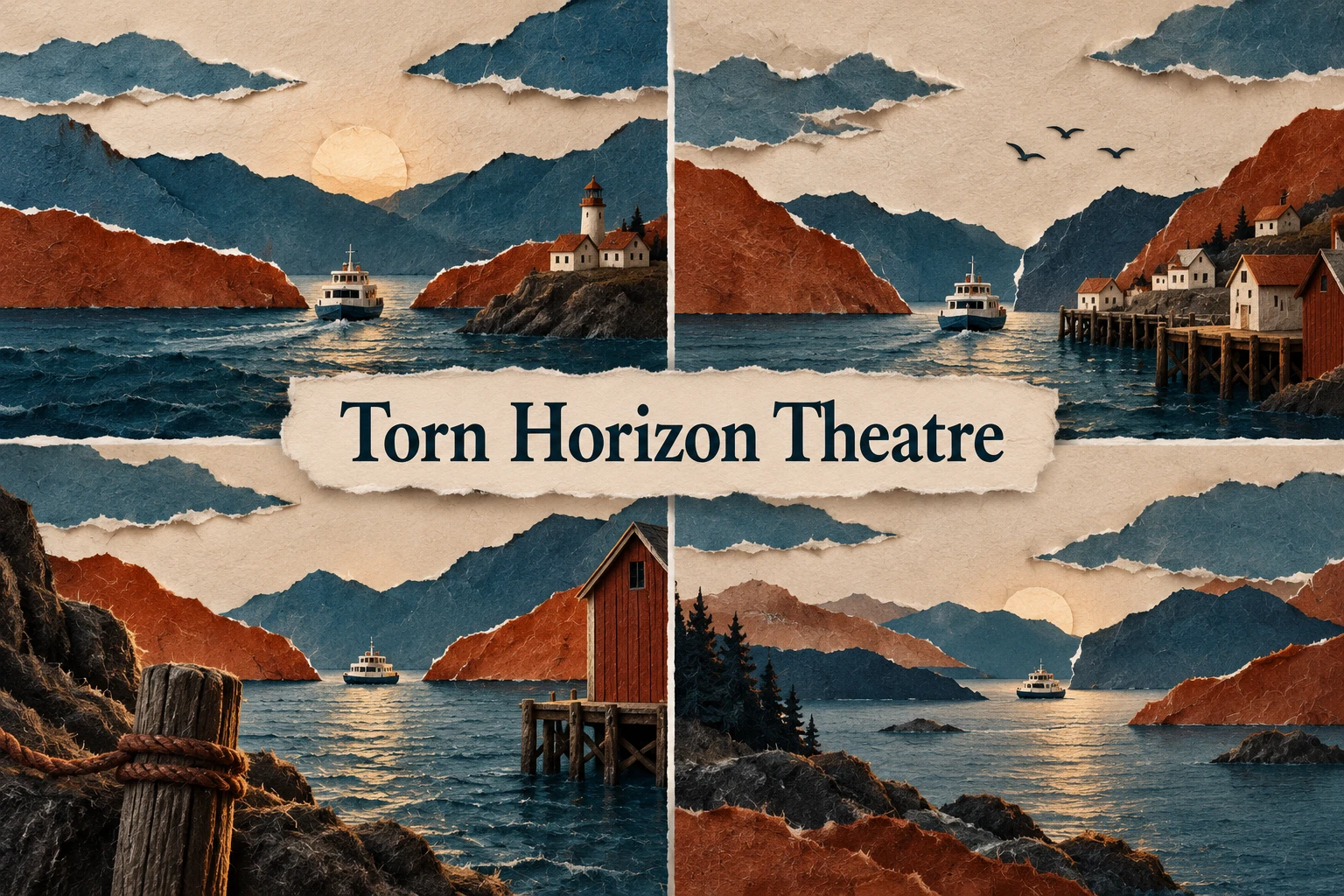
Build a landscape from torn paper bands, but let a single tear behave as the horizon for every layer.
An AOI creative concept, not an established historical movement.
A closer look
Cream, petrol blue and rust; fibrous matte paper. The focal scene: a small ferry approaching a paper harbor.
The edge sets the rule
Build a landscape from torn paper bands, but let a single tear behave as the horizon for every layer. Mountains, clouds and foreground objects must negotiate that same irregular boundary. The paper edge is the organizing event, not a texture laid over an ordinary painting.
Arrange the paper scene
Begin with a broad cream sheet and three darker scraps. Place a small ferry where two torn edges almost meet; that narrow gap becomes the harbor entrance. Keep the nearest fibers sharp and let distant bands remain simple. A low, lateral light should reveal actual separation between the sheets without making every layer equally dramatic.
Where the illusion weakens
If the scene still works unchanged with perfectly straight edges, the tear has done too little. Remove decorative scraps until the harbor depends on the contour. One convincing gap is more useful than twenty busy layers.
Technique notes
Turn the landscape upright into a cliff village, retaining the shared torn boundary as its only route between buildings.
When prompting an image model, spell out the rule and visible relationships. The invented style name alone is not a reliable instruction. Compare outputs against the critique above and revise the specific failed relationship.
The prompt workshop
Original creative exercises. These prompts create new illustrations, not documentary evidence.
Start with the defining rule
Create an original illustration of a small ferry approaching a paper harbor. Build a landscape from torn paper bands, but let a single tear behave as the horizon for every layer. Mountains, clouds and foreground objects must negotiate that same irregular boundary. The paper edge is the organizing event, not a texture laid over an ordinary painting. Use cream, petrol blue and rust; fibrous matte paper. Keep the composition readable, with a clear focal area and quiet surrounding space. No lettering, signatures or watermark.
Build the fuller composition
Create an original Torn Horizon Theatre composition. Begin with a broad cream sheet and three darker scraps. Place a small ferry where two torn edges almost meet; that narrow gap becomes the harbor entrance. Keep the nearest fibers sharp and let distant bands remain simple. A low, lateral light should reveal actual separation between the sheets without making every layer equally dramatic. Use cream, petrol blue and rust; fibrous matte paper. Preserve the defining constraint: Build a landscape from torn paper bands, but let a single tear behave as the horizon for every layer. Avoid decorative clutter, readable text and watermarks.
Try a deliberate variation
Create an experimental illustration based on this rule: Build a landscape from torn paper bands, but let a single tear behave as the horizon for every layer. Mountains, clouds and foreground objects must negotiate that same irregular boundary. The paper edge is the organizing event, not a texture laid over an ordinary painting. Variation: Turn the landscape upright into a cliff village, retaining the shared torn boundary as its only route between buildings. Use cream, petrol blue and rust; fibrous matte paper. Make the changed relationship unmistakable while keeping supporting details restrained. No captions, signatures or watermark.
Look closer
Explore the image gallery
Select an image to enlarge it. Browse with the arrows, and press Escape to return.
Your next inspiration
Discover another art style
Follow a visual thread to the next subject.
Woodcut: A Celebration in Grain and Grooves
Related visual vocabulary from the existing AOI catalogue.