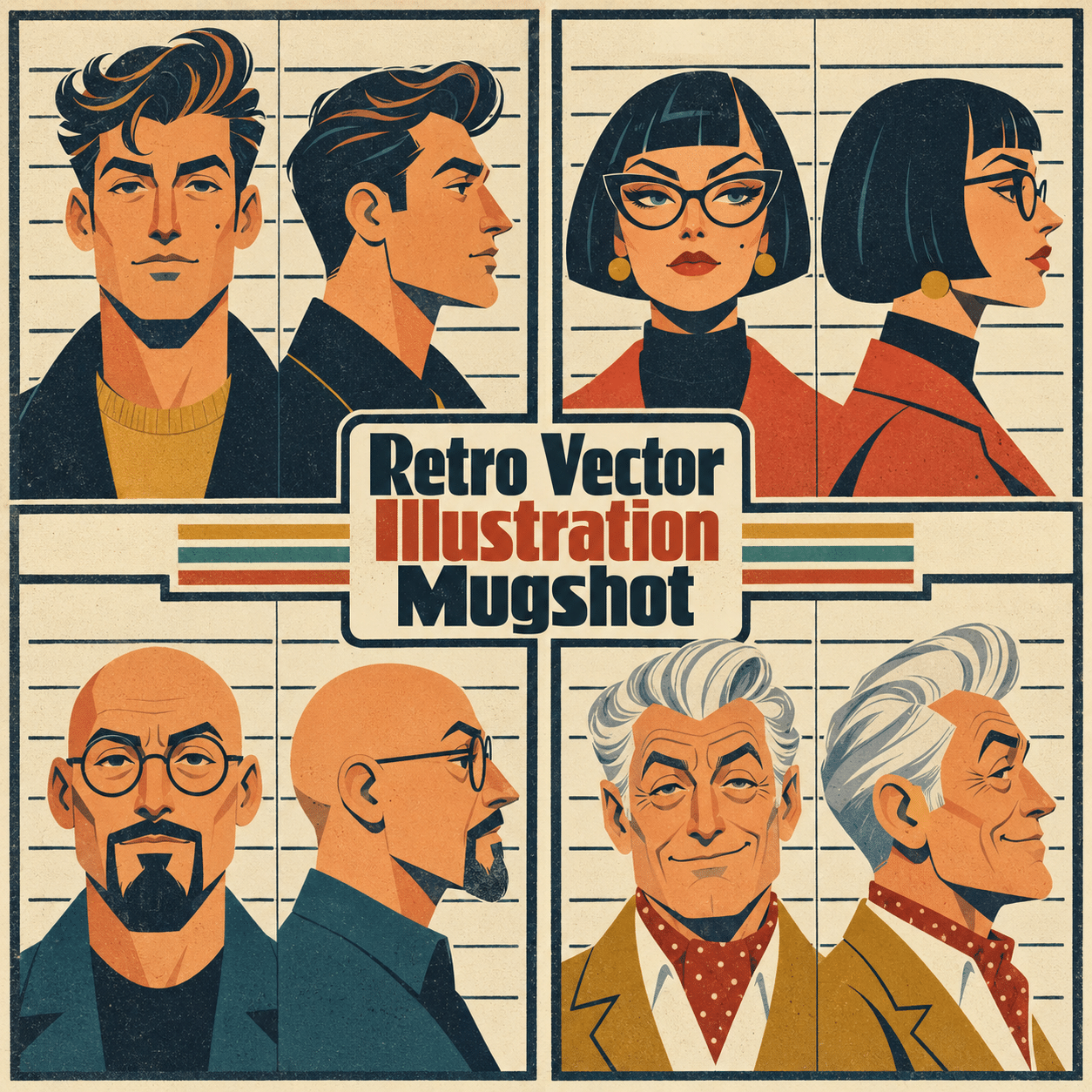
Original AOI concept · Graphic character portraiture
Fictional front-and-profile portraits reduced to crisp curves, bold silhouettes, a restrained retro palette, and dry visual wit. The familiar mugshot format becomes an expressive graphic character sheet.
An AOI creative concept, not an established historical movement.
A visual introduction
Open any image to look closer, then browse the examples.
Creative toolbox · take this style further
Choose an input, adjust it, then open a tool. Search links pass your text to the destination. Copy & open copies it for you to paste into the generator; you start generation there.
ChatGPT
Copy your input and paste it into a ChatGPT conversation or image request.
Copy & open ChatGPT (new tab)Claude · Anthropic
Develop an image prompt or explore the style in a new Claude conversation.
Copy & open Claude · Anthropic (new tab)Midjourney
Paste your input into the Imagine bar on the Create page.
Copy & open Midjourney (new tab)Adobe Firefly
Copy your input, open Firefly, and paste it into the prompt field.
Copy & open Adobe Firefly (new tab)Leonardo.Ai
Copy your input, open Leonardo, and paste it into the generation field.
Copy & open Leonardo.Ai (new tab)Lexica
Search AI images and prompts using your selected input.
Search with this input Lexica (new tab)Pexels
Search the photo and video library. Short keywords often work best.
Search with this input Pexels (new tab)Pixabay
Search photos, illustrations and other images.
Search with this input Pixabay (new tab)Unsplash
Search photographs using the style name or your own keywords.
Search with this input Unsplash (new tab)Wikipedia
Search for background reading. A style may not have its own article.
Search with this input Wikipedia (new tab)WikiArt
Copy your input into WikiArt’s search to explore artists and artworks.
Copy & open WikiArt (new tab)Instagram hashtags
Search a hashtag made from your input: spaces and punctuation are removed. Instagram may require sign-in.
Search with this input Instagram hashtags (new tab)A closer look
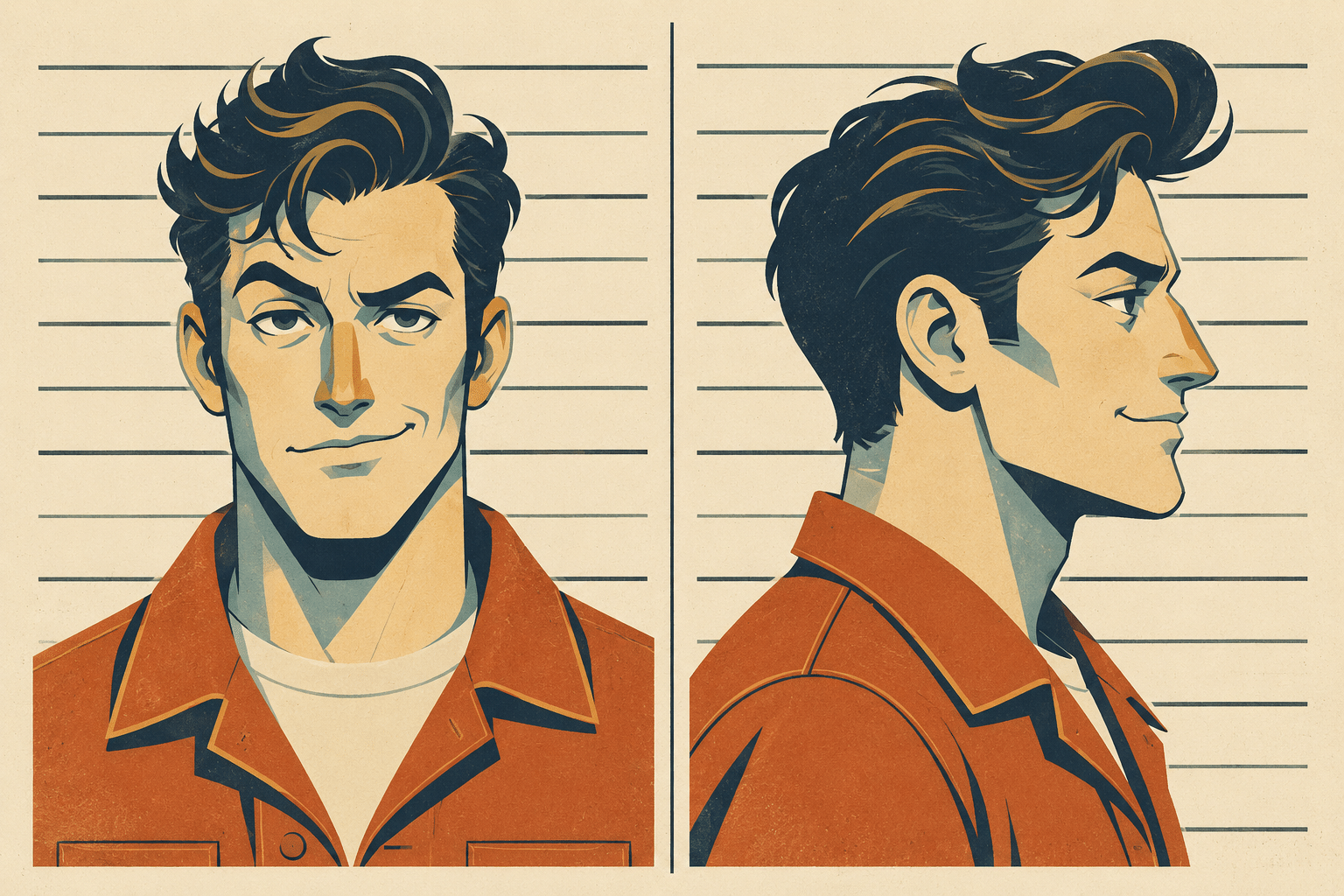
A graphic front-and-profile portrait diptych of the same entirely fictional adult character with a sculptural swept quiff, an angular nose, one raised eyebrow and a burnt-orange work jacket, set against a warm ivory height-line backdrop; ink-navy silhouettes, dusty teal shadow planes, muted mustard accents, restrained vermilion details, confident curved contours and subtle printed-paper grain.
Character in two views
An arched eyebrow, a jacket made from three shapes, a profile that looks as if it knows the punchline: this style turns the rigid front-and-side portrait format into graphic character design. Retro Vector Illustration Mugshot is an original AOI concept combining invented portrait pairs, economical contours, and a deliberately aged print palette. Its subjects are fictional characters. The images are visual studies rather than records of an arrest.
Keep the identity consistent
The paired views do most of the storytelling. A frontal portrait establishes the eyes, hairline, collar, and attitude; the profile tests whether those same decisions survive a change of angle. Align the eyes, chin, and shoulders across both views. Keep a distinctive nose shape or hair silhouette consistent instead of generating two loosely related faces. A slightly raised eyebrow can add personality without disrupting the spare layout.
Let shapes do the drawing
Build each head from a small number of flat color areas. Ink navy can carry the silhouette, warm ivory the light, dusty teal the shadow, and burnt orange the jacket. A muted mustard or vermilion accent is enough for a collar, earring, or tiny background detail. Shape boundaries should explain the face without outlining every feature. Let the cheek emerge from the meeting of two planes; let one clean curve describe an entire ear.
Print character, clean contours
The retro character comes from the illustration choices: limited colors, broad margins, assertive curves, and a little uneven print texture. Keep the grain fine enough that the contour remains decisive. Heavy scratches, fake stains, and distressed lettering can overwhelm the portrait. A small shift between printed color areas may be an expressive effect, but the eyes and mouth should remain intentionally placed. The examples here are generated raster images with a vector-like appearance, not editable SVG artwork.
Reinvent the portrait grid
Treat the background as a quiet measuring rhythm. A few horizontal rules can link the two views without turning the illustration into a realistic official document. Leave out identity numbers, department seals, and invented allegations. For a stronger variation, replace the familiar wall with a geometric color grid while retaining the aligned portrait pair. The format stays recognizable, but the work becomes an unmistakably designed character sheet. Humor works best through expression, posture, and visual economy rather than through humiliation.
Technique notes
Match the eye line, chin height, hairstyle and collar between the front and profile portraits.
Check the silhouette at thumbnail size before adding grain or small facial details.
Use one dominant shadow plane; avoid automatic soft gradients that weaken the flat illustration.
A small poetic detour
Original words from the AOI studio.
Poetry
Two angles borrow one small grin.
A teal-blue shadow settles in.
The ruler measures neither wit
nor all the thoughts that will not fit.
One lifted brow escapes the frame;
the profile almost does the same.
The prompt workshop
Original creative exercises. These prompts create new illustrations, not documentary evidence.
One character, two angles
Retro Vector Illustration Mugshot: one entirely fictional adult character with a swept quiff and burnt-orange work jacket, paired front and right-profile portraits, aligned eyes and chin, ink-navy contours, ivory paper and dusty-teal shadow shapes, sparse horizontal backdrop rules, flat graphic shapes, no gradients, no official insignia, no numbers or text.
The portrait with a punchline
Retro Vector Illustration Mugshot: an invented adult with a sculptural bob, cat-eye glasses and one raised eyebrow, consistent front-and-profile diptych, limited ink-navy, cream, teal, mustard and vermilion palette, mid-century-inspired editorial composition, subtle print grain, strong negative space, charming deadpan expression, no real person, no identity placard or accusation.
Replace the wall with color
Retro Vector Illustration Mugshot: a fictional older adult with a silver pompadour shown frontally and in profile, matching facial proportions, large geometric color blocks replacing the height-line wall, six flat colors, clean curves, dramatically simplified cheek planes, screenprint-like texture, playful formal character sheet, no photograph, no 3D effects or lettering.
Your next inspiration
Discover another art style
Follow a visual thread to the next subject.
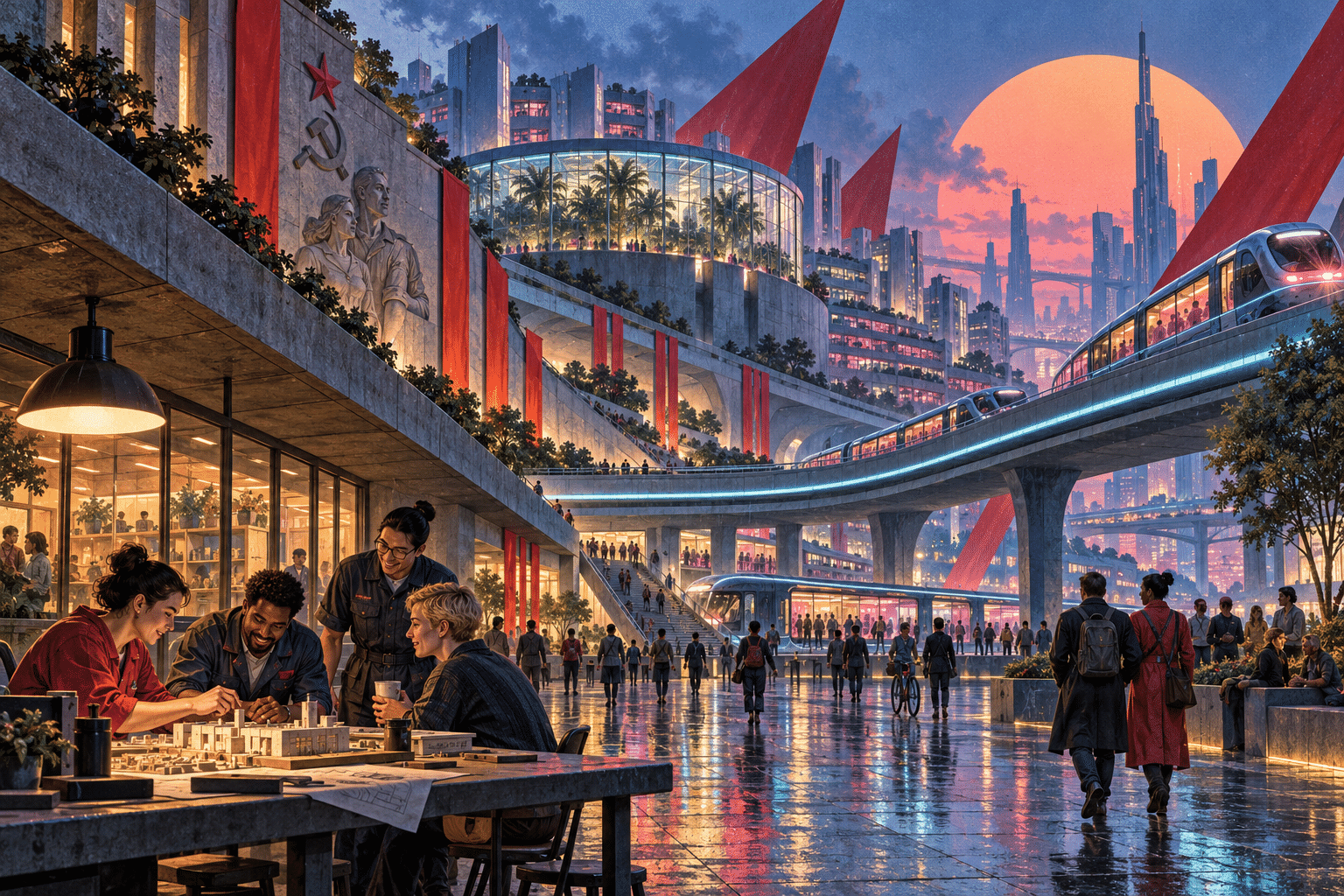
Neon-Retro Futurist Communism
Compare a retro palette and assertive graphic composition at architectural scale.
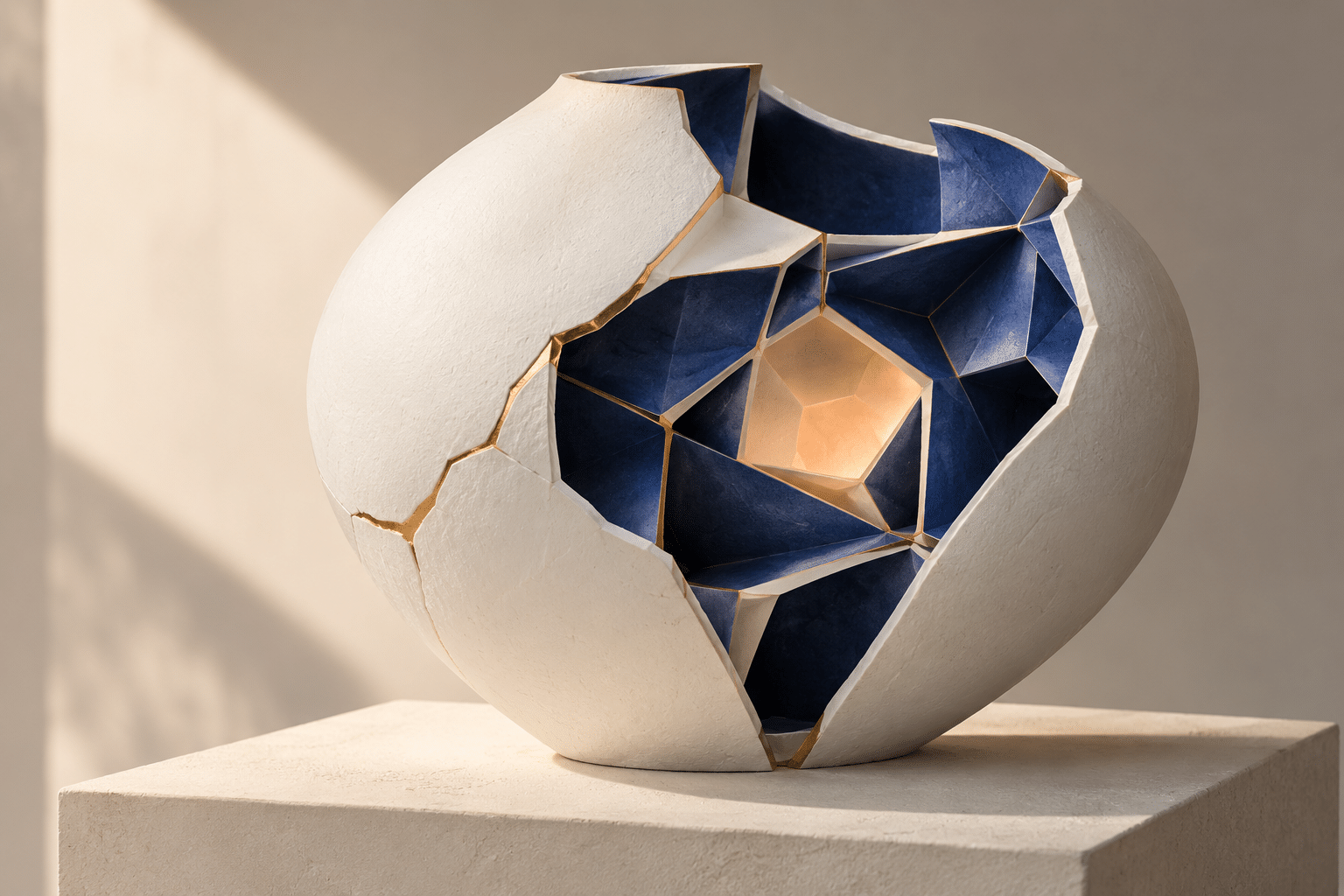
Porcelain Fault Geometrism
Explore the same contrast between a clean contour and sharply divided interior planes.
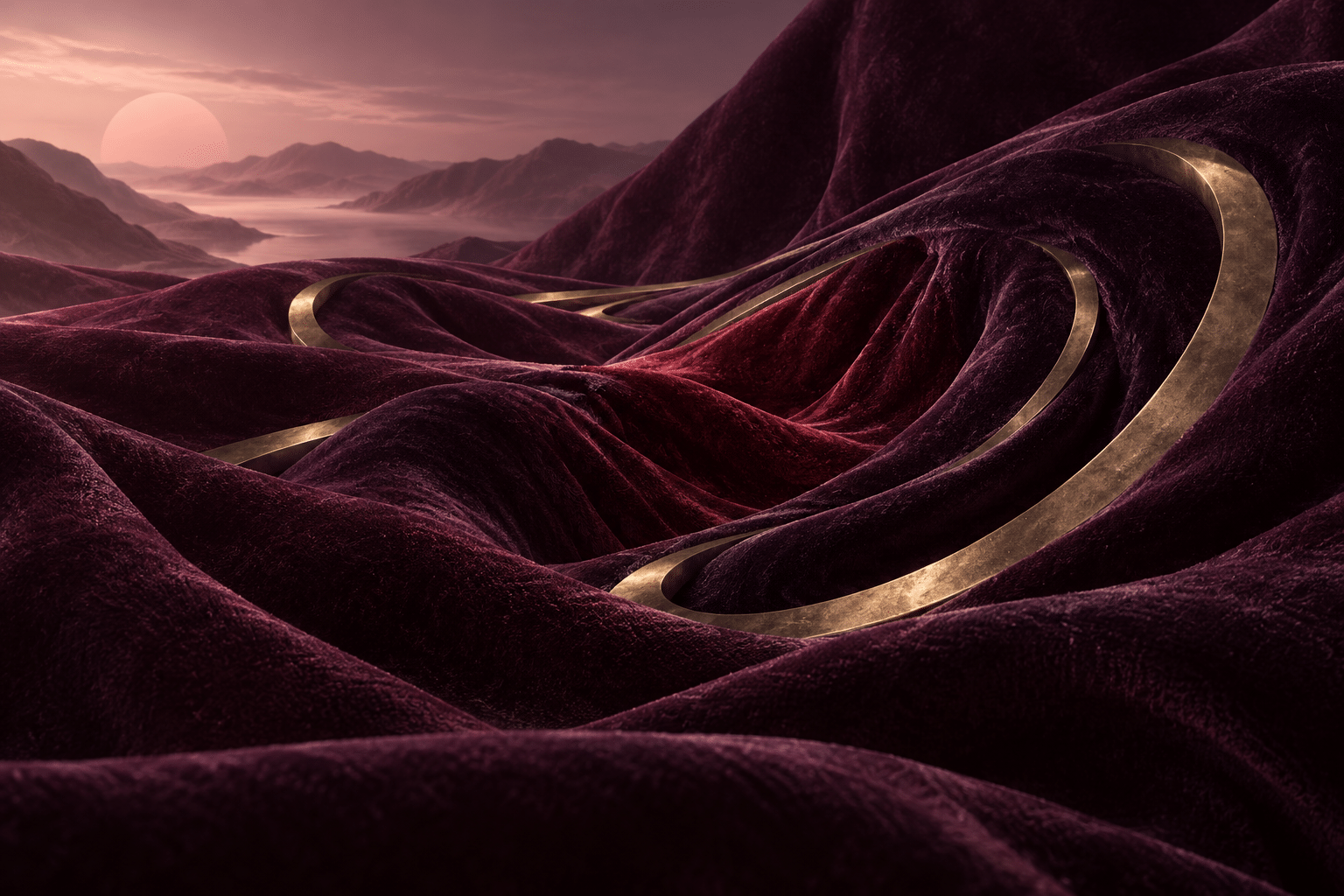
Velvet Orbit Geometrism
Contrast this flat graphic language with tactile surfaces and partially concealed curves.
A smile from the studio
Jokes
The portrait was charged with excessive character. Its lawyer requested more negative space.
The profile asked for a better angle. The art director offered exactly ninety degrees.
The lineup used only six colors. Every suspect had a very limited palette.