
Buddhist tradition and artistic contexts
Zen is a Buddhist tradition with rich artistic contexts, not a synonym for every quiet or minimalist image. Painting, calligraphy and other practices can participate in teaching, contemplation and cultural exchange; their meaning depends on more than a spare appearance.
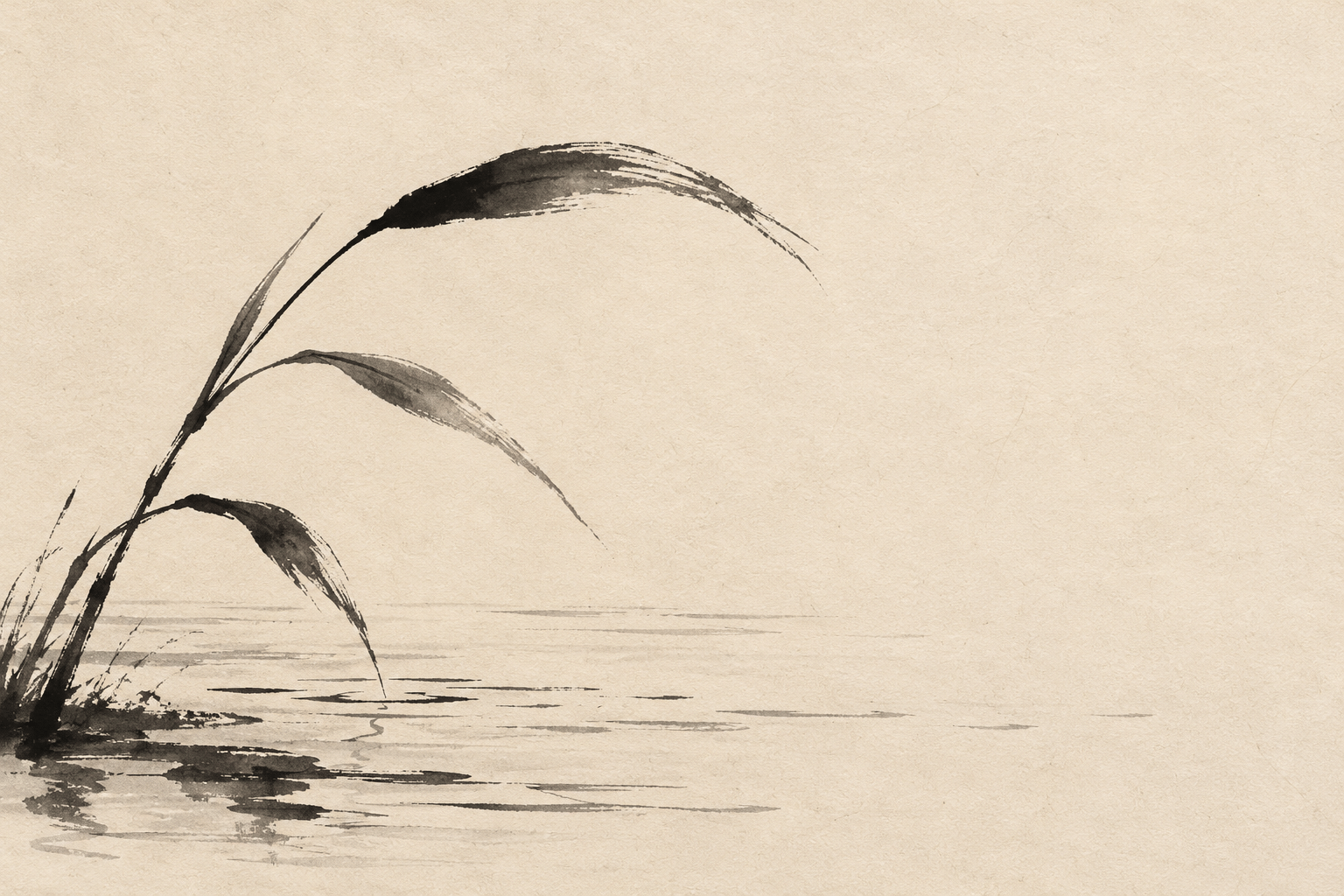
A visual introduction
Select an image for a closer look. Use the thumbnails, arrow keys or a swipe to compare examples. Zoom in to inspect details, or share the image that inspires you.
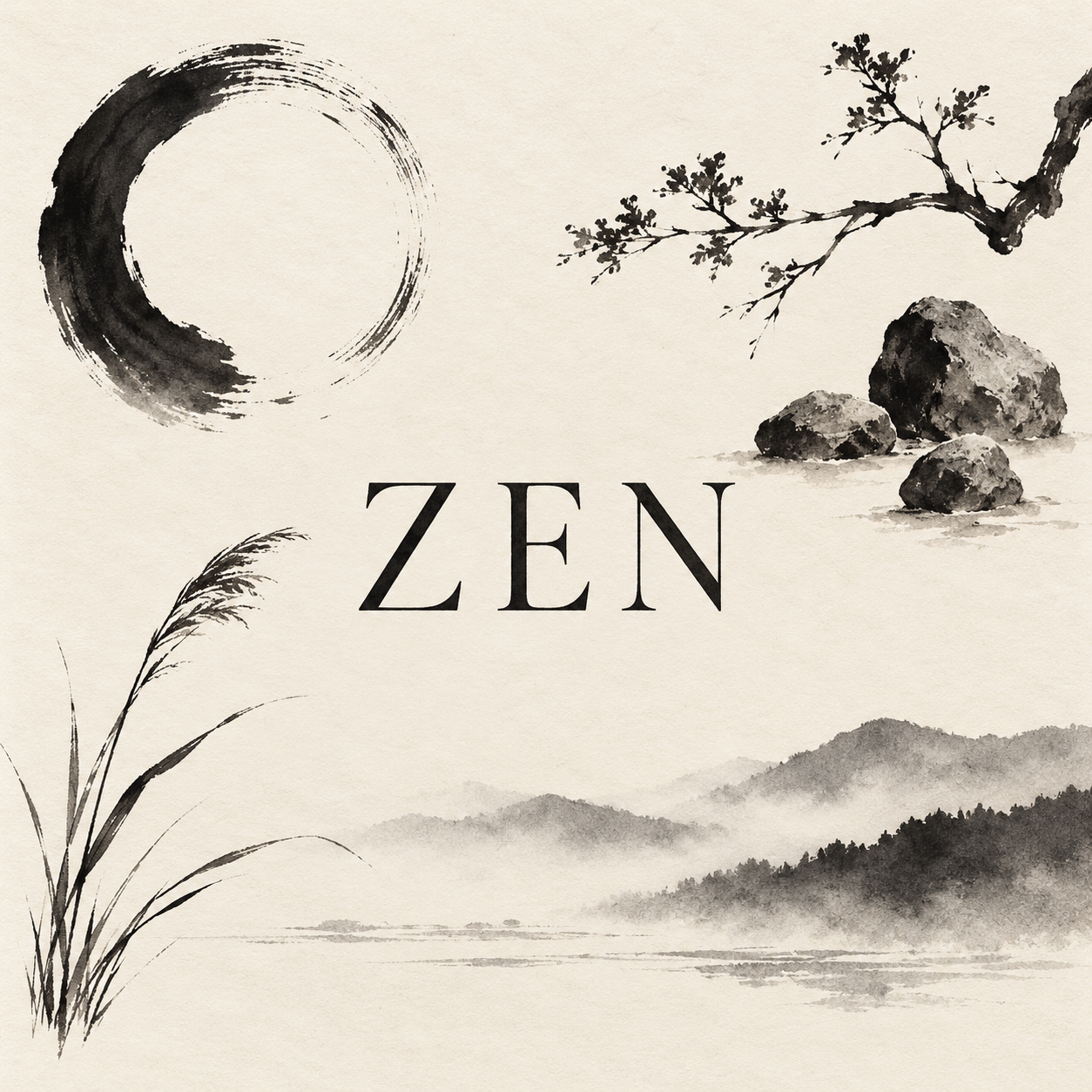
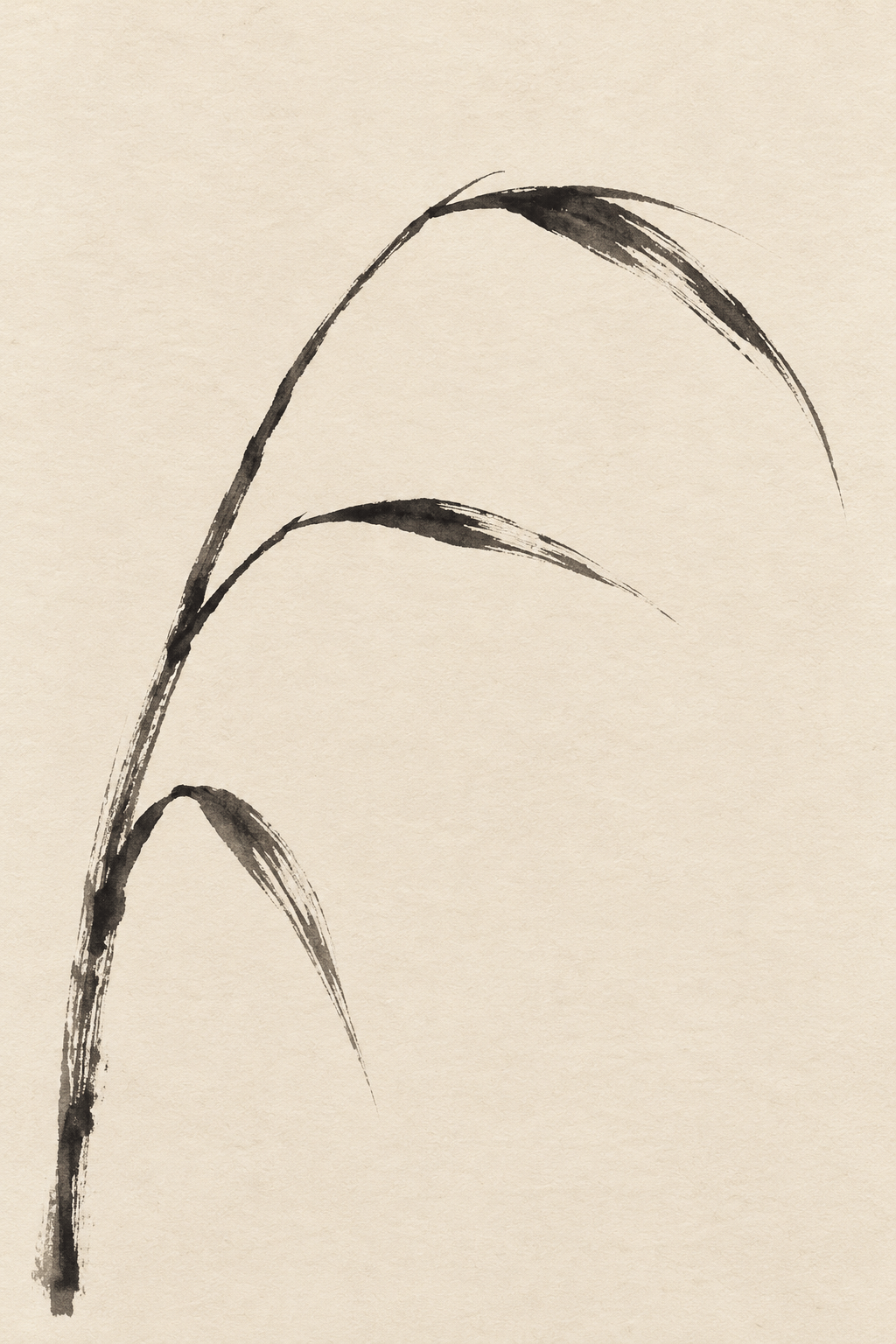
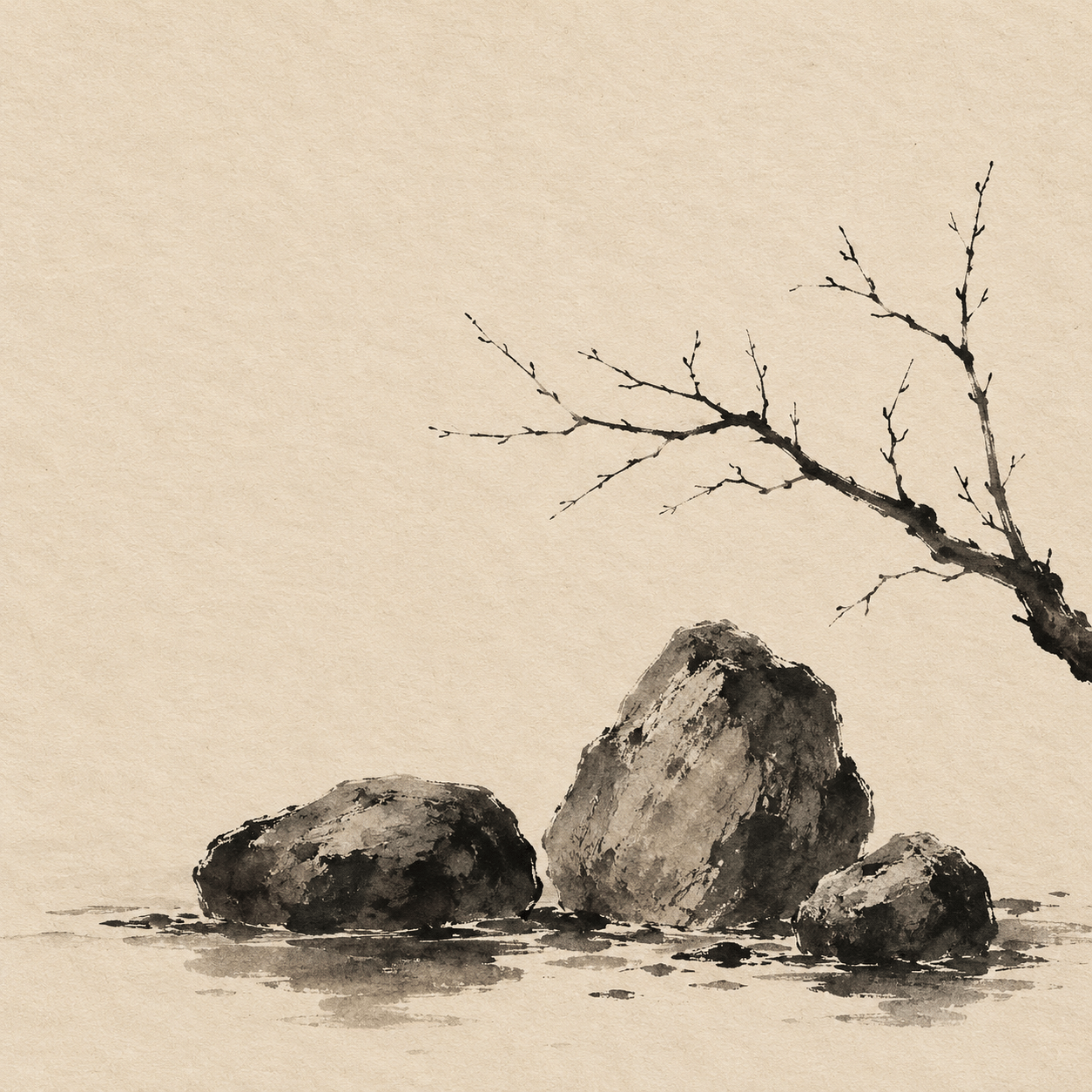
Creative toolbox · take this style further
Choose an input and a destination. Search sends your words to the chosen site; Copy & open puts them on your clipboard to paste there.
Create with AI
Turn your chosen input into an image prompt or a new creative direction.
ChatGPT
Copy your input and paste it into a ChatGPT conversation or image request.
Copy & open ChatGPT (new tab)Claude · Anthropic
Develop an image prompt or explore the style in a new Claude conversation.
Copy & open Claude · Anthropic (new tab)Midjourney
Paste your input into the Imagine bar on the Create page.
Copy & open Midjourney (new tab)Adobe Firefly
Copy your input, open Firefly, and paste it into the prompt field.
Copy & open Adobe Firefly (new tab)Leonardo.Ai
Copy your input, open Leonardo, and paste it into the generation field.
Copy & open Leonardo.Ai (new tab)Image search
Find visual references. Short, concrete keywords usually work best.
Lexica
Search AI images and prompts using your selected input.
Search with this input Lexica (new tab)Pexels
Search the photo and video library. Short keywords often work best.
Search with this input Pexels (new tab)Pixabay
Search photos, illustrations and other images.
Search with this input Pixabay (new tab)Unsplash
Search photographs using the style name or your own keywords.
Search with this input Unsplash (new tab)Wikimedia Commons
Search photographs, artworks and historical images. Check each file for its source and reuse terms.
Search with this input Wikimedia Commons (new tab)Art & research
Explore artists, collections and the ideas behind a style.
Wikipedia
Search for background reading. A style may not have its own article.
Search with this input Wikipedia (new tab)WikiArt
Copy your input into WikiArt’s search to explore artists and artworks.
Copy & open WikiArt (new tab)Europeana
Paste your keywords into the search to explore European museum, library and archive collections.
Copy & open Europeana (new tab)Inspiration
Discover portfolios and visual ideas from creative communities.
Instagram hashtags
Search a hashtag made from your input: spaces and punctuation are removed. Instagram may require sign-in.
Search with this input Instagram hashtags (new tab)ArtStation
Paste your input into artwork search for concept art, environments, characters and visual development.
Copy & open ArtStation (new tab)Behance
Paste your input into project search for illustration, design and visual storytelling.
Copy & open Behance (new tab)A closer look
Some Zen-associated ink works use economical brushwork, active empty space and concentrated gestures. Others depict teachers, eccentric figures, plants or landscapes. No single palette or motif represents the whole tradition.
Begin with the cultural context
Zen developed in relation to Chinese Chan and became an important presence in Japan through transmission, institutions and exchanges of learning. The Metropolitan Museum’s overview connects these exchanges with literature, calligraphy and ink painting. That history matters: a brushstroke belongs to a material and cultural practice, not merely to a modern preference for uncluttered interiors.
The term Zen should therefore be used with care in an art-style directory. This page introduces selected visual principles and contexts without claiming that a generated image is a religious object or an expression of spiritual attainment. A restrained composition can be discussed on its own terms; calling it Zen adds a cultural claim that requires explanation.
Zenga and the work of teaching
The Museum of Fine Arts, Houston’s Gitter-Yelen catalogue discusses Zenga as paintings and calligraphies by Japanese Zen monk-painters, particularly in Edo-period and modern contexts. It connects the works with teaching and includes the importance of humor, paradox and challenges to ordinary expectations. This is a more specific setting than the broad category of Japanese ink painting.
A seemingly simple image may rely on a story, inscription, teacher or shared practice. Its visual economy does not make its meaning self-evident. When studying an actual work, begin with the collection record: artist, date, medium, inscription and intended context. Avoid assigning a universal spiritual meaning to every circle, stone or empty patch of paper.
The mark and the unmarked field
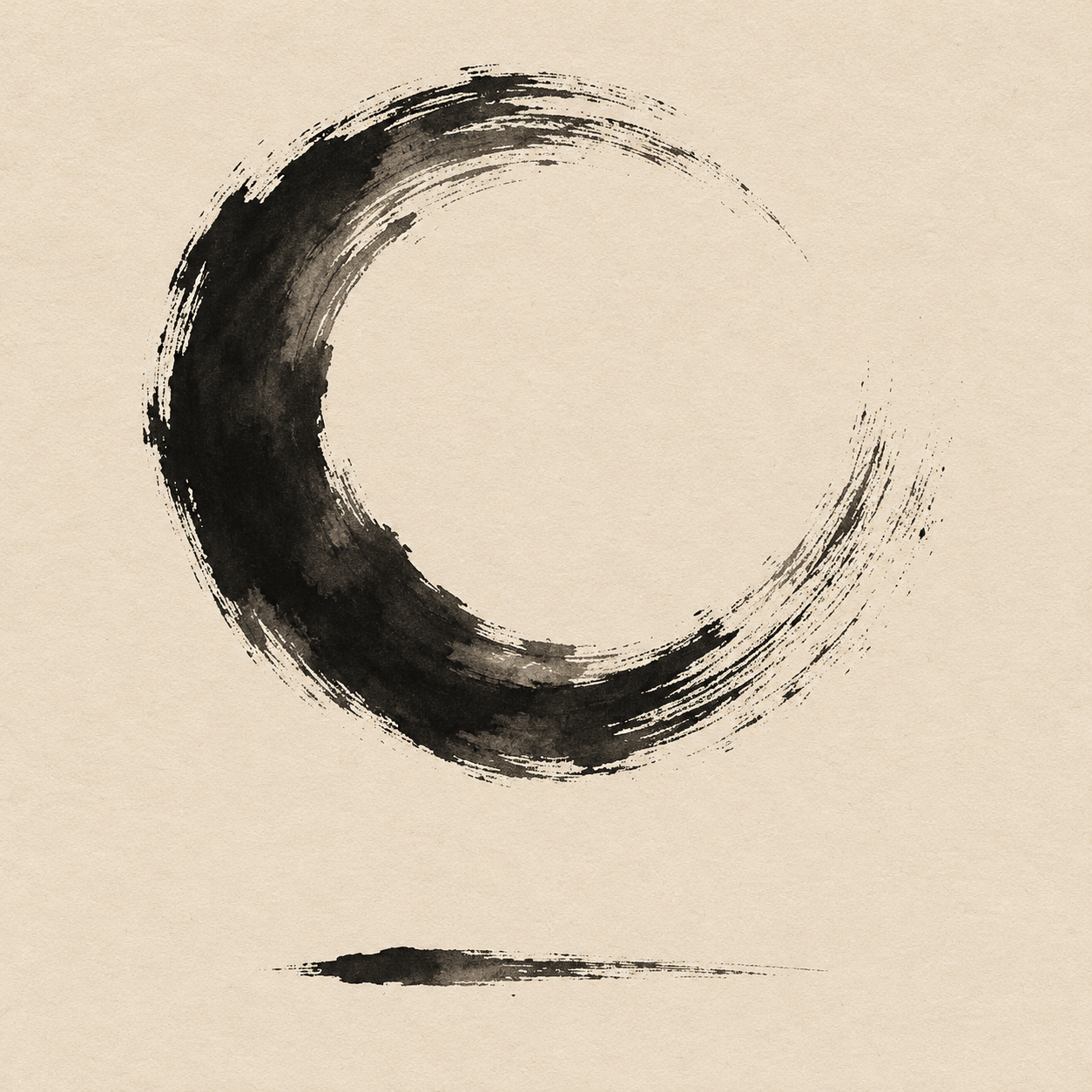
In an ink study, a single dark stroke can organise a large sheet. Its pressure, direction, speed and edge behavior affect how it is read. A wet passage may spread softly; a drier stroke may reveal the texture of the support. These differences give the mark a material presence that a uniform digital outline does not reproduce.
Empty space participates in the composition through proportion and placement. A small plant low on the sheet leaves a different kind of openness from a central circle filling most of the field. Ask where the eye pauses and how the marks relate to the surrounding area. Emptiness should not become a formula in which every subject is placed in a corner and labelled contemplative.
Subjects are more varied than a circle
The Met’s account describes subjects including religious figures and, in wider ink-painting practice, plants, birds and landscapes. The Harvard East Asian Art Program’s Zen Ink text also places painting and calligraphy within practice and transmission. These sources provide context for looking beyond generic symbols of calm.
For an original visual exercise, a reed, a bent branch or a few rocks can offer a focused problem of rhythm and proportion. Such a study can be described as an ink interpretation informed by selected compositional principles. It should not impersonate a named monk, reproduce an unread inscription or claim to transmit a teaching that has not been researched.
Material decisions and digital interpretation
Choose the scale of the gesture before adding detail. A broad brush on absorbent paper encourages a different kind of decision from a fine nib on a smooth surface. If working physically, test how the chosen ink and paper interact. The resulting mark is an event in a material, not simply a shape that can be endlessly corrected without consequence.
Generated images can suggest wet edges, dry-brush texture and spacious composition, but they cannot document a practitioner’s gesture or inner state. The new gallery is explicitly a set of AI-generated studies. It contains no invented sacred calligraphy or forged seals. The accompanying museum resources are the place to encounter attributed works and their histories.
A thoughtful exercise in restraint
Make a study with one main gesture and one quieter response. Remove a mark only when doing so improves the relationship, not because fewer marks are automatically more profound. Compare the balance before and after the change. A lively irregularity may be more effective than a perfectly smooth emblem.
Use this exercise to sharpen looking and compositional choice. It is not a substitute for learning about Zen Buddhism from practitioners and scholarship. The useful artistic question is concrete: what does this mark do in this space, with this material? Keeping that question precise helps avoid turning a living tradition into a vague decorative mood.
A small poetic detour
Original words from the AOI studio.
Poetry
Before the Second Mark
The brush has stopped. The paper stays,
not empty of the morning light.
A reed leans into what remains;
its dark edge makes the white more bright.
I wait before another line,
and let the first one finish mine.
The prompt workshop
Original creative exercises. These prompts create new illustrations, not documentary evidence.
One botanical gesture
Create an original ink-on-paper interpretation of a single bent reed, varied wet and dry brush edges, large deliberate unmarked field and restrained composition. No calligraphy, seals or claim of religious authenticity.
A rhythm of stones
Create an original monochrome ink study of three uneven stones and a small branch, asymmetrical balance, distinct brush pressures and visible paper texture. An illustrative exercise in proportion, not a historical Zen work.
An open gesture
Create an original abstract ink study with a broad incomplete circular gesture and one quiet dry-brush response, meaningful spacing and irregular ink density. No sacred inscription, signature or decorative pseudo-writing.
A smile from the studio
Jokes
A studio exercise: place the brush down, then decide whether the next mark is needed or merely available.