
Established
Zaum is an experimental approach to language associated with Russian Futurist poets, especially Aleksei Kruchenykh and Velimir Khlebnikov. Sound, invented words and the visible material of writing can work beyond ordinary dictionary meaning. This visual-art guide explores the meeting of voice, letter, page and image without reducing the subject to random illegibility.
A visual introduction
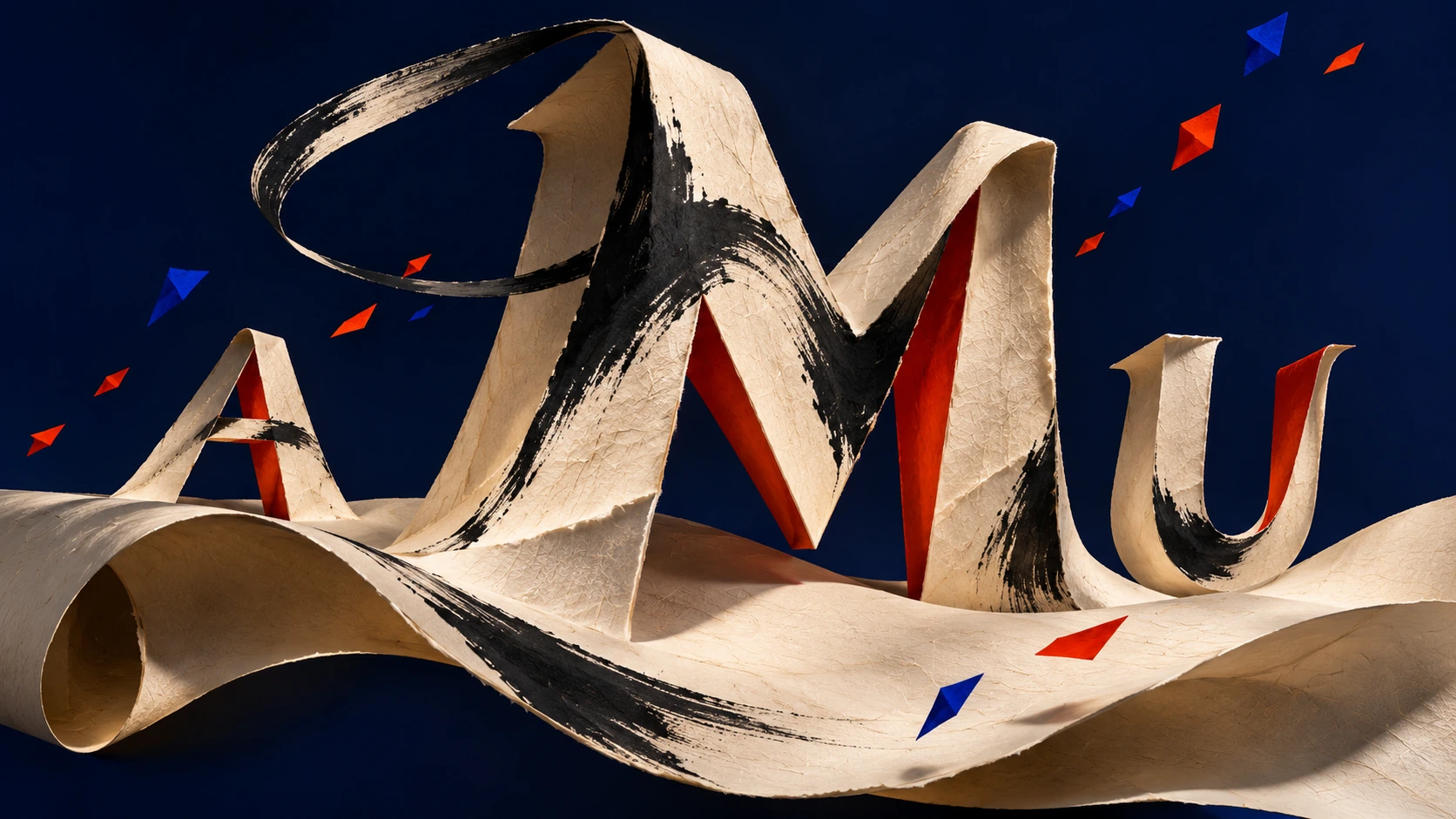
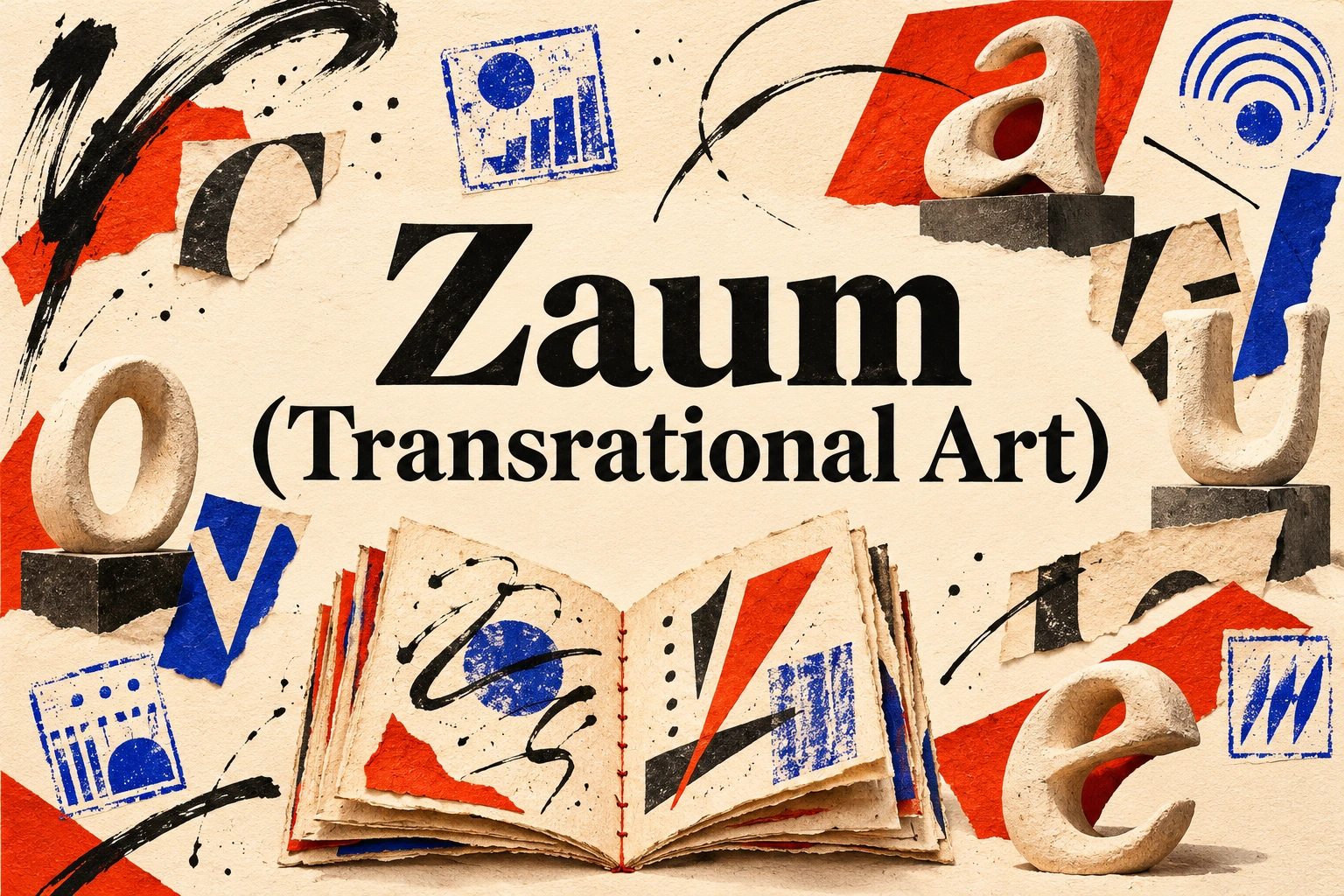
Seven original AI-generated studies explore this subject through a banner, a titled collage and five standalone examples.
Select an image for a closer look. Use the thumbnails, arrow keys or a swipe to compare examples. Zoom in to inspect details, or share the image that inspires you.
Creative toolbox · take this style further
Choose an input and a destination. Search sends your words to the chosen site; Copy & open puts them on your clipboard to paste there.
Create with AI
Turn your chosen input into an image prompt or a new creative direction.
ChatGPT
Copy your input and paste it into a ChatGPT conversation or image request.
Copy & open ChatGPT (new tab)Claude · Anthropic
Develop an image prompt or explore the style in a new Claude conversation.
Copy & open Claude · Anthropic (new tab)Midjourney
Paste your input into the Imagine bar on the Create page.
Copy & open Midjourney (new tab)Adobe Firefly
Copy your input, open Firefly, and paste it into the prompt field.
Copy & open Adobe Firefly (new tab)Leonardo.Ai
Copy your input, open Leonardo, and paste it into the generation field.
Copy & open Leonardo.Ai (new tab)Image search
Find visual references. Short, concrete keywords usually work best.
Lexica
Search AI images and prompts using your selected input.
Search with this input Lexica (new tab)Pexels
Search the photo and video library. Short keywords often work best.
Search with this input Pexels (new tab)Pixabay
Search photos, illustrations and other images.
Search with this input Pixabay (new tab)Unsplash
Search photographs using the style name or your own keywords.
Search with this input Unsplash (new tab)Wikimedia Commons
Search photographs, artworks and historical images. Check each file for its source and reuse terms.
Search with this input Wikimedia Commons (new tab)Art & research
Explore artists, collections and the ideas behind a style.
Wikipedia
Search for background reading. A style may not have its own article.
Search with this input Wikipedia (new tab)WikiArt
Copy your input into WikiArt’s search to explore artists and artworks.
Copy & open WikiArt (new tab)Europeana
Paste your keywords into the search to explore European museum, library and archive collections.
Copy & open Europeana (new tab)Inspiration
Discover portfolios and visual ideas from creative communities.
Instagram hashtags
Search a hashtag made from your input: spaces and punctuation are removed. Instagram may require sign-in.
Search with this input Instagram hashtags (new tab)ArtStation
Paste your input into artwork search for concept art, environments, characters and visual development.
Copy & open ArtStation (new tab)Behance
Paste your input into project search for illustration, design and visual storytelling.
Copy & open Behance (new tab)A closer look
Letters behave as shapes and sounds: they gather, interrupt, stretch, repeat or fall silent in the white of a page. Handwriting, stamped marks, collage and irregular spacing can create a rhythm that invites performance. There is no compulsory red-and-black palette or single Zaum font; the relation between sound and form is the central problem.
Language beyond its usual assignment
Zaum is often translated as transrational language or, more playfully, beyonsense. Steven Cassedy's study Flight from Eden discusses the term's introduction by Kruchenykh in 1913 and emphasizes that it carried more than one theoretical meaning. It belongs to a history of poetic experimentation, not to a newly discovered universal alphabet.
In this entry, Transrational Art names the visual possibilities around that literary practice. A sound may be enjoyed before it is identified as a word; a letter may be seen as a weight, a curve or a gesture before it is read. None of this means that every accidental typo or unreadable AI-generated sign becomes a successful Zaum work.
Books that ask to be seen and heard
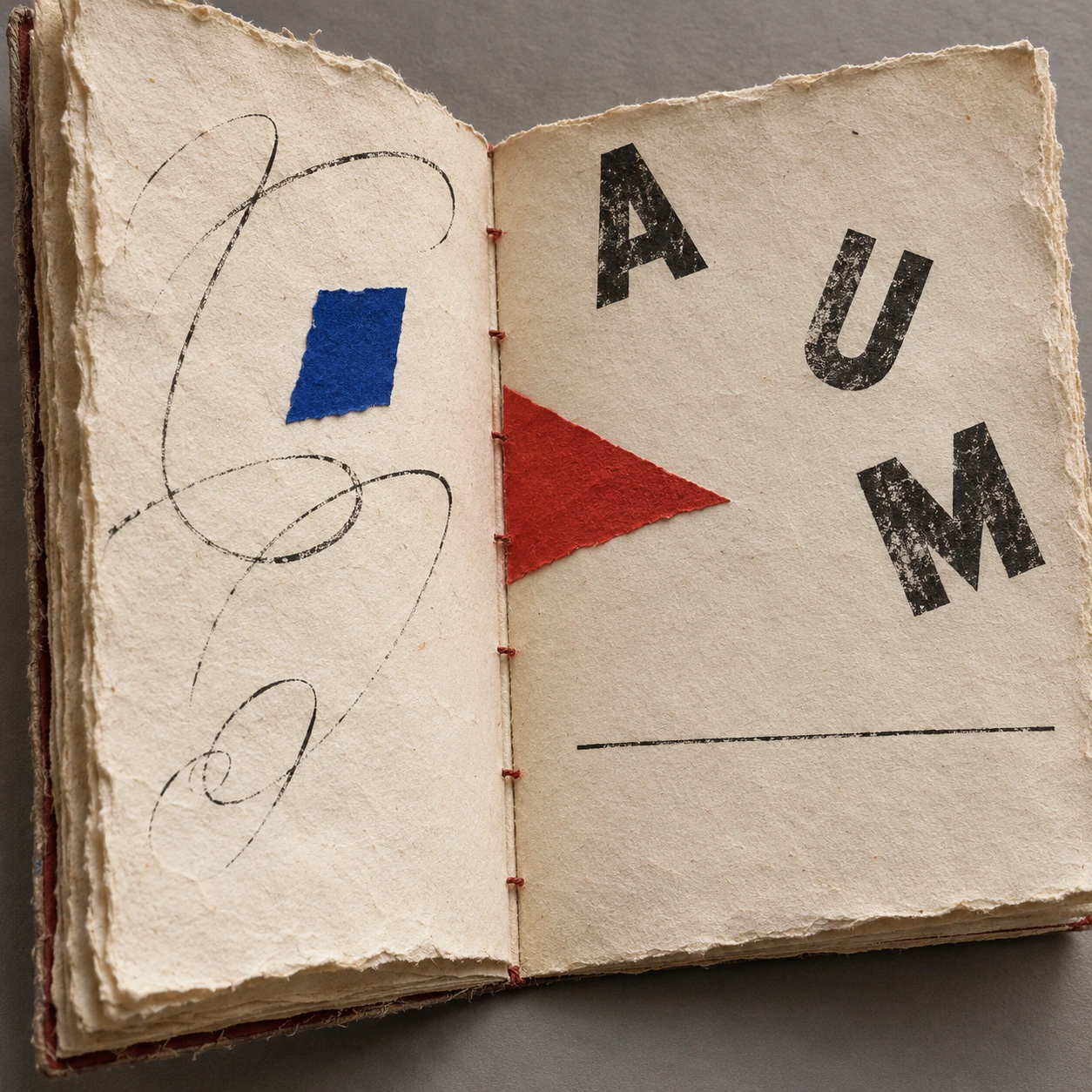
Getty's Tango with Cows exhibition describes collaborative Russian avant-garde books in which stamped poetry, different scripts and abstract or figurative imagery share a page. These disruptions could carry humor and parody as well as responses to profound cultural upheaval. The book was an active meeting place for visual and verbal experiments.
Kruchenykh's Universal War (1916), held by MoMA, combines twelve abstract collages with short Zaum poems. The museum explains their shared use of unexpected juxtapositions rather than straightforward description. A different MoMA object, Zaum' (Transrational Language), credited to Aleksandr Rodchenko and Kruchenykh in 1921, uses hectographed and carbon-copied manuscript designs with rubber-stamped text. These particular objects help resist the idea that the entire practice had one uniform appearance.
Build a rhythm before a layout
Choose a small group of sounds and speak them aloud. Notice whether the mouth closes abruptly, the breath continues or the vowel lingers. Translate one of those differences into a visual rule: a clipped syllable becomes a compact dark mark, a sustained sound receives more space, or a pause becomes an unprinted interval.
These are contemporary exercises, not a reconstruction of a historical notation system. Keep the rule simple enough to perceive, then introduce one exception. Repetition creates expectation; the interruption makes the reader listen again. Filling every available space with unrelated characters removes that relationship.
Treat the letter as a material event
A stamped character carries pressure, uneven ink and repetition. A handwritten stroke records a changing gesture. A cut-paper letter has an edge and a shadow, while a projected letter can change scale across a room. Each medium offers a different way to make language tangible.
Separate intentional distortion from uncontrolled error. If a short sequence matters, spell it out and inspect the result. If the work uses nonalphabetic marks, describe them as invented marks rather than pretending they are authentic Cyrillic or a recovered historical poem. The gallery uses new AOI sound-and-form studies, not facsimiles.
Sound, image and the limits of a still picture
A still image can suggest tempo through spacing, density, scale and direction. It cannot demonstrate an actual vocal performance. To extend a study, read its chosen sounds in several ways and compare what happens when duration or emphasis changes. The same page may invite more than one convincing reading.
A poster can stage a compact collision; an artist's book can distribute it across page turns; a room installation can make the viewer move between forms. Do not assume that greater visual complexity means greater poetic freedom. A single repeated letter can produce a more focused experiment than an entire wall of decorative pseudo-writing.
Related practices, different questions
A calligram arranges writing into an image; concrete poetry gives special importance to the spatial and material organization of language. These offer useful comparisons, but they should not be collapsed into identical histories. A Zaum-oriented exercise places particular pressure on how sound and sense relate, including the possibility of language that resists ordinary reference.
The connection with glitch art is a contemporary analogy rather than proof of direct descent. A corrupted-looking word may resemble an experimental page while having a very different origin. Explain the operation you are testing: fragmentation, repetition, invented syllables, competing reading directions or the unstable boundary between a letter and a shape.
A practical studio test
Make three versions of one brief sound sequence: hand-drawn, stamped and spatially arranged. Keep the sequence constant while changing rhythm and material. Ask which version makes you pause, speed up or imagine a different voice. This provides a concrete basis for discussion even when the sequence has no intended dictionary definition.
For AI generation, specify the exact short text separately from the surrounding composition. Use a clearly readable title on an explanatory collage, and let the examples test more adventurous arrangements. Label new work honestly. A convincing distressed book image is still a generated interpretation, not a rare document from the Russian avant-garde.
Positive editorial review (AI-authored)
Zaum offers a powerful way to reconnect language with the body and the page. A consonant, a breath and a printed mark can become active compositional materials. Its most engaging visual interpretations give the reader a perceptible rhythm to explore while leaving ordinary meaning unsettled.
Negative editorial review (AI-authored)
The approach is easily reduced to decorative gibberish or a generic avant-garde poster. Without a considered relation between sounds, marks and intervals, visual disorder can become merely arbitrary. Historical claims also need care: invented syllables and synthetic aged paper should never be passed off as authentic documents.
Neutral editorial review (AI-authored)
Zaum is a historically situated field of linguistic and poetic experimentation with important visual-book connections. It can inform typography, artist's books, performance and contemporary image studies. This gallery explores those possibilities in still images; it does not reproduce a historical sound performance or provide a complete account of Zaum theory.
A small poetic detour
Original words from the AOI studio.
Poetry
Before the word put on its coat,
A vowel lingered in the throat.
The consonant knocked twice, then three;
The page left room for what might be.
No map arrived to name the sound—
A little silence held its ground.
The prompt workshop
Original creative exercises. These prompts create new illustrations, not documentary evidence.
A sound takes shape
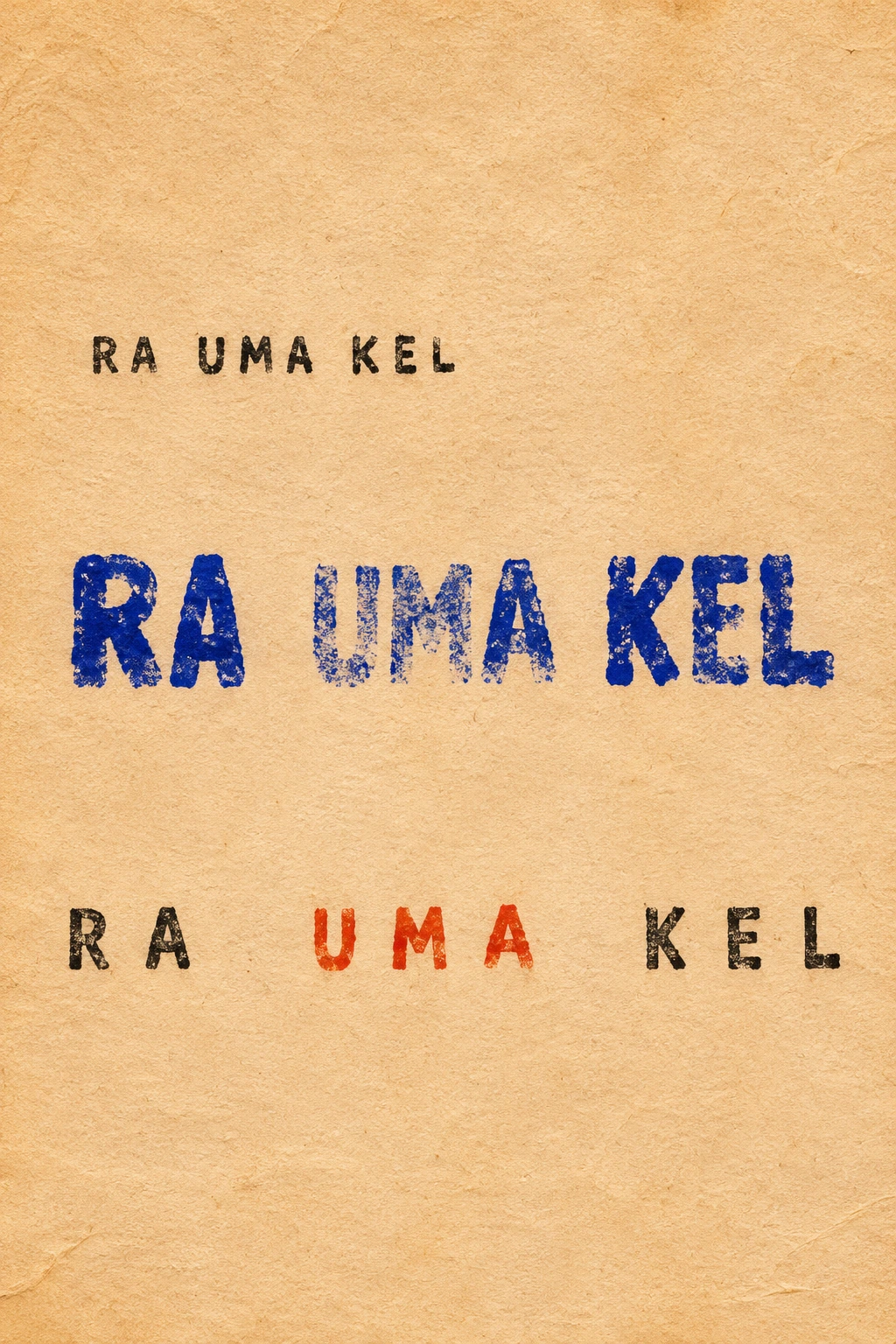
Create an original Zaum-inspired visual poem using only the invented sequence RA UMA KEL. Vary the size, spacing and ink pressure of these exact letters across warm paper, with one large interval of silence. Black and deep blue, tactile hand-stamped character, no extra words, not a historical facsimile.
The page becomes a stage
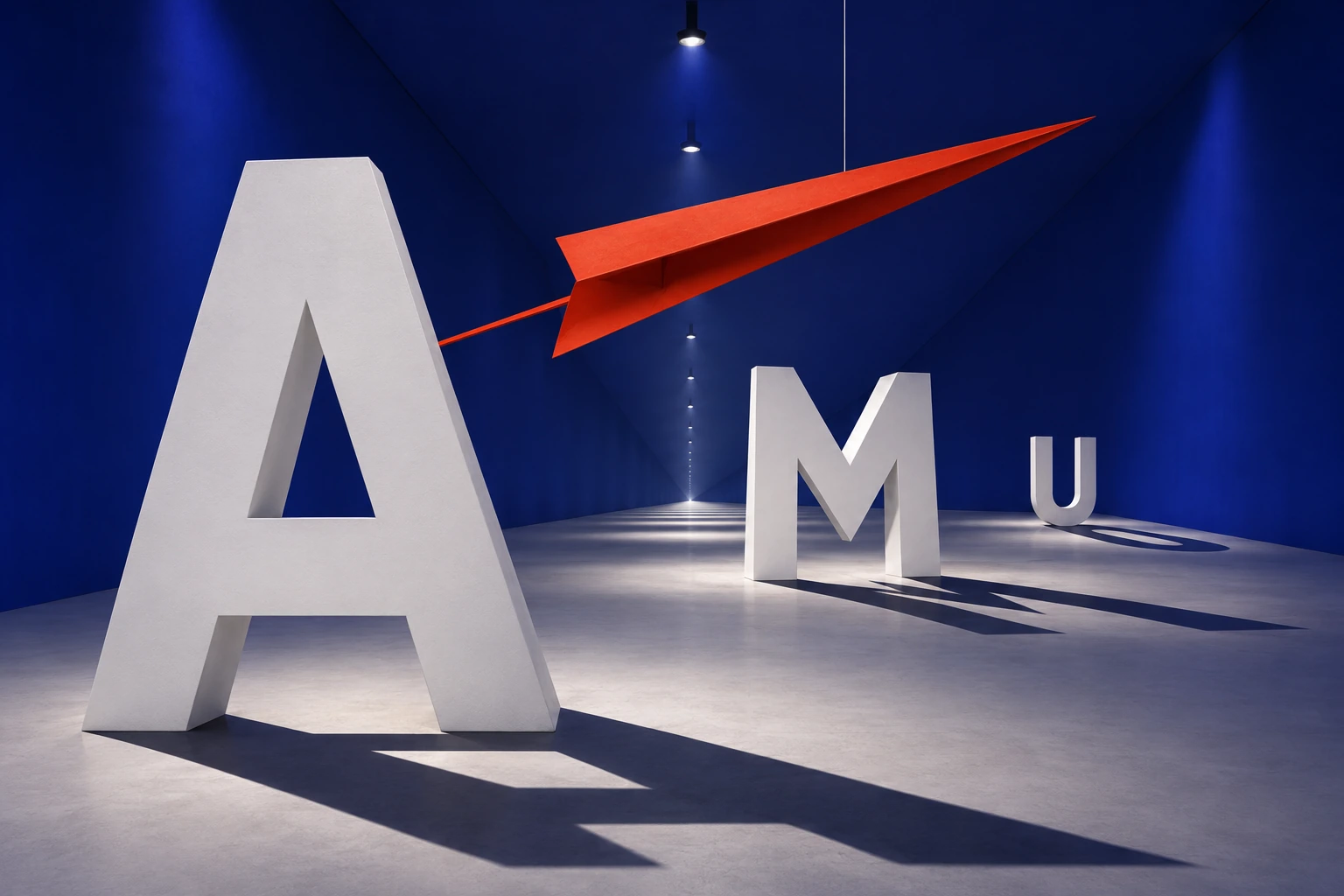
Create a contemporary sound-poetry installation concept: oversized sculptural letters A, M and U stand at different depths in an empty white room, their shadows form a second rhythm, one red paper plane interrupts the composition. Precise lighting, strong intervals, no slogans or historical claims.
An almost-letter
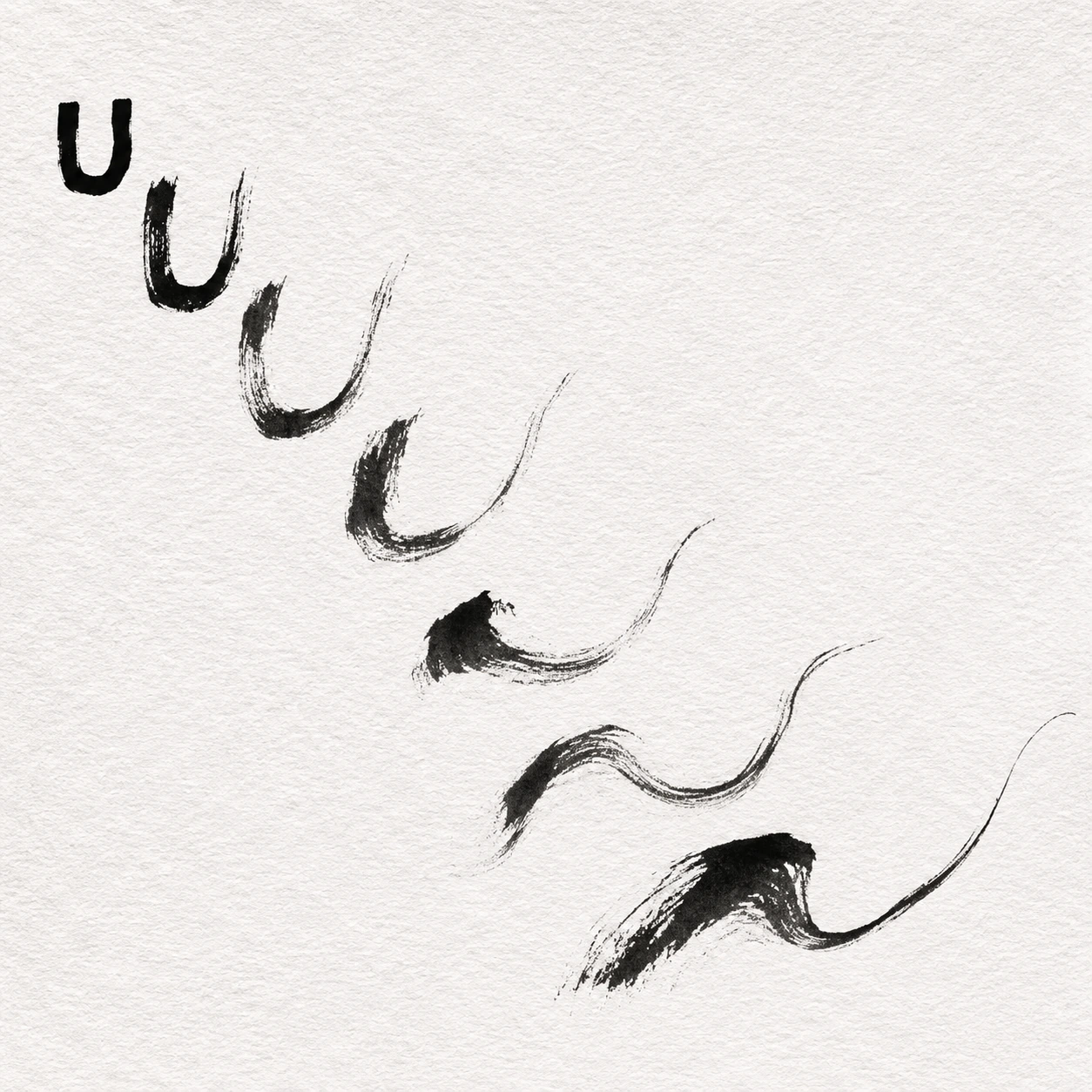
Create a monochrome experimental drawing in which a repeated handwritten U gradually opens into a flowing nonalphabetic gesture. Keep the transformation readable, use changes of pressure and spacing, and leave generous empty paper. Original Zaum-inspired study, no copied poem or signature.
Your next inspiration
Discover another art style
Follow a visual thread to the next subject.
A smile from the studio
Jokes
The dictionary arrived at the Zaum reading with a red pen and a confident expression. After the third poem it requested a chair. After the fourth it began making interesting noises. By the interval, the audience had asked it to perform an encore.
Sources and further exploration
Getty | Tango with Cows: Russian avant-garde books and verbal-visual experimentation
MoMA | Kruchenykh, Universal War (1916): abstract collages and Zaum poems
MoMA | Rodchenko and Kruchenykh, Zaum' (1921): manuscript and stamped processes
UC Press | Steven Cassedy, Flight from Eden: The Zaumniks and competing language theories
San Diego State University Press | Gerald Janecek's detailed study of Zaum