
Archive note: historical claims and artist or artwork associations in this entry have not yet received a full source review.
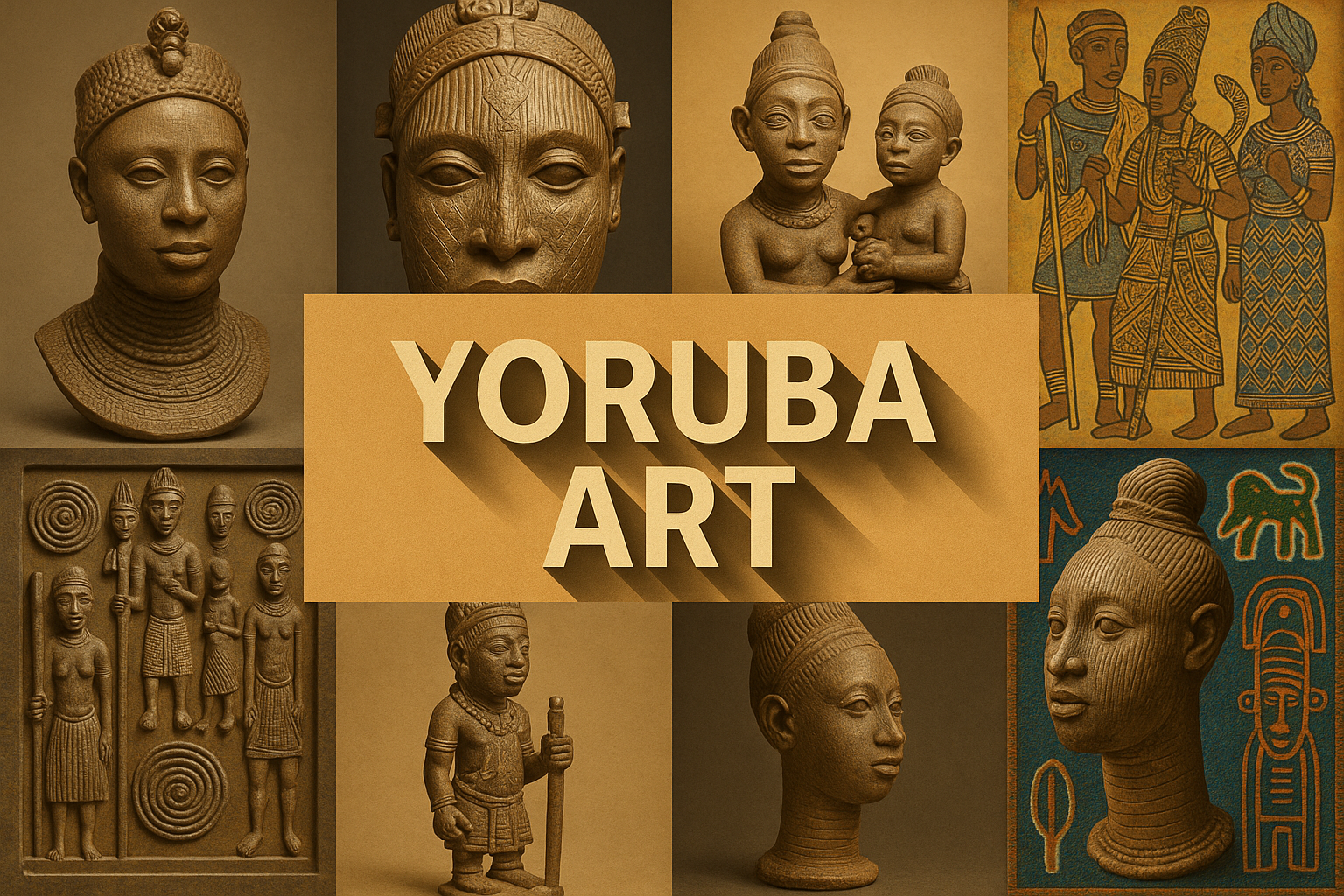
Yoruba Art
Imagine a symphony of fluid lines carving stories into wood, while bold hues whisper secrets across fabric. Each piece, a mosaic of tradition, speaks in textures as rich as a harvest.
AOI thinking about Yoruba Art [+_~]-/
Overview and quick facts
Rooted in spirituality and tradition, Yoruba art merges intricate forms with vibrant expression. It’s a storytelling dance of wood, brass, and earth, where aesthetics serve the sacred.
Can understand it also, as:
Ife Art, Orisha Sculpture, Yoruba Sculpture
Categorize it as:
Traditional, African, Ethnic, Spiritual
.: Dreaming :.
Timeless whispers speak,
Ancestors dance in wood dreams—
Sacred art unfolds.
:. Thought is power .:
Detailed description
In the heart of Yoruba art lies a cosmos of invisible forces and vivid ancestor spirits. Through woodcarving, metalwork, and textiles, artisans relay cosmic tales. Masks, statues, and beadwork vibrate with life, channeling ancestral wisdom to echo the past’s rhythms and today’s pulse.
Archive notes — claims to verify
1. Yoruba art is steeped in symbolic meaning, often representing
deities and ancestors.
2. It incorporates a range of materials, including wood, stone, and metal.
3. Famous for its traditional masks and sculpted figures.
4. Ritual significance dictates many artistic elements.
5. A continuous practice for over a thousand years.
Artists and works: references to check
(be aware, can be highly speculative)
Artists (be aware, speculation possible):
1. Olowe of Ise (early 20th century) 2. Lamidi Fakeye (1928-2009) 3. Arowogun of Osi-Ilorin (late 19th century) 4. Bisi Fakeye (1942-2014)
Artworks (be aware, speculation possible)
1. The Veranda Post of Ikere 2. Head of an Oni 3. Olowe of Ise’s Royal Palace Doors 4. Opon Ifa (divination tray)
Epoch
The art style spans from ancient times to present, flourishing around 500 BC.
Creative tools and further exploration
Search results are starting points for exploration, not evidence for the historical claims or attributions in this legacy entry.