
Visual approach · Radiographic art and simulation
X-Ray aesthetics turn the surface of an object into a veil. Petal veins, hidden fasteners and overlapping shells become the picture’s main structure. This introduction separates real radiographic art from the translucent, radiograph-inspired illustrations that can be made digitally.
A visual introduction
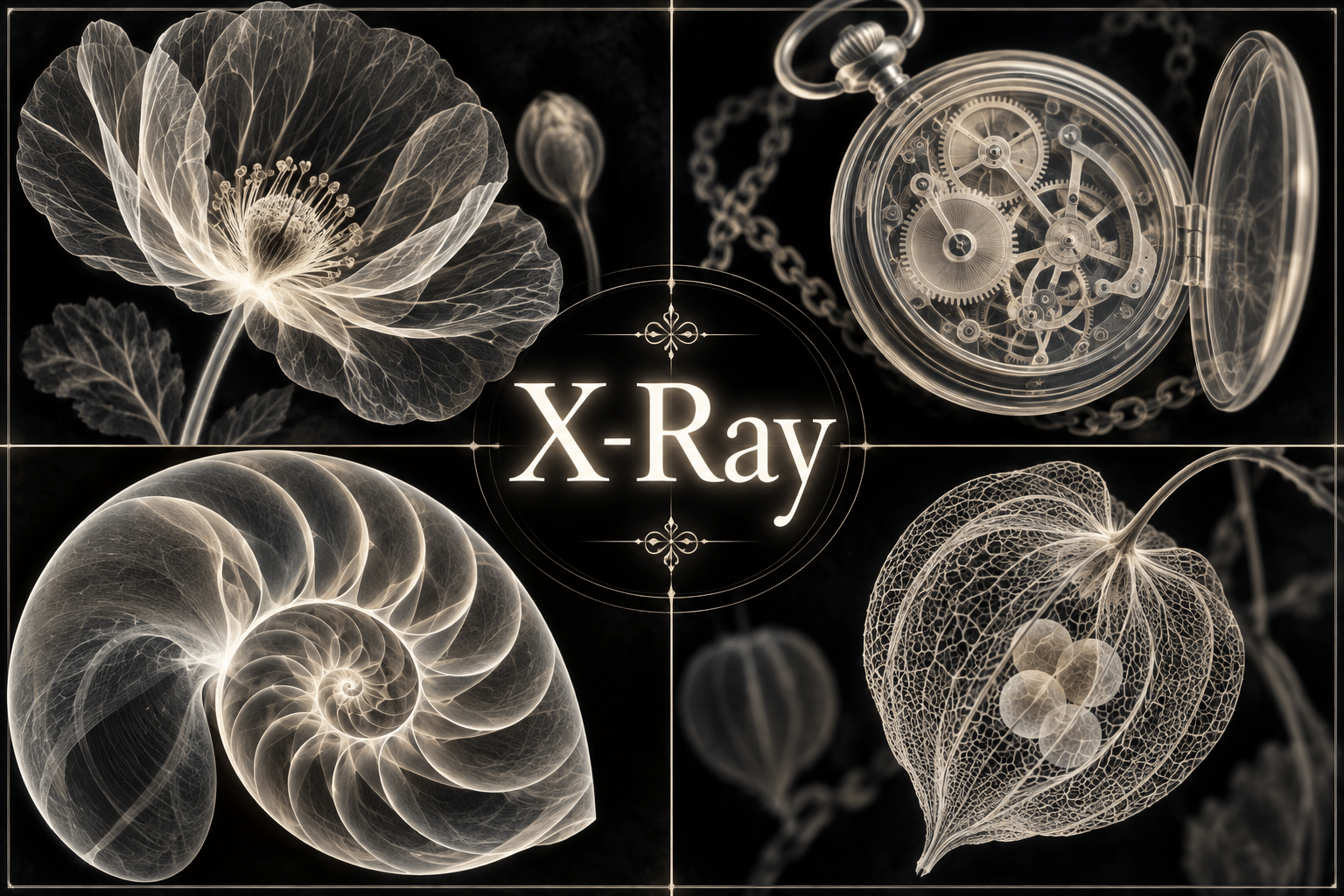
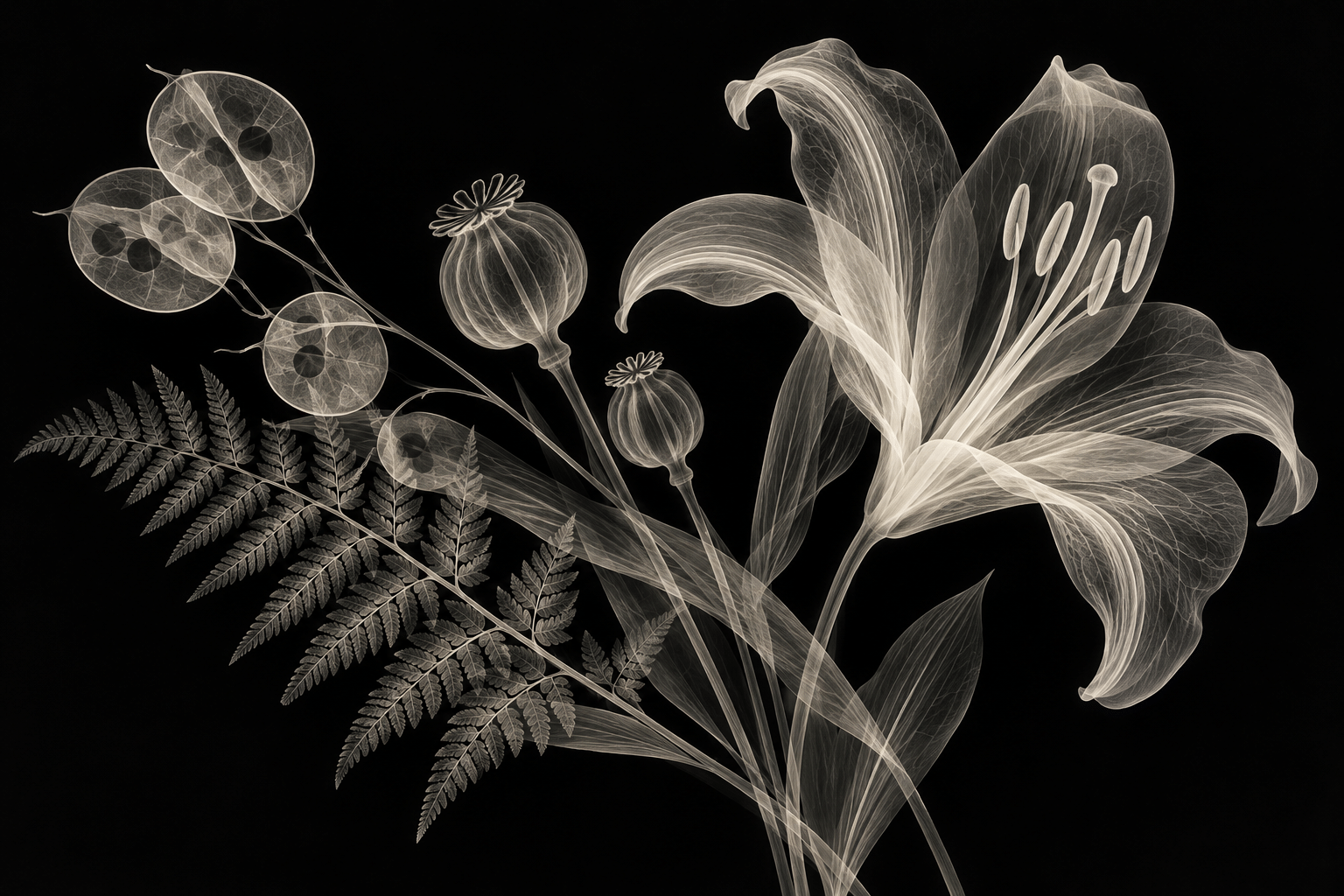
A dedicated example and a centrally titled collage introduce the visual possibilities. Both are AI-generated illustrations.
Select an image for a closer look. Use the arrow keys or gallery controls to compare the illustrations.
Creative toolbox · take this style further
Choose an input and a destination. Search sends your words to the chosen site; Copy & open puts them on your clipboard to paste there.
Create with AI
Turn your chosen input into an image prompt or a new creative direction.
ChatGPT
Copy your input and paste it into a ChatGPT conversation or image request.
Copy & open ChatGPT (new tab)Claude · Anthropic
Develop an image prompt or explore the style in a new Claude conversation.
Copy & open Claude · Anthropic (new tab)Midjourney
Paste your input into the Imagine bar on the Create page.
Copy & open Midjourney (new tab)Adobe Firefly
Copy your input, open Firefly, and paste it into the prompt field.
Copy & open Adobe Firefly (new tab)Leonardo.Ai
Copy your input, open Leonardo, and paste it into the generation field.
Copy & open Leonardo.Ai (new tab)Image search
Find visual references. Short, concrete keywords usually work best.
Lexica
Search AI images and prompts using your selected input.
Search with this input Lexica (new tab)Pexels
Search the photo and video library. Short keywords often work best.
Search with this input Pexels (new tab)Pixabay
Search photos, illustrations and other images.
Search with this input Pixabay (new tab)Unsplash
Search photographs using the style name or your own keywords.
Search with this input Unsplash (new tab)Wikimedia Commons
Search photographs, artworks and historical images. Check each file for its source and reuse terms.
Search with this input Wikimedia Commons (new tab)Art & research
Explore artists, collections and the ideas behind a style.
Wikipedia
Search for background reading. A style may not have its own article.
Search with this input Wikipedia (new tab)WikiArt
Copy your input into WikiArt’s search to explore artists and artworks.
Copy & open WikiArt (new tab)Europeana
Paste your keywords into the search to explore European museum, library and archive collections.
Copy & open Europeana (new tab)Inspiration
Discover portfolios and visual ideas from creative communities.
Instagram hashtags
Search a hashtag made from your input: spaces and punctuation are removed. Instagram may require sign-in.
Search with this input Instagram hashtags (new tab)ArtStation
Paste your input into artwork search for concept art, environments, characters and visual development.
Copy & open ArtStation (new tab)Behance
Paste your input into project search for illustration, design and visual storytelling.
Copy & open Behance (new tab)A closer look
Luminous internal lines, layered transparency, restrained monochrome and generous dark space; structure matters more than an indiscriminate glow.
What the name means
Real X-ray images are made using radiation and specialized imaging equipment; a transparent digital rendering is a different process. Both can invite us to look beneath a familiar surface, but they should be labelled accurately. The AOI images here are AI-generated artistic simulations, not radiographs, diagnoses or reliable diagrams of internal anatomy.
The V&A documents its collaboration with X-ray artist Nick Veasey on fashion objects, beginning in 2016. These studies reveal aspects of construction that an ordinary exterior photograph cannot show. This is a useful real-world connection: an apparently simple object may contain a surprisingly elaborate interior.
Build the image from the inside
Choose an object with a readable outer silhouette and an interesting internal rhythm: a seedpod, a mechanical enclosure or a layered garment. Establish a few dominant ribs or supports before adding fine lines. Use overlaps to suggest depth, while keeping one part unusually clear so the viewer has a place to begin.
A dark background makes pale structures legible, but black-and-white is not a rule for every radiograph. In an invented artwork, a limited ivory-to-silver palette can keep the focus on density and shape. Random glowing veins on every surface usually communicate decoration rather than a convincing structural idea.
Try a transparent still life
Arrange one large flower, a narrow fern and two rounded seedpods. Give each a different internal pattern and leave a substantial dark interval between them. Compare a version with opaque silhouettes to a transparent version: the second should reveal a new relationship, not merely reduce opacity.
For an imaginative machine, draw a plausible functional hierarchy even if the mechanism is fictional: casing, main wheel, smaller connections. Avoid labels that imply measured or authenticated findings. Real radiography belongs with trained specialists; digital illustration is the accessible creative exercise here.
Technique notes
Begin with one clear focal relationship.
Compare the example with the collage before varying the subject.
Label generated illustrations and distinguish visual references from tested technical assets.
A small poetic detour
Original words from the AOI studio.
Poetry
The petal lends its wall to light;
A hidden scaffold comes in sight.
What seemed a surface, smooth and still,
Unfolds a finer world within.
The prompt workshop
Original creative exercises. These prompts create new illustrations, not documentary evidence.
Begin with a flower
An original radiograph-inspired illustration of one translucent lily and a fern, luminous ivory veins on an ink-black field, clear outer silhouettes, layered internal structure and generous negative space. Imagined artistic visualization, not a real scan or anatomical diagram. No labels or text.
Explore a mechanism
A fictional transparent pocket watch suspended against charcoal, one main wheel and a few coherent supporting gears visible through the casing, restrained silver densities and delicate overlapping contours. Elegant X-Ray-inspired art, not a technical blueprint. No numbers, text or brand.
Change the material
An imagined folded coat shown through translucent layers, seams and fasteners forming a quiet architectural rhythm, pale grey density against black, one readable central silhouette, minimalist fine-art composition. Clearly a creative radiograph-inspired simulation, not an actual museum scan. No lettering.
Your next inspiration
Discover another art style
Follow a visual thread to the next subject.
A smile from the studio
Jokes
The pocket watch wanted a portrait. The artist asked it to open up.
My transparent flower has nothing to hide, except the prompt.
Sources and further exploration
Creative studies to try
Explore these collected prompts as creative interpretations. They are starting points for image-making, not reproductions of historical artworks or evidence about a tradition.
Visual cues: The hidden structure shines through
Study 1 — X-Ray
Apply the following visual style to my subject or project, preserving its core content and purpose. Create an artistic X-ray interpretation with translucent overlapping layers, luminous internal structures, and pale cyan-white density patterns on deep black. Make the subject recognizable through internal construction rather than surface color. Adapt the composition and palette to suit my subject. Do not add text unless my project calls for it.
Prompt source: Emergent Mind Style Atlas. Select the text to copy, then adapt the subject and composition.