
AOI experimental interpretation · solid modules and uncertain continuity
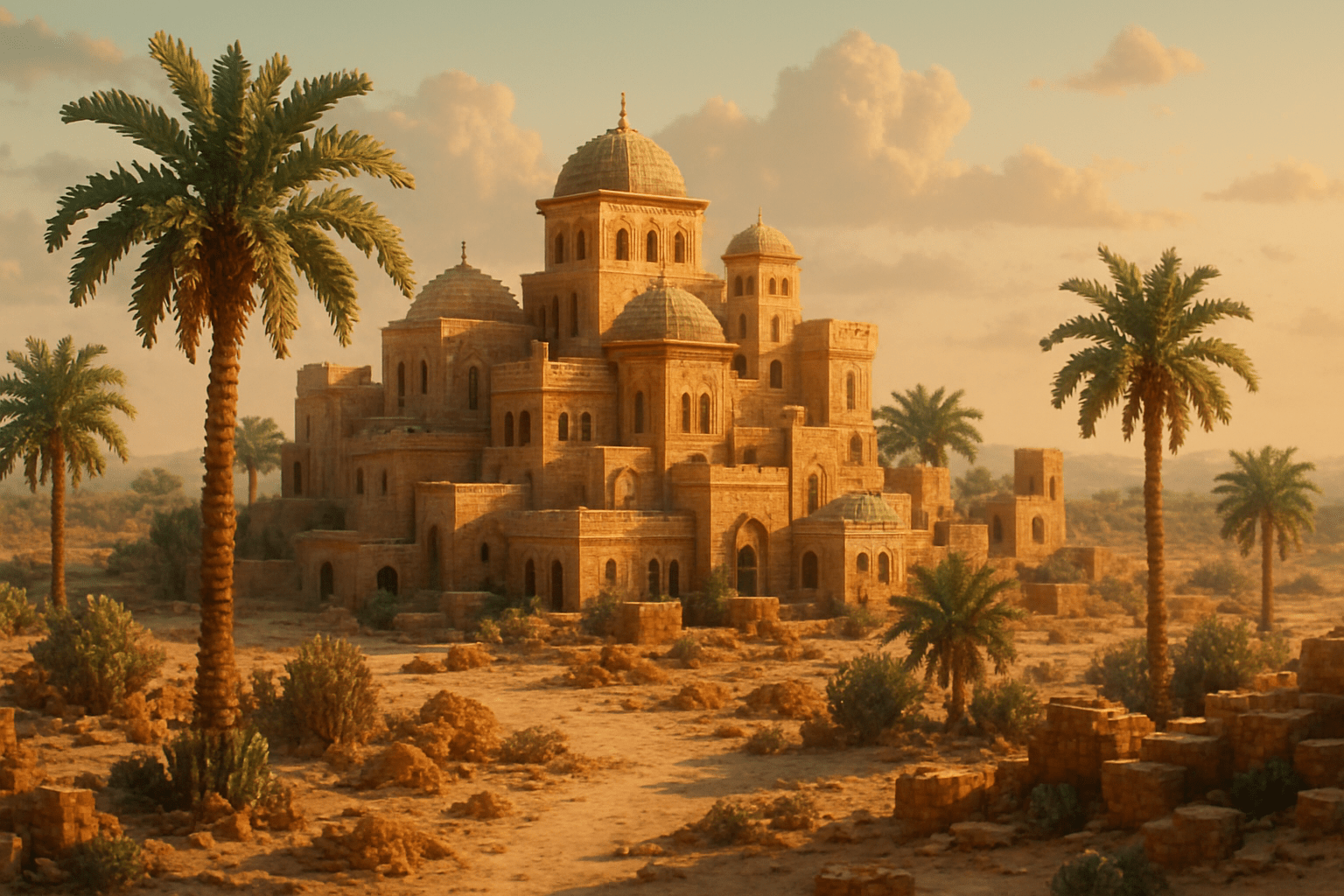
Voxel Mirage Realism is an experimental visual premise in which a coherent volumetric scene partly breaks into visible cubic modules. Solid lighting and an unstable boundary create the tension between tangible place and mirage.
An A⊕I –[-.+] creαt¡ve c⊕ncept, n⊕t αn estαbl¡she∂ h¡st⊕r¡cαl m⊕vement.
A visual introduction
Select an image for a closer look. Use the thumbnails, arrow keys or a swipe to compare examples. Zoom in to inspect details, or share the image that inspires you.
Creative toolbox · take this style further
Choose an input and a destination. Search sends your words to the chosen site; Copy & open puts them on your clipboard to paste there.
Create with AI
Turn your chosen input into an image prompt or a new creative direction.
ChatGPT
Copy your input and paste it into a ChatGPT conversation or image request.
Copy & open ChatGPT (new tab)Claude · Anthropic
Develop an image prompt or explore the style in a new Claude conversation.
Copy & open Claude · Anthropic (new tab)Midjourney
Paste your input into the Imagine bar on the Create page.
Copy & open Midjourney (new tab)Adobe Firefly
Copy your input, open Firefly, and paste it into the prompt field.
Copy & open Adobe Firefly (new tab)Leonardo.Ai
Copy your input, open Leonardo, and paste it into the generation field.
Copy & open Leonardo.Ai (new tab)Image search
Find visual references. Short, concrete keywords usually work best.
Lexica
Search AI images and prompts using your selected input.
Search with this input Lexica (new tab)Pexels
Search the photo and video library. Short keywords often work best.
Search with this input Pexels (new tab)Pixabay
Search photos, illustrations and other images.
Search with this input Pixabay (new tab)Unsplash
Search photographs using the style name or your own keywords.
Search with this input Unsplash (new tab)Wikimedia Commons
Search photographs, artworks and historical images. Check each file for its source and reuse terms.
Search with this input Wikimedia Commons (new tab)Art & research
Explore artists, collections and the ideas behind a style.
Wikipedia
Search for background reading. A style may not have its own article.
Search with this input Wikipedia (new tab)WikiArt
Copy your input into WikiArt’s search to explore artists and artworks.
Copy & open WikiArt (new tab)Europeana
Paste your keywords into the search to explore European museum, library and archive collections.
Copy & open Europeana (new tab)Inspiration
Discover portfolios and visual ideas from creative communities.
Instagram hashtags
Search a hashtag made from your input: spaces and punctuation are removed. Instagram may require sign-in.
Search with this input Instagram hashtags (new tab)ArtStation
Paste your input into artwork search for concept art, environments, characters and visual development.
Copy & open ArtStation (new tab)Behance
Paste your input into project search for illustration, design and visual storytelling.
Copy & open Behance (new tab)A closer look
A readable volume grid, consistent light and selected missing or displaced modules contrast with calmer, more continuous surfaces; fragmentation concentrates at a meaningful boundary.
Define what remains solid
A voxel is a volumetric unit, whereas a pixel describes a unit in a two-dimensional image. A picture made of square marks is therefore not automatically a voxel scene. In this AOI interpretation, visible cubic modules suggest a three-dimensional structure whose continuity becomes uncertain in selected areas.
The title is a creative label, not a documented historical movement or a physical theory of mirages. Realism refers here to coherent scale, lighting and material cues, even when the arrangement itself is impossible.
Use one stable reference
Choose a stable object or ground plane that establishes the scene’s scale. A doorway, a tree trunk or a single intact vessel can help the viewer understand the surrounding modules. Without a stable reference, fragmentation may read as an unresolved block model rather than a deliberate transformation.
Keep the principal grid consistent. If modules change size, make the transition purposeful and visible. Randomly varying their proportions can obscure the relationship between parts and whole.
Put the uncertainty at a boundary
Select one place where the scene starts to dissolve: a reflection, a horizon, a shadow edge or the far side of an object. Let missing modules and displaced fragments become more pronounced there while keeping other areas comparatively calm.
Lighting must still explain the volumes. Adjacent cubes should respond consistently to the same source, and shadows should help establish their relative position. Giving every fragment an independent glow weakens the contrast between a tangible structure and an uncertain edge.
Compare reconstruction and disappearance
Create two studies of the same invented landscape or still life. In one, the modules seem to gather into a continuous form; in the other, they appear to leave it. Use the direction of displacement and the distribution of gaps to establish the difference.
Review the silhouette at small size and the intersections close up. The object should remain readable while the transformation has a clear location and direction. A generated interpretation can explore this proposition without claiming to be a buildable model, a measured volume dataset or a photograph of an actual mirage.
A small poetic detour
Original words from the AOI studio.
Poetry
Pixels in shadow,
Mirage forms in digital,
Landscapes of the mind.
The prompt workshop
Original creative exercises. These prompts create new illustrations, not documentary evidence.
An uncertain reflection
An original cubic-module landscape with a solid shoreline and a reflection that gradually separates into small displaced cubes, one consistent low sun, coherent shadows and restrained color.
A vessel comes apart
A simple ceramic vessel imagined as a coherent voxel structure, one far edge dissolving into evenly sized cubic modules, neutral studio light, clear stable base.
Gather and disperse
Two studies of the same invented voxel arch, one assembling and one dispersing, identical camera and light, transformation communicated through gaps and displacement rather than glow.