
Moving-image medium and artistic practice
Video is a medium, not a single surface effect. Duration, sequence, repetition, sound and the conditions of viewing can matter as much as the appearance of an individual frame.
A visual introduction
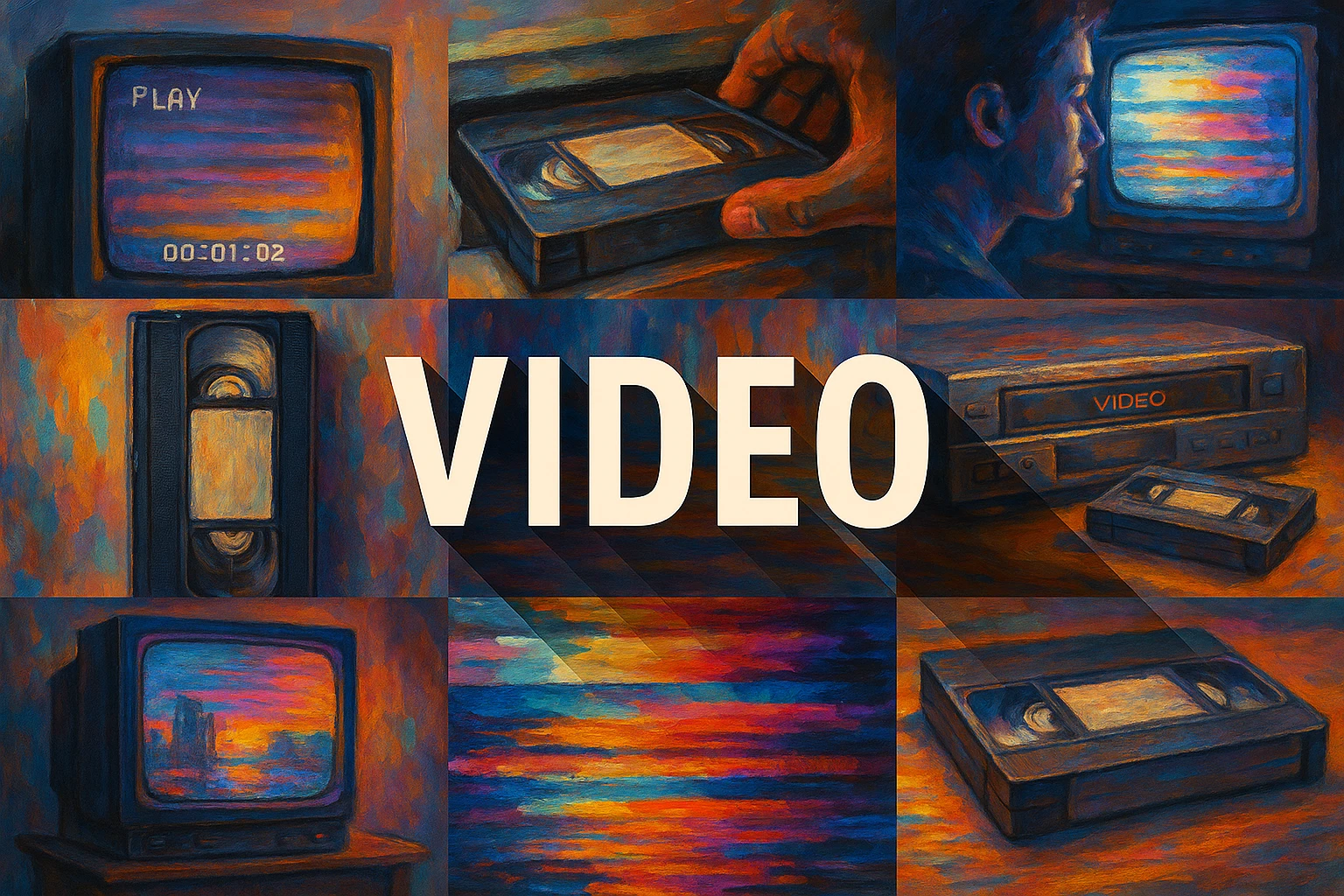
Compare the retained archive studies. The titled collage is modern editorial illustration; its panels are not reproductions of documented works.
Select an image for a closer look. Use the thumbnails, arrow keys or a swipe to compare examples. Zoom in to inspect details, or share the image that inspires you.
Creative toolbox · take this style further
Choose an input and a destination. Search sends your words to the chosen site; Copy & open puts them on your clipboard to paste there.
Create with AI
Turn your chosen input into an image prompt or a new creative direction.
ChatGPT
Copy your input and paste it into a ChatGPT conversation or image request.
Copy & open ChatGPT (new tab)Claude · Anthropic
Develop an image prompt or explore the style in a new Claude conversation.
Copy & open Claude · Anthropic (new tab)Midjourney
Paste your input into the Imagine bar on the Create page.
Copy & open Midjourney (new tab)Adobe Firefly
Copy your input, open Firefly, and paste it into the prompt field.
Copy & open Adobe Firefly (new tab)Leonardo.Ai
Copy your input, open Leonardo, and paste it into the generation field.
Copy & open Leonardo.Ai (new tab)Image search
Find visual references. Short, concrete keywords usually work best.
Lexica
Search AI images and prompts using your selected input.
Search with this input Lexica (new tab)Pexels
Search the photo and video library. Short keywords often work best.
Search with this input Pexels (new tab)Pixabay
Search photos, illustrations and other images.
Search with this input Pixabay (new tab)Unsplash
Search photographs using the style name or your own keywords.
Search with this input Unsplash (new tab)Wikimedia Commons
Search photographs, artworks and historical images. Check each file for its source and reuse terms.
Search with this input Wikimedia Commons (new tab)Art & research
Explore artists, collections and the ideas behind a style.
Wikipedia
Search for background reading. A style may not have its own article.
Search with this input Wikipedia (new tab)WikiArt
Copy your input into WikiArt’s search to explore artists and artworks.
Copy & open WikiArt (new tab)Europeana
Paste your keywords into the search to explore European museum, library and archive collections.
Copy & open Europeana (new tab)Inspiration
Discover portfolios and visual ideas from creative communities.
Instagram hashtags
Search a hashtag made from your input: spaces and punctuation are removed. Instagram may require sign-in.
Search with this input Instagram hashtags (new tab)ArtStation
Paste your input into artwork search for concept art, environments, characters and visual development.
Copy & open ArtStation (new tab)Behance
Paste your input into project search for illustration, design and visual storytelling.
Copy & open Behance (new tab)A closer look
Think in changes over time: a held frame, a cut, a repeated action, a shift of light or a relation between screens.
An image that takes time
A still illustration can suggest video equipment or a graphic era, but it cannot demonstrate duration by itself. The National Gallery of Art’s Nam June Paik exhibition included video sculptures alongside works on paper, showing how moving images can be part of a spatial practice as well as a screen-based one. The medium does not require one particular palette or an obsolete television.
Distinguish the content of a recording from the way it is presented. The same action seen once, repeated in a loop or distributed across several screens can produce different expectations. Sound, silence and the viewer’s position also shape the experience.
Give a short study a clear rule
Begin with a small action: a curtain moving, a hand arranging three objects or sunlight crossing a wall. Decide what changes and what remains fixed. A locked camera makes a small movement noticeable; a cut can introduce a new relation. Test the beginning and end together if you want a seamless loop.
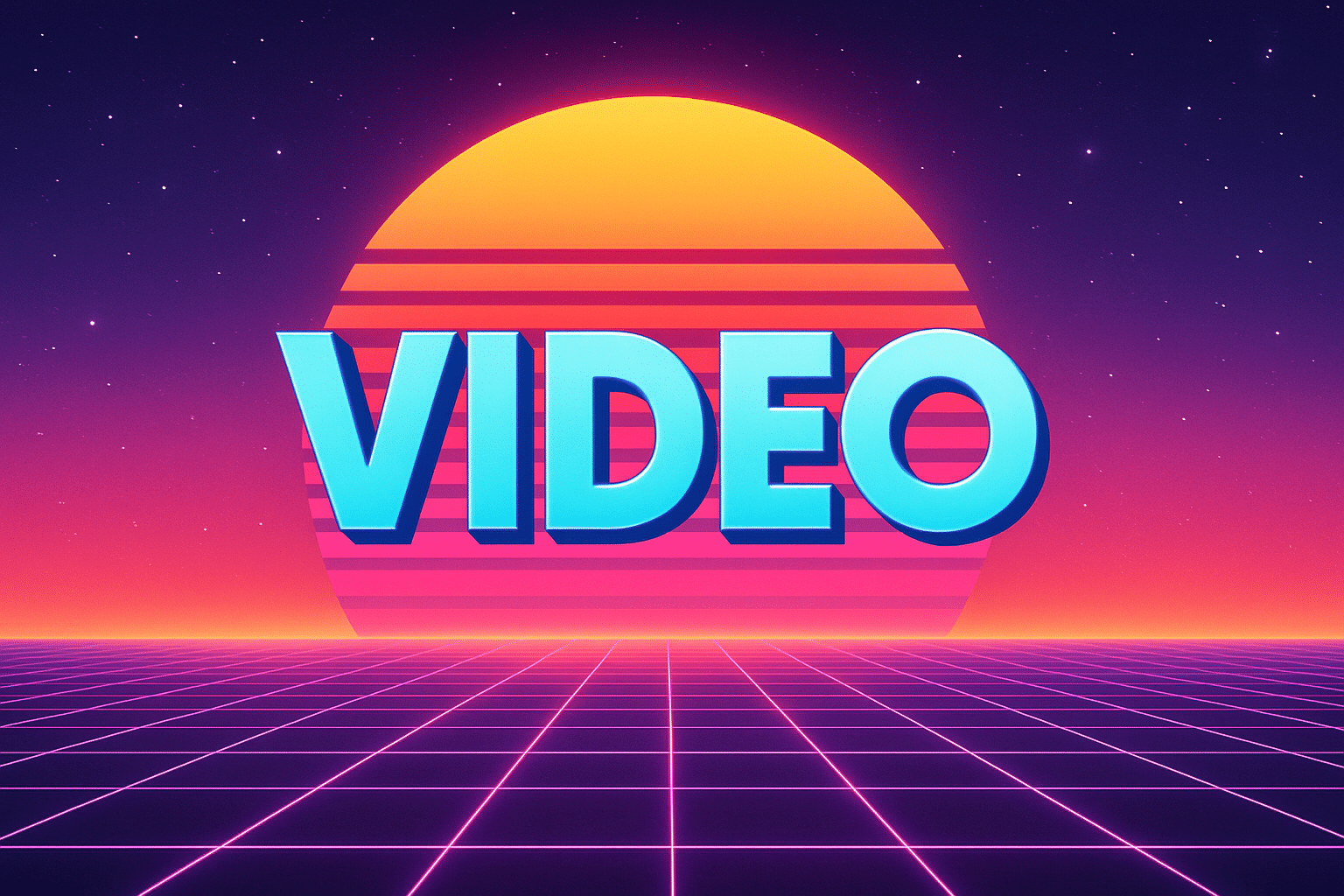
The archive collage shows screens, tapes and electronic color, while the standalone title graphic suggests retro video packaging. These are static illustrations, not playable videos or documentation of a particular artist’s installation. Use them as prompts for atmosphere, then write a short sequence that could actually unfold in time. Avoid adding scan lines and calling the task complete. A useful moving-image idea has a temporal structure, even when its visual vocabulary is very simple.
The prompt workshop
Original creative exercises. These prompts create new illustrations, not documentary evidence.
A frame for a loop
Create an original still concept frame for a short video: a pale curtain beside a dark window, one bright band of sunlight and a quiet empty room. The planned action is a slow movement of the curtain. No text or television frame.
An installation concept
Create an original visualization of three small screens at different heights in a dark gallery, each showing a different stage of water rippling. Make the spatial arrangement readable and the lighting restrained. Concept illustration, not documentation; no text.
A sequence plan
Create an original three-panel storyboard showing a hand place a red stone on a white table, withdraw, and leave a shifting shadow. Keep camera position and object scale constant. No labels or lettering.