
Central European archaeology
Explore the Middle Bronze Age Tumulus culture through burial landscapes, dress pins and arm ornaments, with archaeological references and labelled studies.
A visual introduction
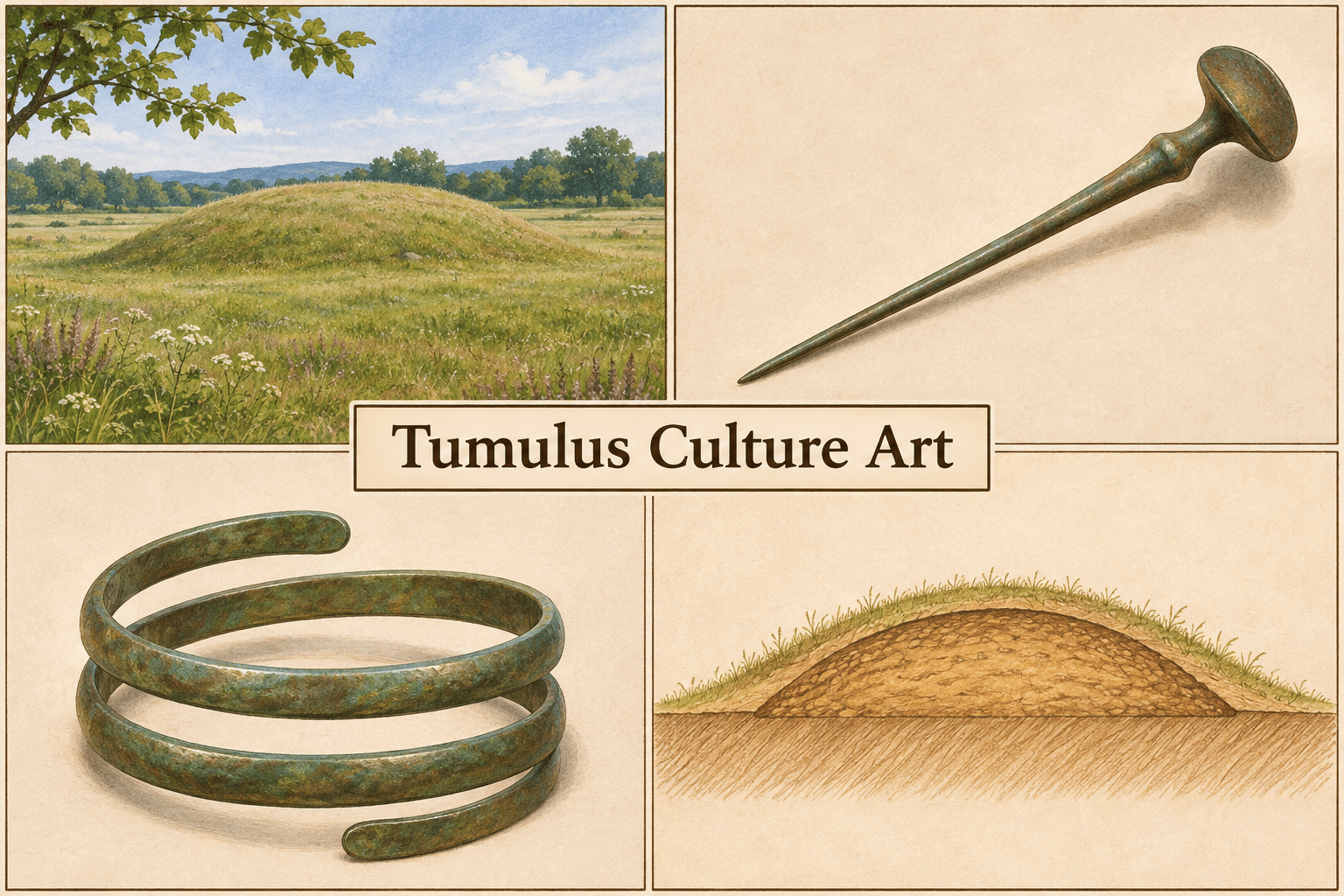
Five original AOI teaching illustrations accompany the visual comparisons.
Select an image for a closer look. Use the thumbnails, arrow keys or a swipe to compare examples. Zoom in to inspect details, or share the image that inspires you.
A closer look
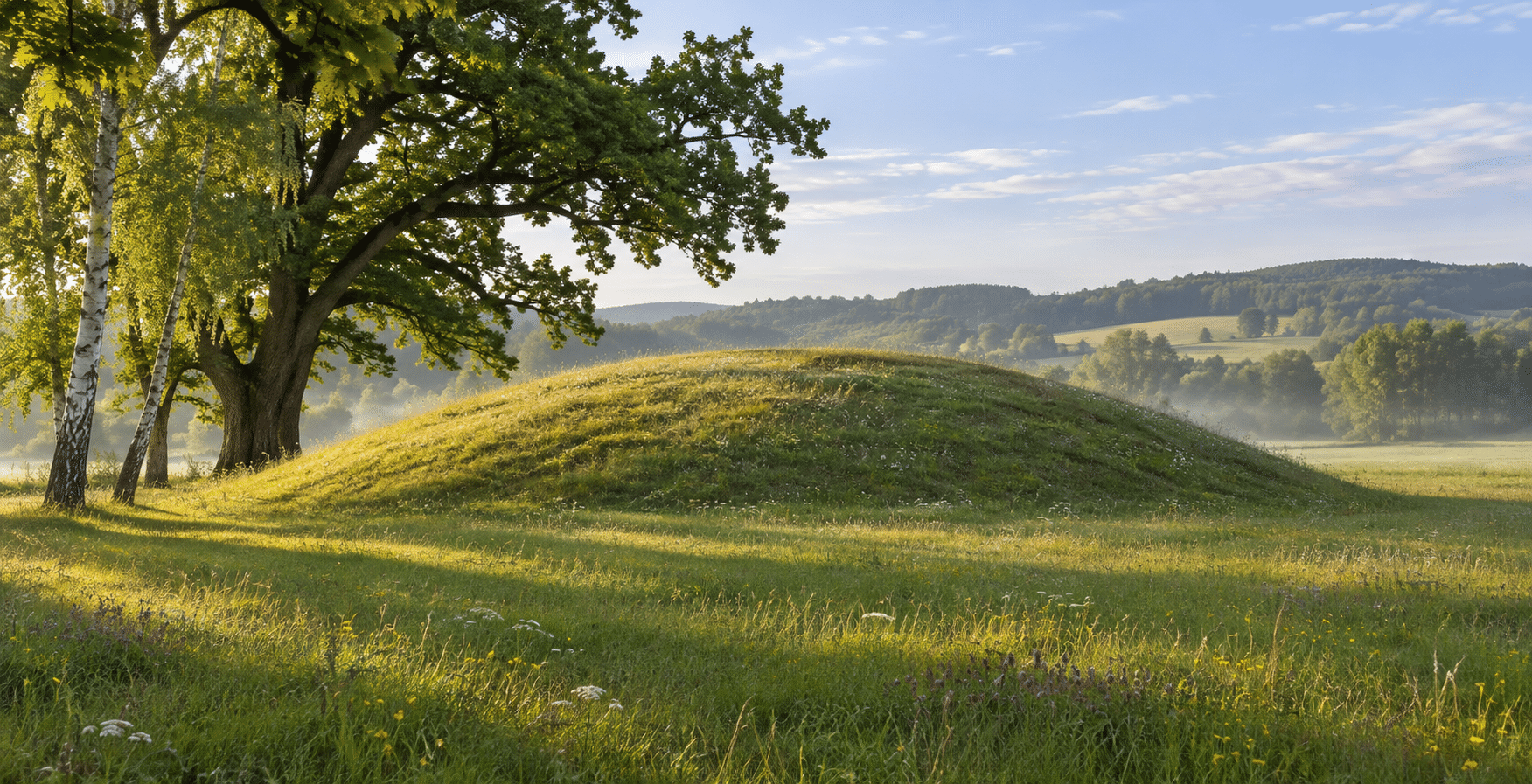
Morning light makes the edge of a low mound visible beside a tree.
A name derived from burial practice
Archaeologists use Tumulus culture for a Middle Bronze Age grouping in parts of central Europe. The word tumulus means a mound. Mounds were built in many periods and places, and identifying one in a landscape takes archaeological evidence. The meadow scene here gives the reader a sense of scale. It depicts an imagined landscape. Tree height, turf and the angle of the sun all affect how prominent a low mound appears.
Read the excavation context first
Albrecht Jockenhövel’s account of Bronze Age Germany illustrates finds from Wolnzach-Niederlauterbach in Bavaria. Two graves in the same tumulus yielded different groupings of objects, including pins and ornaments. Their recorded positions matter when interpreting how a pin or a spiral may have been worn. A drawing that joins an ornament to a garment adds an inference. Keeping the object drawing beside that reconstruction lets readers see where observation ends and interpretation begins.
A pin head and an arm coil
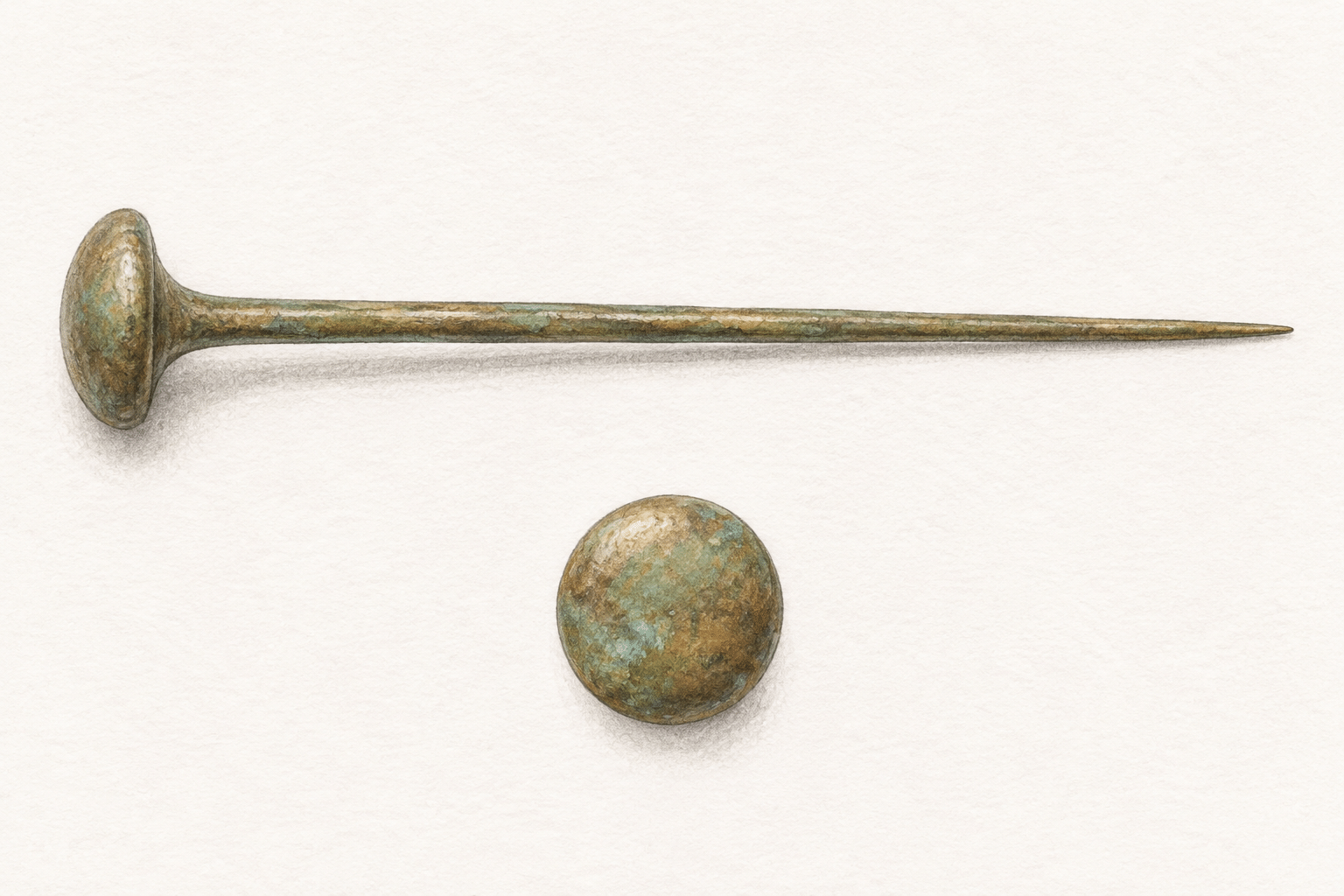
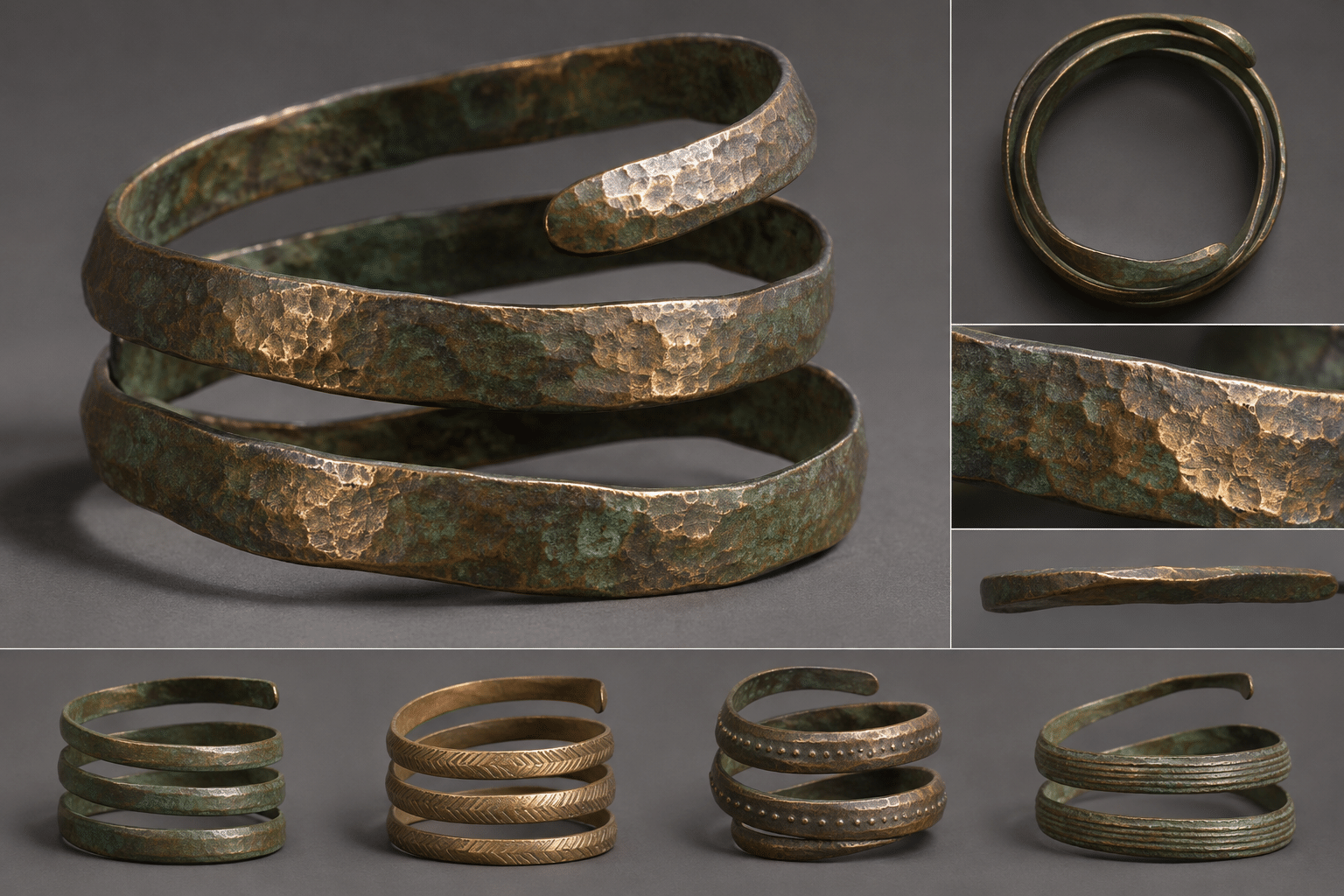
In the pin study the taper takes most of the horizontal space. Viewed end-on, the head hides the shaft almost completely. On the ornament plate, light crosses the hammered surfaces differently from the incised bands. Each design in the plate is an invented comparison. For an archaeological attribution one would seek the find record, dimensions, material analysis and associated objects. A green surface by itself cannot date a piece of metal.
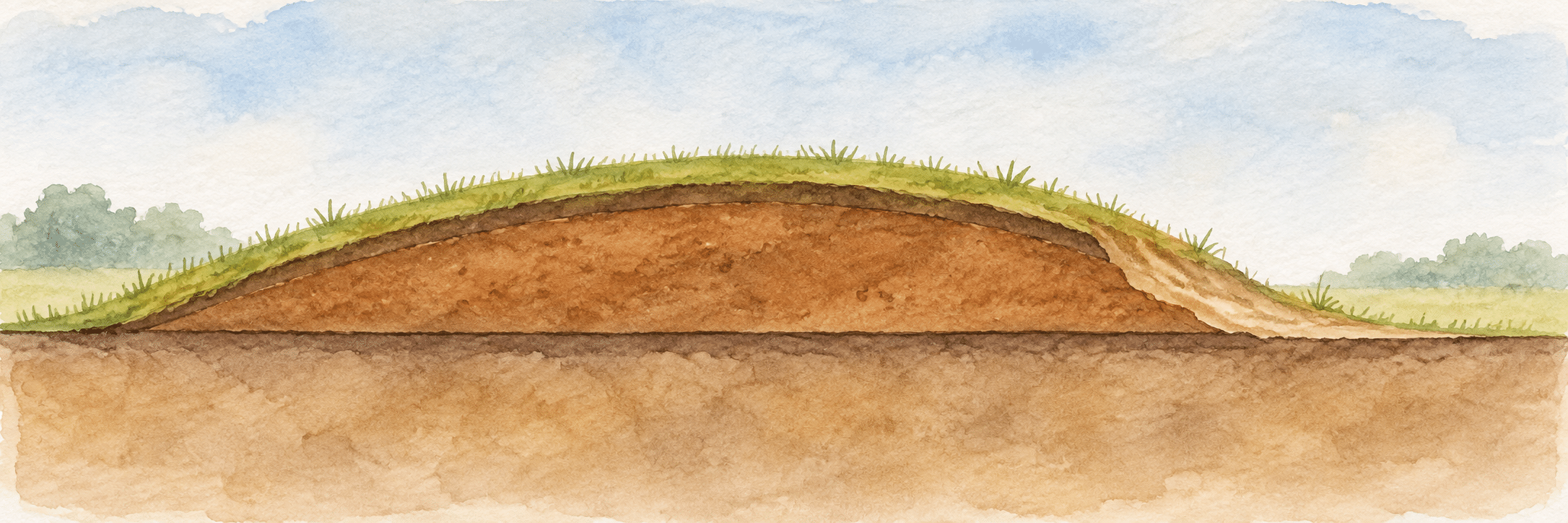
Earth in section
Trace the dark line under the curve of the mound in the watercolour. It indicates an earlier ground surface and lets you compare the low edge with the greater depth toward the centre. One slope shows a break in the turf. The drawing simplifies the layers to make a reading exercise possible. A real excavation section records irregularities at a particular location. What people believed about a burial requires a different argument from the one that explains how its mound was built.
A small poetic detour
Original words from the AOI studio.
Poetry
Grass leans across the rise.
In the drawing, a darker line
keeps the level of a meadow
before the mound was there.
The prompt workshop
Original creative exercises. These prompts create new illustrations, not documentary evidence.
Pin in two views
Show a low meadow mound in oblique light with a tree for scale.
Turn of a bronze band
Draw a rounded dress pin from the side and the end, keeping both views aligned.
Ground beneath the mound
Compare a plain and an incised bronze coil in grazing light. Mark each as an invented design study.
A smile from the studio
Jokes
Sketch a folded blanket as a hill, then draw its section. Ask which drawing lets someone count the folds.
Sources and further exploration
Albrecht Jockenhövel, Germany in the Bronze Age, including the Bavarian burial assemblages