
Found-material and assemblage practices
Trashism is a loosely used label for art that engages discarded objects, damaged materials or the status of waste. It is most useful when the material’s former life contributes to the work, rather than merely supplying a rough texture.

A visual introduction
Select an image for a closer look. Use the thumbnails, arrow keys or a swipe to compare examples. Zoom in to inspect details, or share the image that inspires you.
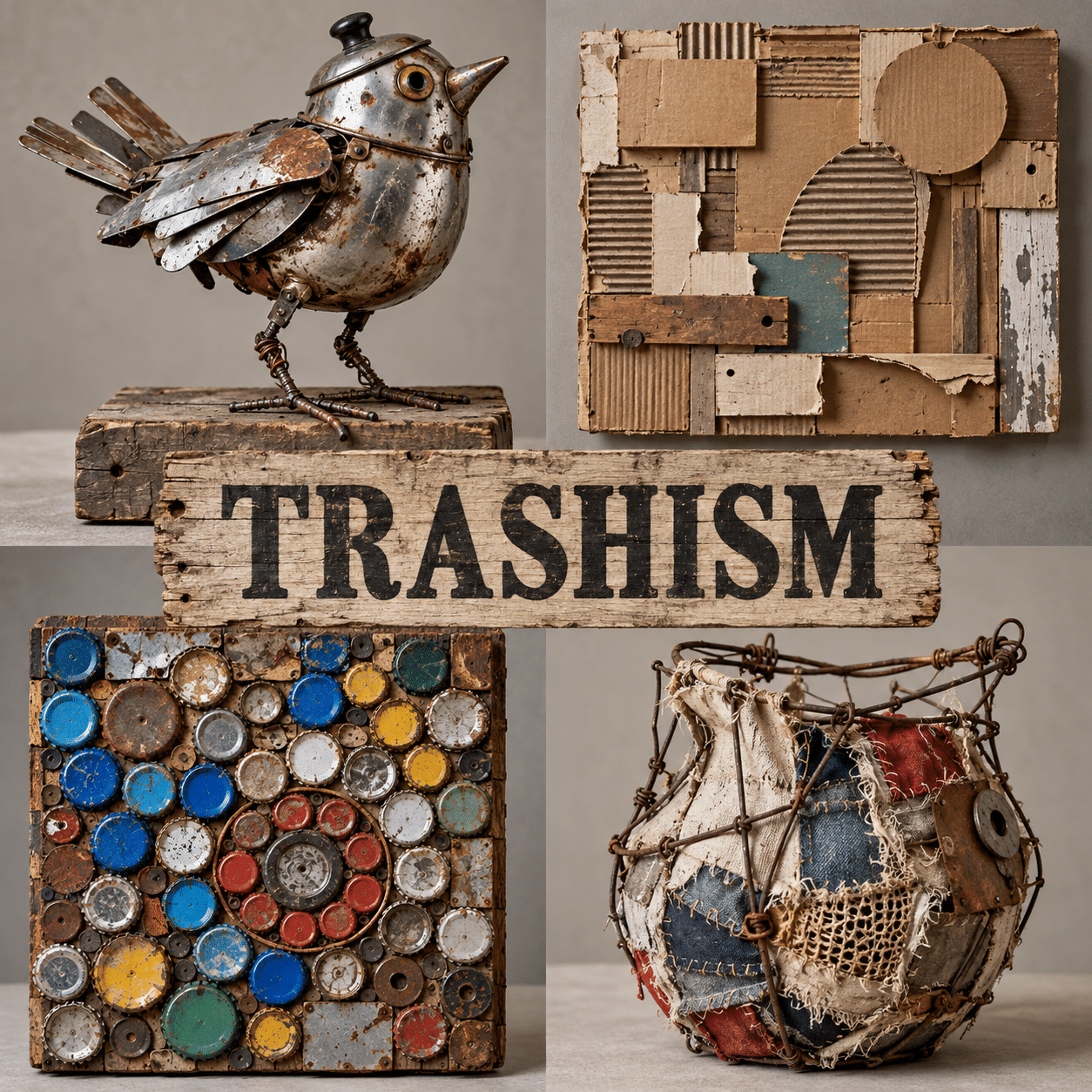
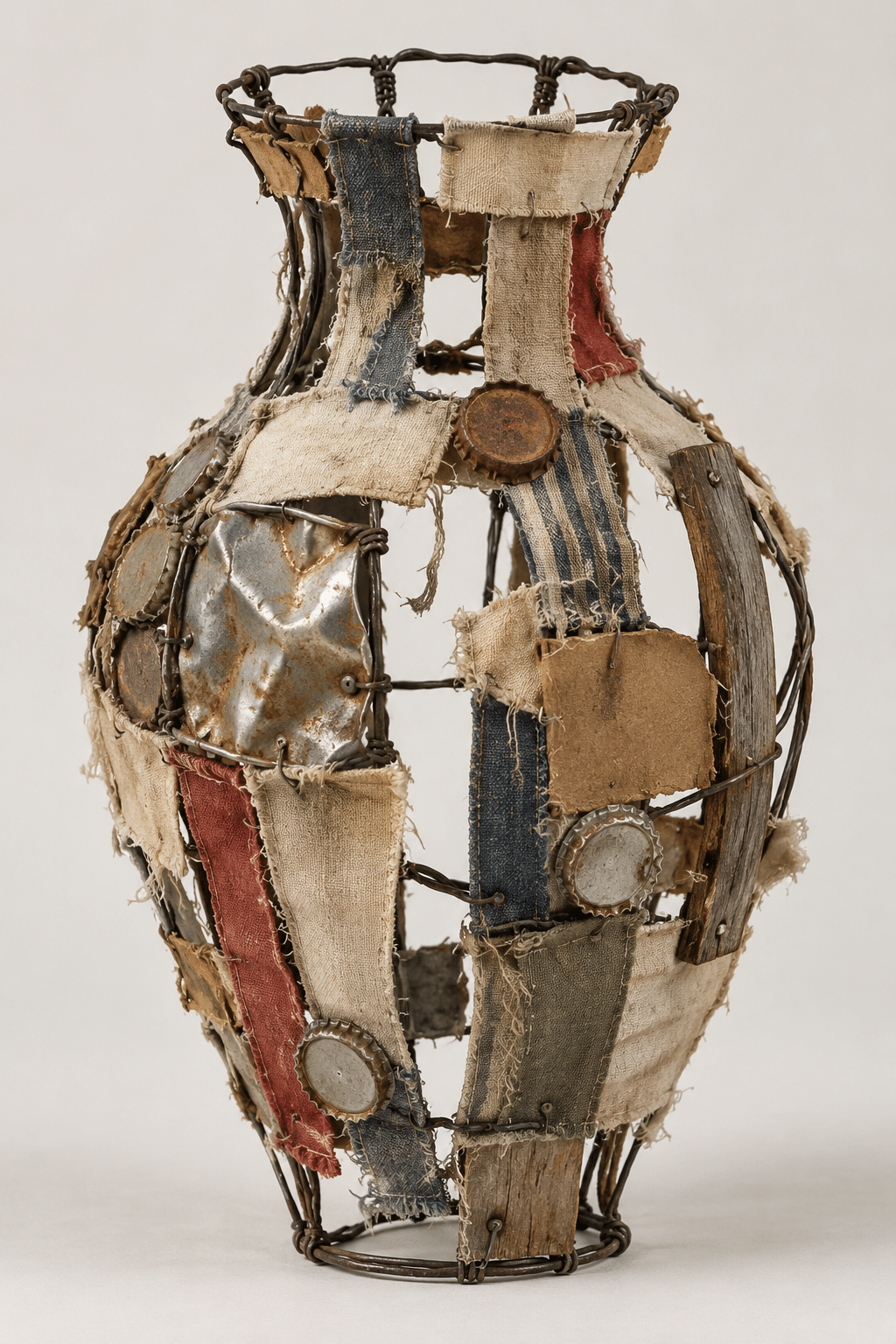
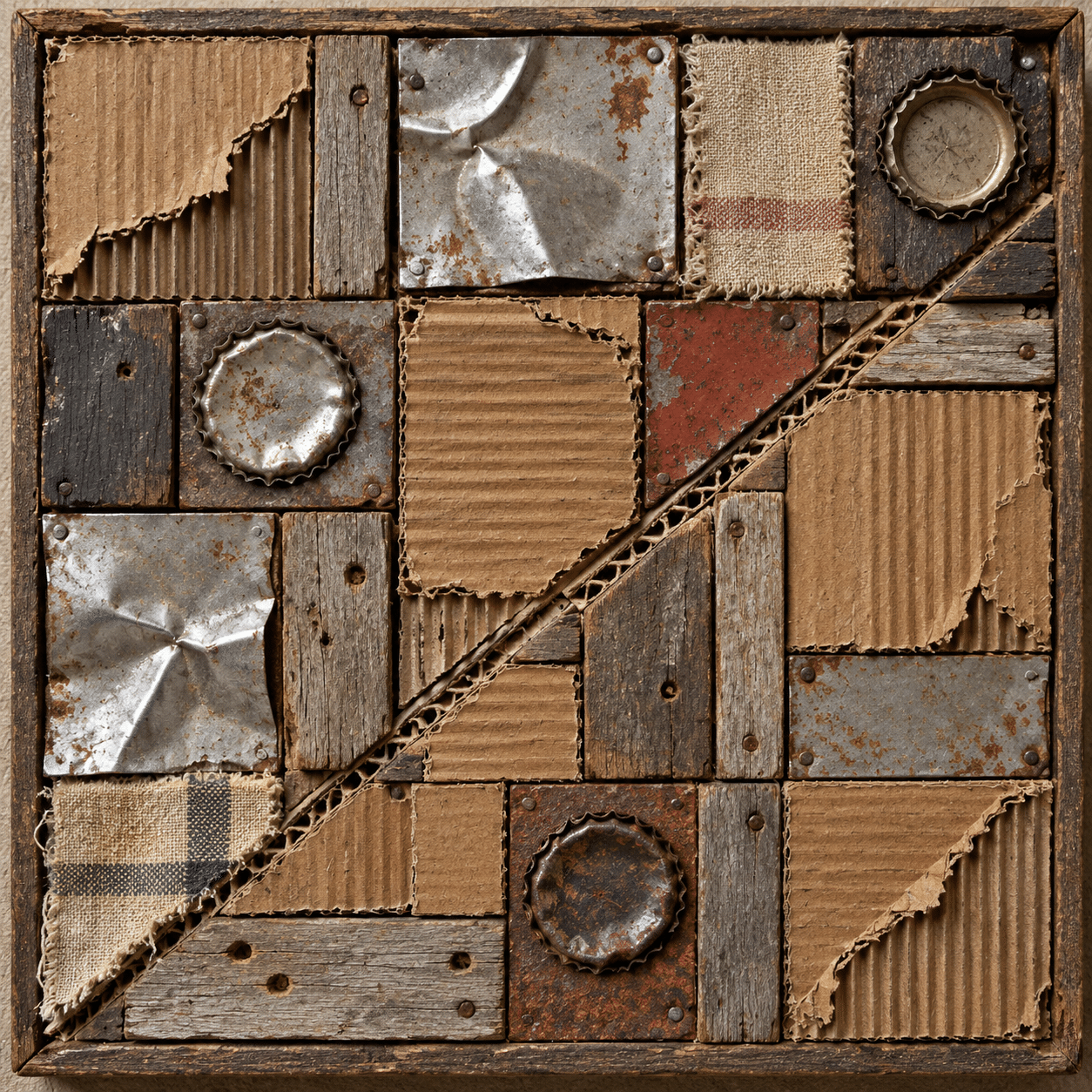
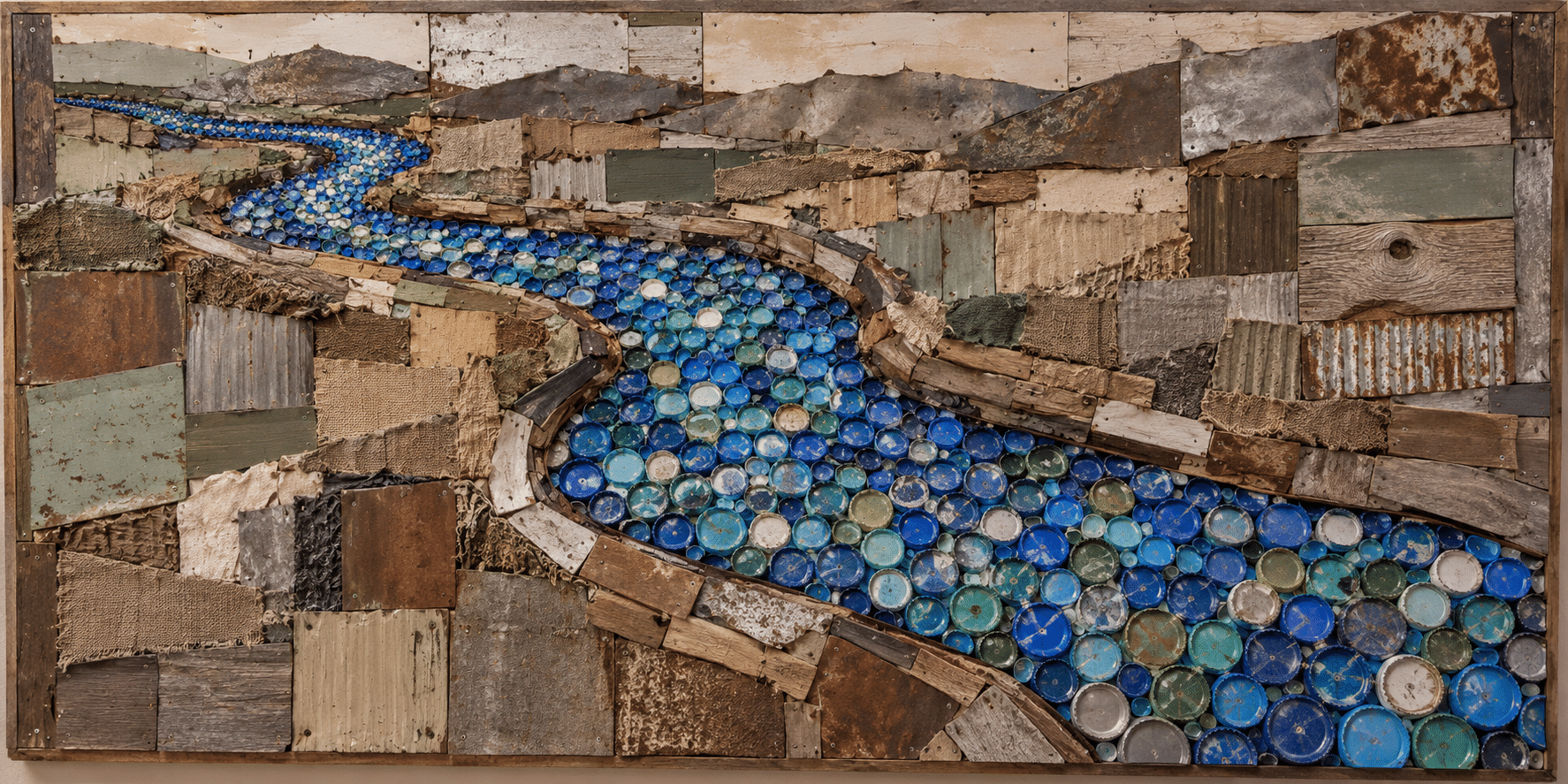
Creative toolbox · take this style further
Choose an input and a destination. Search sends your words to the chosen site; Copy & open puts them on your clipboard to paste there.
Create with AI
Turn your chosen input into an image prompt or a new creative direction.
ChatGPT
Copy your input and paste it into a ChatGPT conversation or image request.
Copy & open ChatGPT (new tab)Claude · Anthropic
Develop an image prompt or explore the style in a new Claude conversation.
Copy & open Claude · Anthropic (new tab)Midjourney
Paste your input into the Imagine bar on the Create page.
Copy & open Midjourney (new tab)Adobe Firefly
Copy your input, open Firefly, and paste it into the prompt field.
Copy & open Adobe Firefly (new tab)Leonardo.Ai
Copy your input, open Leonardo, and paste it into the generation field.
Copy & open Leonardo.Ai (new tab)Image search
Find visual references. Short, concrete keywords usually work best.
Lexica
Search AI images and prompts using your selected input.
Search with this input Lexica (new tab)Pexels
Search the photo and video library. Short keywords often work best.
Search with this input Pexels (new tab)Pixabay
Search photos, illustrations and other images.
Search with this input Pixabay (new tab)Unsplash
Search photographs using the style name or your own keywords.
Search with this input Unsplash (new tab)Wikimedia Commons
Search photographs, artworks and historical images. Check each file for its source and reuse terms.
Search with this input Wikimedia Commons (new tab)Art & research
Explore artists, collections and the ideas behind a style.
Wikipedia
Search for background reading. A style may not have its own article.
Search with this input Wikipedia (new tab)WikiArt
Copy your input into WikiArt’s search to explore artists and artworks.
Copy & open WikiArt (new tab)Europeana
Paste your keywords into the search to explore European museum, library and archive collections.
Copy & open Europeana (new tab)Inspiration
Discover portfolios and visual ideas from creative communities.
Instagram hashtags
Search a hashtag made from your input: spaces and punctuation are removed. Instagram may require sign-in.
Search with this input Instagram hashtags (new tab)ArtStation
Paste your input into artwork search for concept art, environments, characters and visual development.
Copy & open ArtStation (new tab)Behance
Paste your input into project search for illustration, design and visual storytelling.
Copy & open Behance (new tab)A closer look
Recognizable fragments, worn surfaces, exposed joins and changes of scale turn discarded things into deliberate sculptural or pictorial relationships.
A label with more than one context
Trashism should not be presented as a single movement with an agreed founder or manifesto. A published conversation with artist Kimberly Thomas uses the term in connection with discarded objects and their stories. A Colección Oxenford essay uses it in a different Argentine context associated with Roto. These examples support a plural, context-dependent use of the word.
This page offers a practical framework for looking at found-material work without claiming ownership of the term or assigning every assemblage to it. The useful starting point is the object: what it was, how it changed and what its new placement asks the viewer to notice.
Material identity should remain legible
A dented kettle, frayed cloth or crushed bottle cap carries a recognizable history of use. Preserve enough of that identity for the transformation to register. If every fragment is coated into one anonymous surface, the work may become a valid relief, but its relationship to discarded objects can become less apparent.
Recognition does not require a literal story about an unknown owner. Avoid inventing provenance for found things. Wear can suggest use without proving who used an object or why it was discarded. Describe documented origins when available and leave the rest open to interpretation.
Build a relationship, not merely a pile
Choose an organizing principle: a repeated unit, a clear silhouette, a material contrast or a visible structural joint. A field of bottle caps can become a mosaic through spacing and value; a vessel made from fabric and wire can make tension and support part of its form.
A chaotic arrangement may be intentional, but it still benefits from decisions about density and focal points. Leave some objects readable and allow others to merge into a larger mass. The viewer needs a way to move between individual fragments and the whole composition.
Color and surface
Existing paint, rust, faded printing and exposed substrate can provide a palette. Select materials whose colors support the design, or use a limited new treatment while keeping important wear visible. Bright discarded packaging and muted metal produce different emotional and spatial effects.
Photograph the work so texture and joins are legible. Side light can reveal corrugation and folded metal; diffuse light may better preserve a mosaic’s color relationships. A neutral background is useful when the object’s silhouette matters, while an installation context can show how the work occupies space.
Environmental meaning is not automatic
Using discarded material may raise questions about consumption, repair and value, but it does not by itself establish an environmental benefit. Added resins, transport, durability and future disposal can change the practical picture. Make specific claims only when they are supported by the project’s actual materials and process.
Likewise, an AI-generated picture of reused objects has not diverted those objects from a waste stream. The gallery is a set of design interpretations, not documentation of recycling. It demonstrates possible formal relationships and invites material experimentation without claiming an impact that did not occur.
Related practices and useful distinctions
Assemblage describes the joining of objects or materials into a work; found-object art can rely on selection and presentation; upcycling emphasizes a new use or value. Trashism may overlap with each, but the label is most informative when discarded status remains central to the work’s meaning.
A polished sculpture can still engage waste, and an intentionally rough surface can be made entirely from new materials. Appearance alone cannot resolve that distinction. Accurate captions help viewers separate a material fact from an aesthetic suggestion.
A small collection exercise
Choose five clean, manageable discarded objects with different shapes. Make one arrangement that preserves their original identities and another that uses them to form a new silhouette. Compare which relationships become stronger and which histories disappear. Document the actual materials and the way they are joined.
Do not add fragments simply to make the object look more complicated. A single exposed seam or carefully placed worn edge can carry more meaning than a dense surface of unrelated debris. The strongest work makes its transformation visible and gives the discarded material a precise role.
A small poetic detour
Original words from the AOI studio.
Poetry
After the Useful Years
The kettle keeps its dented side;
the cloth remembers every fold.
Their former tasks are set aside,
but not the stories surfaces hold.
A seam joins what was thrown away;
the shape asks us to let it stay.
The prompt workshop
Original creative exercises. These prompts create new illustrations, not documentary evidence.
A recognizable transformation
Create an AI concept of a bird-like assemblage from a dented kettle, worn metal fragments and weathered wood, visible joins and a clear silhouette, neutral gallery setting.
A rhythm of discarded units
Create an imagined bottle-cap mosaic forming a flowing river through a muted field, distinct cap edges and varied worn color, no brand names.
An open vessel
Create a sculptural concept of frayed fabric strips tensioned around a bent wire vessel frame, visible gaps, restrained color and a deliberate balance of fragility and support.
A smile from the studio
Jokes
The bottle cap retired from beverages and joined the color department.