
Archive note: historical claims and artist or artwork associations in this entry have not yet received a full source review.
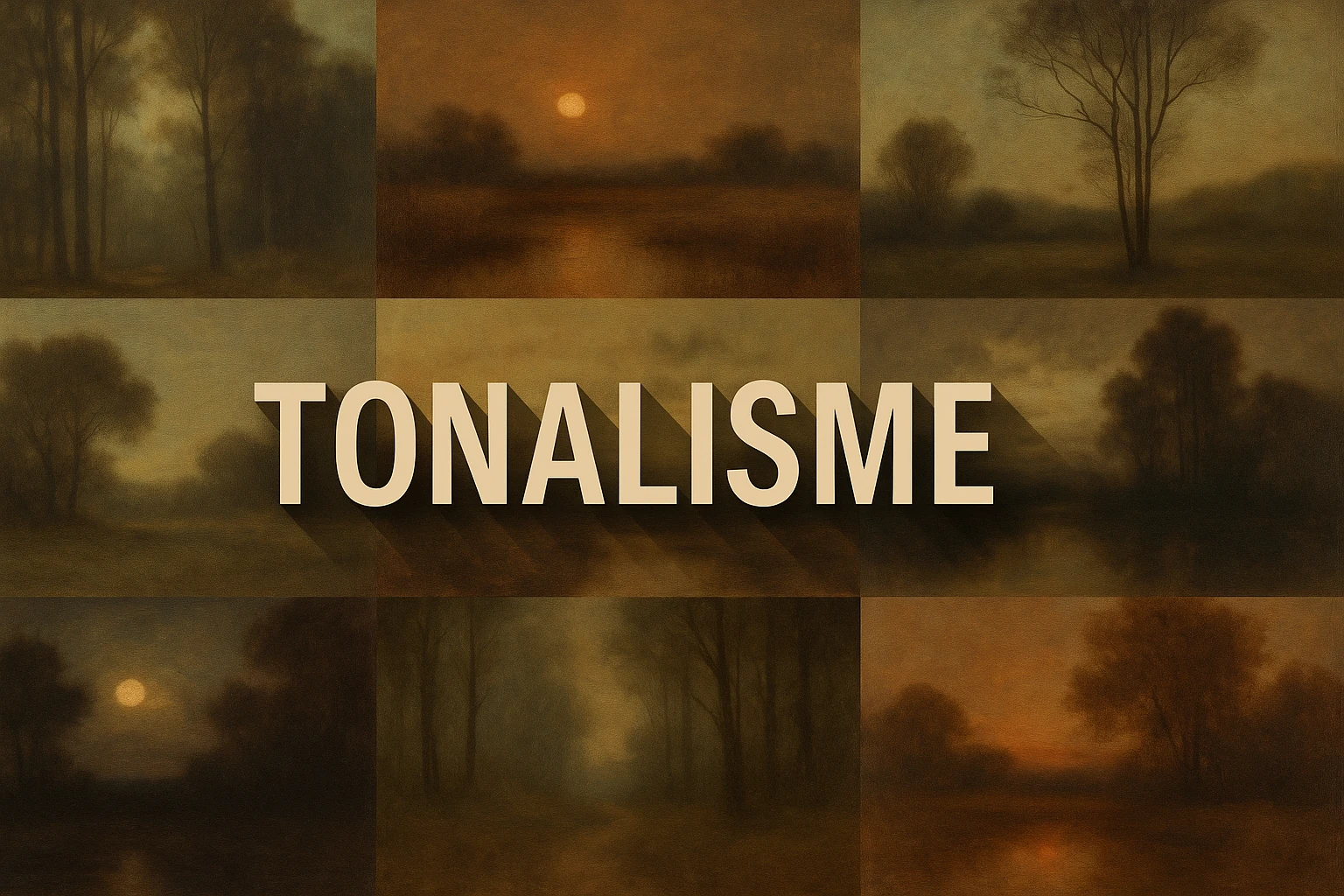
Tonalisme
Atmospheric veils of muted colors; brushstrokes that evoke the gentle touch of dawn’s first kiss or the fading whispers of twilight. Shadows dance as gentle whispers against a rich, dark tapestry.
AOI thinking about Tonalisme [+_~]-/
Overview and quick facts
A moody, atmospheric art style capturing the nuances of dusk and dawn; blending soft hues with shadowy whispers, often resembling an elegy painted in twilight.
Can understand it also, as:
Twilight Impressionism, Mood Painting
Categorize it as:
Impressionism, Modernism
.: Dreaming :.
Shadows' gentle dance,
Twilight bathes the world in calm—
Night's silent embrace.
:. Thought is power .:
Detailed description
Tonalisme, a turn-of-the-century wanderer, weaves as its own symphony. Artists cast aside flamboyant palettes for the sultry embrace of muted whispers. Imbued with shadows, its whispers beckon, calling from the edge of light.
Archive notes — claims to verify
1. Originated in the late 19th century.
2. Emphasizes mood through tone rather than detail.
3. Shares kinship with the Barbizon school.
4. Often features landscapes cloaked in twilight.
5. Bridges naturalism with abstraction.
Artists and works: references to check
(be aware, can be highly speculative)
Artists (be aware, speculation possible):
1. James McNeill Whistler 2. George Inness 3. John Henry Twachtman
Artworks (be aware, speculation possible)
1. “Nocturne in Black and Gold” by James McNeill Whistler 2. “The Lackawanna Valley” by George Inness 3. “Snow Scene” by John Henry Twachtman
Epoch
Late 19th to early 20th century
Creative tools and further exploration
Search results are starting points for exploration, not evidence for the historical claims or attributions in this legacy entry.