
Japanese paper-marbling technique
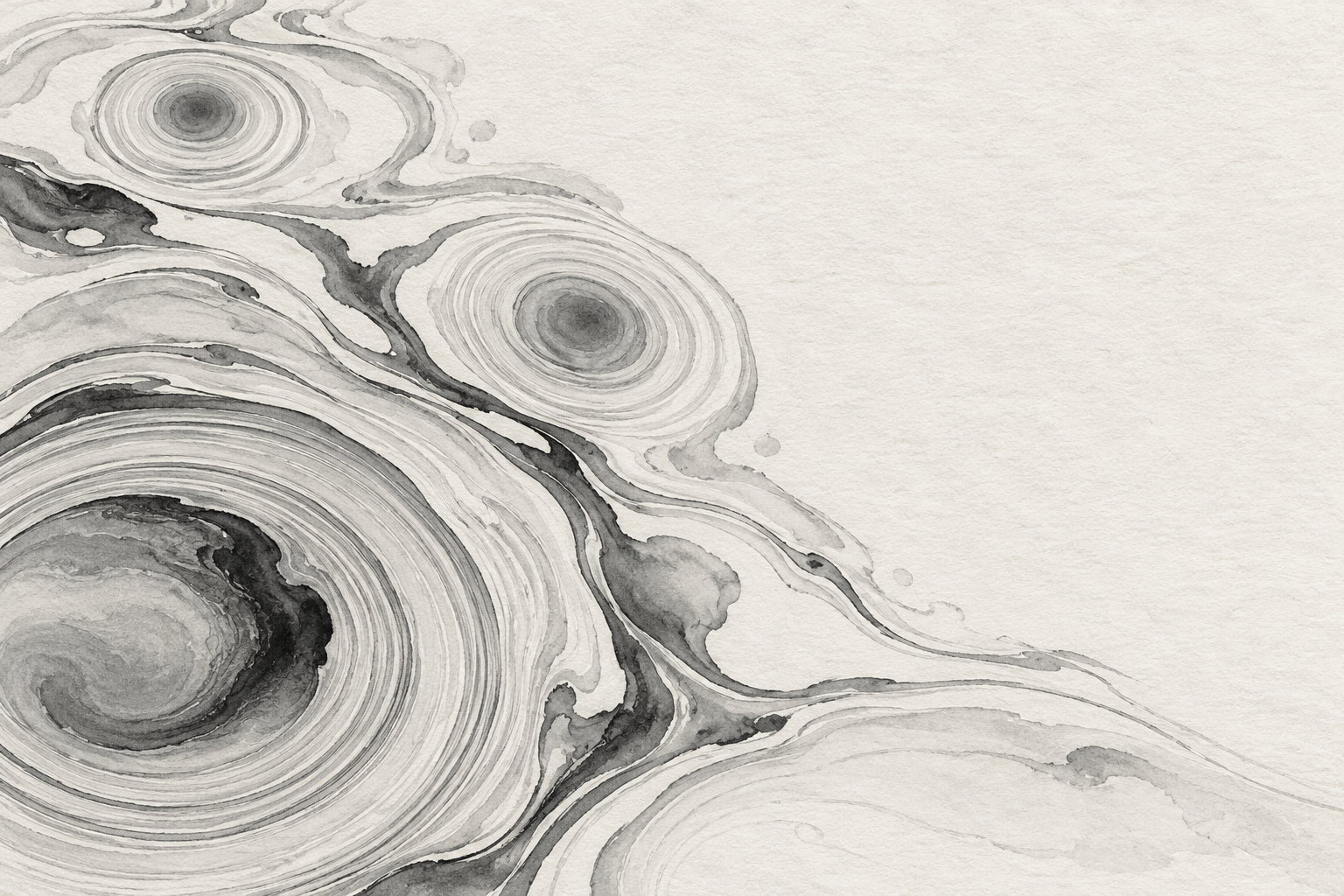
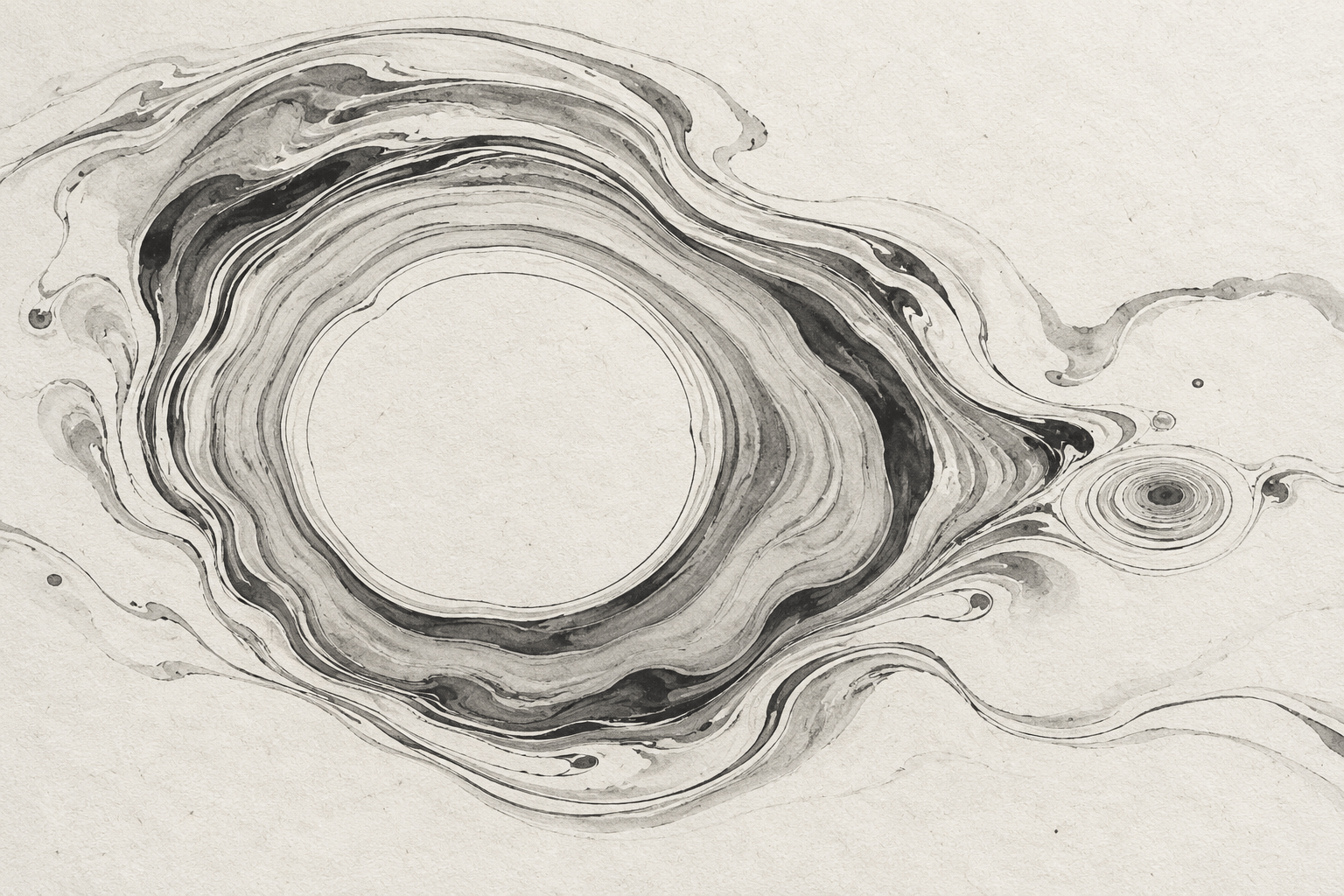
Suminagashi is a Japanese paper-marbling technique in which floating ink patterns are transferred from water to paper. Fine rings and currents record an interaction between deliberate placement and fluid movement.
A visual introduction
Select an image for a closer look. Use the thumbnails, arrow keys or a swipe to compare examples. Zoom in to inspect details, or share the image that inspires you.
Creative toolbox · take this style further
Choose an input and a destination. Search sends your words to the chosen site; Copy & open puts them on your clipboard to paste there.
Create with AI
Turn your chosen input into an image prompt or a new creative direction.
ChatGPT
Copy your input and paste it into a ChatGPT conversation or image request.
Copy & open ChatGPT (new tab)Claude · Anthropic
Develop an image prompt or explore the style in a new Claude conversation.
Copy & open Claude · Anthropic (new tab)Midjourney
Paste your input into the Imagine bar on the Create page.
Copy & open Midjourney (new tab)Adobe Firefly
Copy your input, open Firefly, and paste it into the prompt field.
Copy & open Adobe Firefly (new tab)Leonardo.Ai
Copy your input, open Leonardo, and paste it into the generation field.
Copy & open Leonardo.Ai (new tab)Image search
Find visual references. Short, concrete keywords usually work best.
Lexica
Search AI images and prompts using your selected input.
Search with this input Lexica (new tab)Pexels
Search the photo and video library. Short keywords often work best.
Search with this input Pexels (new tab)Pixabay
Search photos, illustrations and other images.
Search with this input Pixabay (new tab)Unsplash
Search photographs using the style name or your own keywords.
Search with this input Unsplash (new tab)Wikimedia Commons
Search photographs, artworks and historical images. Check each file for its source and reuse terms.
Search with this input Wikimedia Commons (new tab)Art & research
Explore artists, collections and the ideas behind a style.
Wikipedia
Search for background reading. A style may not have its own article.
Search with this input Wikipedia (new tab)WikiArt
Copy your input into WikiArt’s search to explore artists and artworks.
Copy & open WikiArt (new tab)Europeana
Paste your keywords into the search to explore European museum, library and archive collections.
Copy & open Europeana (new tab)Inspiration
Discover portfolios and visual ideas from creative communities.
Instagram hashtags
Search a hashtag made from your input: spaces and punctuation are removed. Instagram may require sign-in.
Search with this input Instagram hashtags (new tab)ArtStation
Paste your input into artwork search for concept art, environments, characters and visual development.
Copy & open ArtStation (new tab)Behance
Paste your input into project search for illustration, design and visual storytelling.
Copy & open Behance (new tab)A closer look
Thin black or colored lines expand into concentric rings, drift into irregular loops and leave pale intervals that are as important as the ink.
A pattern formed before it reaches paper
In suminagashi, the pattern is developed on a water surface and then received by paper. The Metropolitan Museum’s workshop account with artist Yukari Hayashida describes alternating touches of ink and a dispersing solution to build rings. Water movement changes their spacing and shape before transfer.
This sequence distinguishes the technique from drawing a marbled pattern directly with a pen. The visible line is the outcome of a floating boundary and its movement. A digital imitation may resemble that result, but resemblance alone does not establish that the paper touched an inked water surface.
History without a convenient invention story
The Met’s account places surviving examples in the twelfth century and discusses earlier literary references. Those are different kinds of evidence: an object that survives and a text that mentions a practice do not justify an exact invention date. The Japanese context is central, while a sweeping claim that all marbling has one origin would obscure distinct traditions.
Contemporary museum workshops demonstrate that suminagashi remains a practiced technique. Historical study and present experimentation can inform each other. When looking at an attributed sheet, consult its collection record for date, support and use rather than assigning a period from the pattern’s apparent simplicity.
The grammar of rings and intervals
A ring can remain nearly circular, stretch into a long loop or drift into a neighboring system. Thin pale gaps separate dark passages and prevent the pattern from becoming a solid mass. Varying the spacing creates rhythm: close lines suggest compression, while open intervals allow the eye to rest.
Avoid treating every square centimeter with equal density. A small cluster near a broad quiet field may feel more expansive than a uniformly busy sheet. Several ring centers can establish a conversation across the page, but too many equally strong centers can make the design difficult to read.
Material behavior matters
Ink, water, dispersing solution and paper interact. Their compatibility and handling influence whether a pattern spreads cleanly and transfers successfully. Follow a reliable workshop method for the materials in use, test on small sheets and observe the results. A universal recipe cannot be inferred from the appearance of a finished image.
Movement can come from controlled disturbance, but forceful stirring may erase the fine boundaries that give the technique its character. Work with the scale of the marks. Keep notes on conditions and timing so a pleasing result becomes something you can learn from, even when it cannot be reproduced exactly.
Color, support and neighboring techniques
Black ink on pale paper makes changes in line density easy to see. Additional color can enrich the pattern, but a limited palette helps preserve its delicacy. The paper’s own tone participates in the image through every unprinted interval. Photograph the sheet with light that reveals its texture without replacing the subtle lines with glare.
Suminagashi should not be used as a catch-all name for acrylic pouring or every form of marbling. Different methods employ different supports, liquids, tools and traditions. Describe the actual process when it is known. A combed pattern, a thick paint cell and a floating ink ring are visually and materially different events.
An exercise in controlled openness
Begin with one ring center and a small number of alternating touches. Make a second study with two centers, then compare the negative space and the direction of drift. Change one variable at a time. The aim is not to eliminate chance but to see which decisions remain yours within a fluid process.
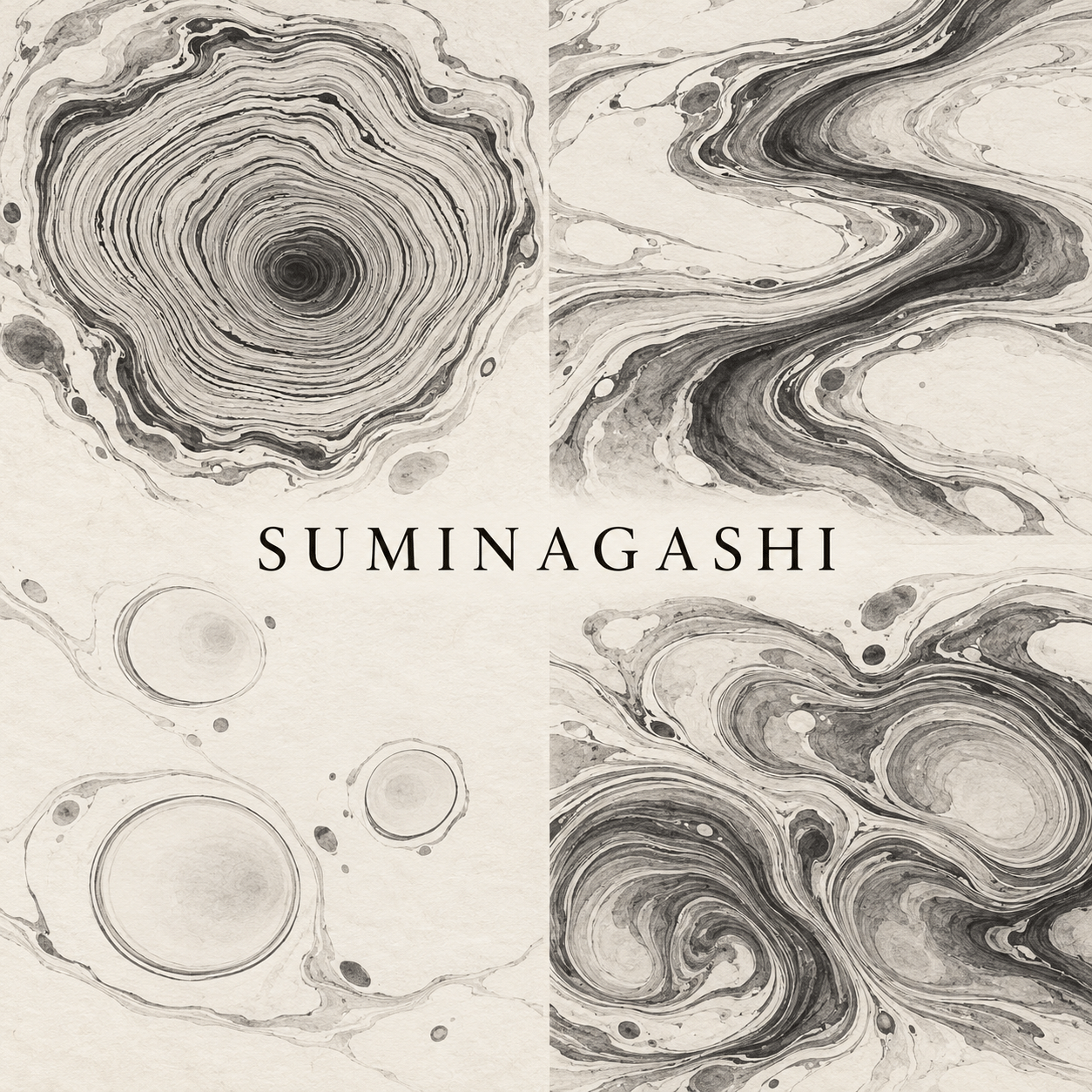
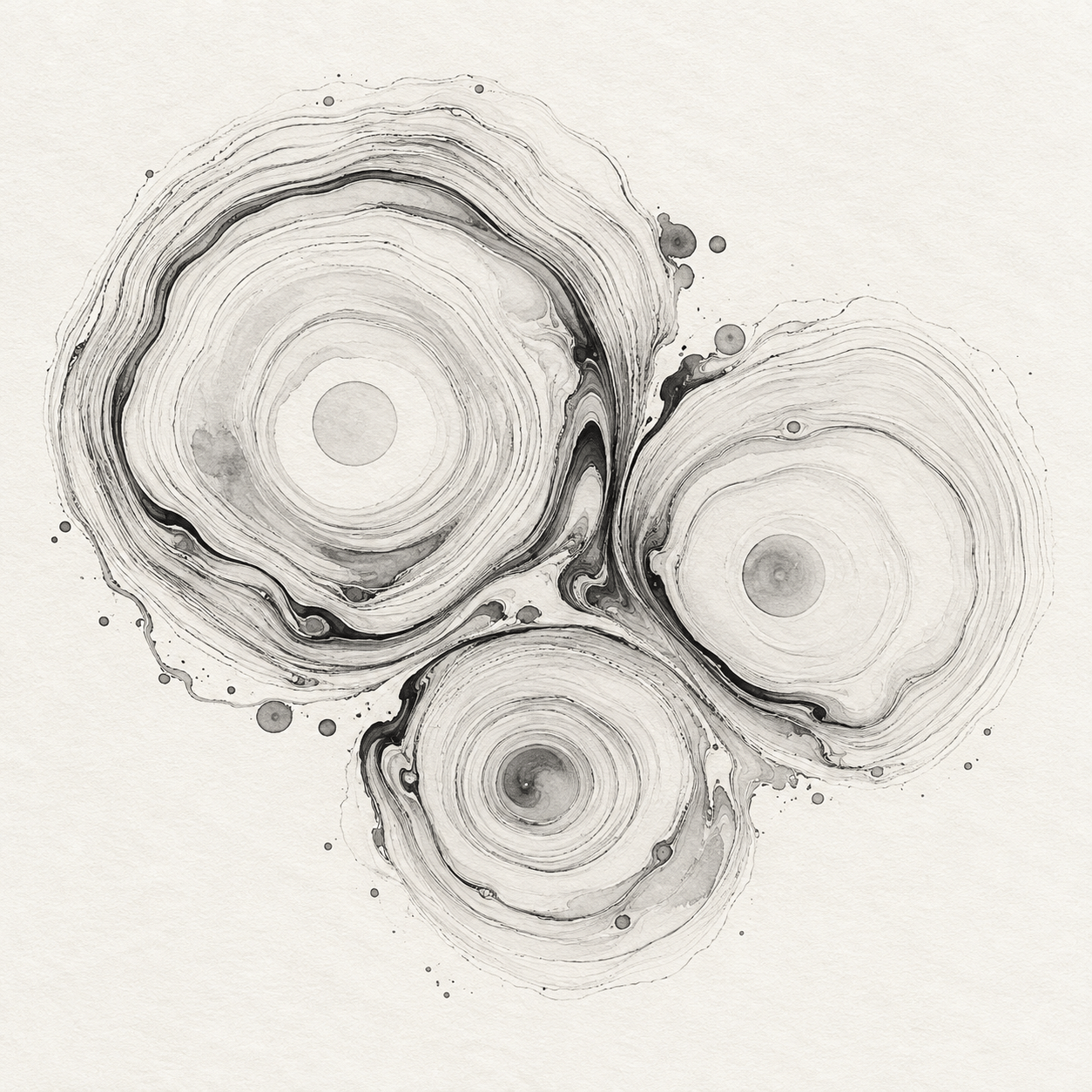
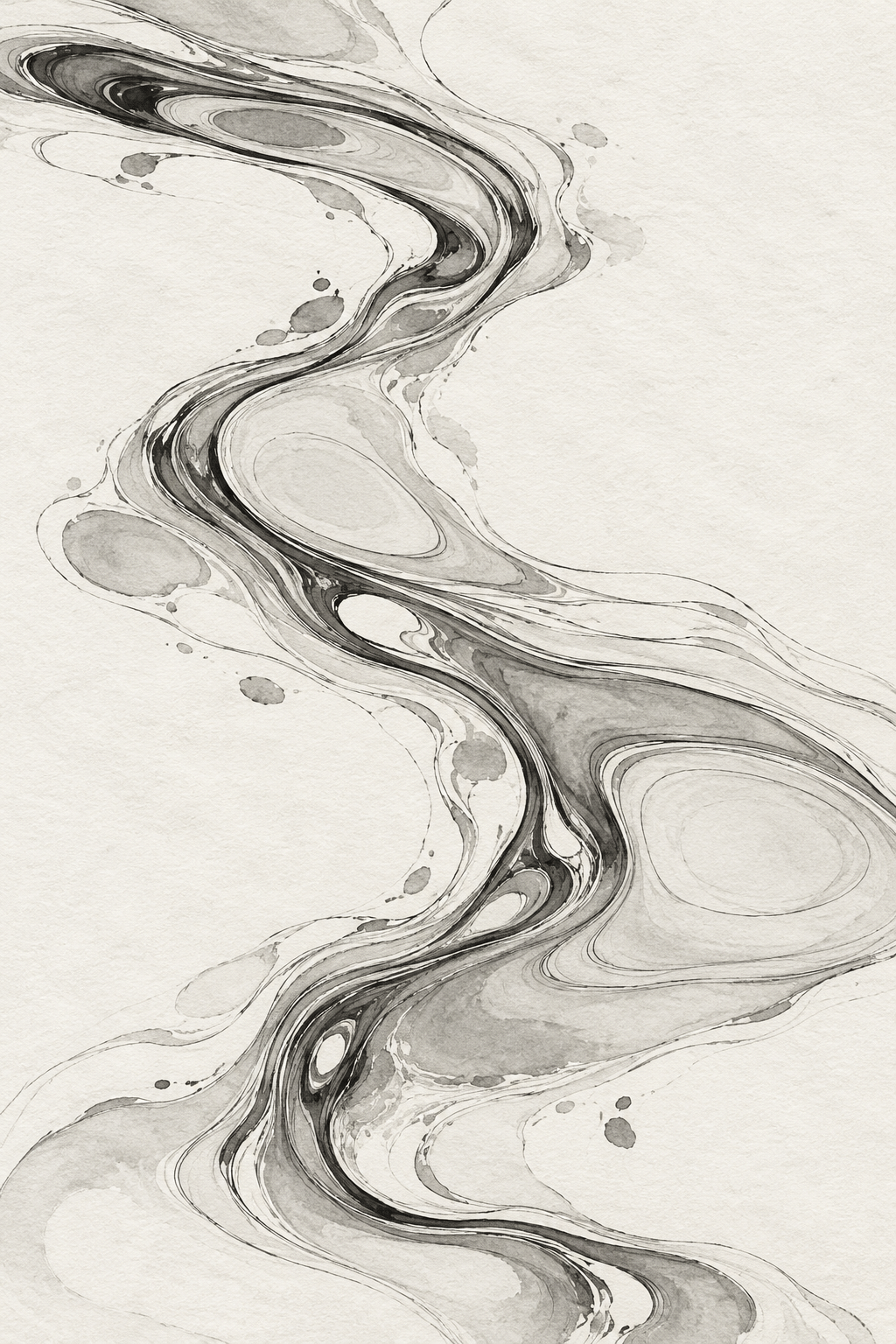
The new gallery contains AI-generated interpretations of these visual principles, not scans of physically marbled paper. They demonstrate variations in scale, spacing and flow. For material instruction and cultural context, use the museum resources alongside direct practice; a generated image cannot show how a particular ink actually behaves on water.
A small poetic detour
Original words from the AOI studio.
Poetry
Before the Paper
A circle opens on the stream;
another follows, thin and slow.
The water changes what I mean,
and keeps the part I cannot know.
The lifted sheet receives the tide—
a moving moment dried inside.
The prompt workshop
Original creative exercises. These prompts create new illustrations, not documentary evidence.
One ring system
Create an AI interpretation of suminagashi on pale paper: a single cluster of thin black and gray concentric rings, slight water-driven deformation, generous unmarked margins, no text.
Two currents
Create a delicate floating-ink marbling interpretation with two ring centers drifting toward one another, fine pale intervals and restrained black ink density, visible warm paper.
An elongated flow
Create an original paper-marbling interpretation in which thin concentric ink boundaries stretch into a long quiet current, asymmetrical placement, no thick paint cells or combed feathers.
A smile from the studio
Jokes
The ink planned a perfect circle. The water had a small revision.