
Art and craft medium
Stained-glass windows combine glass, joining structures and sometimes painted detail to shape light within a space. Their effect depends on illumination, scale and construction as well as the image shown on the surface.
A visual introduction
Select an image for a closer look. Use the thumbnails, arrow keys or a swipe to compare examples. Zoom in to inspect details, or share the image that inspires you.
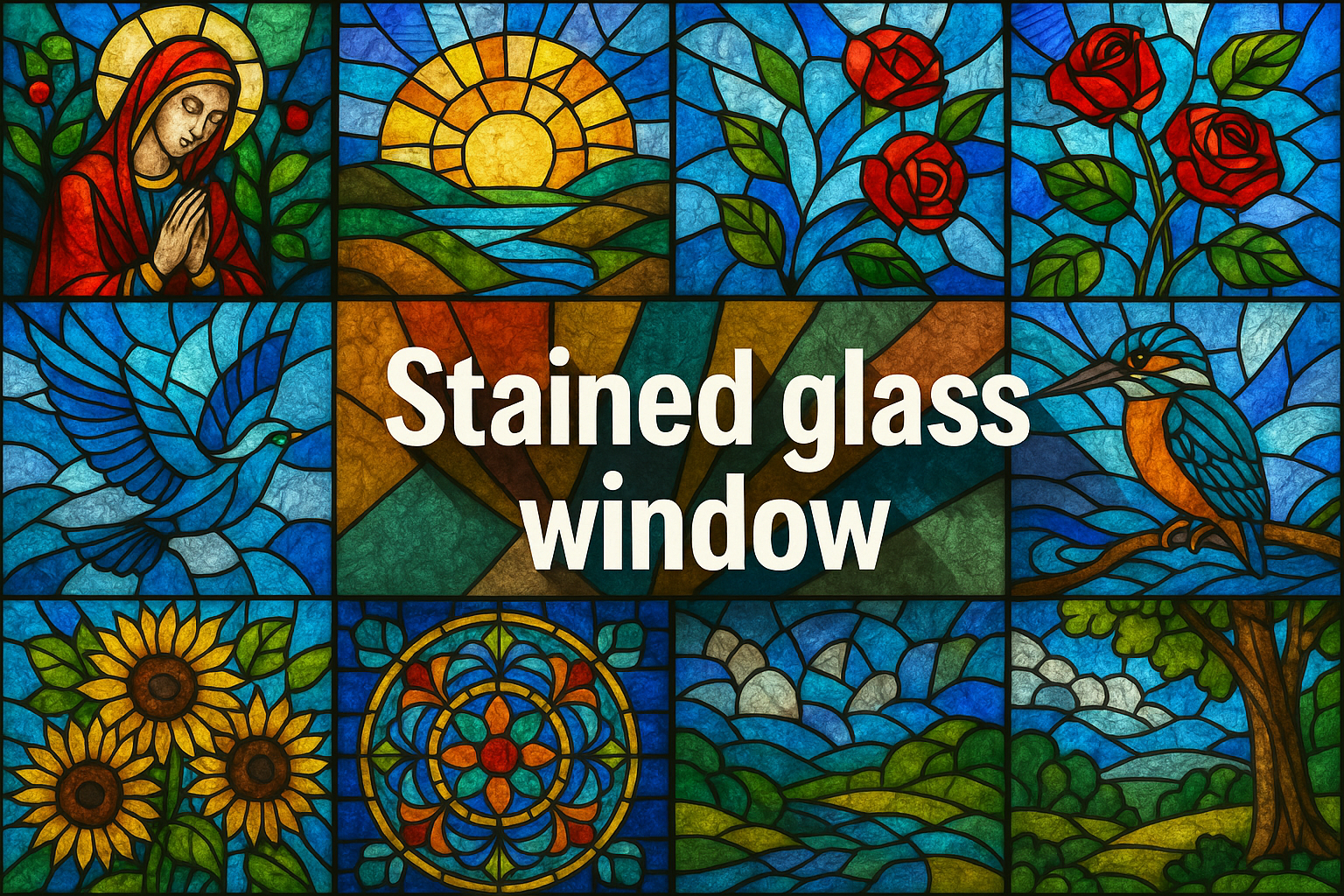
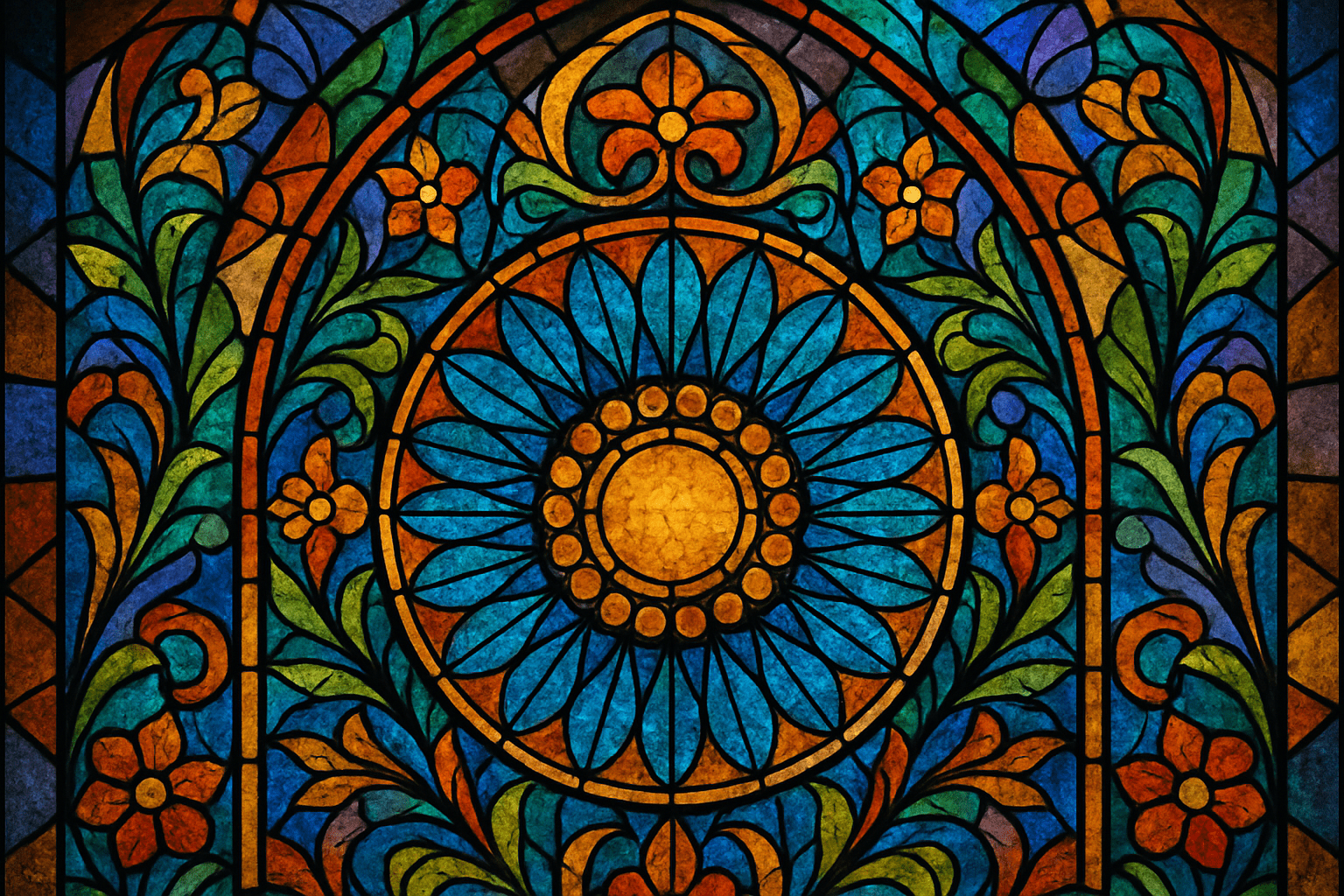
Creative toolbox · take this style further
Choose an input and a destination. Search sends your words to the chosen site; Copy & open puts them on your clipboard to paste there.
Create with AI
Turn your chosen input into an image prompt or a new creative direction.
ChatGPT
Copy your input and paste it into a ChatGPT conversation or image request.
Copy & open ChatGPT (new tab)Claude · Anthropic
Develop an image prompt or explore the style in a new Claude conversation.
Copy & open Claude · Anthropic (new tab)Midjourney
Paste your input into the Imagine bar on the Create page.
Copy & open Midjourney (new tab)Adobe Firefly
Copy your input, open Firefly, and paste it into the prompt field.
Copy & open Adobe Firefly (new tab)Leonardo.Ai
Copy your input, open Leonardo, and paste it into the generation field.
Copy & open Leonardo.Ai (new tab)Image search
Find visual references. Short, concrete keywords usually work best.
Lexica
Search AI images and prompts using your selected input.
Search with this input Lexica (new tab)Pexels
Search the photo and video library. Short keywords often work best.
Search with this input Pexels (new tab)Pixabay
Search photos, illustrations and other images.
Search with this input Pixabay (new tab)Unsplash
Search photographs using the style name or your own keywords.
Search with this input Unsplash (new tab)Wikimedia Commons
Search photographs, artworks and historical images. Check each file for its source and reuse terms.
Search with this input Wikimedia Commons (new tab)Art & research
Explore artists, collections and the ideas behind a style.
Wikipedia
Search for background reading. A style may not have its own article.
Search with this input Wikipedia (new tab)WikiArt
Copy your input into WikiArt’s search to explore artists and artworks.
Copy & open WikiArt (new tab)Europeana
Paste your keywords into the search to explore European museum, library and archive collections.
Copy & open Europeana (new tab)Inspiration
Discover portfolios and visual ideas from creative communities.
Instagram hashtags
Search a hashtag made from your input: spaces and punctuation are removed. Instagram may require sign-in.
Search with this input Instagram hashtags (new tab)ArtStation
Paste your input into artwork search for concept art, environments, characters and visual development.
Copy & open ArtStation (new tab)Behance
Paste your input into project search for illustration, design and visual storytelling.
Copy & open Behance (new tab)A closer look
A strong network of divisions supports colored fields; transmitted light changes the relationship between the window, its surroundings and the viewer.
A window is also an object
The V&A describes traditional stained glass as colored and painted pieces held together by lead strips. Its history extends beyond medieval churches into later public, domestic and contemporary settings. A stained-glass design is therefore not defined by one kind of religious subject.
Identify the proposed setting before designing the image. A high window seen from far away requires a different scale of detail from a small panel viewed closely. Consider how the opening's proportions shape the composition.
Make the divisions meaningful
The joining lines can reinforce contours, separate color areas and establish rhythm. Begin with a strong drawing of these divisions. Avoid a design whose main forms depend entirely on tiny painted details that disappear at the intended viewing distance.
For an original concept, use large areas for the principal subject and smaller ones for accents. Let quieter passages balance dense sections. A decorative network that cuts randomly across every form can weaken both the image and its sense of construction.
Color changes with light
The V&A emphasizes the changing experience of transmitted light across the day and seasons. In a digital visualization, decide which side is illuminated and how bright the surrounding room is. A uniformly glowing surface can make the window look like an electronic screen.
Distinguish glass color from reflected light on nearby walls or floors. Those effects should agree with the light's direction and the space. Keep the main design legible even when the surrounding illumination is subdued.
Concept design is not a fabrication plan
A generated image can explore composition, but it does not demonstrate that every narrow piece, joint or support is practical. A real commission needs the expertise of a glass artist and the relevant construction process.
Use the medium's constraints as creative opportunities. Try a landscape, abstract rhythm or contemporary narrative without automatically adding a Gothic frame. The strongest proposal connects its subject, divisions and lighting to a specific place, while clearly identifying itself as an original design rather than a historical window.
The prompt workshop
Original creative exercises. These prompts create new illustrations, not documentary evidence.
A garden window
Original stained-glass window concept of branching plants, clear structural divisions and large readable colored fields, soft daylight transmitted into a modest room.
Abstract rhythm
Original contemporary stained-glass panel with broad geometric color relationships, purposeful joining lines and restrained painted detail, no electronic glow.
A changing interior
Original visualization of a small stained-glass window casting plausible colored light on a wall, coherent illumination and a design readable from across the room.