
Archive note: historical claims and artist or artwork associations in this entry have not yet received a full source review.
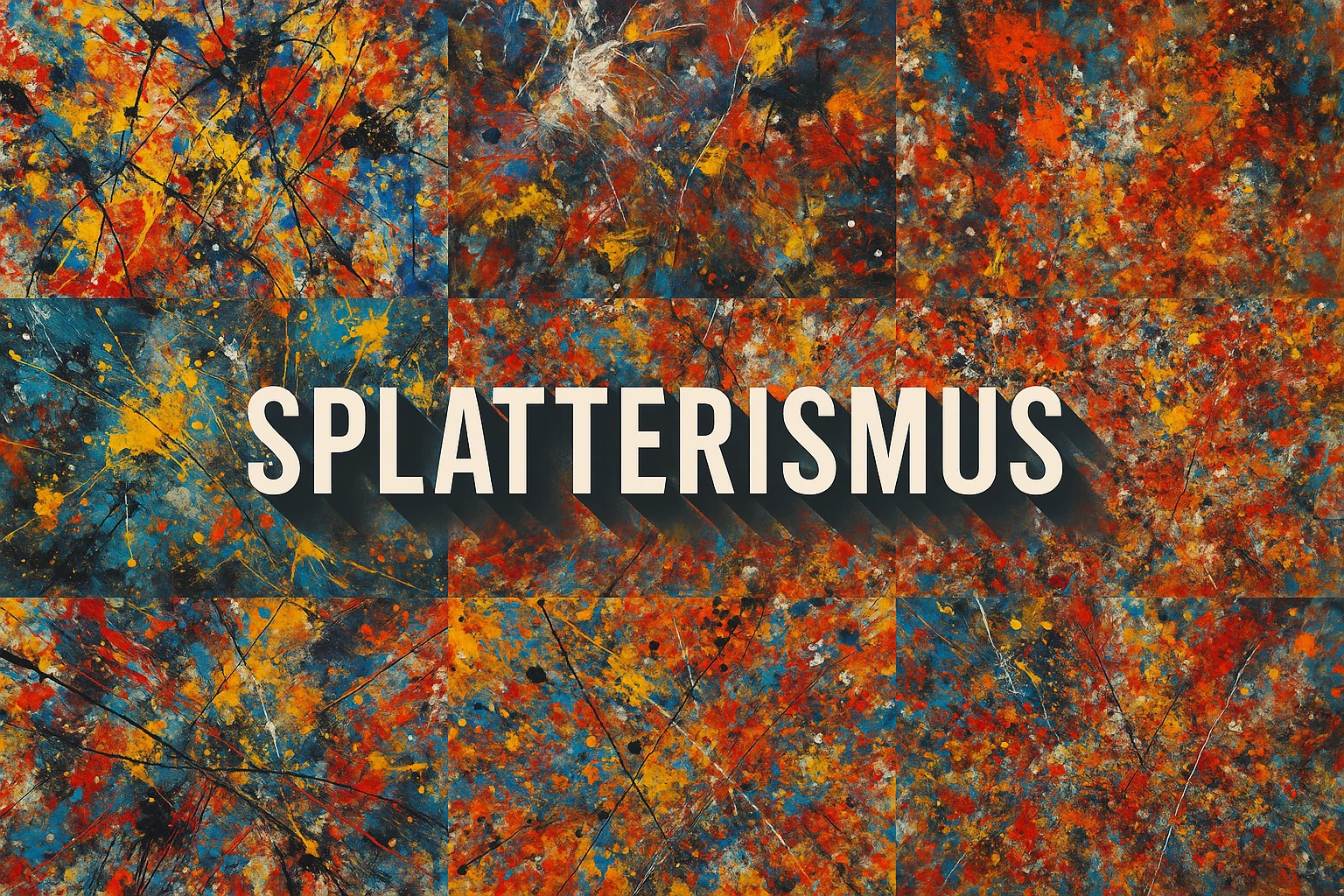
Splatterismus
Splatterismus is an abstract art style that is characterized by the use of bold, vibrant colors and chaotic, energetic brush strokes. It often features a combination of abstract shapes, lines, and textures that are arranged in a seemingly random and chaotic manner. The overall effect is often one of energy and movement, with the colors and shapes blending together to create a unique and dynamic composition.
AOI thinking about Splatterismus [+_~]-/
Overview and quick facts
Splatterismus is an art style that combines elements of abstract expressionism, surrealism, and pop art. It is characterized by bold, bright colors, distorted shapes, and a chaotic, energetic composition. The art style is often used to express emotions and ideas in a visually stimulating way. Splatterismus is a great way to make a statement and create a unique and eye-catching piece of art.
Can understand it also, as:
1. Spatterism
2. Splashism
3. Splurge
4. Spillage
5. Spritz
6. Spray
7. Splotch
8. Splodge
9. Splosh
10. Splatter
Categorize it as:
Impressionism, Modernism
Detailed description
Splatterismus is an art style that has been gaining popularity in recent years. It is a form of abstract expressionism that uses splatters of paint to create dynamic and vibrant works of art. The style was developed in the late 1960s by German artist Jörg Immendorff, who was inspired by the work of Jackson Pollock. Splatterismus is characterized by its use of bold colors and energetic brushstrokes. The artist often uses a variety of tools to create the splatters, such as brushes, sticks, and even their hands. The result is a chaotic yet beautiful composition that is full of movement and life. The style has been embraced by many contemporary artists, including Julian Schnabel, Damien Hirst, and Jean-Michel Basquiat. These artists have used Splatterismus to create some of their most iconic works. For example, Schnabels The Last Supper is a classic example of Splatterismus, as is Hirsts The Physical Impossibility of Death in the Mind of Someone Living. Basquiats Untitled (Skull) is another great example of the style. Splatterismus is a great way to express yourself and create unique works of art. It is a style that is full of energy and emotion, and it can be used to create powerful and meaningful pieces. If youre looking for a way to express yourself through art, Splatterismus is definitely worth exploring.
Archive notes — claims to verify
1. Splatterismus is a German art movement that emerged in the late 1960s.
2. It is characterized by the use of bright colors, bold shapes, and abstract forms.
3. The movement was founded by German artist and sculptor Gunther Uecker.
4. Splatterismus is often referred to as action painting due to its emphasis on spontaneity and improvisation.
5. The movement was heavily influenced by the works of Jackson Pollock and other Abstract Expressionists.
6. Splatterismus is characterized by the use of a variety of materials, including paint, paper, fabric, and even found objects.
7. The movement is often associated with the Fluxus art movement, which was also founded by Uecker.
8. Splatterismus is often seen as a reaction to the traditional art forms of the time, such as Realism and Impressionism.
9. The movement was heavily influenced by the works of the Dadaists and Surrealists.
10. Splatterismus is often seen as a form of anti-art due to its rejection of traditional art forms.
11. The movement was heavily influenced by the works of the German Expressionists.
12. Splatterismus is often seen as a form of anti-aesthetic due to its rejection of traditional aesthetic values.
13. The movement was heavily influenced by the works of the Bauhaus artists.
14. Splatterismus is often seen as a form of anti-establishment due to its rejection of traditional social values.
15. The movement was heavily influenced by the works of the Situationists.
16. Splatterismus is often seen as a form of anti-conformity due to its rejection of traditional norms.
17. The movement was heavily influenced by the works of the Neo-Dadaists.
18. Splatterismus is often seen as a form of anti-rationalism due to its rejection of traditional logic and reason.
19. The movement was heavily influenced by the works of the Neo-Expressionists.
20. Splatterismus is often seen as a form of anti-materialism due to its rejection of traditional material values.
Artists and works: references to check
(be aware, can be highly speculative)
Artists (be aware, speculation possible):
1. Jackson Pollock (1912-1956) 2. Jean-Michel Basquiat (1960-1988) 3. Cy Twombly (1928-2011) 4. Keith Haring (1958-1990) 5. Robert Rauschenberg (1925-2008) 6. Roy Lichtenstein (1923-1997) 7. Andy Warhol (1928-1987) 8. Jean Dubuffet (1901-1985) 9. Richard Hamilton (1922-2011) 10. Francis Bacon (1909-1992) 11. Mark Rothko (1903-1970) 12. Gerhard Richter (1932-) 13. Yves Klein (1928-1962) 14. Damien Hirst (1965-) 15. David Hockney (1937-)
Artworks (be aware, speculation possible)
1. The Great Wave off Kanagawa by Katsushika Hokusai (1830) 2. The Starry Night by Vincent van Gogh (1889) 3. The Persistence of Memory by Salvador Dali (1931) 4. The Scream by Edvard Munch (1893) 5. Guernica by Pablo Picasso (1937) 6. The Dance of Life by Edvard Munch (1899) 7. The Garden of Earthly Delights by Hieronymus Bosch (1490-1510) 8. The Night Watch by Rembrandt van Rijn (1642) 9. The Birth of Venus by Sandro Botticelli (1486) 10. The Creation of Adam by Michelangelo (1512) 11. The Kiss by Gustav Klimt (1908) 12. The Son of Man by René Magritte (1964) 13. The Third of May 1808 by Francisco Goya (1814) 14. The Night Cafe by Vincent van Gogh (1888) 15. The Mona Lisa by Leonardo da Vinci (1503-1517)
Epoch
Splatterismus is a contemporary art movement that began in the late 2000s.
Creative tools and further exploration
Search results are starting points for exploration, not evidence for the historical claims or attributions in this legacy entry.