
Hand-puppet performance and textile character design
Put a book in front of a sock puppet and the audience wants to know whether it can read. Tilt its head towards the page, hold still for a beat and the question almost answers itself. A knitted tube has acquired an intention.

A visual introduction
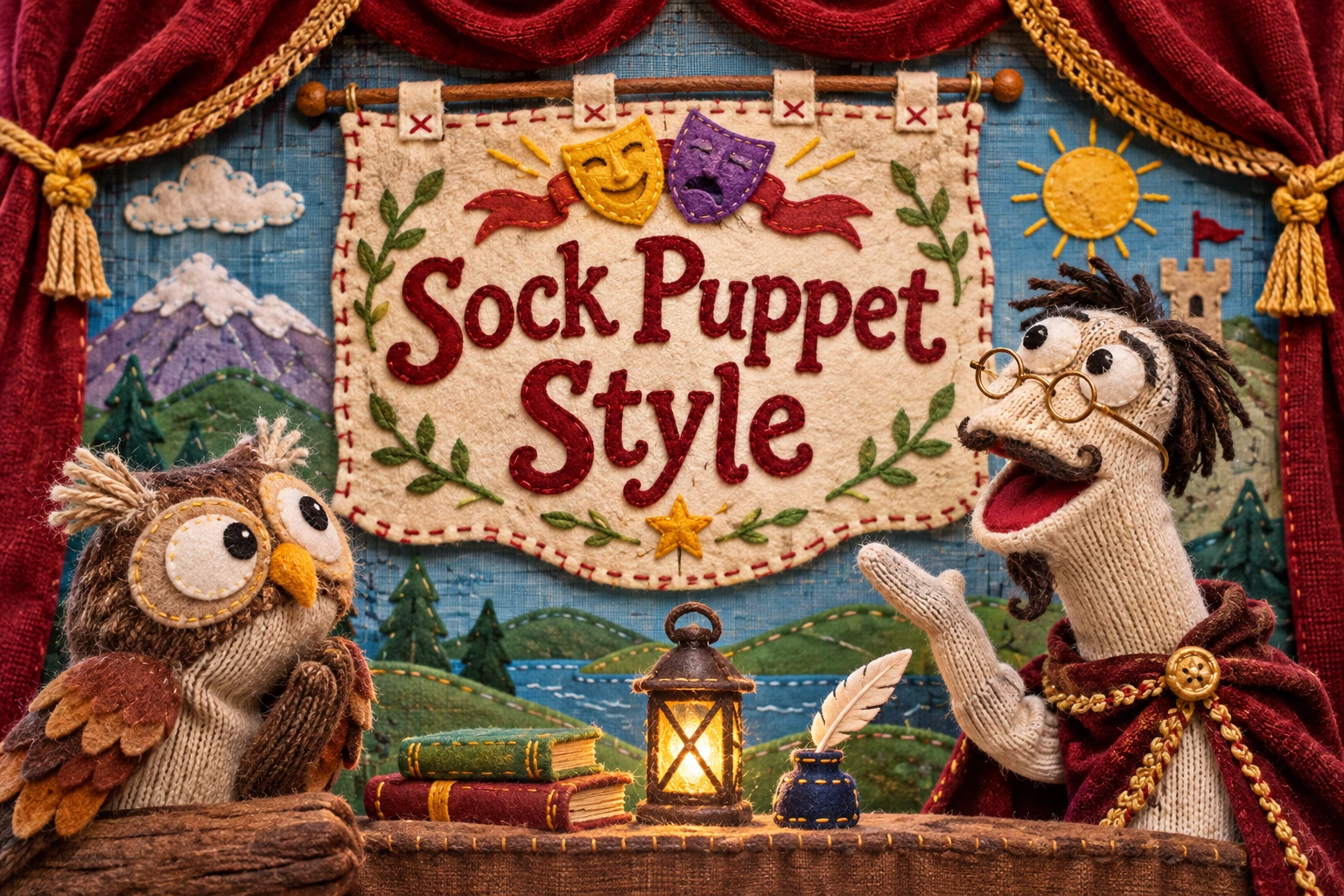
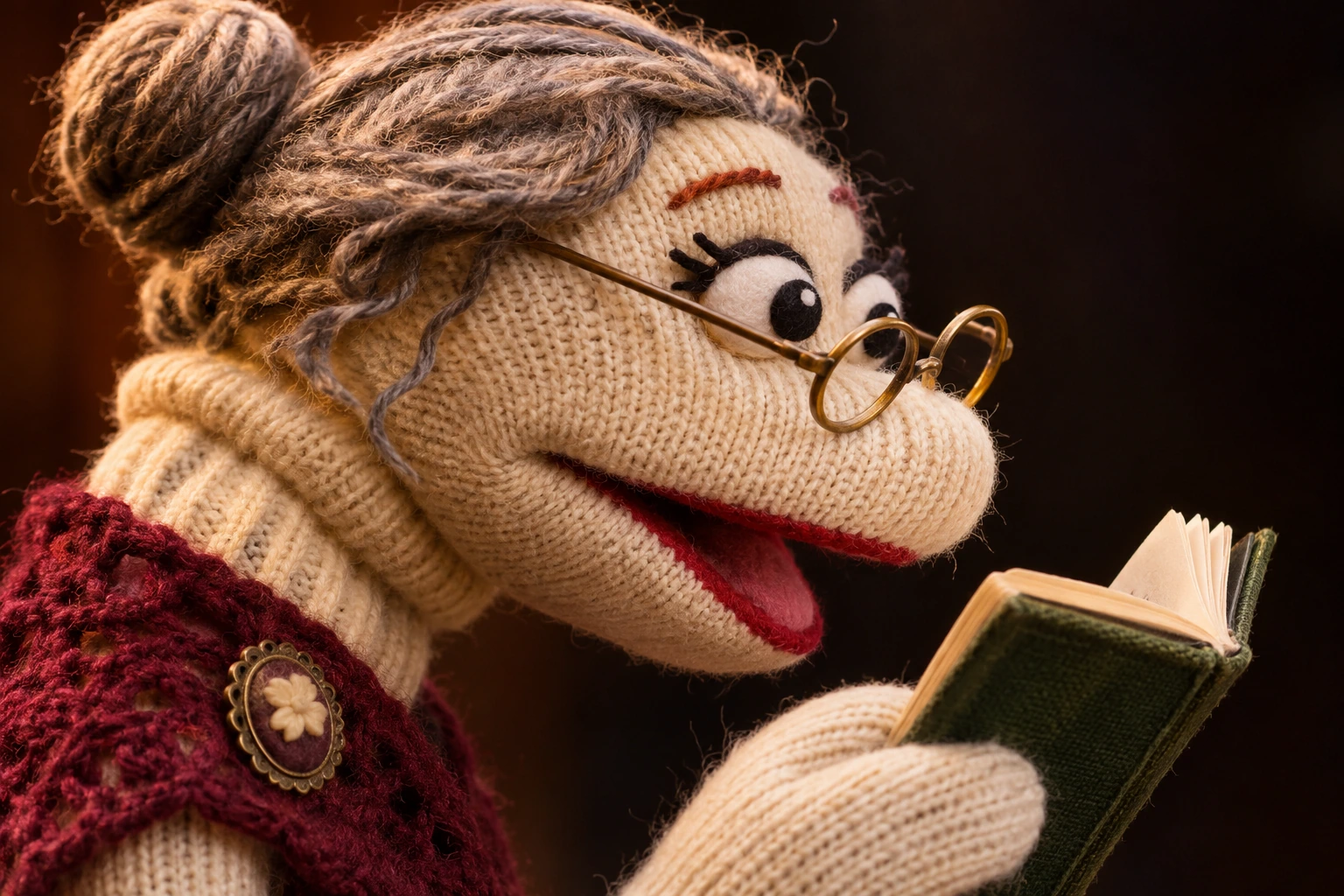
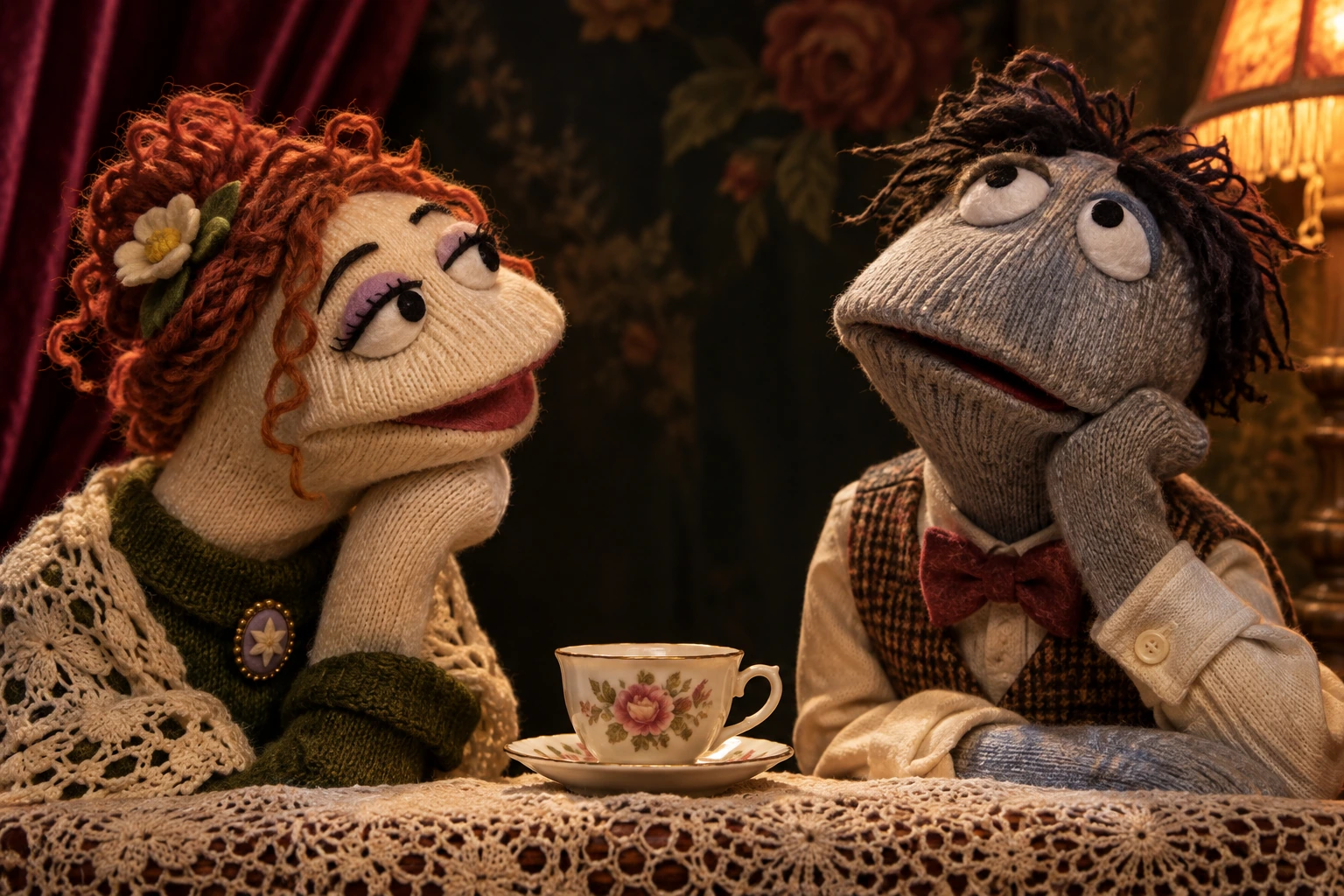
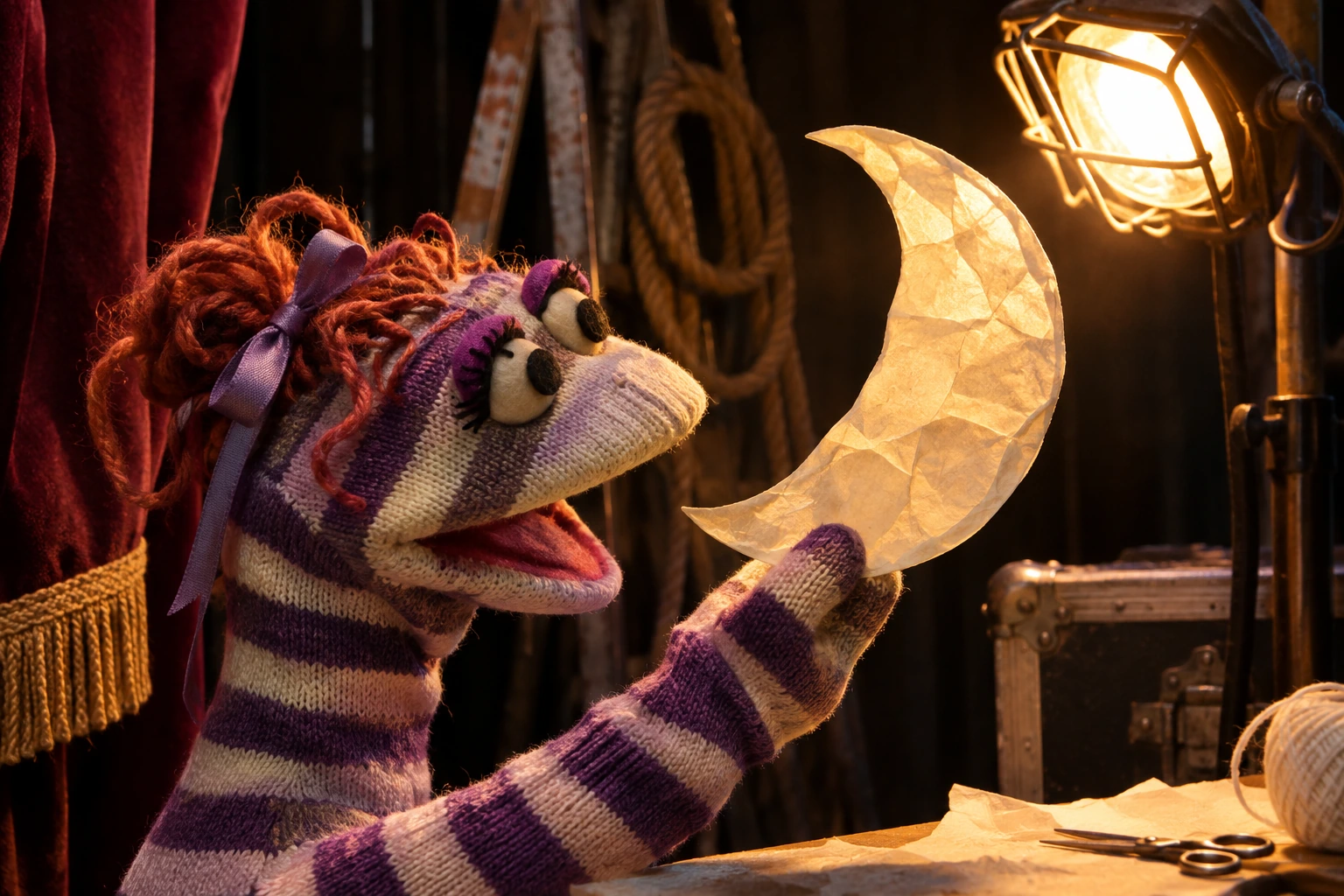
The banner, collage and five studies are AOI interpretations. The linked sources document the works and practices discussed in the article.
Select an image for a closer look. Use the thumbnails, arrow keys or a swipe to compare examples. Zoom in to inspect details, or share the image that inspires you.
Creative toolbox · take this style further
Choose an input and a destination. Search sends your words to the chosen site; Copy & open puts them on your clipboard to paste there.
Create with AI
Turn your chosen input into an image prompt or a new creative direction.
ChatGPT
Copy your input and paste it into a ChatGPT conversation or image request.
Copy & open ChatGPT (new tab)Claude · Anthropic
Develop an image prompt or explore the style in a new Claude conversation.
Copy & open Claude · Anthropic (new tab)Midjourney
Paste your input into the Imagine bar on the Create page.
Copy & open Midjourney (new tab)Adobe Firefly
Copy your input, open Firefly, and paste it into the prompt field.
Copy & open Adobe Firefly (new tab)Leonardo.Ai
Copy your input, open Leonardo, and paste it into the generation field.
Copy & open Leonardo.Ai (new tab)Image search
Find visual references. Short, concrete keywords usually work best.
Lexica
Search AI images and prompts using your selected input.
Search with this input Lexica (new tab)Pexels
Search the photo and video library. Short keywords often work best.
Search with this input Pexels (new tab)Pixabay
Search photos, illustrations and other images.
Search with this input Pixabay (new tab)Unsplash
Search photographs using the style name or your own keywords.
Search with this input Unsplash (new tab)Wikimedia Commons
Search photographs, artworks and historical images. Check each file for its source and reuse terms.
Search with this input Wikimedia Commons (new tab)Art & research
Explore artists, collections and the ideas behind a style.
Wikipedia
Search for background reading. A style may not have its own article.
Search with this input Wikipedia (new tab)WikiArt
Copy your input into WikiArt’s search to explore artists and artworks.
Copy & open WikiArt (new tab)Europeana
Paste your keywords into the search to explore European museum, library and archive collections.
Copy & open Europeana (new tab)Inspiration
Discover portfolios and visual ideas from creative communities.
Instagram hashtags
Search a hashtag made from your input: spaces and punctuation are removed. Instagram may require sign-in.
Search with this input Instagram hashtags (new tab)ArtStation
Paste your input into artwork search for concept art, environments, characters and visual development.
Copy & open ArtStation (new tab)Behance
Paste your input into project search for illustration, design and visual storytelling.
Copy & open Behance (new tab)A closer look
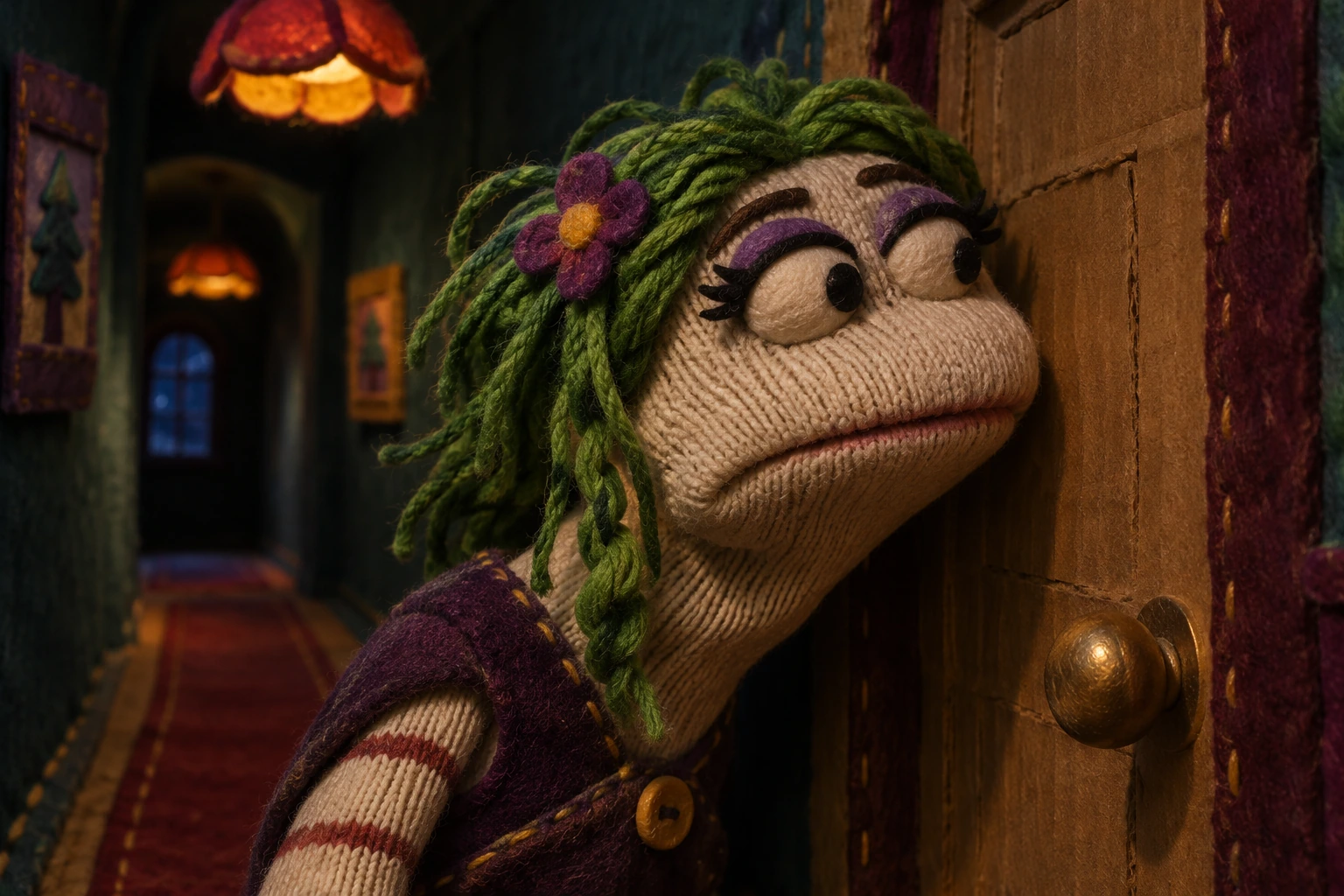
Read the crease of the mouth and the direction of the eyes together. The sock toe supplies a soft upper face. A second fold opens below it. Wrinkles, a slightly crooked brow or a strand of yarn can register the performer’s smallest shift.
The hand inside the face
The US National Archives describes the simplest sock puppet as a sock on a hand with a mouth opened and closed by fingers and thumb. BYU’s theatre teaching exercise folds the toe inward and secures the corners to make a mouth the operator can move. Its distinction between flat and raised eyes is worth testing: features that read well in profile can look in a different direction when the puppet turns towards the audience.
A television example and a studio exercise
The National Archives identifies Shari Lewis as the ventriloquist and puppeteer who performed with Lamb Chop across decades. That history belongs to a particular pairing of character and performer. For a new character, start with a different problem. Give a long-faced librarian a book whose pages will not turn. A quiet look at the book, followed by a look at the audience, offers two distinct beats before the puppet says a word.
Stage the listener
Build a scene with two puppets and a single teacup. If both mouths move and both heads bob, the audience has little evidence about who is listening. Hold the second head still with its eyes on the first. Then turn only the listener towards the cup. The object suddenly has the attention of the whole scene. A small stage benefits from this economy because every movement occupies a large part of the available frame.
Photographing a performance decision
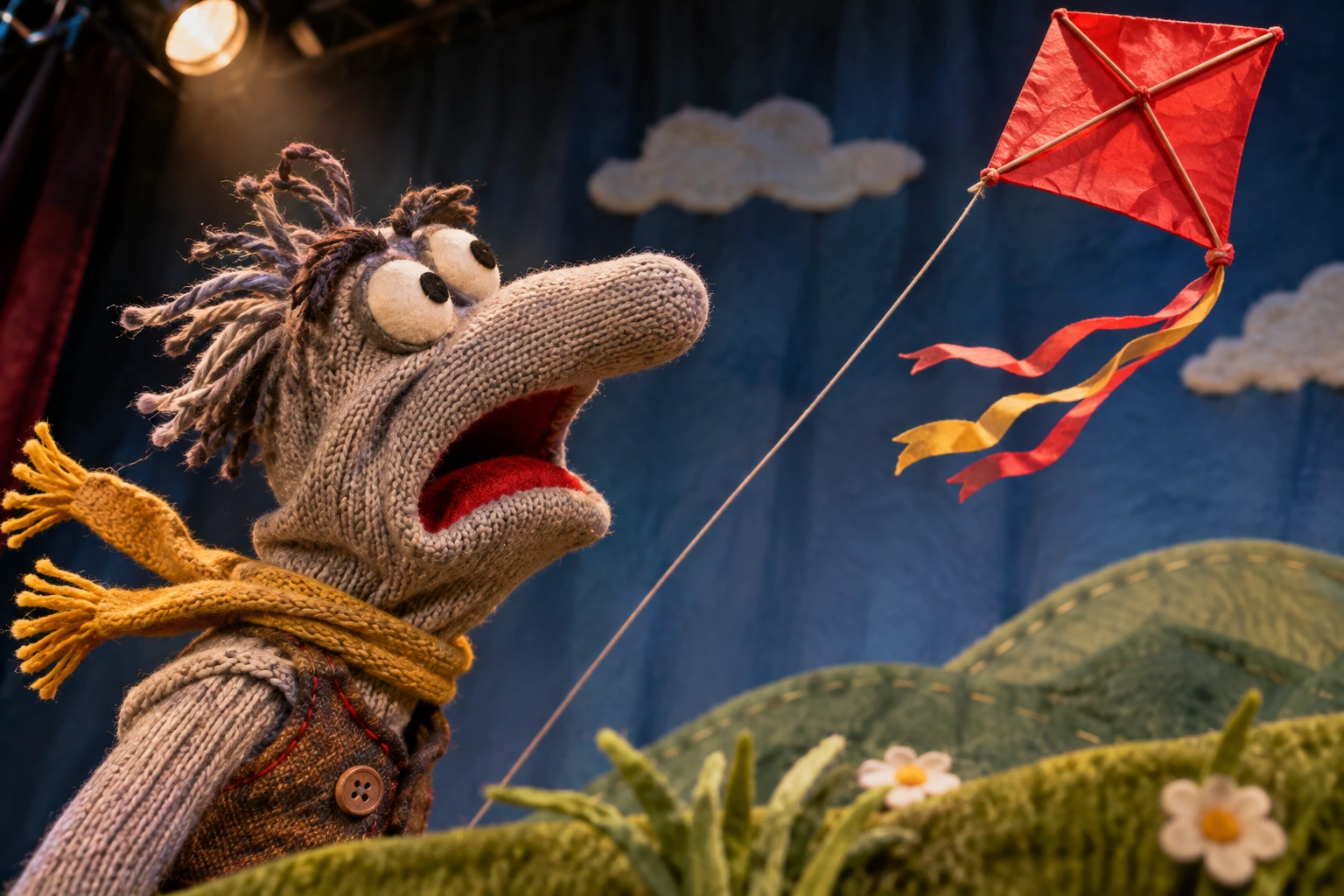
Light the face from slightly to one side so the knit and the mouth hinge remain visible. Keep enough of the neck in frame for its direction to read. In a single still, choose the instant before a reply or after the head has turned. A mouth held at its widest point can read as surprise, laughter or a permanent manufacturing defect. A second feature, such as gaze or posture, settles the ambiguity. These generated stills illustrate staging decisions. They are independent characters and do not document a historical performance.
Positive review · AI-authored editorial assessment
A closed mouth and a precise eyeline can command a stage. That economy lets the audience read thought into a movement small enough to fit inside a sock.
Negative review · AI-authored editorial assessment
Too many buttons, eyebrows and tufts pull attention away from the hinge. Test the bare puppet in profile before decorating the face that already works.
Neutral review · AI-authored editorial assessment
The form is useful for improvisation, classroom theatre and photographic character studies. Live timing and the operator’s wrist supply information that a single still must convey with staging.
A small poetic detour
Original words from the AOI studio.
Poetry
A thumb drops. The room laughs.
The woollen face looks at the cup.
For one long beat a hand keeps still.
Someone in the front row leans in.
The prompt workshop
Original creative exercises. These prompts create new illustrations, not documentary evidence.
Starting point
Stage a cream sock librarian over an open red book. Fold the mouth nearly shut and angle one stitched brow towards a stubborn page. Light the knitting from the side.
Richer composition
Photograph two handmade sock characters across a toy teacup. The speaker leans forward while the listener has just turned to the cup. Use the empty space above the cup as a pause.
Experiment
Make a backstage portrait of a striped performer regarding a paper moon under a work lamp. Keep the wrist line and toe fold legible and let a trailing thread catch the light.
People & works to explore
References discussed in this article. Consult the sources below for context.
Artists and practitioners
Shari Lewis
A smile from the studio
Jokes
The puppet asked for a dressing room. The stage manager offered the other drawer.