
Animated film reference
Shrek combines a fairy-tale quest with comic reversals of expected roles. Its visual design is useful for studying how contrasting silhouettes, material settings and character reactions make a familiar story feel different.
A visual introduction
Select an image for a closer look. Use the thumbnails, arrow keys or a swipe to compare examples. Zoom in to inspect details, or share the image that inspires you.
Creative toolbox · take this style further
Choose an input and a destination. Search sends your words to the chosen site; Copy & open puts them on your clipboard to paste there.
Create with AI
Turn your chosen input into an image prompt or a new creative direction.
ChatGPT
Copy your input and paste it into a ChatGPT conversation or image request.
Copy & open ChatGPT (new tab)Claude · Anthropic
Develop an image prompt or explore the style in a new Claude conversation.
Copy & open Claude · Anthropic (new tab)Midjourney
Paste your input into the Imagine bar on the Create page.
Copy & open Midjourney (new tab)Adobe Firefly
Copy your input, open Firefly, and paste it into the prompt field.
Copy & open Adobe Firefly (new tab)Leonardo.Ai
Copy your input, open Leonardo, and paste it into the generation field.
Copy & open Leonardo.Ai (new tab)Image search
Find visual references. Short, concrete keywords usually work best.
Lexica
Search AI images and prompts using your selected input.
Search with this input Lexica (new tab)Pexels
Search the photo and video library. Short keywords often work best.
Search with this input Pexels (new tab)Pixabay
Search photos, illustrations and other images.
Search with this input Pixabay (new tab)Unsplash
Search photographs using the style name or your own keywords.
Search with this input Unsplash (new tab)Wikimedia Commons
Search photographs, artworks and historical images. Check each file for its source and reuse terms.
Search with this input Wikimedia Commons (new tab)Art & research
Explore artists, collections and the ideas behind a style.
Wikipedia
Search for background reading. A style may not have its own article.
Search with this input Wikipedia (new tab)WikiArt
Copy your input into WikiArt’s search to explore artists and artworks.
Copy & open WikiArt (new tab)Europeana
Paste your keywords into the search to explore European museum, library and archive collections.
Copy & open Europeana (new tab)Inspiration
Discover portfolios and visual ideas from creative communities.
Instagram hashtags
Search a hashtag made from your input: spaces and punctuation are removed. Instagram may require sign-in.
Search with this input Instagram hashtags (new tab)ArtStation
Paste your input into artwork search for concept art, environments, characters and visual development.
Copy & open ArtStation (new tab)Behance
Paste your input into project search for illustration, design and visual storytelling.
Copy & open Behance (new tab)A closer look
Broad character masses, expressive faces, tactile environments and contrasts between rough domestic spaces and formal spectacle can support both comedy and emotional change.
The setting establishes an expectation
DreamWorks' official account identifies the 2001 film's quest involving Shrek, Fiona, Donkey and Lord Farquaad. The story uses recognizable fairy-tale situations while questioning the roles that appearances seem to assign. This page treats the film as a visual and narrative reference, not a freestanding art movement.
When studying a scene, ask which expectation the setting creates before the characters act. A grand entrance, a humble dwelling or a ceremonial arrangement can establish a social position. A character's response can then confirm or unsettle it. The visual joke depends on the expectation being readable.
Contrast the cast without losing coherence
Distinct body shapes and proportions help characters remain recognizable at a distance. In an original ensemble, vary the dominant masses and posture instead of giving everyone the same body with different accessories. Keep the rendering and light coherent so the contrasts still belong to one world.
A large figure can move delicately; a small figure can occupy space with excessive confidence. These relationships between design and behavior are more interesting than equating physical size with personality. Test the character through several poses before deciding what its silhouette communicates.
Materials can carry social information
A rough tabletop, a carefully polished floor and an overdecorated gate suggest different priorities. Choose details that reveal how a place is inhabited or maintained. Texture should support the situation rather than cover every surface with the same level of complexity.
For a comic scene, keep the key prop or expression distinct from the background. A crowded environment may be rich in design but weaken a reaction if all its contrasts compete equally. Establish the main beat, then let secondary details reward a second look.
Stage the reversal
Create an original three-beat sequence: an impressive entrance, an unexpected practical problem and a revealing response. Keep the camera and spatial relationships clear enough for the viewer to understand what changed. A reaction held for a moment can matter more than an elaborate effect.
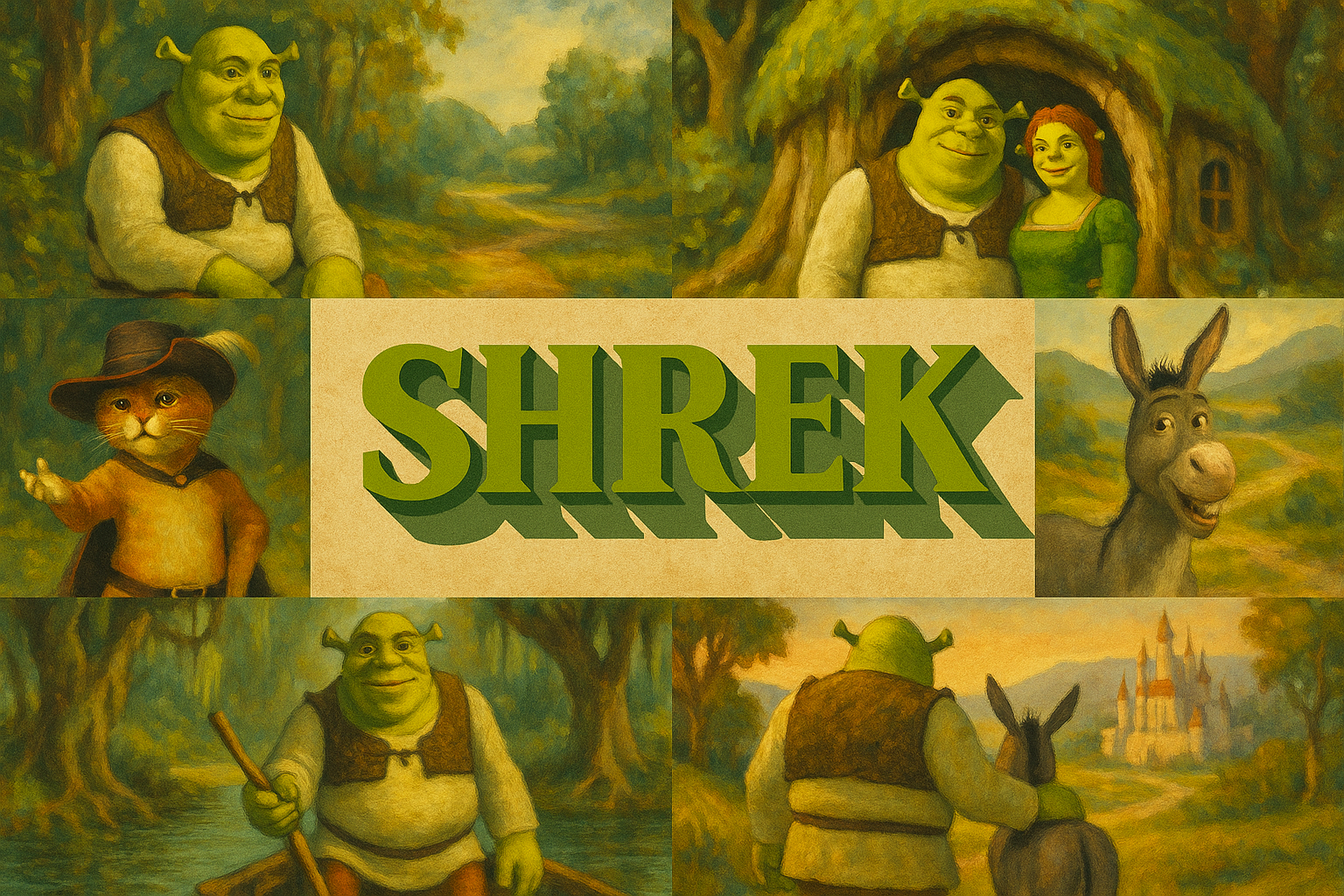
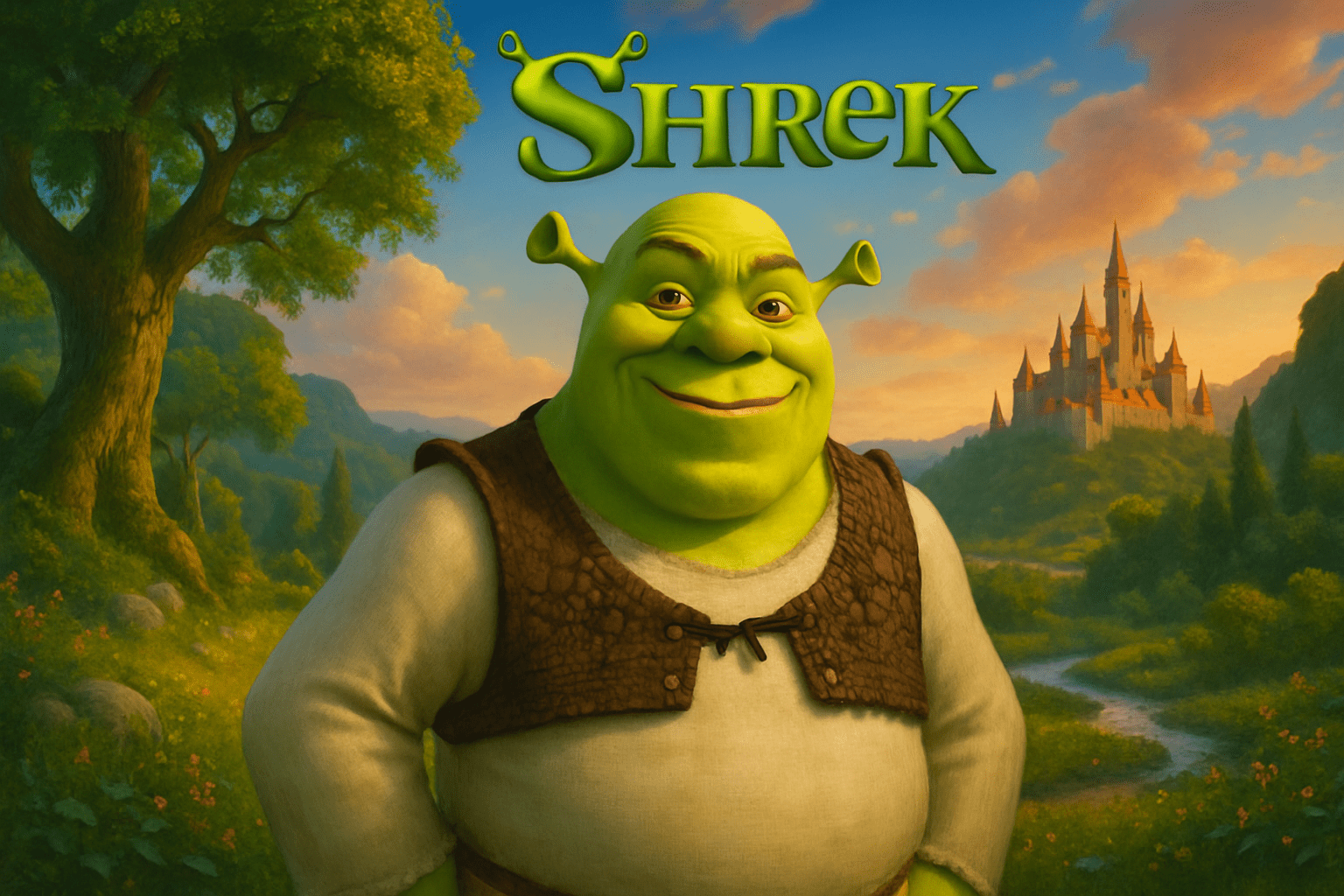
AOI's prompts propose new fairy-tale situations and independent characters. The retained illustrations are interpretive material, not official DreamWorks stills or a claim that all the studio's films share the same visual treatment.
The prompt workshop
Original creative exercises. These prompts create new illustrations, not documentary evidence.
A reversed expectation
Original animated-feature concept of a huge gentle marsh gardener carefully repairing a tiny teacup, expressive silhouette and hands, tactile humble interior, warm practical light, independent character design.
A contrasting ensemble
Three original fairy-tale travelers with clearly different body masses and postures waiting at an excessively ornate gate, coherent stylized 3D rendering, readable reactions, one focal comic detail, no franchise characters.
The ceremonial problem
Original comic story frame of a pompous royal welcome interrupted by a stubborn wheelbarrow at the entrance, clear staging and character reaction, polished stone contrasted with muddy wheels, no recognizable film scene.