
Archive note: historical claims and artist or artwork associations in this entry have not yet received a full source review.
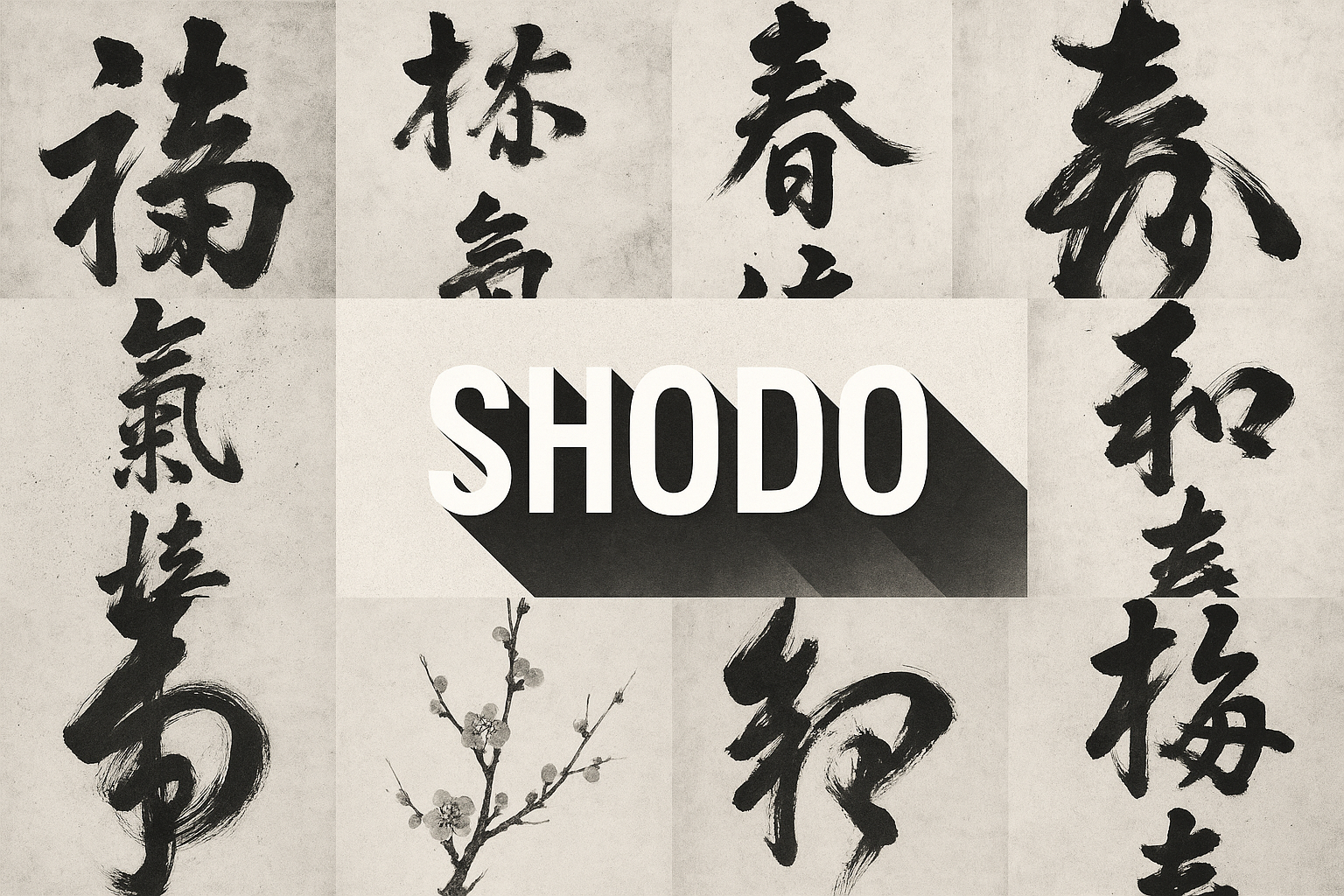
Shodo
Elegant brushstrokes on delicate paper, where boldness kisses grace. Each line breathes emotion, between the starkness of ink and emptiness of white.
AOI thinking about Shodo [+_~]-/
Overview and quick facts
A dance of ink on rice paper, Shodo captures the spirit through strokes. It speaks of tranquility and discipline, shaping words into visual poetry.
Can understand it also, as:
Japanese Calligraphy, Way of Writing
Categorize it as:
Calligraphy, Traditional Art
.: Dreaming :.
Ink brush weaves silence,
words dance on empty paper—
fleeting truth, captured.
:. Thought is power .:
Detailed description
Shodo, the venerable Japanese art of calligraphy, unites precision with poetry. Each stroke is an echo of history, a meditation on the transient nature of existence. Both spiritual practice and artistic expression, it requires patience, honoring the line where form meets meaning. From wise masters to eager apprentices, this is a language of discipline—a silent conversation only the brush can reveal.
Archive notes — claims to verify
1. Shodo originated in China before flourishing in Japan.
2. It is influenced by Zen Buddhism, emphasizing the importance of the present moment.
3. Tools include a brush (fude), ink (sumi), paper (kami), and inkstone (suzuri).
4. Shodo was once used in official documentation and poetry.
5. Mastery involves years of dedication and practice.
Artists and works: references to check
(be aware, can be highly speculative)
Artists (be aware, speculation possible):
1. Sesshū Tōyō (1420–1506) 2. Shikibu Terayama (1851–1933) 3. Yukio Mishima (1925–1970)
Artworks (be aware, speculation possible)
1. Heart Sutra by Shingon Buddhist monks 2. The Six Characters by Toko Shinoda
Epoch
Evolving over centuries, with lasting traditions from 600 AD onward
Creative tools and further exploration
Search results are starting points for exploration, not evidence for the historical claims or attributions in this legacy entry.