
Visual quality and composition
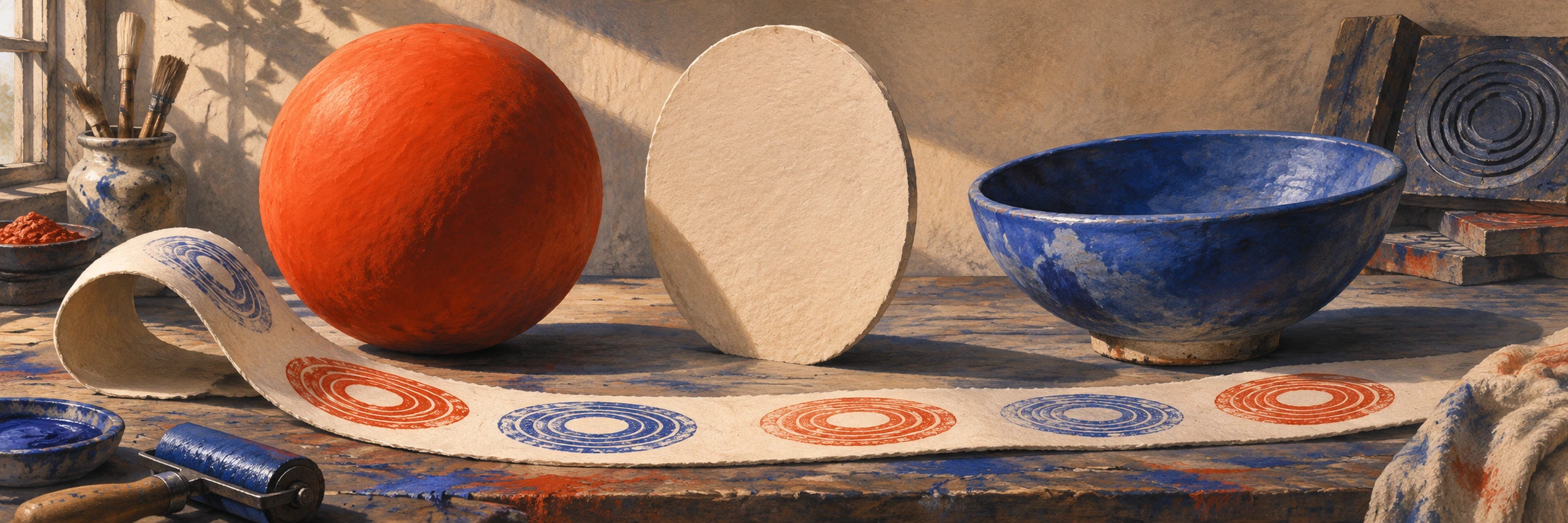
A plate seen from above is a circle. Tip it towards you and its rim becomes an ellipse. Put an apricot beside it and a patch of shadow makes the fruit swell towards your hand. Round is AOI’s guide to those different ways an image can turn. It is a visual quality that crosses movements, periods and materials.
A visual introduction
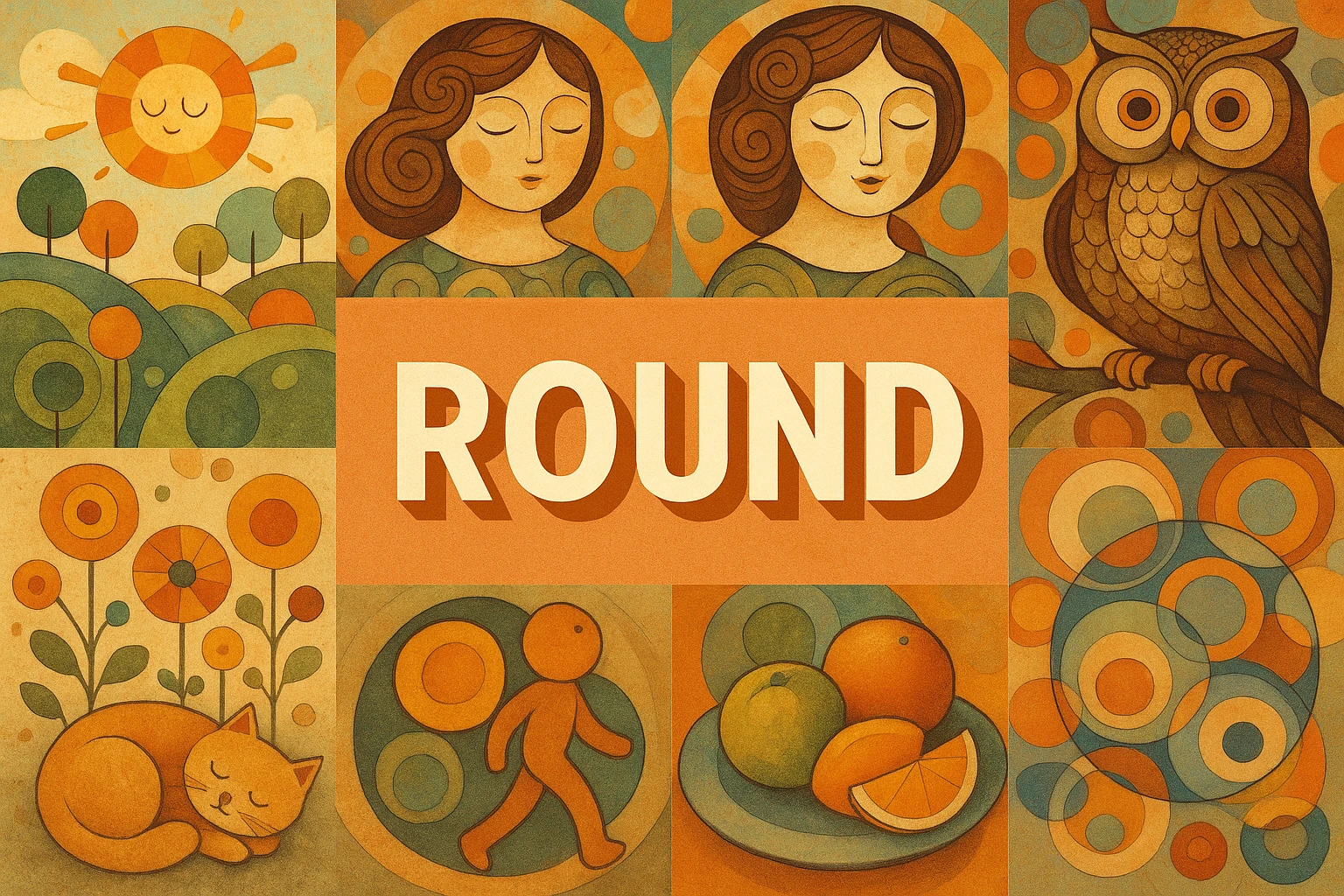
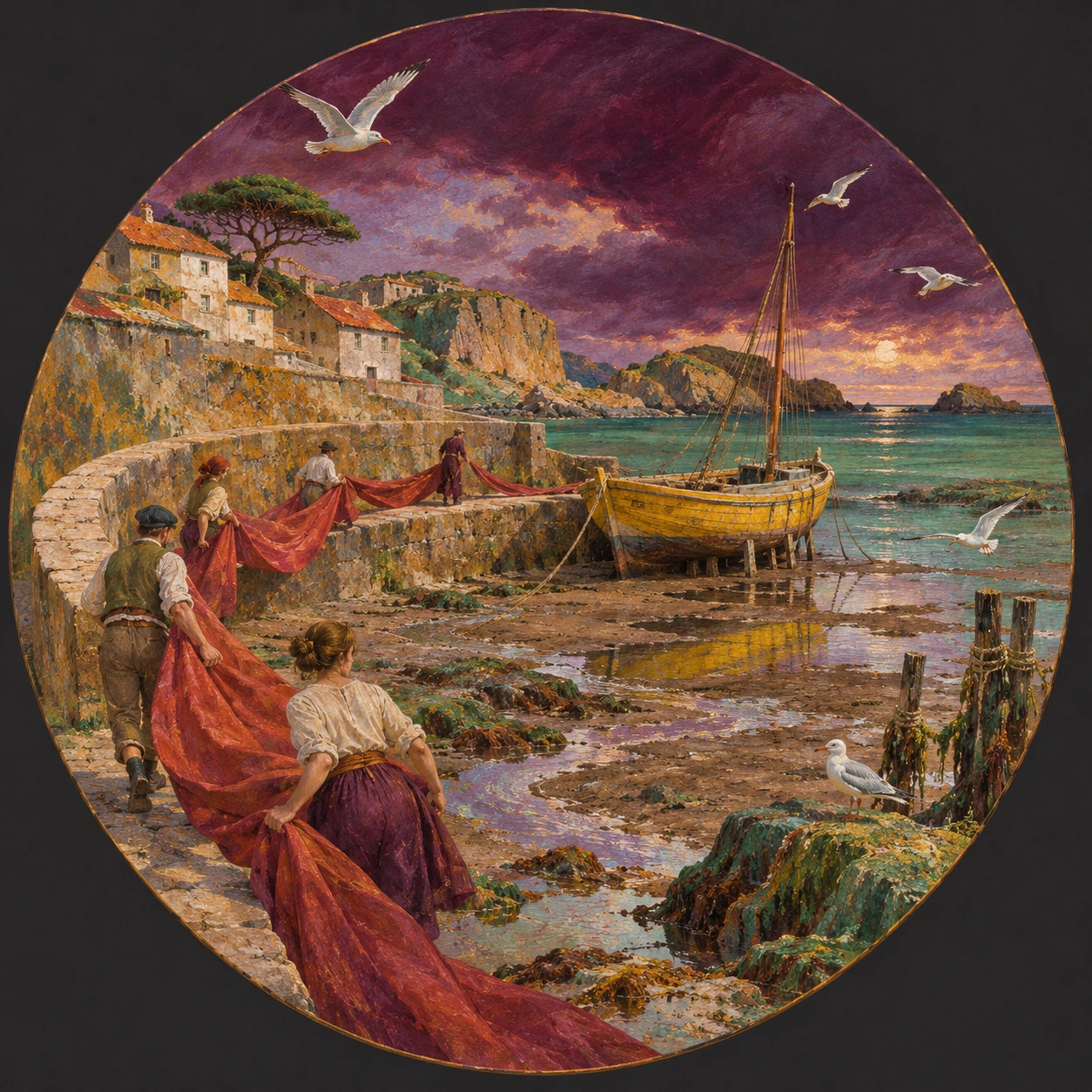
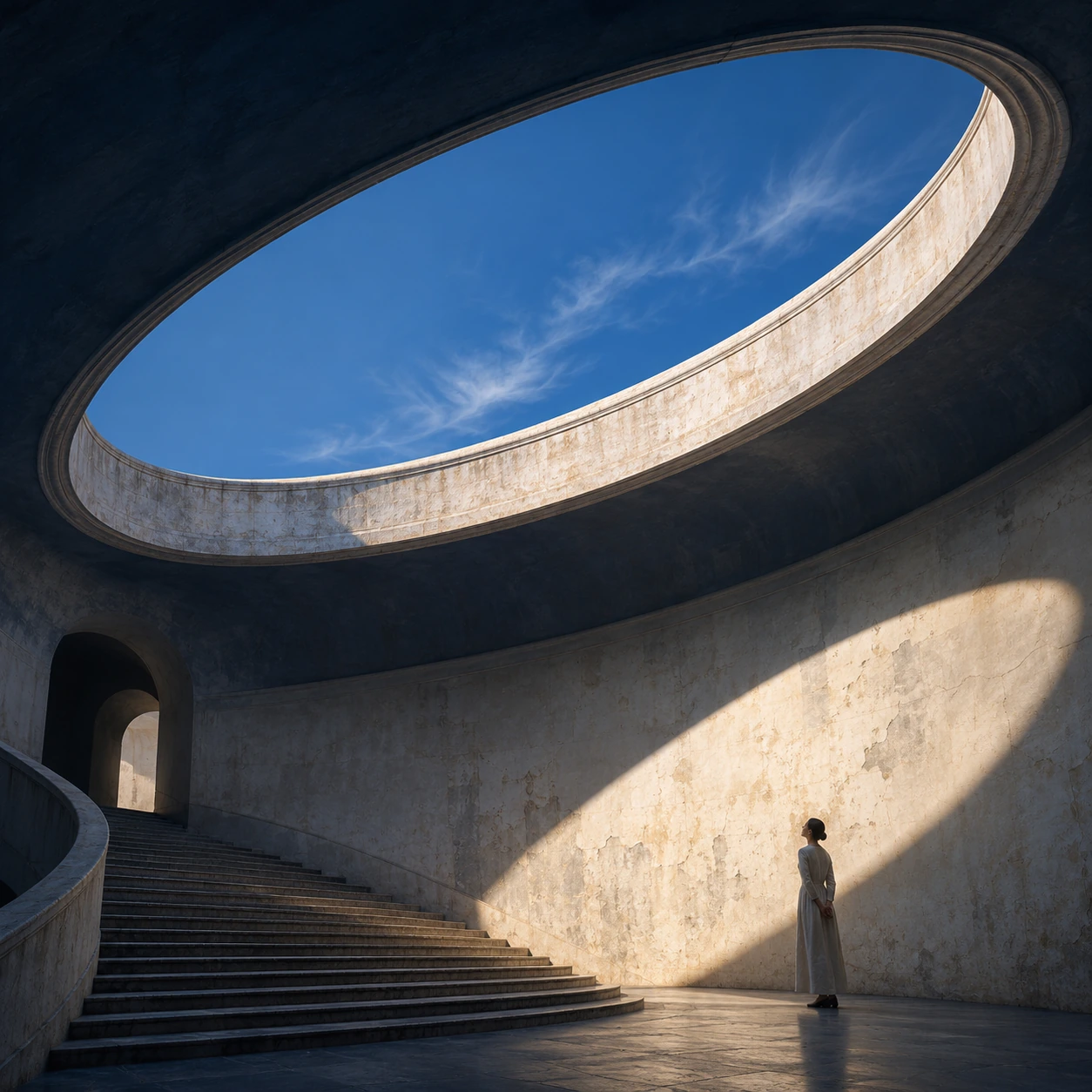
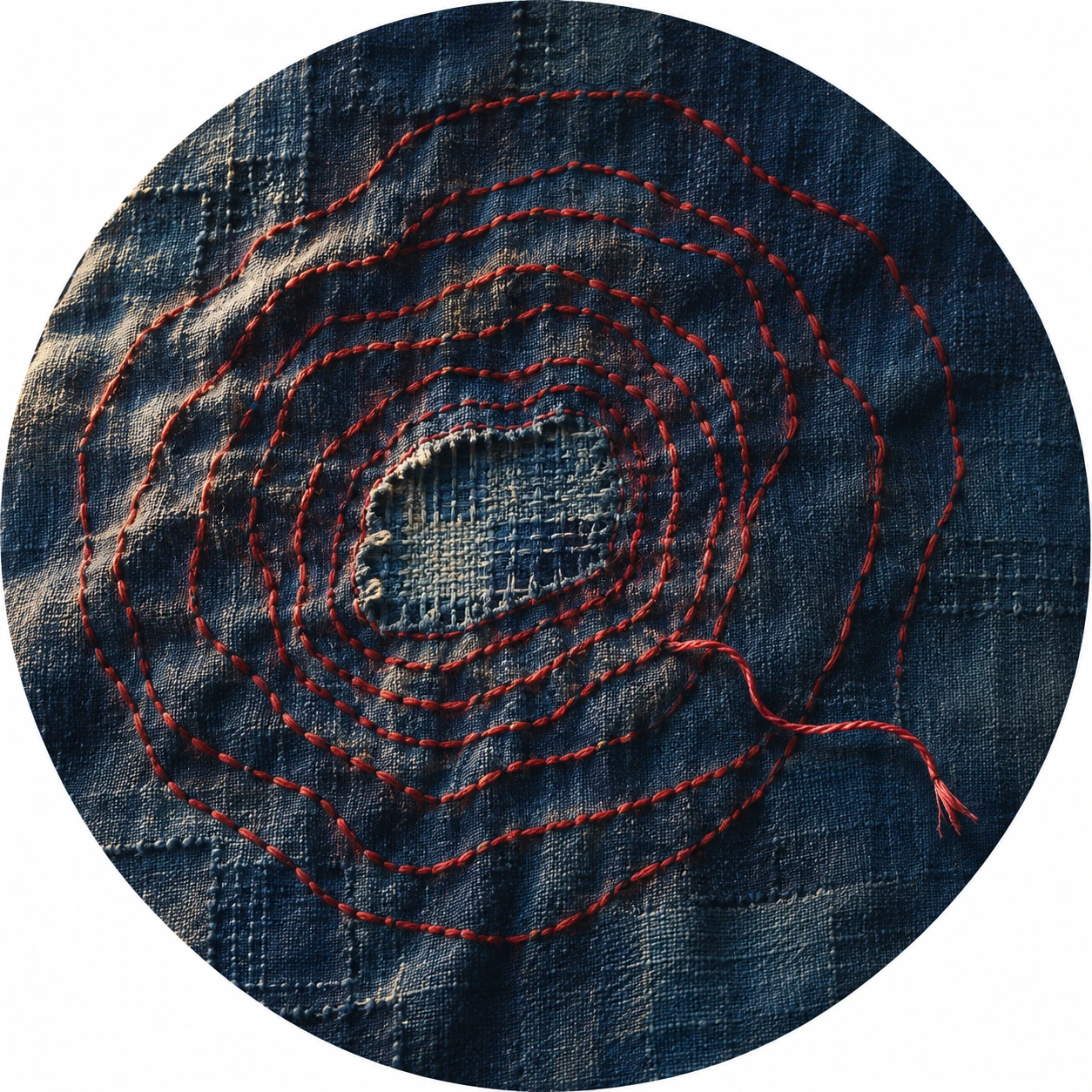
Five new studies compare edge, volume, enclosure, aperture and radial stitching. The titled collage is retained from the AOI archive.
Select an image for a closer look. Use the thumbnails, arrow keys or a swipe to compare examples. Zoom in to inspect details, or share the image that inspires you.
Creative toolbox · take this style further
Choose an input and a destination. Search sends your words to the chosen site; Copy & open puts them on your clipboard to paste there.
Create with AI
Turn your chosen input into an image prompt or a new creative direction.
ChatGPT
Copy your input and paste it into a ChatGPT conversation or image request.
Copy & open ChatGPT (new tab)Claude · Anthropic
Develop an image prompt or explore the style in a new Claude conversation.
Copy & open Claude · Anthropic (new tab)Midjourney
Paste your input into the Imagine bar on the Create page.
Copy & open Midjourney (new tab)Adobe Firefly
Copy your input, open Firefly, and paste it into the prompt field.
Copy & open Adobe Firefly (new tab)Leonardo.Ai
Copy your input, open Leonardo, and paste it into the generation field.
Copy & open Leonardo.Ai (new tab)Image search
Find visual references. Short, concrete keywords usually work best.
Lexica
Search AI images and prompts using your selected input.
Search with this input Lexica (new tab)Pexels
Search the photo and video library. Short keywords often work best.
Search with this input Pexels (new tab)Pixabay
Search photos, illustrations and other images.
Search with this input Pixabay (new tab)Unsplash
Search photographs using the style name or your own keywords.
Search with this input Unsplash (new tab)Wikimedia Commons
Search photographs, artworks and historical images. Check each file for its source and reuse terms.
Search with this input Wikimedia Commons (new tab)Art & research
Explore artists, collections and the ideas behind a style.
Wikipedia
Search for background reading. A style may not have its own article.
Search with this input Wikipedia (new tab)WikiArt
Copy your input into WikiArt’s search to explore artists and artworks.
Copy & open WikiArt (new tab)Europeana
Paste your keywords into the search to explore European museum, library and archive collections.
Copy & open Europeana (new tab)Inspiration
Discover portfolios and visual ideas from creative communities.
Instagram hashtags
Search a hashtag made from your input: spaces and punctuation are removed. Instagram may require sign-in.
Search with this input Instagram hashtags (new tab)ArtStation
Paste your input into artwork search for concept art, environments, characters and visual development.
Copy & open ArtStation (new tab)Behance
Paste your input into project search for illustration, design and visual storytelling.
Copy & open Behance (new tab)A closer look
Read the edge first. A disc has a boundary, a sphere has a turning surface, a ring encloses an interval and a tondo gives the entire picture a circular boundary. Each asks the eye to do a different kind of work.
What turns when the picture stays still?
Take a coin, a cup and an orange to the same window. Trace each silhouette, then ignore the contour and look only at the light. The coin can be flat while its outline is perfectly round. The orange retains its volume even if the frame cuts away half its silhouette. The cup offers two rims, an inside wall and a glimpse of depth. A single circle template would miss all three differences.
A round picture and a picture of circles
In the National Gallery of Art’s Adoration of the Magi, begun by Fra Angelico and completed by Fra Filippo Lippi, the tempera painting occupies a circular poplar panel. The procession winds down to the group in the foreground. Follow the figures one by one and the perimeter becomes a means of pacing a story. The eye can arrive at a destination away from the mathematical centre.
Vasily Kandinsky’s Several Circles, painted in 1926, sets differently sized discs inside a nearly square canvas. The Guggenheim records the painting and its Bauhaus context. Here the outer edge stays put while the intervals between circles establish distances. Cover the smallest satellite with a fingertip and the large dark disc seems to shift its weight. The tondo and the Kandinsky give two quite different jobs to the same geometry.
Where an interval becomes an accident
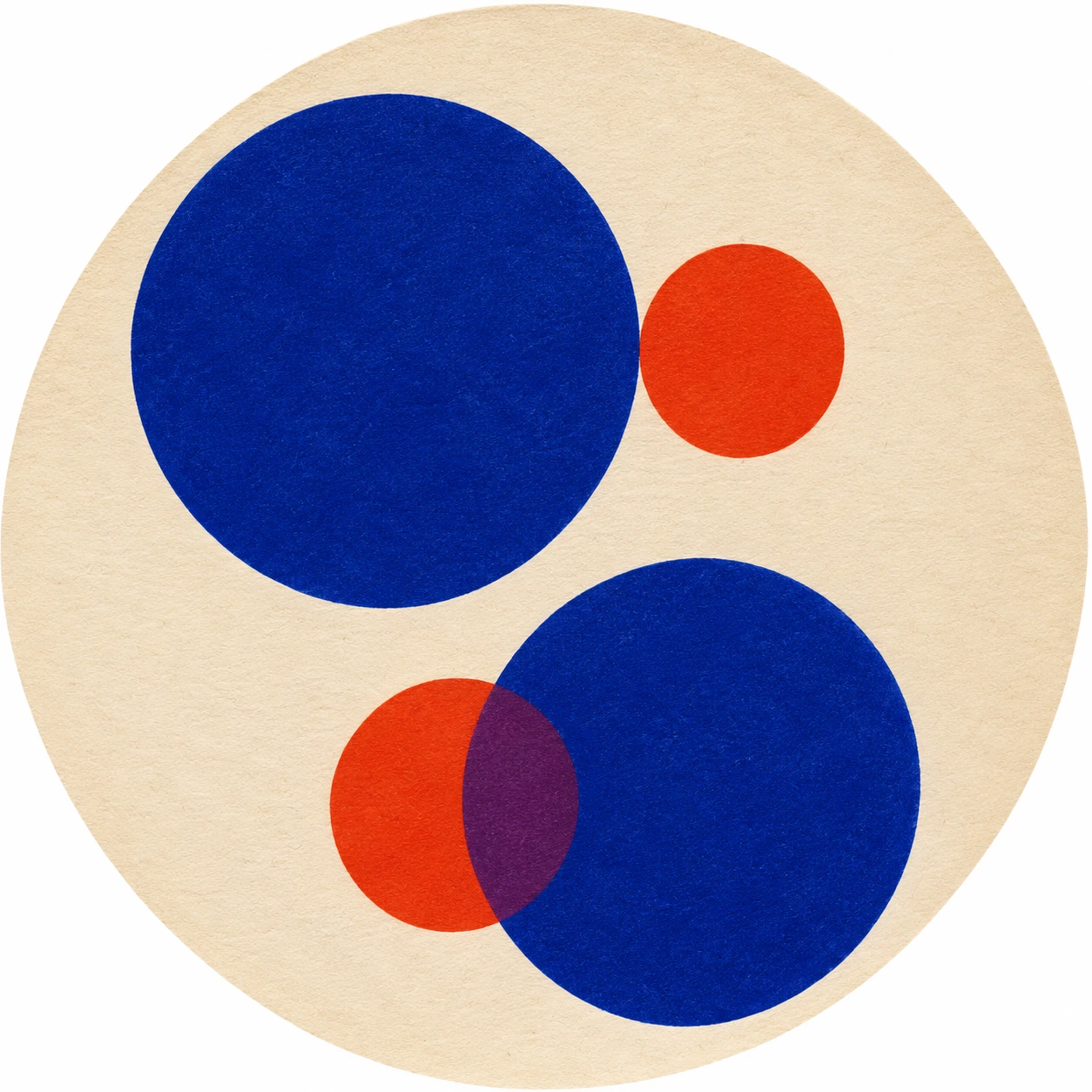
Two outlines that just kiss can flatten a composition. A gap makes them separate. A deliberate overlap tells the eye which is in front. Try three thumbnails in which you change only this interval. Keep the strongest contrast for the place you want the viewer to examine. Repeating one diameter at regular distances produces a beat. A single missing unit gives that beat a pause.
Light, edge and the hollow centre
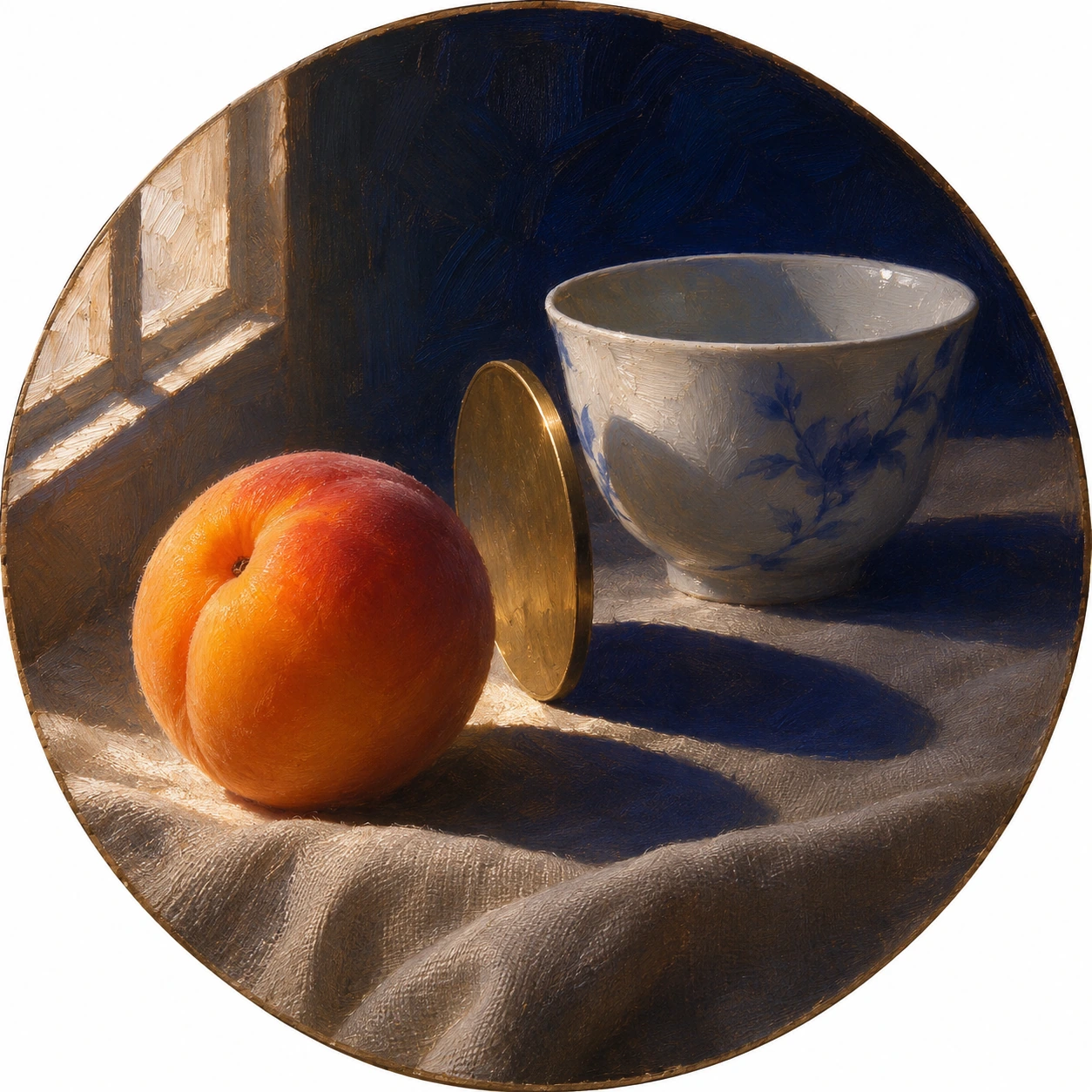
A sphere takes volume from its rounded transition into shadow and the small contact shadow where it rests. A cut opening does the opposite. The dark rim of an oculus can frame faraway sky. An oblique viewpoint compresses its near and far edges into an ellipse. In cloth, roundness can follow the tension of a stitch. A ring pulled unevenly changes both the contour of the hole and the way its surrounding surface catches light.
At the drawing table
Start with cut paper before asking a generator for a polished scene. Photograph two circles touching, separate them, then overlap them. Choose the arrangement whose empty space interests you most. In the final prompt specify whether the light should cross a surface, pass through an opening or leave a flat field of colour undisturbed. A word about what light does is usually worth more than a list of round objects.
Positive review · AI-authored editorial assessment
The strongest moment comes when a flat edge and a turning surface share the same patch of light. A few millimetres of shadow can make the difference legible from across a room.
Negative review · AI-authored editorial assessment
A page of evenly spaced circles can become wallpaper before the eye has found anything to investigate. Change the interval first. A gap or a single cropped edge often works better than another colour.
Neutral review · AI-authored editorial assessment
Roundness is a compositional resource for painting, illustration, textile work and architecture. A common outline can support very different functions, so any historical or symbolic interpretation still needs evidence from the particular work.
A small poetic detour
Original words from the AOI studio.
Poetry
The coin keeps all its light on one cheek.
The plum lets evening round its side.
My cup holds a small oval of sky.
I tilt it, and the sky grows wide.
The prompt workshop
Original creative exercises. These prompts create new illustrations, not documentary evidence.
Test the interval
Cut two unequal cobalt paper discs and one small vermilion disc. Place them off centre on warm white paper. Make a deliberate gap beside one overlap and keep every field flat.
Model the surface
Paint a cup, an apricot and a standing brass disc on linen under one side window. Reveal the cup interior, the apricot’s turning shadow and the narrow thickness of the metal edge.
Compose a tondo
Compose a story inside a round harbour painting. Carry a coloured sail through a winding line of figures and return the eye along the shore. Give the story a destination just outside the centre.
People & works to explore
References discussed in this article. Consult the sources below for context.
Artists and practitioners
Fra Angelico
Fra Filippo Lippi
Vasily Kandinsky
Paintings and other works
The Adoration of the Magi
Several Circles
A smile from the studio
Jokes
The compass took credit for the orange. The window asked who had drawn the shadow.