
Artistic practice involving robotic systems
Robotic art uses robotic systems in the making, performance or presentation of a work. It differs from an image depicting a robot, and it need not involve artificial intelligence or claim that a machine acts without human decisions.
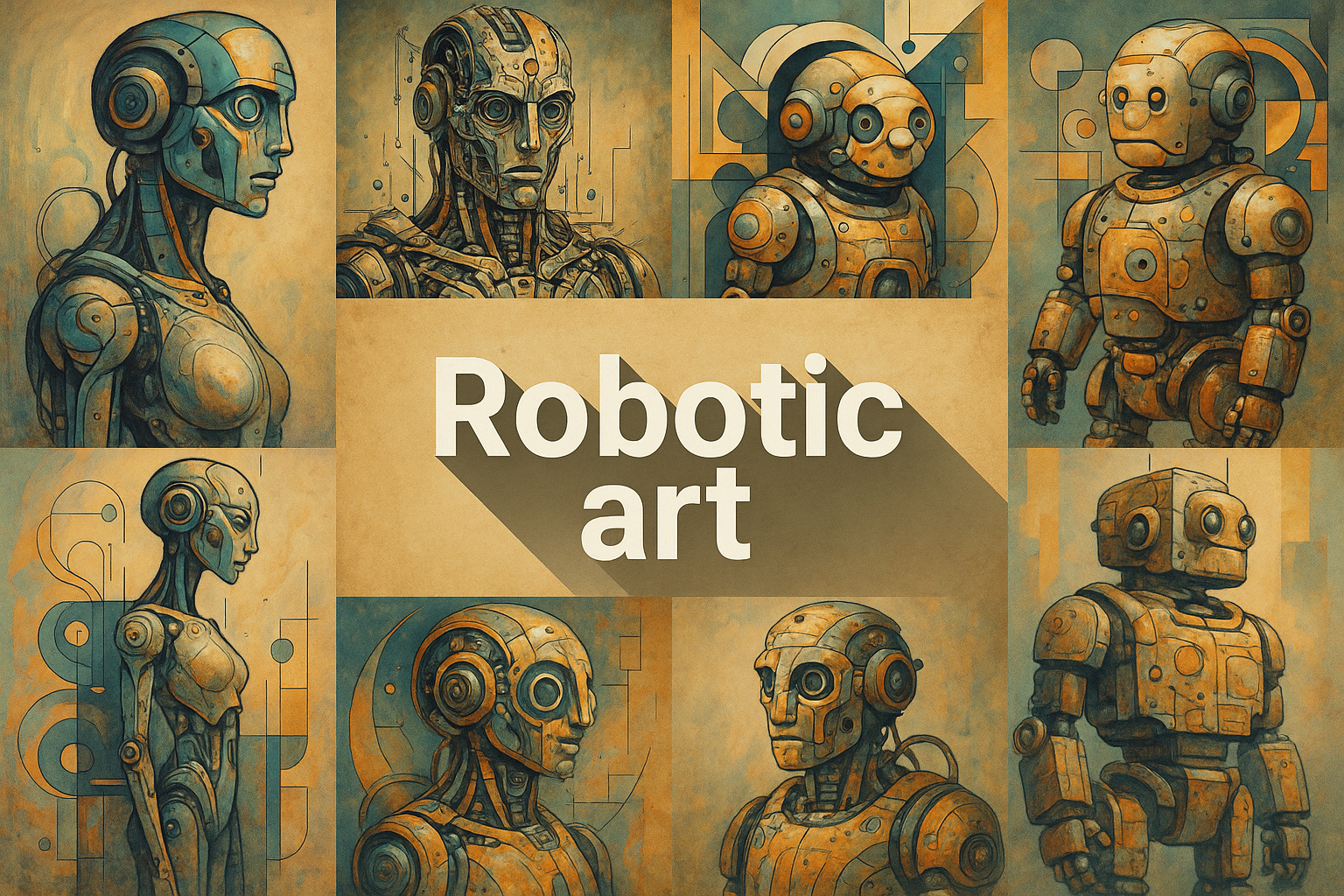
A visual introduction
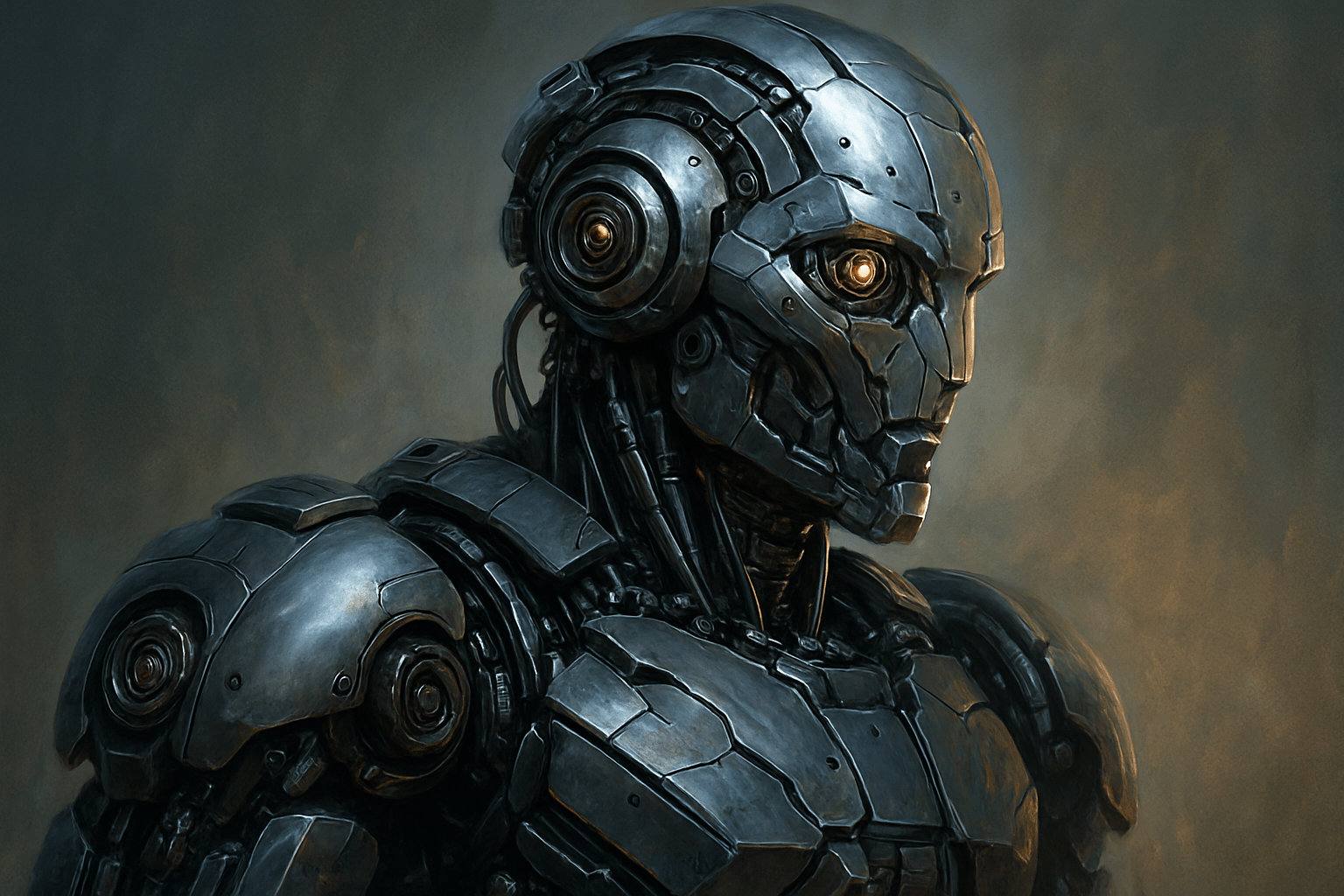
Select an image for a closer look. Use the thumbnails, arrow keys or a swipe to compare examples. Zoom in to inspect details, or share the image that inspires you.
Creative toolbox · take this style further
Choose an input and a destination. Search sends your words to the chosen site; Copy & open puts them on your clipboard to paste there.
Create with AI
Turn your chosen input into an image prompt or a new creative direction.
ChatGPT
Copy your input and paste it into a ChatGPT conversation or image request.
Copy & open ChatGPT (new tab)Claude · Anthropic
Develop an image prompt or explore the style in a new Claude conversation.
Copy & open Claude · Anthropic (new tab)Midjourney
Paste your input into the Imagine bar on the Create page.
Copy & open Midjourney (new tab)Adobe Firefly
Copy your input, open Firefly, and paste it into the prompt field.
Copy & open Adobe Firefly (new tab)Leonardo.Ai
Copy your input, open Leonardo, and paste it into the generation field.
Copy & open Leonardo.Ai (new tab)Image search
Find visual references. Short, concrete keywords usually work best.
Lexica
Search AI images and prompts using your selected input.
Search with this input Lexica (new tab)Pexels
Search the photo and video library. Short keywords often work best.
Search with this input Pexels (new tab)Pixabay
Search photos, illustrations and other images.
Search with this input Pixabay (new tab)Unsplash
Search photographs using the style name or your own keywords.
Search with this input Unsplash (new tab)Wikimedia Commons
Search photographs, artworks and historical images. Check each file for its source and reuse terms.
Search with this input Wikimedia Commons (new tab)Art & research
Explore artists, collections and the ideas behind a style.
Wikipedia
Search for background reading. A style may not have its own article.
Search with this input Wikipedia (new tab)WikiArt
Copy your input into WikiArt’s search to explore artists and artworks.
Copy & open WikiArt (new tab)Europeana
Paste your keywords into the search to explore European museum, library and archive collections.
Copy & open Europeana (new tab)Inspiration
Discover portfolios and visual ideas from creative communities.
Instagram hashtags
Search a hashtag made from your input: spaces and punctuation are removed. Instagram may require sign-in.
Search with this input Instagram hashtags (new tab)ArtStation
Paste your input into artwork search for concept art, environments, characters and visual development.
Copy & open ArtStation (new tab)Behance
Paste your input into project search for illustration, design and visual storytelling.
Copy & open Behance (new tab)A closer look
A robot’s path, speed, tool contact and repeated actions can become visible features of the artwork; the process may be as significant as the finished object.
Describe the system and the artistic question
ZKM's documentation of robotlab's work shows industrial robots translating image information into drawn paths. The Heinz Nixdorf MuseumsForum's portrait robot offers another example, combining a photographic input with programmed drawing.
These projects demonstrate different relationships among input, software, mechanism, material and audience. Identify those relationships before describing a robot as an independent artist. Human choices remain important in selecting the task, constraints and presentation.
A path is more than a line on a screen
A physical drawing tool has contact, pressure, reach and material behavior. The same planned path can appear differently with another pen or surface. Repeated movement can create texture, but the machine's limitations can also become part of the work.
For a concept study, decide whether the path follows contours, distributes tone or performs an abstract rule. A coherent rule makes the process easier to understand than arbitrary mechanical scribbling. Show enough of the system for the viewer to connect action and result.
Time can be part of the composition
A work may unfold slowly, accumulate marks or change in response to an input. A still image of the final drawing cannot communicate all of that behavior. Documentation should distinguish the completed object from the performance or installation.
Consider what an audience sees at different moments. A small emerging pattern can hold attention if the governing action is legible. Motion added merely to make the machine look busy may contribute little to the artistic question.
Make claims that the evidence supports
Do not call a system autonomous, learning or AI-driven unless its actual operation justifies those terms. A programmed drawing machine can be artistically compelling without those claims. Likewise, a generated picture of a robotic studio is a concept illustration, not proof of a functioning system.
An original proposal should specify the intended input, transformation, output and viewer experience. Keep technical feasibility and safe operation as part of any later physical development. The visual study can then concentrate on what the machine's particular way of acting makes perceptible.
The prompt workshop
Original creative exercises. These prompts create new illustrations, not documentary evidence.
A visible rule
Original concept illustration of a robotic drawing installation producing one continuous line, clear relation between tool and paper, no claim of a working prototype.
Accumulation over time
Original three-stage visualization of a programmed drawing accumulating tonal density through repeated paths, consistent apparatus and visible differences between stages.
Material experiment
Original robotic-art proposal comparing the same planned line on smooth paper and rough board, emphasis on material response rather than humanoid appearance.