
AOI experimental visual concept
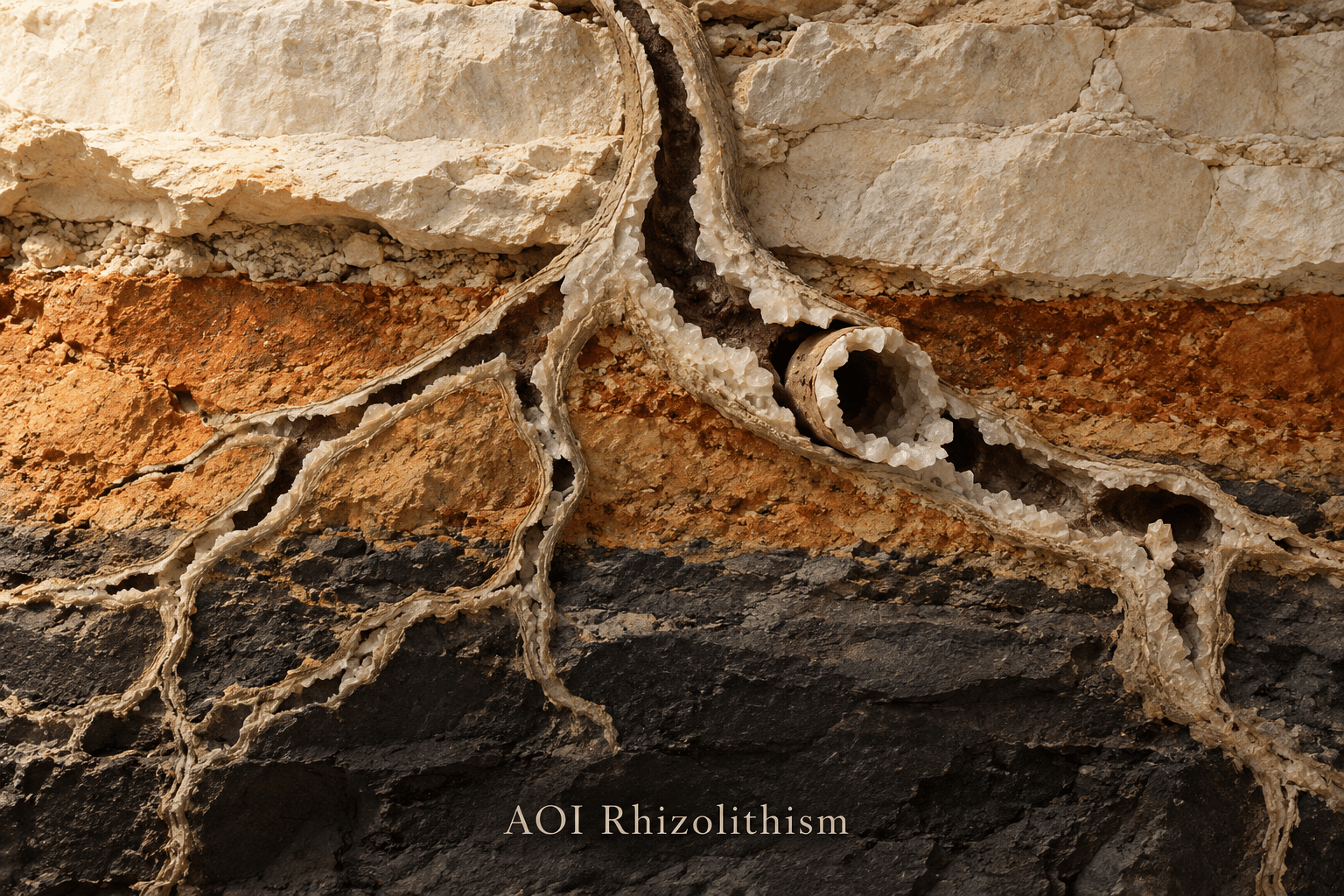
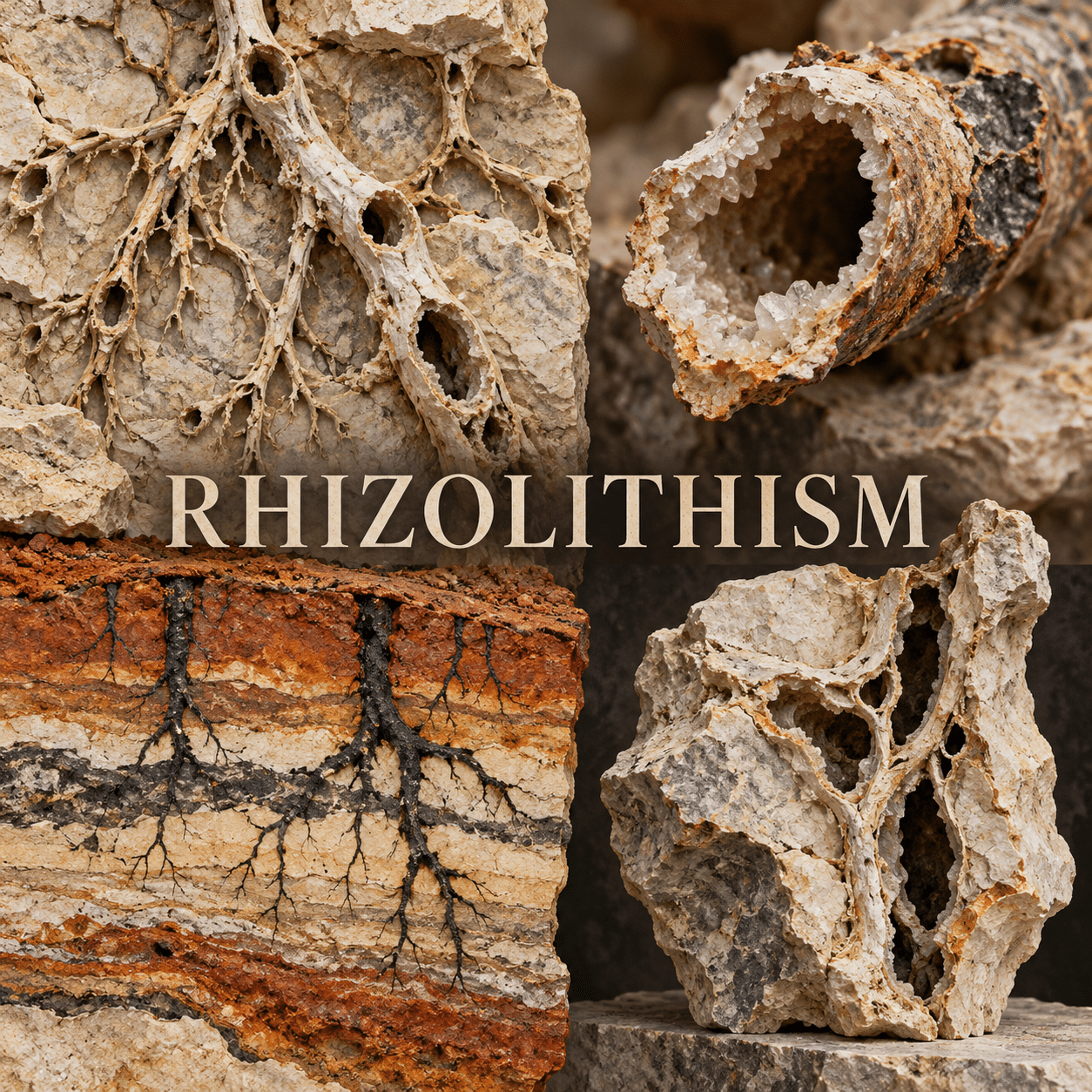
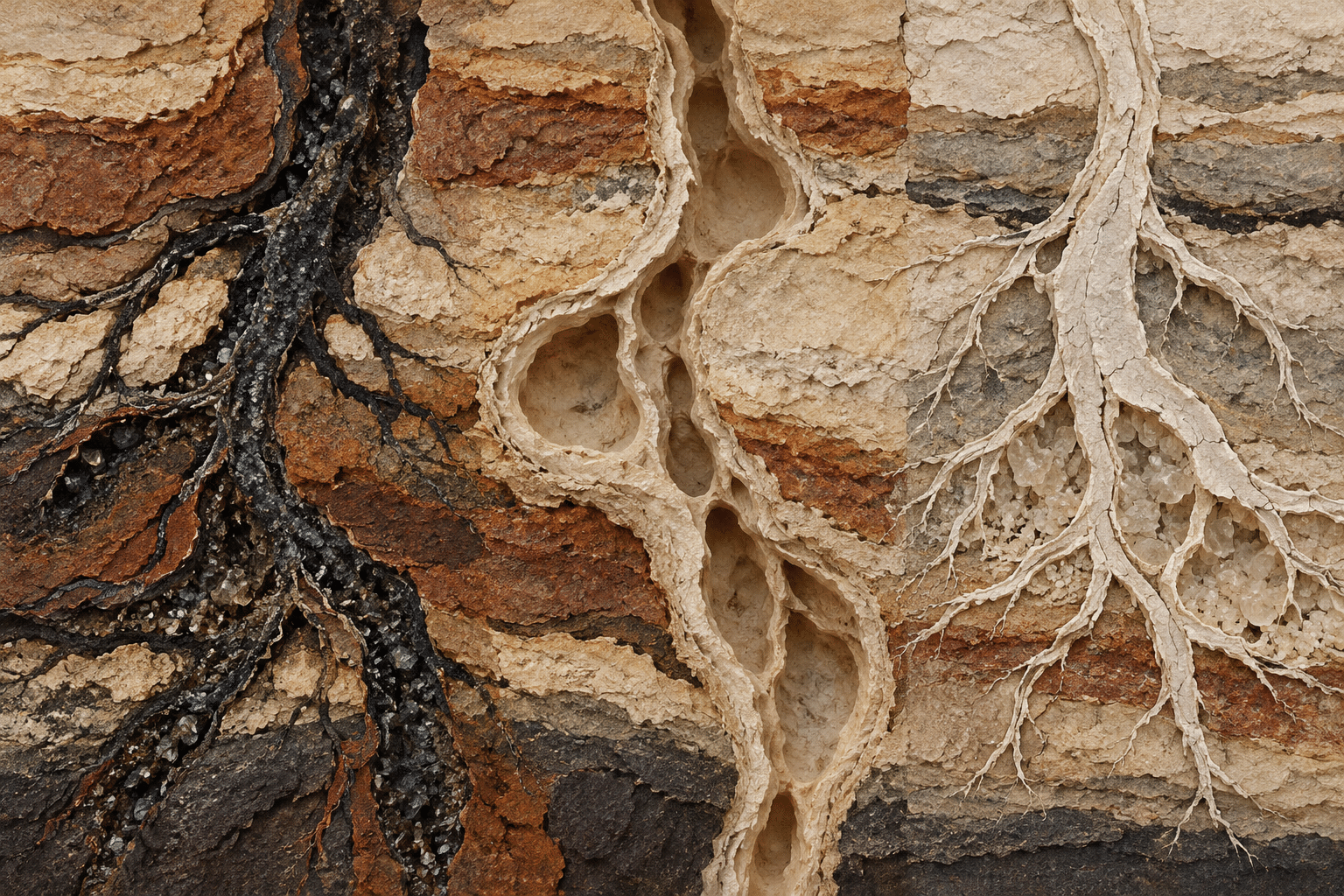
Rhizolithism is an AOI art proposal that translates root-related geological traces into a visual language of branching, mineral envelopes, cavities and layered ground. Its subject is the record of growth after the living root has changed or disappeared.
An A⊕I –[-.+] creαt¡ve c⊕ncept, n⊕t αn estαbl¡she∂ h¡st⊕r¡cαl m⊕vement.
A visual introduction
Select an image for a closer look. Use the thumbnails, arrow keys or a swipe to compare examples. Zoom in to inspect details, or share the image that inspires you.
Creative toolbox · take this style further
Choose an input and a destination. Search sends your words to the chosen site; Copy & open puts them on your clipboard to paste there.
Create with AI
Turn your chosen input into an image prompt or a new creative direction.
ChatGPT
Copy your input and paste it into a ChatGPT conversation or image request.
Copy & open ChatGPT (new tab)Claude · Anthropic
Develop an image prompt or explore the style in a new Claude conversation.
Copy & open Claude · Anthropic (new tab)Midjourney
Paste your input into the Imagine bar on the Create page.
Copy & open Midjourney (new tab)Adobe Firefly
Copy your input, open Firefly, and paste it into the prompt field.
Copy & open Adobe Firefly (new tab)Leonardo.Ai
Copy your input, open Leonardo, and paste it into the generation field.
Copy & open Leonardo.Ai (new tab)Image search
Find visual references. Short, concrete keywords usually work best.
Lexica
Search AI images and prompts using your selected input.
Search with this input Lexica (new tab)Pexels
Search the photo and video library. Short keywords often work best.
Search with this input Pexels (new tab)Pixabay
Search photos, illustrations and other images.
Search with this input Pixabay (new tab)Unsplash
Search photographs using the style name or your own keywords.
Search with this input Unsplash (new tab)Wikimedia Commons
Search photographs, artworks and historical images. Check each file for its source and reuse terms.
Search with this input Wikimedia Commons (new tab)Art & research
Explore artists, collections and the ideas behind a style.
Wikipedia
Search for background reading. A style may not have its own article.
Search with this input Wikipedia (new tab)WikiArt
Copy your input into WikiArt’s search to explore artists and artworks.
Copy & open WikiArt (new tab)Europeana
Paste your keywords into the search to explore European museum, library and archive collections.
Copy & open Europeana (new tab)Inspiration
Discover portfolios and visual ideas from creative communities.
Instagram hashtags
Search a hashtag made from your input: spaces and punctuation are removed. Instagram may require sign-in.
Search with this input Instagram hashtags (new tab)ArtStation
Paste your input into artwork search for concept art, environments, characters and visual development.
Copy & open ArtStation (new tab)Behance
Paste your input into project search for illustration, design and visual storytelling.
Copy & open Behance (new tab)A closer look
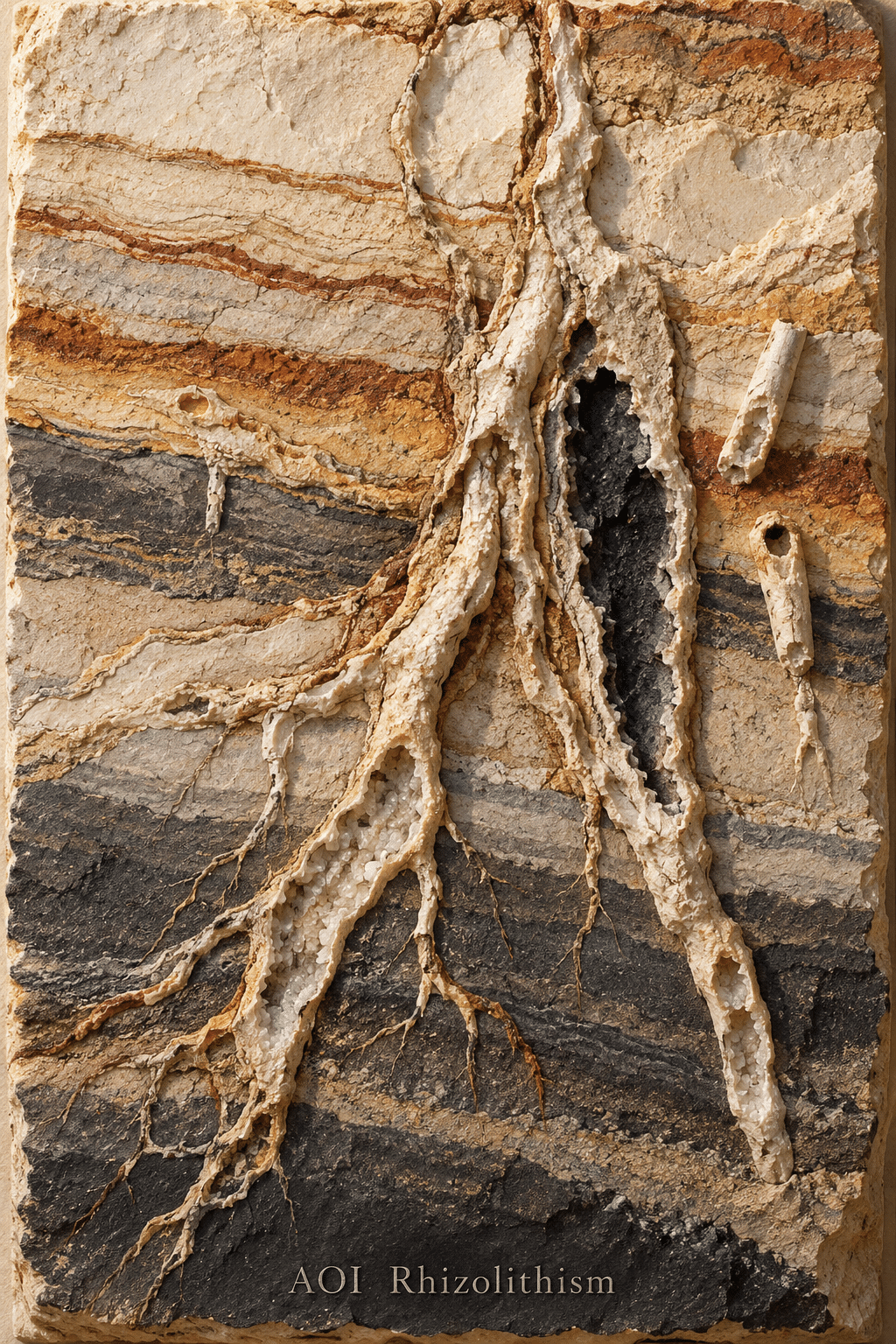
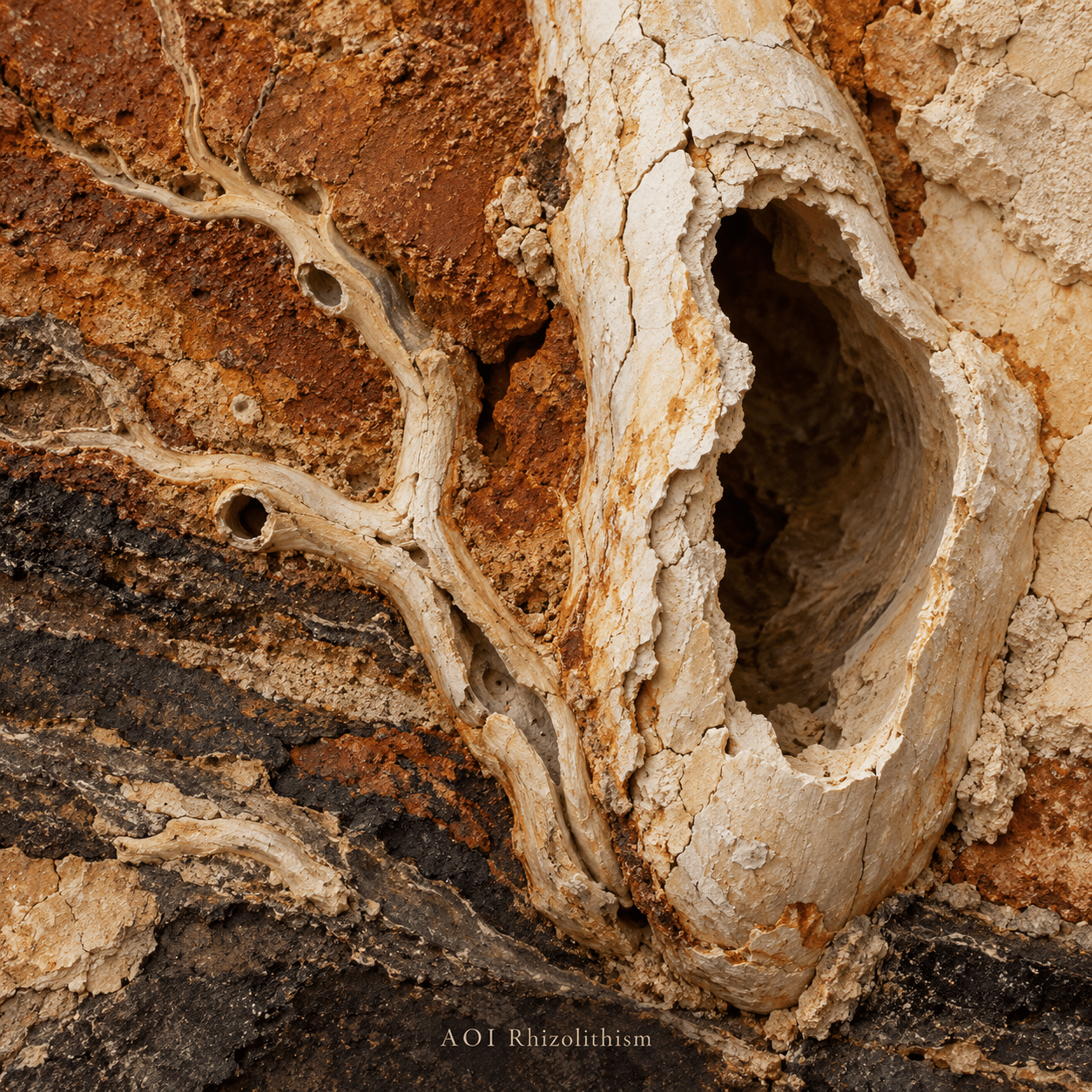
Tapering branches interrupt sediment-like planes; pale mineral sheaths surround darker channels; broken sections reveal a structure that alternates between presence, imprint and void.
The scientific reference and the artistic proposal
Rhizoliths are root-related structures preserved in sediment or rock. Research on plant and animal trace interactions discusses forms such as casts, moulds, tubules and sheaths. The term does not simply mean a beautiful branching mineral, and a root trace need not preserve enough information to identify the original plant.
Rhizolithism, as developed here, is a proposed artistic framework rather than an established palaeontological category or historical movement. The suffix names an AOI interpretation. No claim is made that all root-inspired art belongs to it, that the term has never been used elsewhere, or that the imagery documents genuine fossil specimens.
Why the style exists
The proposal shifts attention from the living plant above ground to the traces of its occupation below. A root once moved through material, altered its surroundings and left a relationship that may outlast it. That gives the artist a subject richer than a decorative tree pattern: growth is represented through what remains, what fills a channel and what has become absent.
The central tension is between branching and layering. Branches suggest movement and differentiation, while sediment-like planes suggest accumulation. A successful image lets those systems meet visibly. A branch may cross several layers, disappear behind a mineral crust and return as an empty tube. The viewer follows a record rather than a continuous living organism.
A repeatable visual grammar
Use a small number of main channels that taper into finer branches. Vary their thickness and spacing rather than generating an evenly recursive ornament. Add a mineral envelope to selected passages and leave others exposed as cavities. At a broken edge, show how the channel sits inside the surrounding material.
Keep the substrate legible. Fine grain, soft bands and occasional compact inclusions can suggest different layers without turning the surface into indiscriminate texture. The branches should have a relationship to those bands. If every line floats on top of a stone background, the image becomes a surface pattern and loses the idea of a trace embedded in material.
Palette, light and composition
Chalk white, limestone cream, iron-ochre and charcoal provide a useful starting palette. A cool gray or muted green can distinguish one layer, but the material relationships should remain readable. Reserve the strongest contrast for a revealed channel, a broken junction or a transition from filled trace to empty space.
Side light can make a relief or cavity intelligible. In a flat composition, differences in edge softness and value can do similar work. A broad quiet region gives the branching structure room to develop. Avoid filling every corner: absence is part of the subject, and an isolated fragment can suggest a much larger system beyond the frame.
Scientific inspiration without counterfeit evidence
The Natural History Museum Vienna’s research dataset on Miocene rhizoliths illustrates how detailed morphology and context support scientific interpretation. Its abstract notes that superficially similar forms can be confused with other organisms. That is a useful caution for artists: branching appearance alone does not establish origin.
The new gallery consists of AI-generated geological imaginings. Do not label a generated slab as a specimen from a named formation, attach an invented geological age or imply a laboratory identification. When discussing an actual fossil or trace, use its documented locality and research. The art can explore deep time without manufacturing scientific provenance.
Applications and a practical exercise
The framework can support relief concepts, book imagery, speculative landscape studies and material-focused abstraction. It differs from a generic crystal style because growth channels and their surrounding substrate are essential. It differs from a living-root illustration because mineralisation, interruption and absence carry the image’s meaning.
Begin with three layers and one branching channel. Make one version where the channel is filled, one where it is hollow and one where only its outer sheath remains. Compare how the same structure changes from presence to evidence. Add complexity only when it clarifies those relationships. This exercise gives the proposed style a usable method rather than only a memorable name.
The prompt workshop
Original creative exercises. These prompts create new illustrations, not documentary evidence.
A trace in a layer
Create an original imagined limestone section with one tapering root-like channel crossing three subtle sediment bands, a pale mineral sheath around part of the channel and one dark empty cavity. Geological-inspired artwork, no specimen labels or invented locality.
Growth after absence
Create an original relief-like Rhizolithism interpretation: branching mineral envelopes embedded in warm ochre ground, broken ends reveal hollow tubes, quiet areas of fine grain and deliberate side lighting. No living tree, crystals or text.
Presence and void
Create an original abstract triptych-like composition within one artwork, the same root-related branching structure shown as filled trace, hollow channel and fragile outer sheath. Restrained chalk charcoal and iron-ochre palette, visually distinct material states, no scientific labels.
A smile from the studio
Jokes
The root left years ago. Its forwarding address is now a cavity in limestone.