
Chicano aesthetics · cultural context before a visual preset
What does rasquache mean, and who gets to use the word? Explore its relationship to rasquachismo through Chicano writing and five illustrated material studies.
A visual introduction
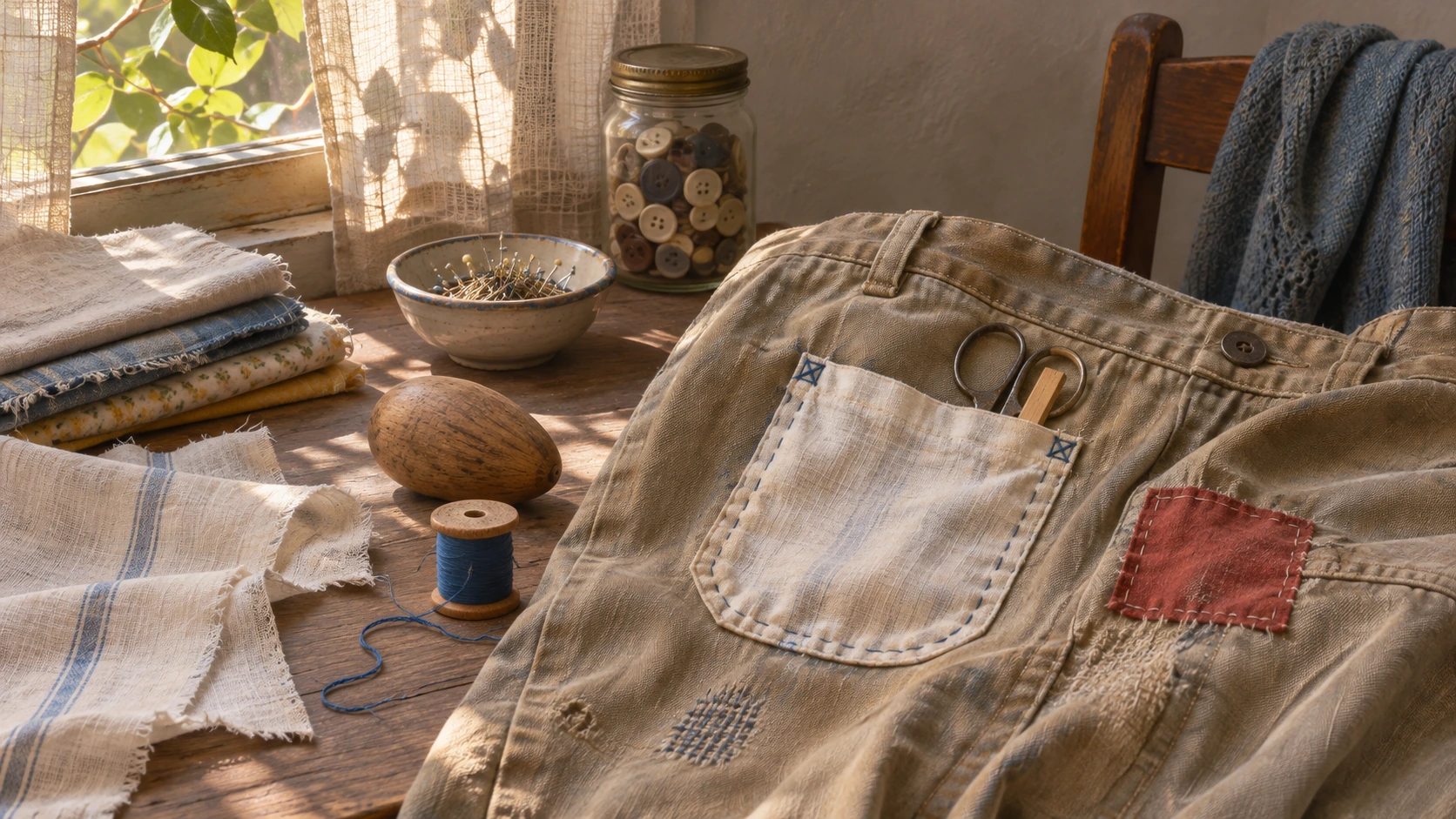
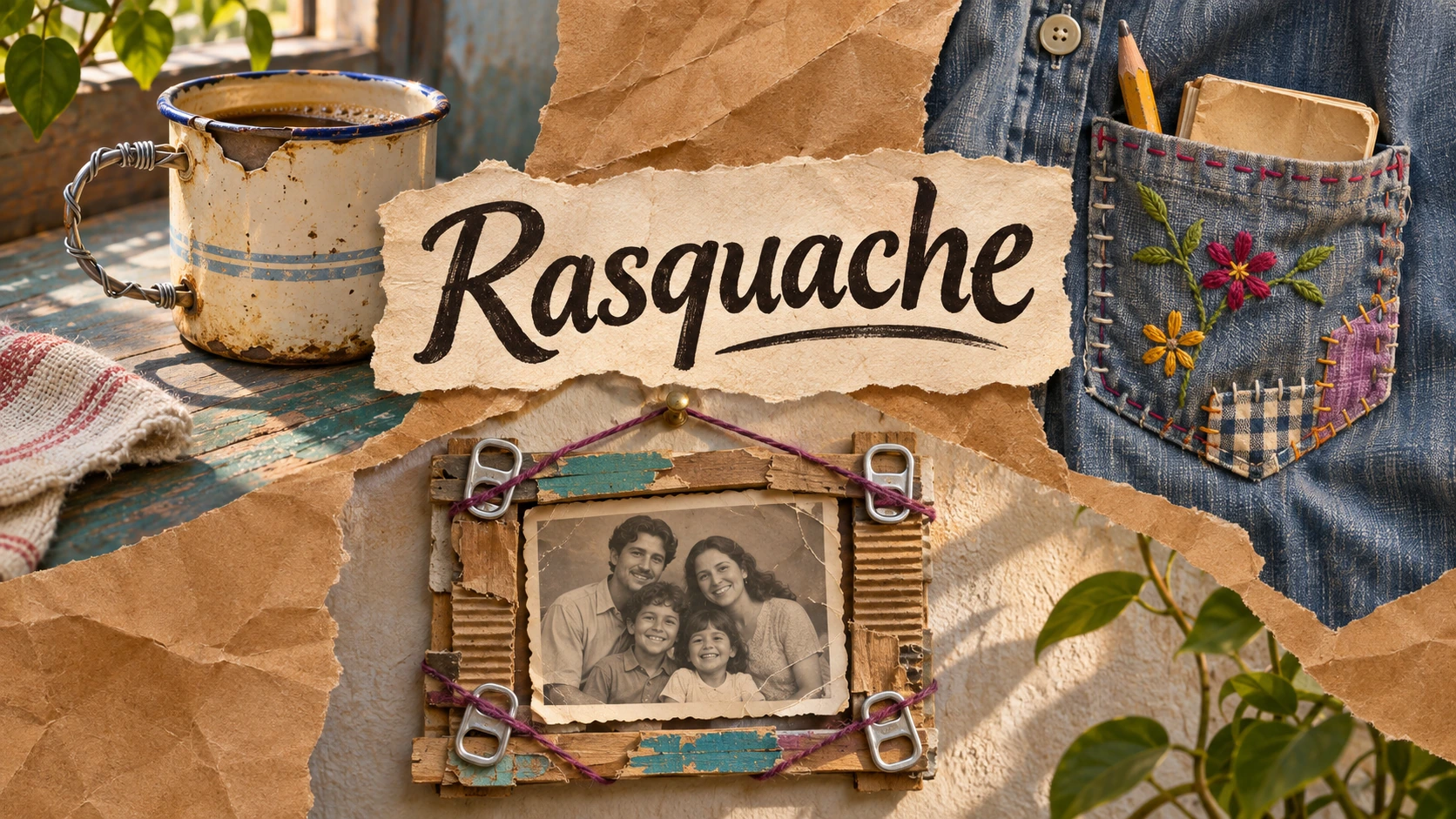
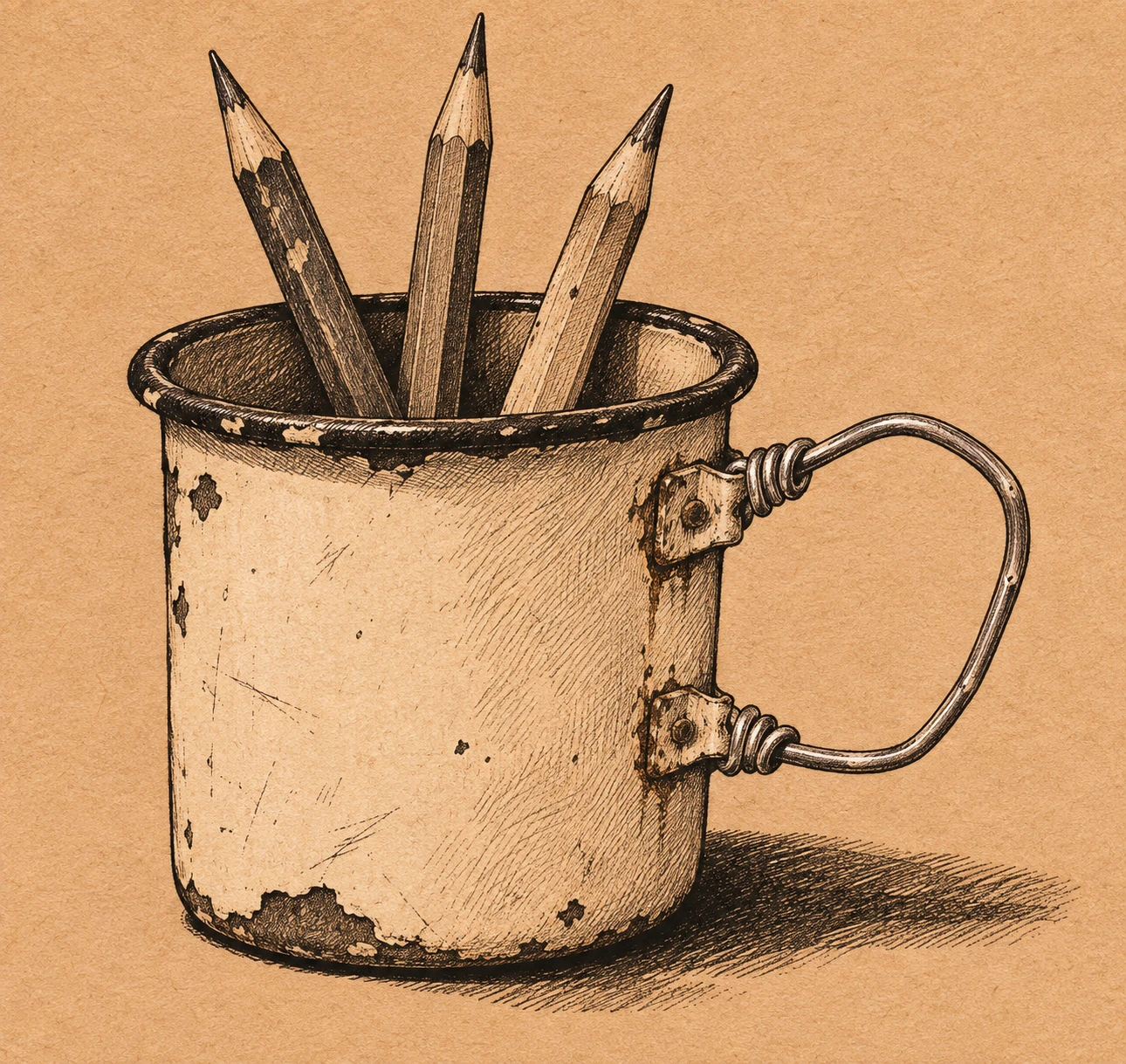
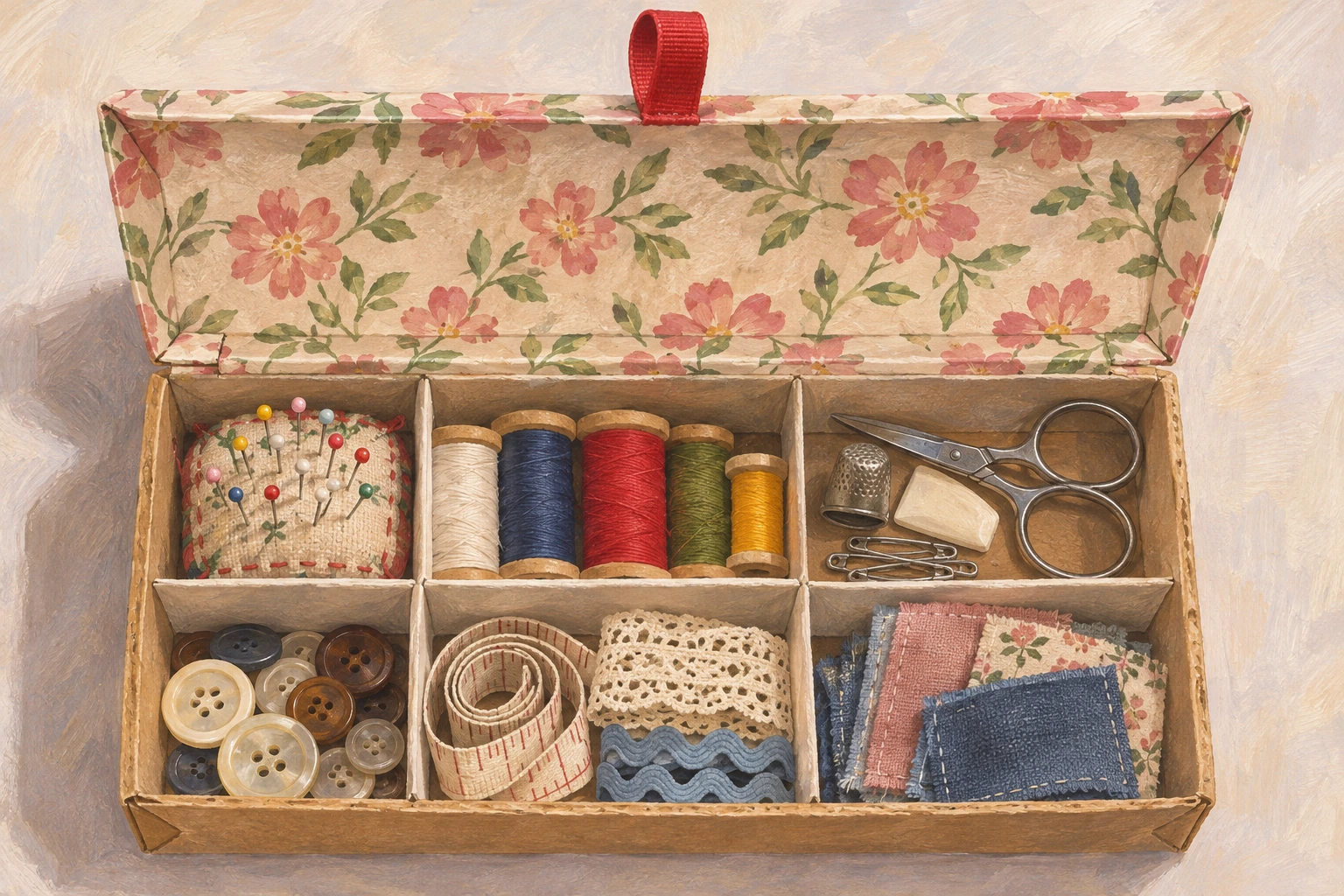
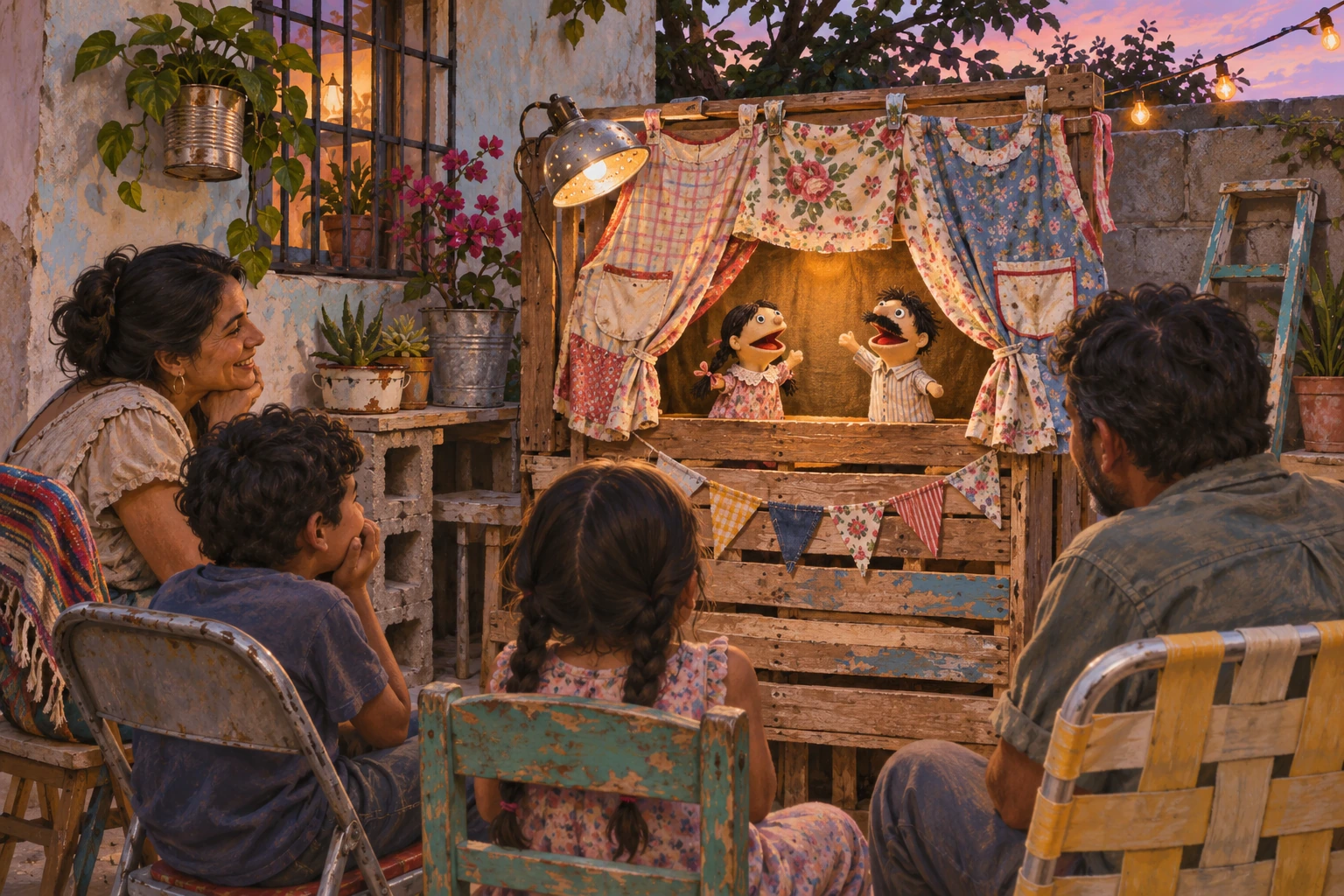
Seven original AI illustrations. The household objects and the courtyard are invented for close looking.
Select an image for a closer look. Use the thumbnails, arrow keys or a swipe to compare examples. Zoom in to inspect details, or share the image that inspires you.
Creative toolbox · take this style further
Choose an input and a destination. Search sends your words to the chosen site; Copy & open puts them on your clipboard to paste there.
Create with AI
Turn your chosen input into an image prompt or a new creative direction.
ChatGPT
Copy your input and paste it into a ChatGPT conversation or image request.
Copy & open ChatGPT (new tab)Claude · Anthropic
Develop an image prompt or explore the style in a new Claude conversation.
Copy & open Claude · Anthropic (new tab)Midjourney
Paste your input into the Imagine bar on the Create page.
Copy & open Midjourney (new tab)Adobe Firefly
Copy your input, open Firefly, and paste it into the prompt field.
Copy & open Adobe Firefly (new tab)Leonardo.Ai
Copy your input, open Leonardo, and paste it into the generation field.
Copy & open Leonardo.Ai (new tab)Image search
Find visual references. Short, concrete keywords usually work best.
Lexica
Search AI images and prompts using your selected input.
Search with this input Lexica (new tab)Pexels
Search the photo and video library. Short keywords often work best.
Search with this input Pexels (new tab)Pixabay
Search photos, illustrations and other images.
Search with this input Pixabay (new tab)Unsplash
Search photographs using the style name or your own keywords.
Search with this input Unsplash (new tab)Wikimedia Commons
Search photographs, artworks and historical images. Check each file for its source and reuse terms.
Search with this input Wikimedia Commons (new tab)Art & research
Explore artists, collections and the ideas behind a style.
Wikipedia
Search for background reading. A style may not have its own article.
Search with this input Wikipedia (new tab)WikiArt
Copy your input into WikiArt’s search to explore artists and artworks.
Copy & open WikiArt (new tab)Europeana
Paste your keywords into the search to explore European museum, library and archive collections.
Copy & open Europeana (new tab)Inspiration
Discover portfolios and visual ideas from creative communities.
Instagram hashtags
Search a hashtag made from your input: spaces and punctuation are removed. Instagram may require sign-in.
Search with this input Instagram hashtags (new tab)ArtStation
Paste your input into artwork search for concept art, environments, characters and visual development.
Copy & open ArtStation (new tab)Behance
Paste your input into project search for illustration, design and visual storytelling.
Copy & open Behance (new tab)A closer look
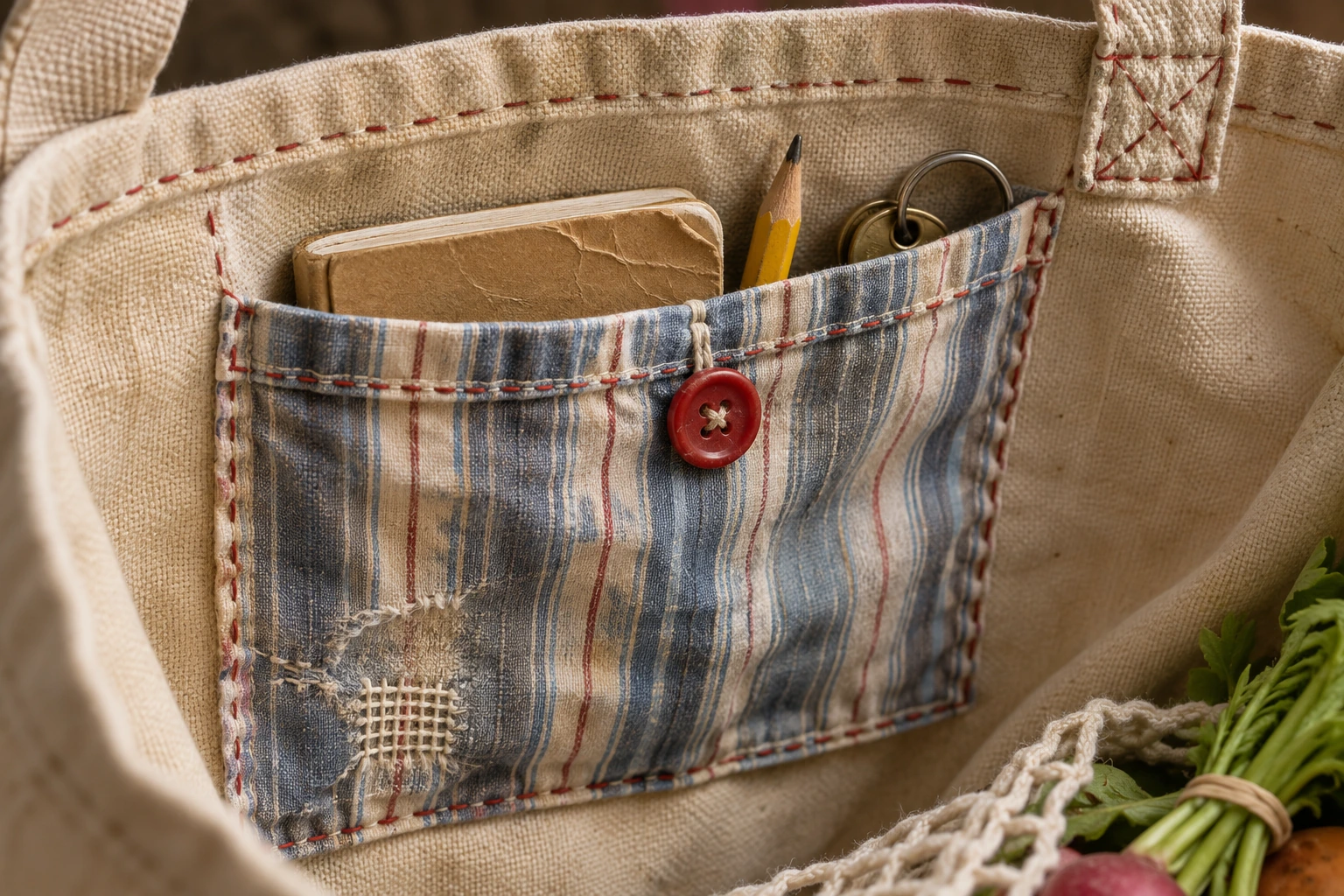
Look for an earlier use still visible in the new one: ruled paper turned into a frame, a shirt cuff sewn into a bag, or a carton divided to hold sewing tools.
Rasquache and rasquachismo: who is doing the naming?
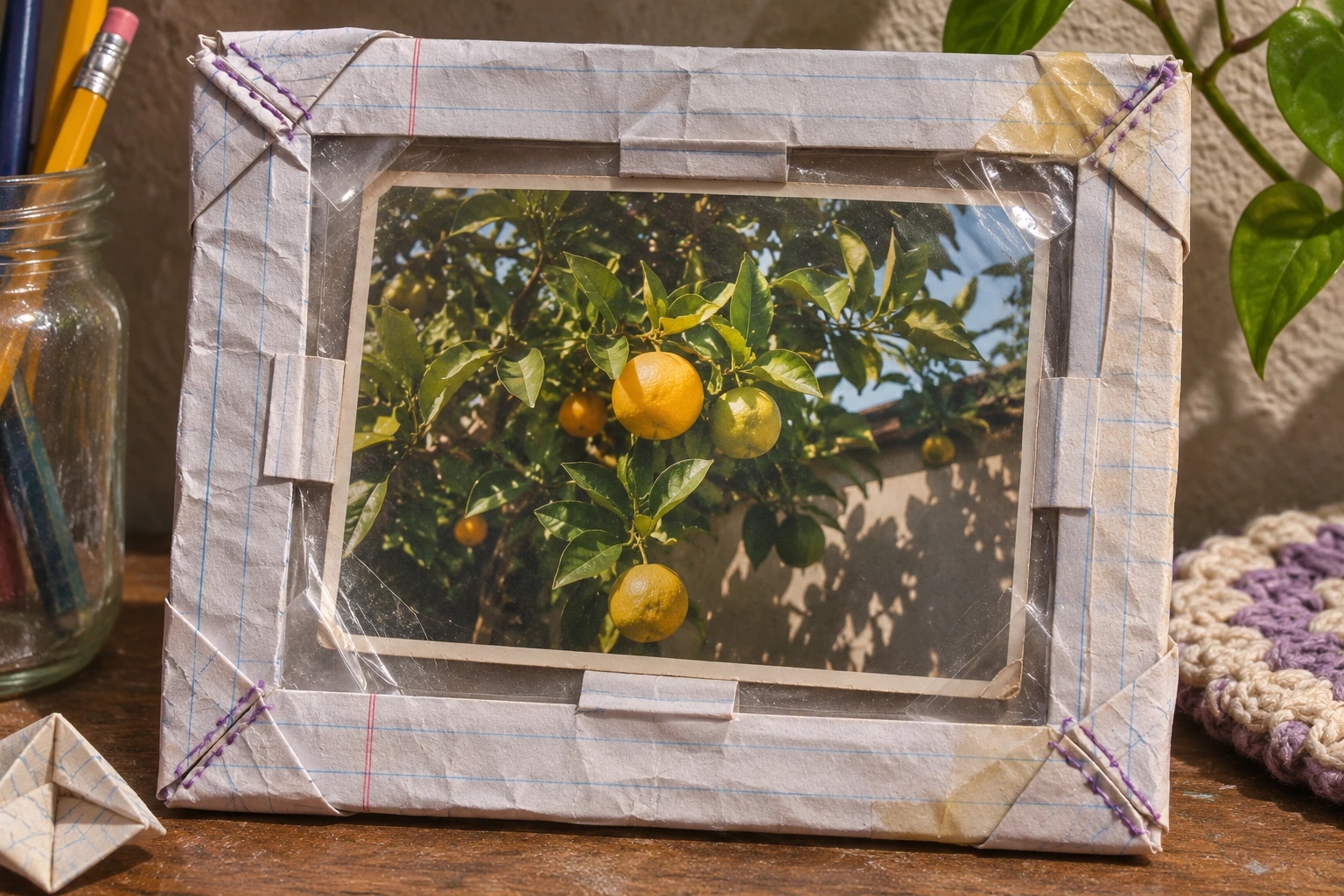
Imagine two people looking at a photograph held in a folded paper frame. One calls the frame shabby. The other points to the careful turn at each corner and asks why a bought frame would make the photograph more valuable. Their disagreement is a way into the word rasquache. It can carry a judgment of bad taste. Who uses it, about whom, and with what affection or contempt changes what a listener hears.
Tomás Ybarra-Frausto’s 1989 essay uses rasquachismo to describe a Chicano sensibility that can turn such judgments back on the people who make them. His account locates it in a bicultural US context influenced by Mexican vernacular traditions. Here the word rasquache is the starting point for reading particular choices. The linked Rasquachismo companion follows the broader critical argument, including how artists and museums approach it. The two entries examine the same cultural conversation at different scales. [1]
Materials carry decisions, not just texture
For close looking, begin with what an object has been asked to do. Has a container become a planter? Has a damaged surface been joined to another material? Is a familiar object being displayed in an unexpected relation to memory, humour or belonging? These questions are more useful than assuming that saturated colour alone establishes a cultural category.
A visible repair can be practical, expressive or both. Its appearance does not tell you the maker’s income, identity or intention. Resourcefulness deserves recognition without turning economic constraint into attractive scenery for an outside viewer. In our illustration the joins are deliberately legible, but the accompanying caption also makes clear that their story was invented for this page.
Domesticana expands the discussion
Amalia Mesa-Bains’s Domesticana: The Sensibility of Chicana Rasquache develops a specifically Chicana critical approach. The ICAA synopsis of the revised 1999 essay highlights domestic spaces, home altars, memory and challenges to restrictive gender expectations. It describes the work as extending the discussion rather than merely identifying a decorative subset. [2]
This gives us another question to ask of an arrangement: whose work becomes visible, and whose work is treated as background? Objects associated with the home can carry intellectual and artistic decisions. A display does not become trivial because its materials are familiar. Nor should an interpretation erase the particular women and practices through which that argument was made.
A label for the frame
Try writing a museum label for the paper frame using only what you can see. The paper has ruled lines. Its corners have been folded to hold the image. The tree in the photograph matters enough within the composition to occupy the centre. Now cross out any statement that assigns the maker an income, a nationality or a motive. What evidence would let you put one of those statements back?
All the gallery pictures are invented AOI studies. You can use them to practise describing a choice. For an account of Chicana domestic space and memory grounded in an artist’s practice, turn to Amalia Mesa-Bains’s essay listed below. [2]
An exercise in reuse and explanation
Choose three safe discarded materials you already have and an object that could benefit from a small, non-structural alteration. Make a temporary arrangement or a drawing of the proposed change. Record where each material came from, what changed and why. If you are responding to this reading from outside its cultural context, describe your work as your own reuse exercise rather than claiming an identity for it.
For an AI study, specify the materials, their earlier uses and the visible joins you want to investigate. Avoid substituting a famous face or a bundle of familiar symbols for that work of description. Keep the output labelled synthetic and retain your sources. The interesting part begins when you can explain a choice without hiding behind the name of a style.
Positive critical reading
The paper frame makes a small decision worth lingering over. A folded corner does two jobs: it holds the photograph and draws the eye back into it. Giving that detail room in the picture lets ordinary skill occupy the foreground.
Negative critical reading
An attractive seam can tempt a viewer to invent a biography for its maker. A synthetic picture offers no evidence about a household’s income, identity or reasons for keeping an object. Such a claim would require someone’s account of its use.
Neutral critical reading
Read the theatre scene twice. First describe how the curtain hangs from the crate. Then ask who would set out the chairs, operate the puppets and gather the pieces afterwards. The first reading concerns construction. The second opens a question about shared work.
A small poetic detour
Original words from the AOI studio.
Poetry
The fold holds the photograph.
The photograph holds a tree.
Someone has turned the corner twice
to keep the leaves from slipping.
The prompt workshop
Original creative exercises. These prompts create new illustrations, not documentary evidence.
Study a visible join
Create an original conceptual illustration of a small salvaged mirror framed with cloth offcuts and plain cardboard, exposed stitching and careful joins, warm daylight, visible material differences, restrained red and blue accents. No portraits, cultural symbols, text or brands. This is an invented reuse study, not documentary evidence.
Original AOI exercise; generated interpretations are not historical evidence.
Record the transformation
Propose three original uses for a clean empty tin and leftover cloth. Describe the practical transformation and the visual decisions. Do not claim that generic reuse establishes a cultural identity or that the proposal represents a particular community.
Original AOI exercise; generated interpretations are not historical evidence.
Write two labels for a puppet stage
Illustrate a puppet stage made from a packing crate and two joined pieces of curtain cloth. Write one caption describing the construction. Write a second caption as a question for someone who used it. Identify the scene as invented.
People & works to explore
References discussed in this article. Consult the sources below for context.
Artists and practitioners
Tomás Ybarra-Frausto — scholar and author of Rasquachismo: A Chicano Sensibility
Amalia Mesa-Bains — artist, curator and theorist of domesticana
Paintings and other works
Rasquachismo: A Chicano Sensibility (1989) — essay, not a painting
Domesticana: The Sensibility of Chicana Rasquache (1999 revised version) — essay
A smile from the studio
Jokes
A looking game for two: cover the button in the pocket study. Can the other viewer still tell where the cloth came from? Ask which detail gave it away.