
Photographic medium
Photography creates images by recording light, but it has no single required look. Framing, timing, focus, exposure and presentation can produce sharply described detail, abstraction, blur or staged fiction.
A visual introduction
Compare the retained archive illustrations with the practical principles below. These images illustrate ideas; they do not document the cited artists’ works.
Select an image for a closer look. Use the thumbnails, arrow keys or a swipe to compare examples. Zoom in to inspect details, or share the image that inspires you.
Creative toolbox · take this style further
Choose an input and a destination. Search sends your words to the chosen site; Copy & open puts them on your clipboard to paste there.
Create with AI
Turn your chosen input into an image prompt or a new creative direction.
ChatGPT
Copy your input and paste it into a ChatGPT conversation or image request.
Copy & open ChatGPT (new tab)Claude · Anthropic
Develop an image prompt or explore the style in a new Claude conversation.
Copy & open Claude · Anthropic (new tab)Midjourney
Paste your input into the Imagine bar on the Create page.
Copy & open Midjourney (new tab)Adobe Firefly
Copy your input, open Firefly, and paste it into the prompt field.
Copy & open Adobe Firefly (new tab)Leonardo.Ai
Copy your input, open Leonardo, and paste it into the generation field.
Copy & open Leonardo.Ai (new tab)Image search
Find visual references. Short, concrete keywords usually work best.
Lexica
Search AI images and prompts using your selected input.
Search with this input Lexica (new tab)Pexels
Search the photo and video library. Short keywords often work best.
Search with this input Pexels (new tab)Pixabay
Search photos, illustrations and other images.
Search with this input Pixabay (new tab)Unsplash
Search photographs using the style name or your own keywords.
Search with this input Unsplash (new tab)Wikimedia Commons
Search photographs, artworks and historical images. Check each file for its source and reuse terms.
Search with this input Wikimedia Commons (new tab)Art & research
Explore artists, collections and the ideas behind a style.
Wikipedia
Search for background reading. A style may not have its own article.
Search with this input Wikipedia (new tab)WikiArt
Copy your input into WikiArt’s search to explore artists and artworks.
Copy & open WikiArt (new tab)Europeana
Paste your keywords into the search to explore European museum, library and archive collections.
Copy & open Europeana (new tab)Inspiration
Discover portfolios and visual ideas from creative communities.
Instagram hashtags
Search a hashtag made from your input: spaces and punctuation are removed. Instagram may require sign-in.
Search with this input Instagram hashtags (new tab)ArtStation
Paste your input into artwork search for concept art, environments, characters and visual development.
Copy & open ArtStation (new tab)Behance
Paste your input into project search for illustration, design and visual storytelling.
Copy & open Behance (new tab)A closer look
Read the frame edges, viewpoint, light direction, tonal range and distribution of sharpness before assuming a photograph’s meaning or authenticity.
Light becomes a set of choices
Photography includes many processes and purposes. A portrait, a scientific record and an abstract camera experiment can share a medium without sharing an aesthetic. The Metropolitan Museum’s Night Vision exhibition describes how changing equipment and light-sensitive materials expanded photographers’ ability to work after dark. This is a useful reminder that the image depends on both an intention and the conditions of making it.
Start by asking what the frame includes and excludes. A low viewpoint can emphasize height; a close crop can remove the context that explains an event. Sharpness is a choice rather than a universal standard of quality. Motion blur can communicate duration, while selective focus can separate a face from a busy background. Neither effect automatically makes a picture truthful or expressive.
Give every decision a purpose
For a practical study, photograph one ordinary object in the same position under window light at different times. Keep the framing stable and compare shadow edges, reflected color and the relation between bright and dark areas. Then change only the viewpoint. This separates the effect of illumination from the effect of composition and makes the comparison easier to understand.
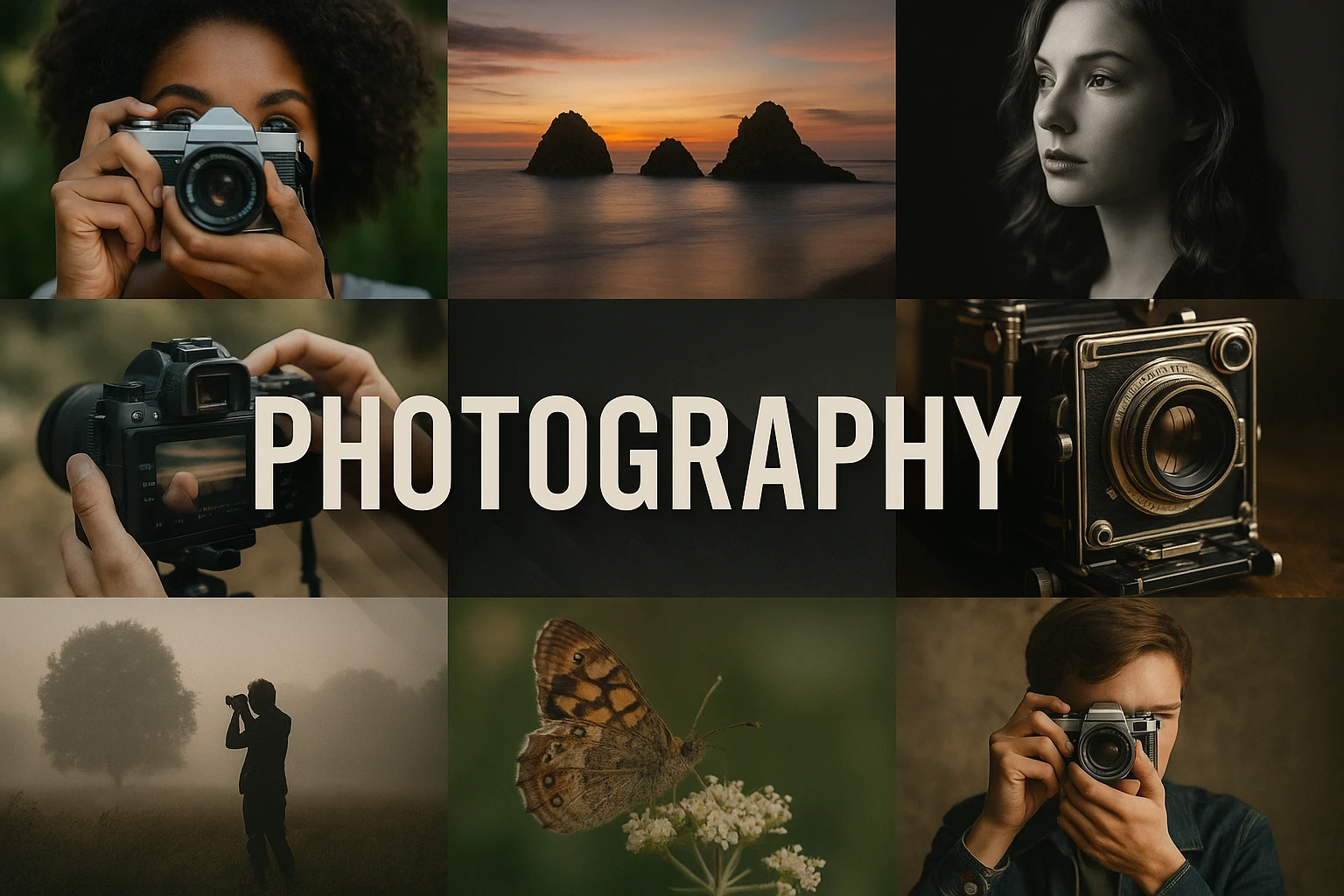
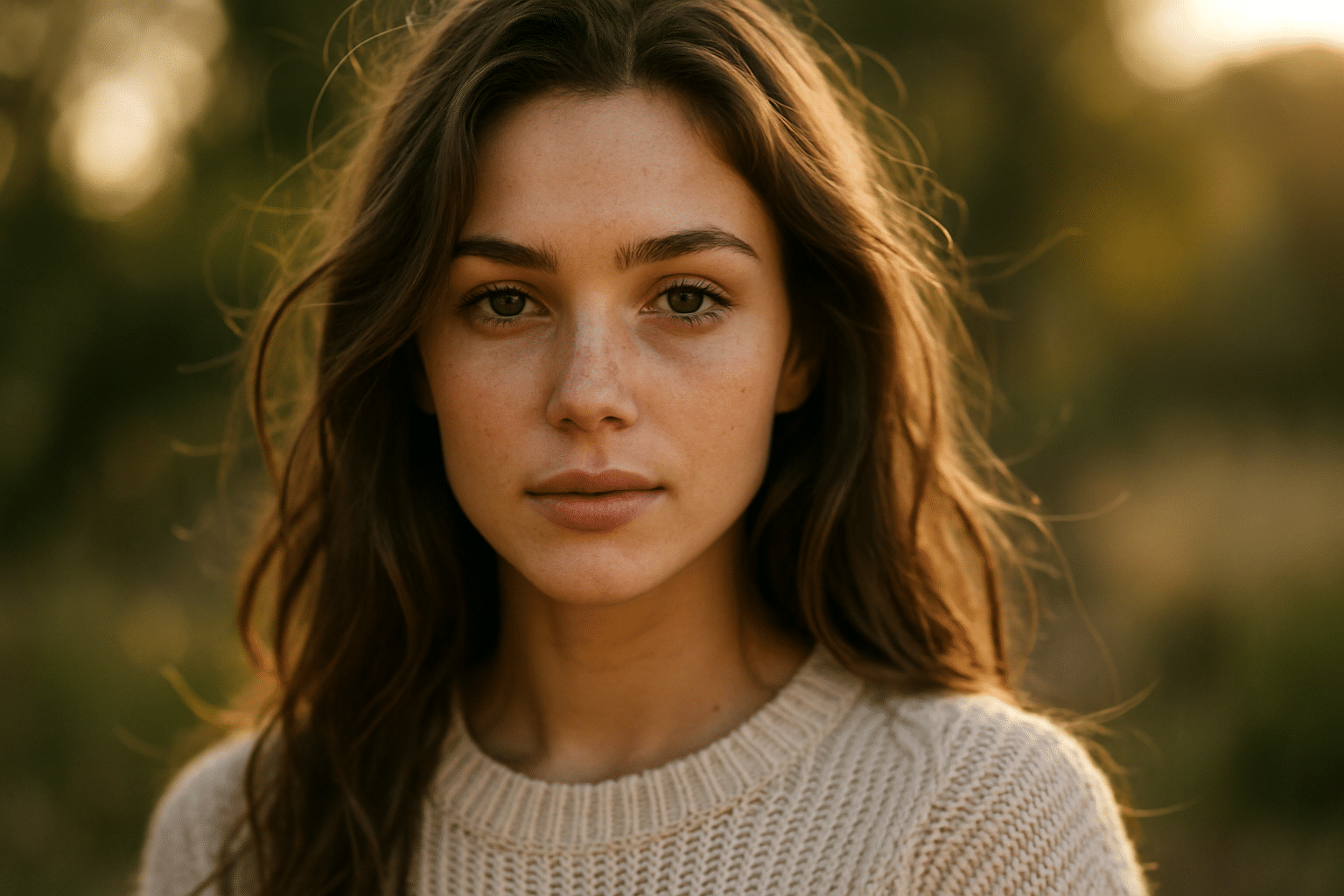
The retained archive portrait demonstrates the appearance of a sharp face against a soft background and warm light. It is an illustrative image, not a verified camera exposure or a documented person. The collage similarly presents photographic motifs. When using an image generator, describe the intended framing and light, but label the result as generated; photographic appearance does not establish photographic provenance. For actual photographs, distinguish adjustments to presentation from changes that alter what the scene appears to contain, especially when the image is offered as evidence.
The prompt workshop
Original creative exercises. These prompts create new illustrations, not documentary evidence.
Window-light study
Create an original generated image with the appearance of a carefully composed still-life photograph: one white ceramic cup beside a window, soft side light, a clear cast shadow and a quiet gray background. Natural perspective, no lettering. The result is an illustration, not documentary evidence.
Depth and attention
Create a generated portrait of an invented adult in a simple sweater outdoors, with a sharply described face and softly separated foliage behind. Gentle side light, believable skin texture and a restrained warm-cool balance. No beauty-filter smoothing or text.
Time in the frame
Create an original illustrative image of a stationary bicycle beside moving pedestrians, with the bicycle sharp and the pedestrians softly motion-blurred. Consistent perspective, readable urban setting, no text. Suggest duration without claiming to document an actual event.
Sources and further exploration
The Metropolitan Museum: Night Vision — Photography After Dark