
Artist study: seventeenth-century Dutch painting
Johannes Vermeer turns light, measured space and ordinary actions into images of extraordinary attention. This guide explores his painting through composition, selective detail and material color, while distinguishing documented works from new AI interpretations.
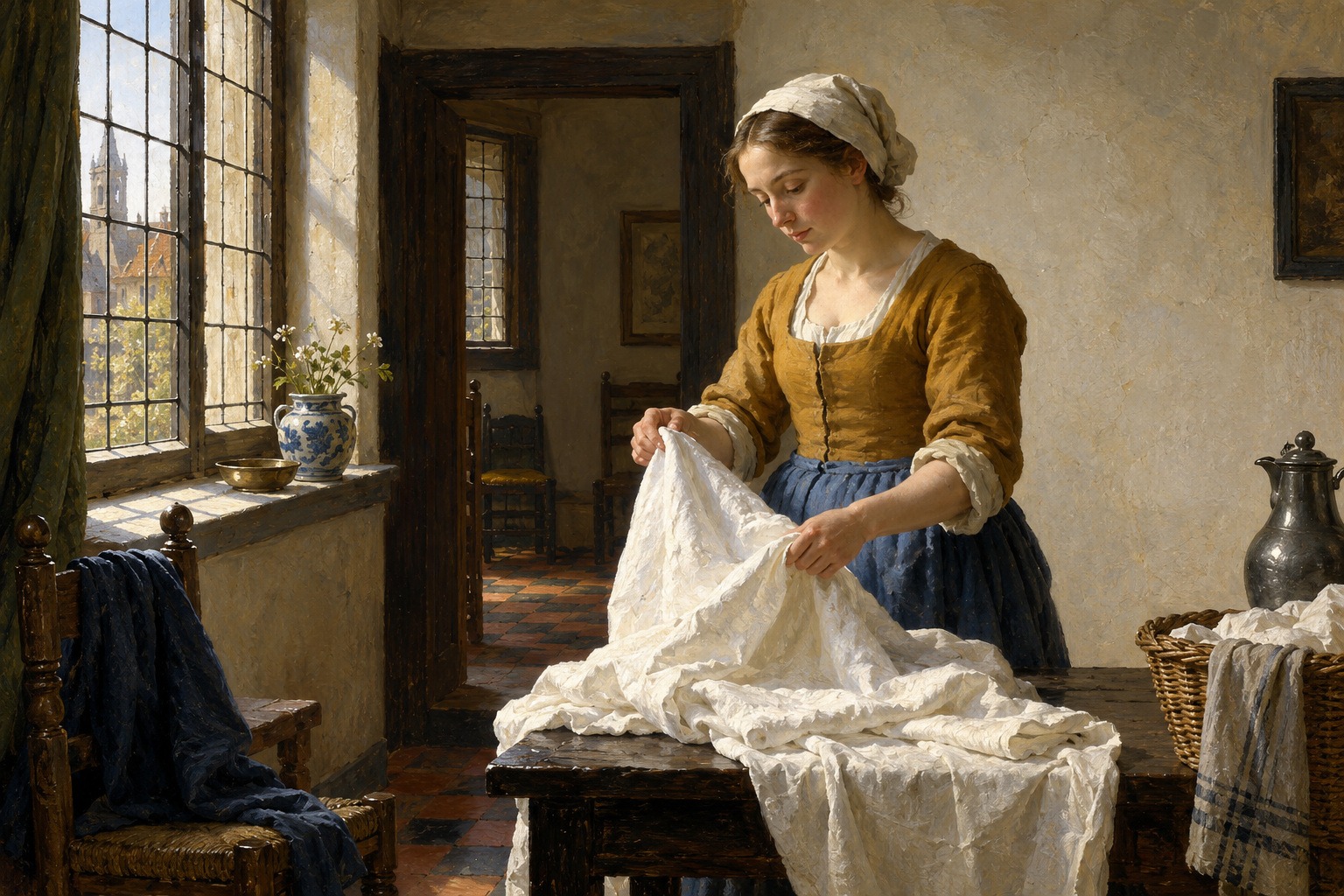
A visual introduction
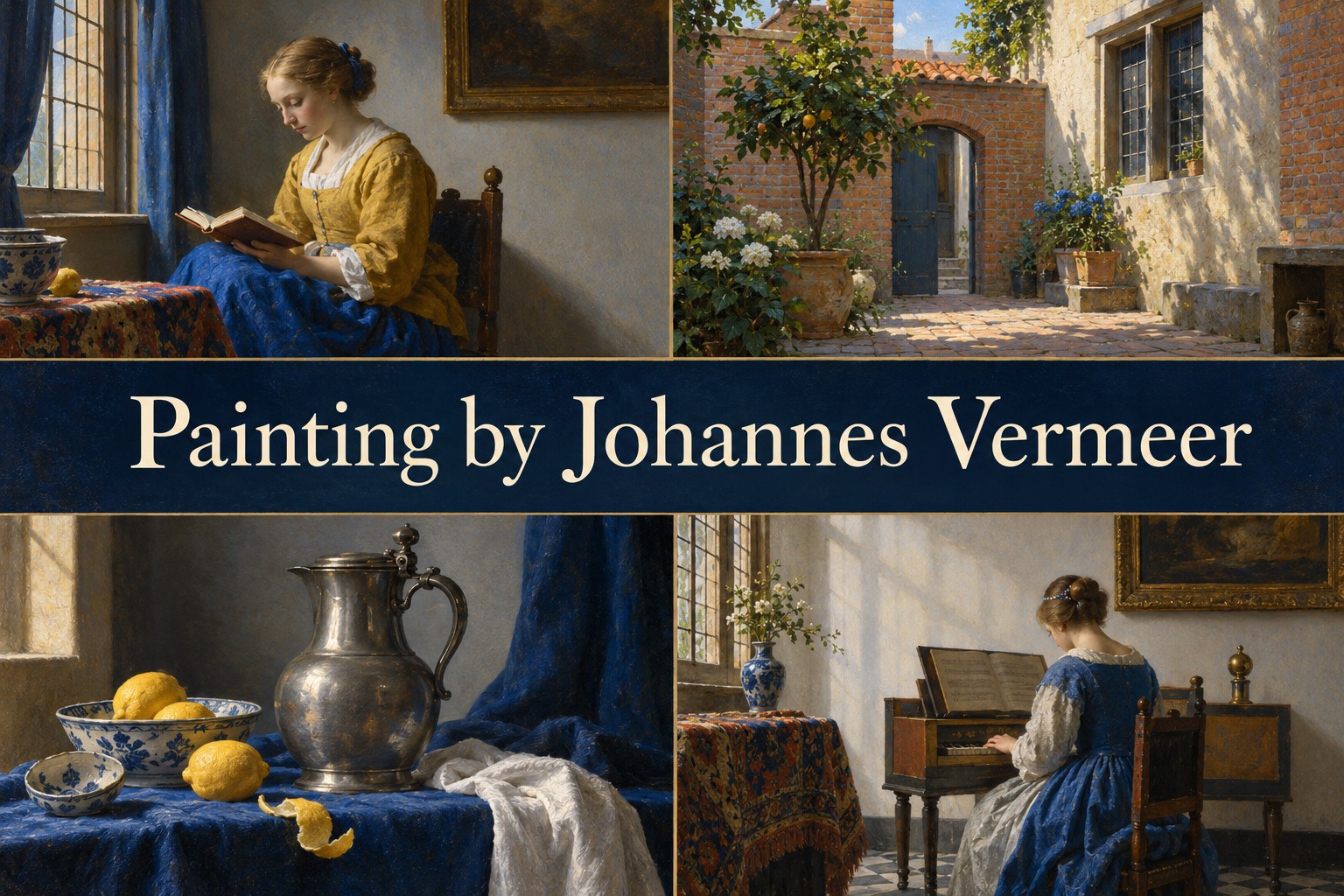
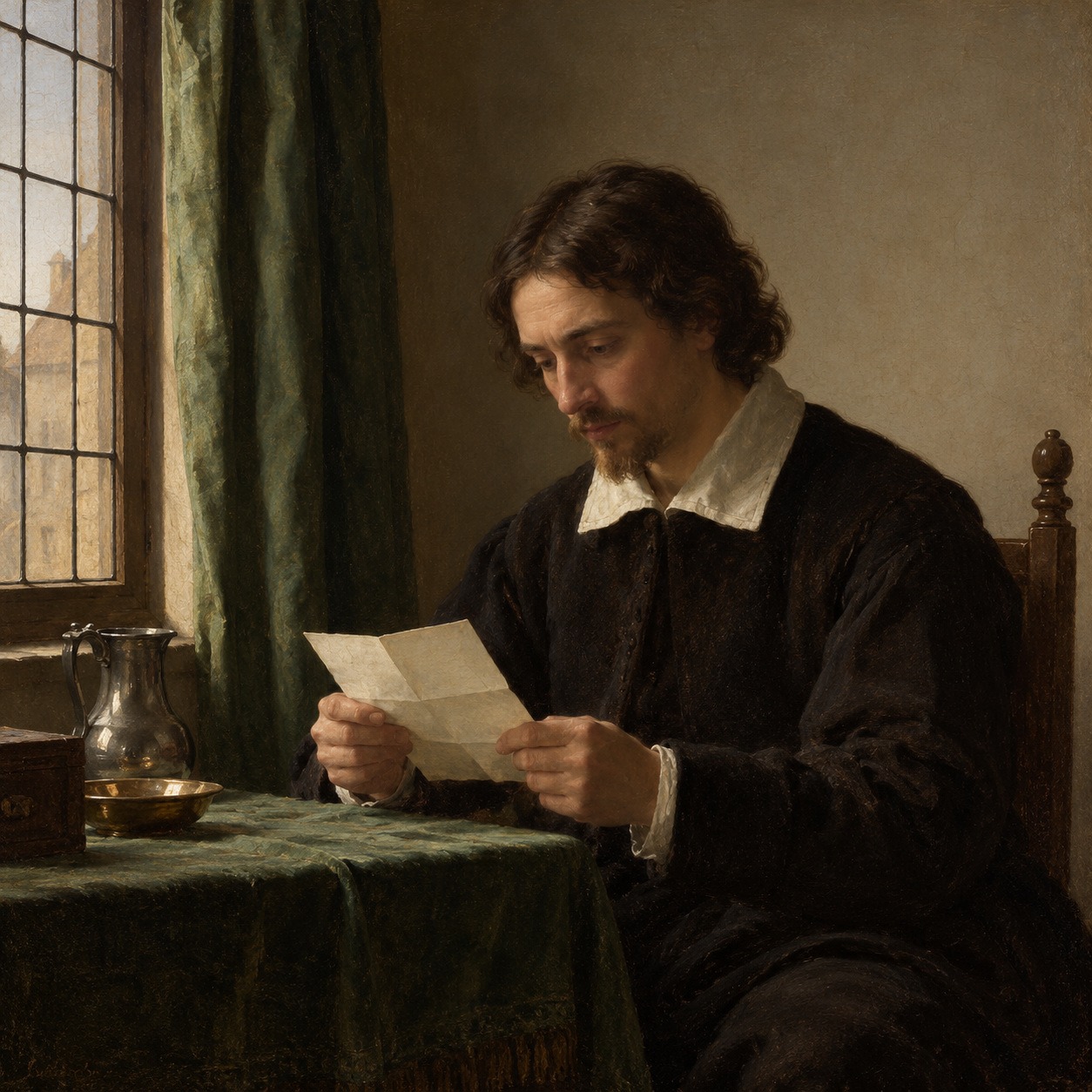
Five new AI interpretations explore light, quiet action, architectural space and reflective materials. They are original teaching studies, not works by Vermeer or reproductions offered as historical evidence.
Select an image for a closer look. Use the thumbnails, arrow keys or a swipe to compare examples. Zoom in to inspect details, or share the image that inspires you.
Creative toolbox · take this style further
Choose an input and a destination. Search sends your words to the chosen site; Copy & open puts them on your clipboard to paste there.
Create with AI
Turn your chosen input into an image prompt or a new creative direction.
ChatGPT
Copy your input and paste it into a ChatGPT conversation or image request.
Copy & open ChatGPT (new tab)Claude · Anthropic
Develop an image prompt or explore the style in a new Claude conversation.
Copy & open Claude · Anthropic (new tab)Midjourney
Paste your input into the Imagine bar on the Create page.
Copy & open Midjourney (new tab)Adobe Firefly
Copy your input, open Firefly, and paste it into the prompt field.
Copy & open Adobe Firefly (new tab)Leonardo.Ai
Copy your input, open Leonardo, and paste it into the generation field.
Copy & open Leonardo.Ai (new tab)Image search
Find visual references. Short, concrete keywords usually work best.
Lexica
Search AI images and prompts using your selected input.
Search with this input Lexica (new tab)Pexels
Search the photo and video library. Short keywords often work best.
Search with this input Pexels (new tab)Pixabay
Search photos, illustrations and other images.
Search with this input Pixabay (new tab)Unsplash
Search photographs using the style name or your own keywords.
Search with this input Unsplash (new tab)Wikimedia Commons
Search photographs, artworks and historical images. Check each file for its source and reuse terms.
Search with this input Wikimedia Commons (new tab)Art & research
Explore artists, collections and the ideas behind a style.
Wikipedia
Search for background reading. A style may not have its own article.
Search with this input Wikipedia (new tab)WikiArt
Copy your input into WikiArt’s search to explore artists and artworks.
Copy & open WikiArt (new tab)Europeana
Paste your keywords into the search to explore European museum, library and archive collections.
Copy & open Europeana (new tab)Inspiration
Discover portfolios and visual ideas from creative communities.
Instagram hashtags
Search a hashtag made from your input: spaces and punctuation are removed. Instagram may require sign-in.
Search with this input Instagram hashtags (new tab)ArtStation
Paste your input into artwork search for concept art, environments, characters and visual development.
Copy & open ArtStation (new tab)Behance
Paste your input into project search for illustration, design and visual storytelling.
Copy & open Behance (new tab)A closer look
Window light shapes quiet figures and objects within carefully balanced rooms. Soft contours, small bright accents, restrained spatial clues and intervals of empty wall guide attention without explaining every detail.
An artist, not a universal filter
Johannes Vermeer (1632–1675) lived and worked in Delft. His name identifies an individual practice within seventeenth-century Dutch painting, not a generic style for any dim room with a blue curtain. The Rijksmuseum’s collection overview includes early biblical and mythological subjects, interiors and tronies, or studies of anonymous character types. His range also includes city views. A useful introduction should leave room for that variety.
The familiar domestic scenes often turn a small action into the center of sustained attention: reading, music-making or household work. Their calm is constructed. Figures, furniture and openings occupy carefully considered positions, and apparent simplicity can conceal substantial revision. Looking for those choices is more informative than merely calling the paintings photographic.
Light organizes the picture
In many interiors, daylight from a side window establishes a clear hierarchy. A sleeve, letter or vessel catches enough light to pull the eye; nearby shadow connects less important shapes. Reflections and tiny bright touches suggest differences between cloth, pottery and metal without describing every surface with the same sharpness. Warm walls and cooler fabrics can coexist within one coherent illumination.
The Rijksmuseum’s account of Vermeer emphasizes balance, cropping and light as a guide to attention. Cropped furniture or architecture makes a scene feel larger than its frame. Empty wall is active space: it separates figures, slows the rhythm and lets a small illuminated form become significant. Strong composition remains visible even when the picture is reduced to a thumbnail.
How the paintings were made
Technical research complicates the myth of effortless, unchanging perfection. The Rijksmuseum’s non-invasive imaging studies reveal sketch phases, underlayers, pigments and compositional changes. In The Milkmaid, investigations brought to light a jug holder and a fire basket that Vermeer subsequently painted over. The final quiet background was therefore an outcome of decisions, not necessarily a literal transcription of an untouched room.
Dresden’s research presentation likewise describes alterations and the importance of light, color and perspective. Paint can be physically raised where a highlight needs presence, while other passages remain smooth or softened. These findings support studying the relationship between surface and illusion. They do not justify a universal step-by-step formula for every Vermeer painting or a claim that one device explains his achievement.
Space, narrative and uncertainty
A room can be organized with floor lines, window frames and overlapping objects, but perspective serves the image rather than replacing observation. A foreground curtain or chair can establish a threshold between viewer and subject. Keep a few spatial cues legible and avoid filling every wall with props. Too much evenly rendered detail destroys the hierarchy that makes a quiet interior persuasive.
Letters, instruments and household objects invite interpretation, yet their presence does not entitle us to invent a definite story. The Mauritshuis notes the continuing debate about a possible camera obscura and Vermeer’s unusual optical effects. Treat that question as a question. Similarly, Girl with a Pearl Earring is a tronie rather than a documented portrait of a securely identified sitter.
Make a new study with clear attribution
For an original exercise, choose one small action, one dominant light source and a limited set of spatial anchors. Vary the subject across an interior, an urban exterior and a study of reflective materials. Keep highlights selective and shadows connected. The gallery’s generated works explore these principles; none is a newly discovered Vermeer or a reproduction presented as authentic. Use the museum links to study his actual paintings alongside these contemporary interpretations.
About this guide
This AI-authored AOI guide appears under Penny Wraiter, AOI’s editorial persona. Sources support the historical context; exercises, prompts and poetry are original editorial interpretations. Image captions distinguish generated studies from documented works.
A small poetic detour
Original words from the AOI studio.
Poetry
The window measures out the day,
A folded cloth receives its share;
The wall has little more to say
Than how the light becomes the air.
A letter waits beyond our knowing,
A silver edge begins to gleam;
The room is still, the hour is going,
And neither needs to break the dream.
The prompt workshop
Original creative exercises. These prompts create new illustrations, not documentary evidence.
Build a quiet interior
Original oil-painting interpretation informed by Vermeer: an adult woman folds a white linen cloth beside a left-hand window, ochre bodice, blue tablecloth, pale empty wall. One coherent daylight source, selective highlights, soft edges and balanced negative space. No signature; not a reproduction.
Study the street
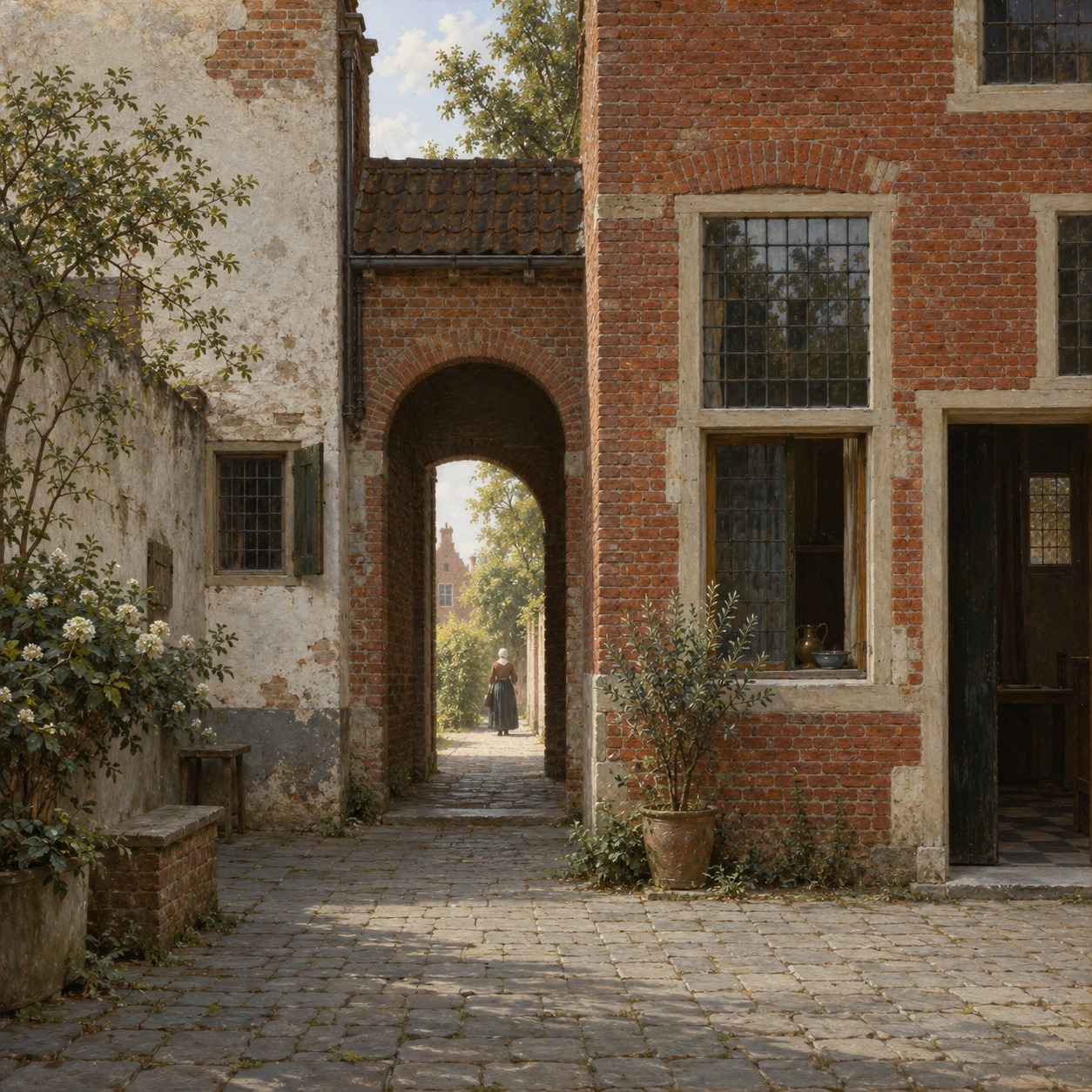
Original seventeenth-century Delft-inspired courtyard painting: brick facade, worn pale plaster, narrow passage and a tiny distant figure. Diffuse daylight, thoughtful cropping, muted red and gray, restrained detail, no text or attribution mark.
Let materials carry the light
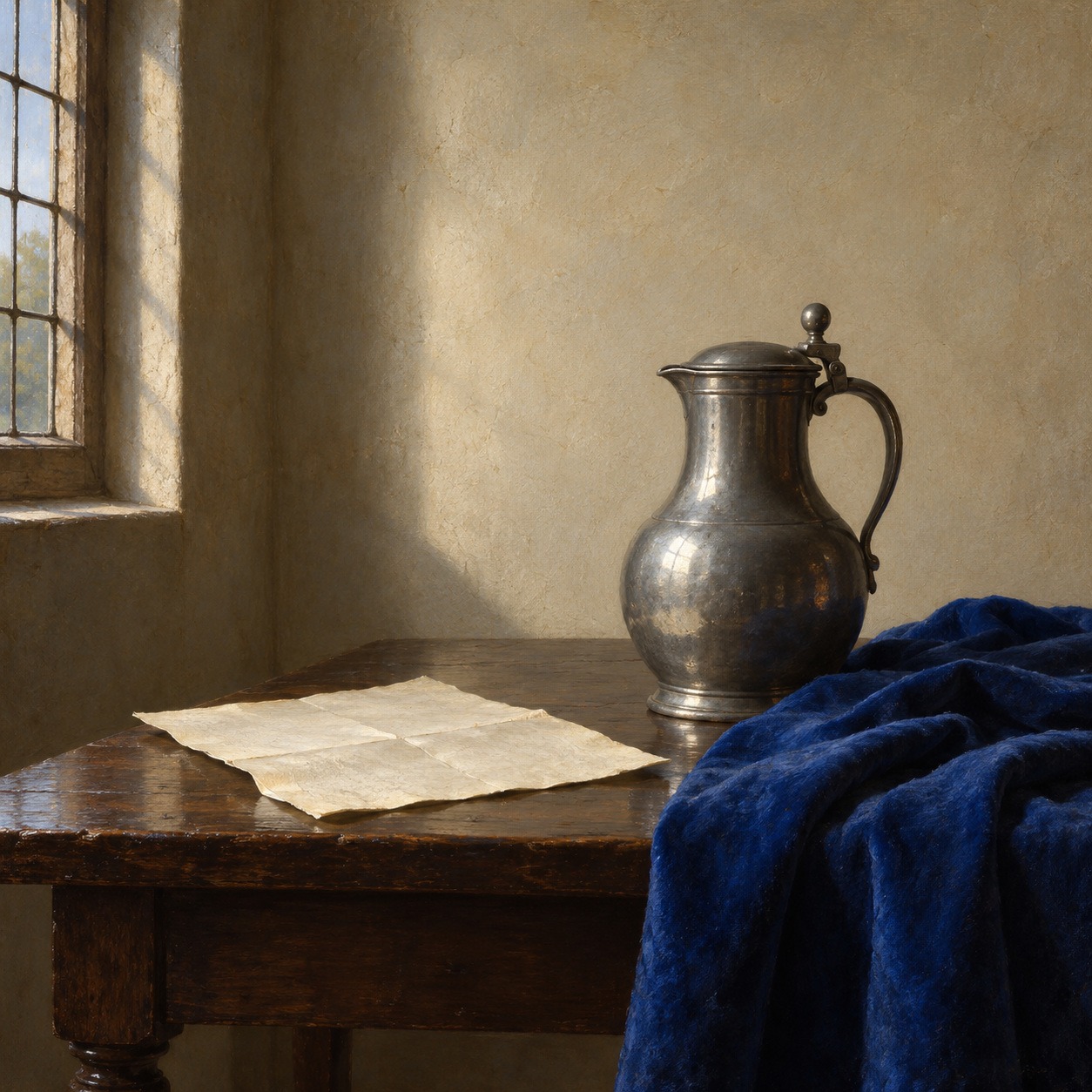
Original chamber still life: a pewter jug, blue cloth and a folded sheet of paper on a dark table beside a window. Small bright reflections, connected shadows, warm plaster wall, no lettering, no copied Vermeer composition.
A smile from the studio
Jokes
The room asked for another ornament. The light said it was already doing the decorating.
Sources and further exploration
Rijksmuseum: Vermeer technical studies — imaging, pigments and changes beneath the surface
Rijksmuseum: exhibition research — The Milkmaid’s altered background
Rijksmuseum: ten observations — cropping, balance and light
Dresden: On Reflection — painting technique and perspective
Mauritshuis: Vermeer — subjects, tronies and the camera-obscura question