Photographic and compositing technique
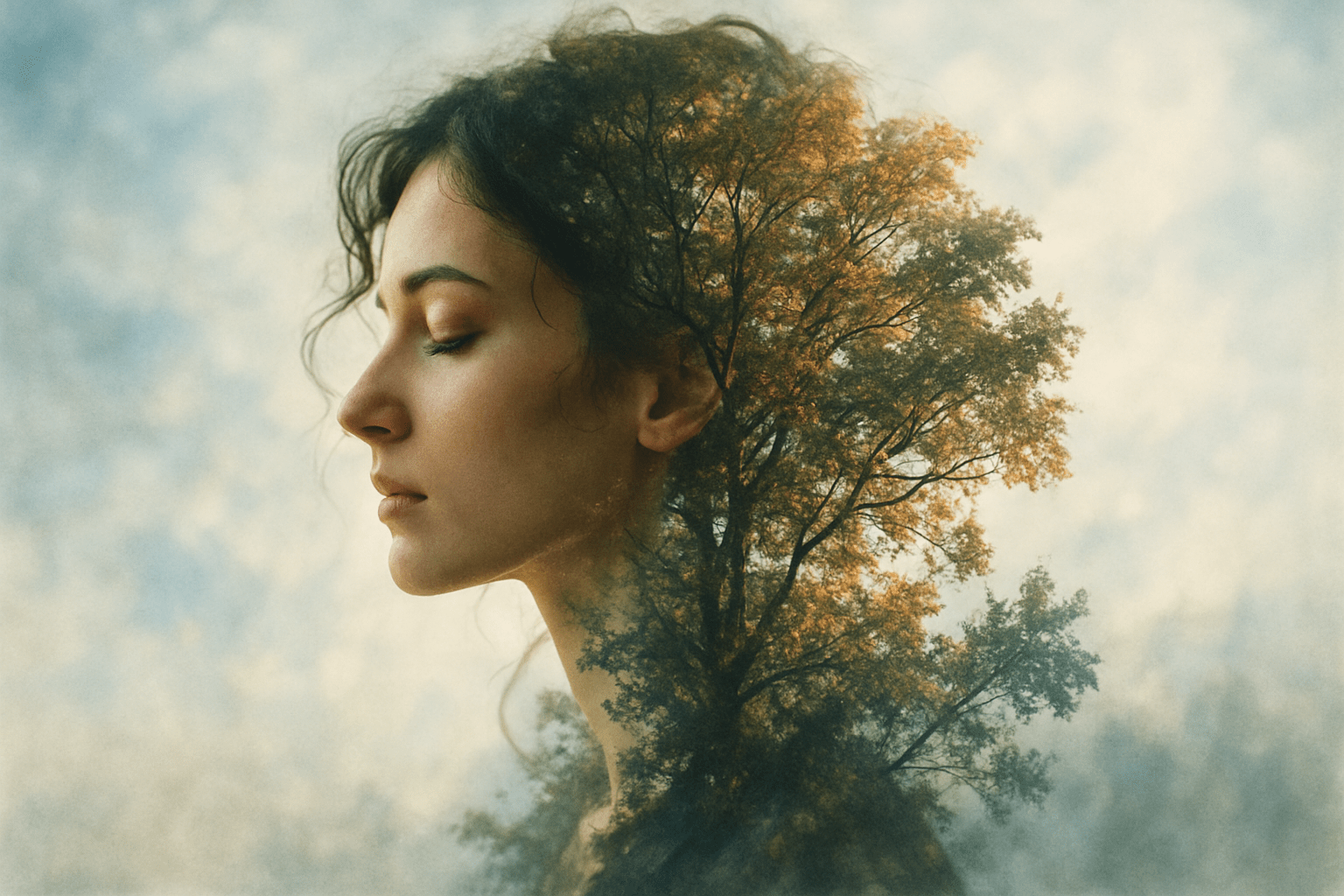
Multiple exposure layers more than one view into an image. The strongest combinations have a clear relationship rather than merely visible overlap.
A closer look
Choose an anchor image and a supporting texture before experimenting.
Understanding the subject
Multiple exposure combines exposures within one photographic image; related digital composites can be assembled from separately captured files. These methods may produce similar appearances but have different workflows. Overlap changes brightness, density and legibility, so two individually successful pictures do not necessarily work together. A portrait layered with a landscape can suggest association, but it should not be presented as documentary evidence that the person occupied that place.
AOI looking and making workshop
Choose an anchor image and a supporting texture before experimenting. A clean silhouette gives the second layer room to appear, while a busy background can hide the relationship. Decide whether the overlay belongs inside a form, across the whole frame or only in selected regions. Check faces and hands for accidental doubling that distracts from the idea. For AI work, state the layering rule explicitly. Preserve at least one readable area so the image offers an entry point rather than becoming uniformly tangled.
The prompt workshop
Original creative exercises. These prompts create new illustrations, not documentary evidence.
A landscape within
Create an original double-exposure-style illustration of a fictional profile containing a quiet forest, with a clean outer silhouette and a pale background. Keep facial features subtle and tree detail concentrated inside the form.
Movement and memory
Create a multiple-exposure-inspired image of a dancer in three translucent positions across an empty rehearsal room. Keep the floor and windows stable, with a clear progression of movement and no extra limbs in each pose.
Material overlap
Create an abstract composite of rippling water and folded paper, letting water texture appear only in the paper’s shadow planes. Use a restrained blue-gray palette and retain several crisp, unlayered edges.
Your next inspiration
Discover another art style
Follow a visual thread to the next subject.