
Compositional approach · organized visual abundance
Maximalist Composition organizes plentiful forms, patterns, textures or references into an image worth exploring. Its subject is the arrangement of abundance: how a viewer enters, follows connections and discovers details without losing the whole.
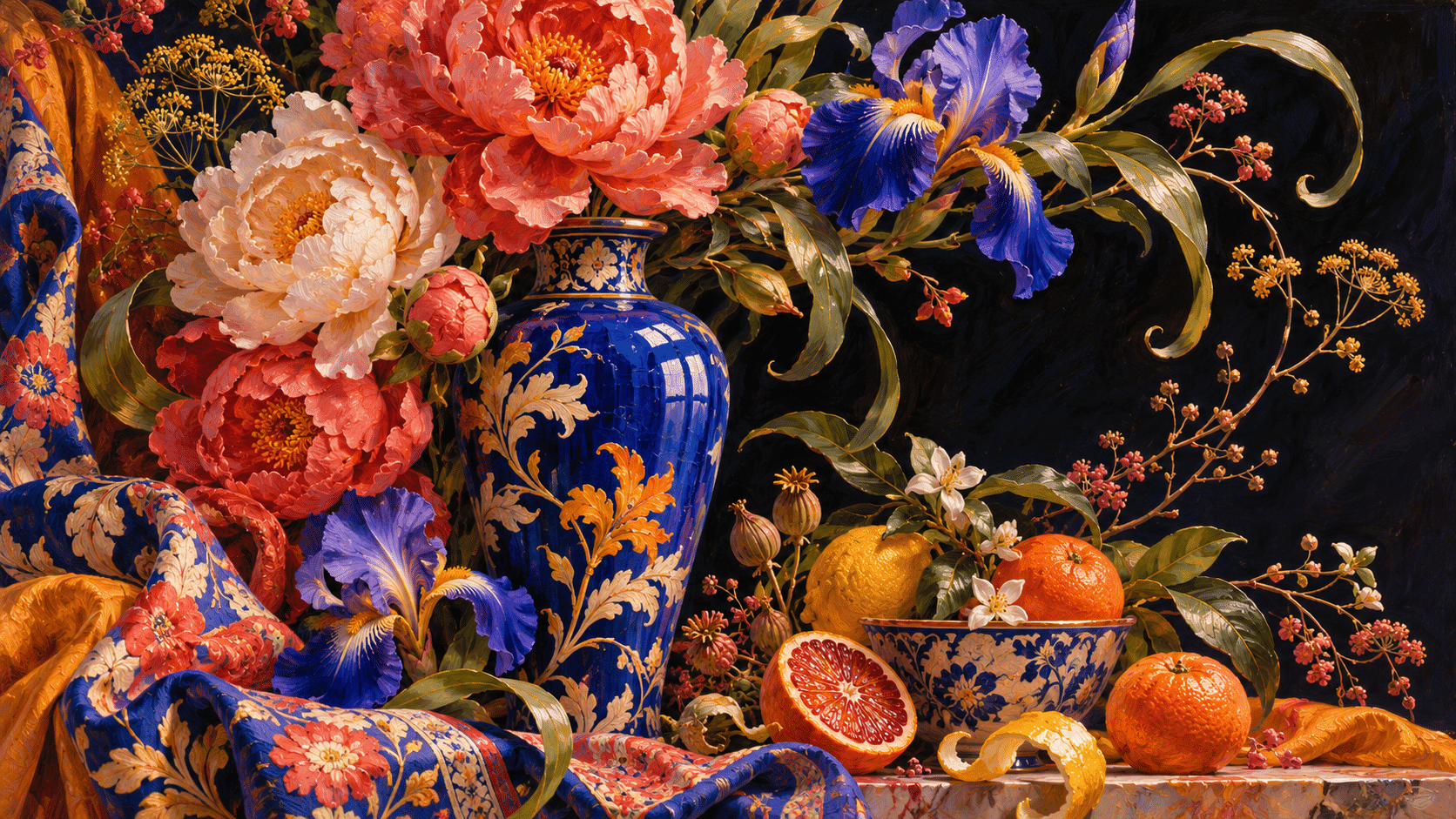
A visual introduction
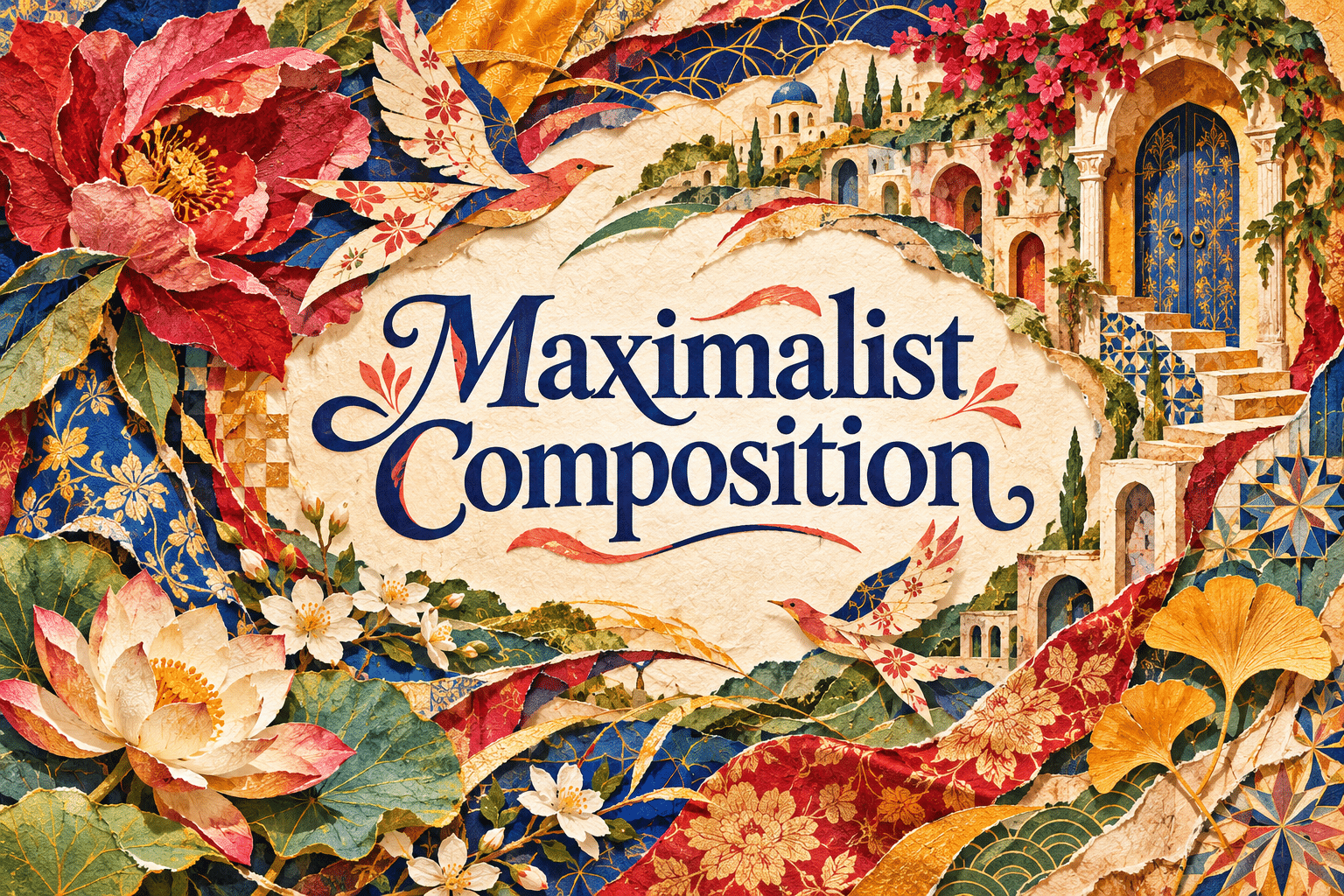
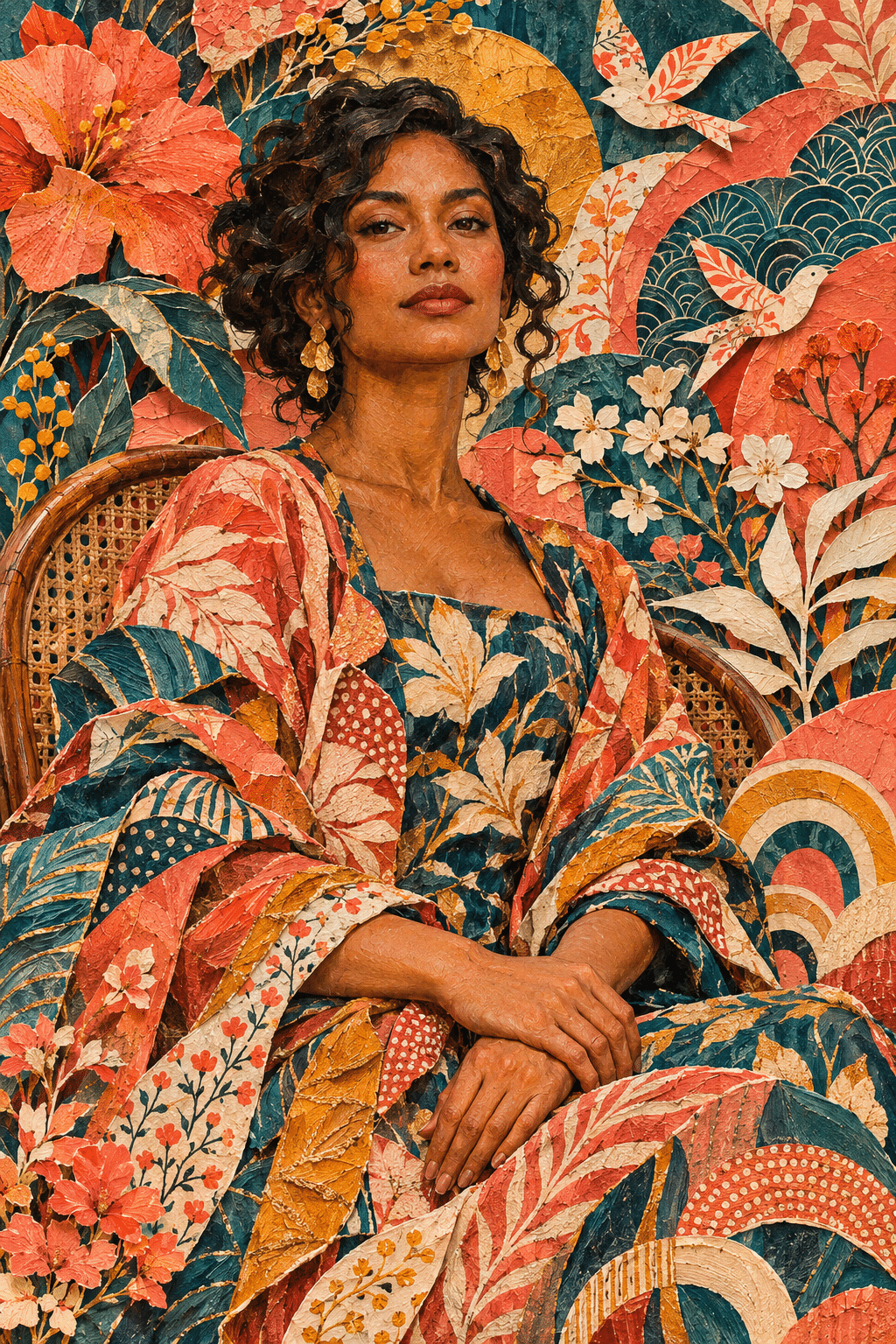
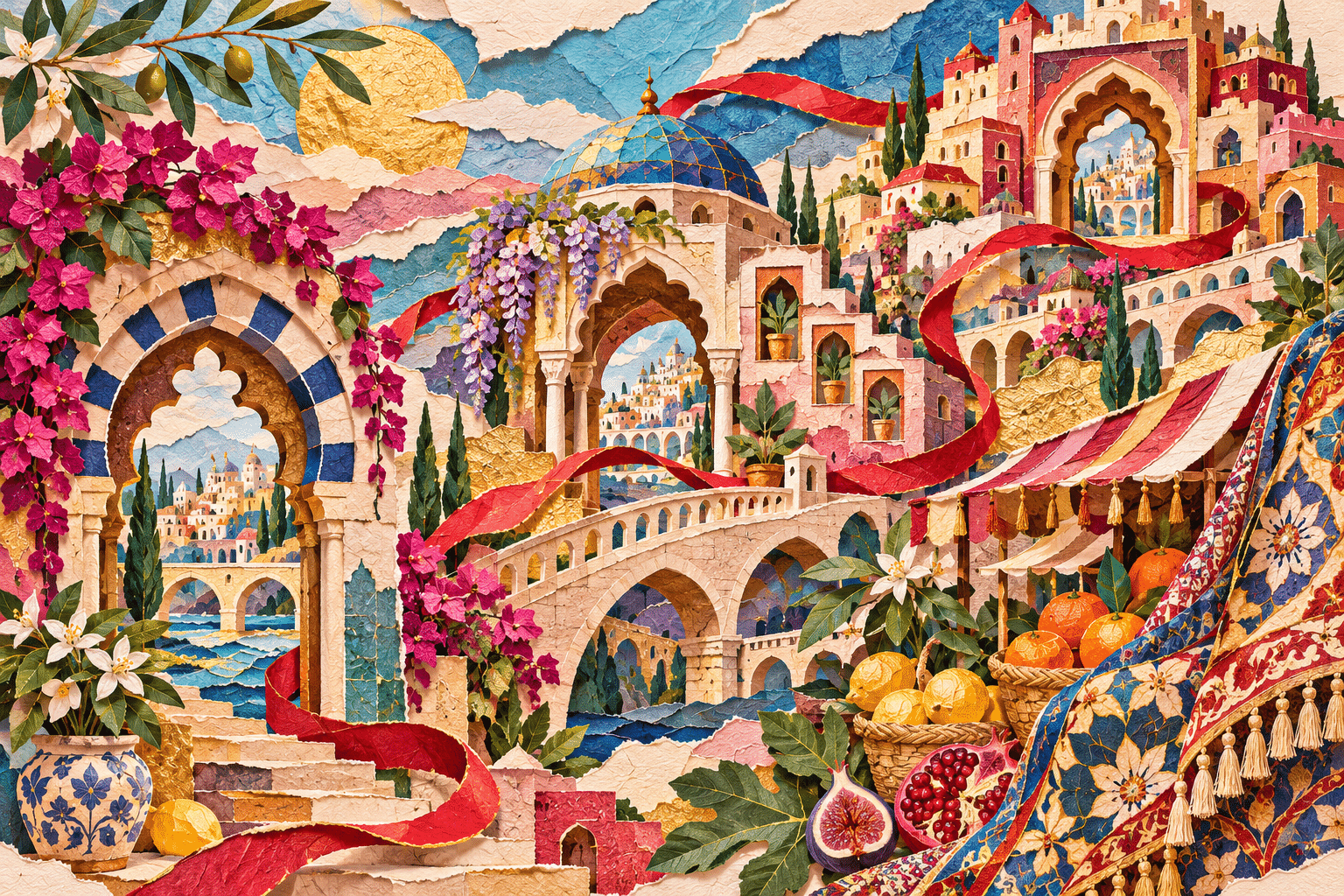
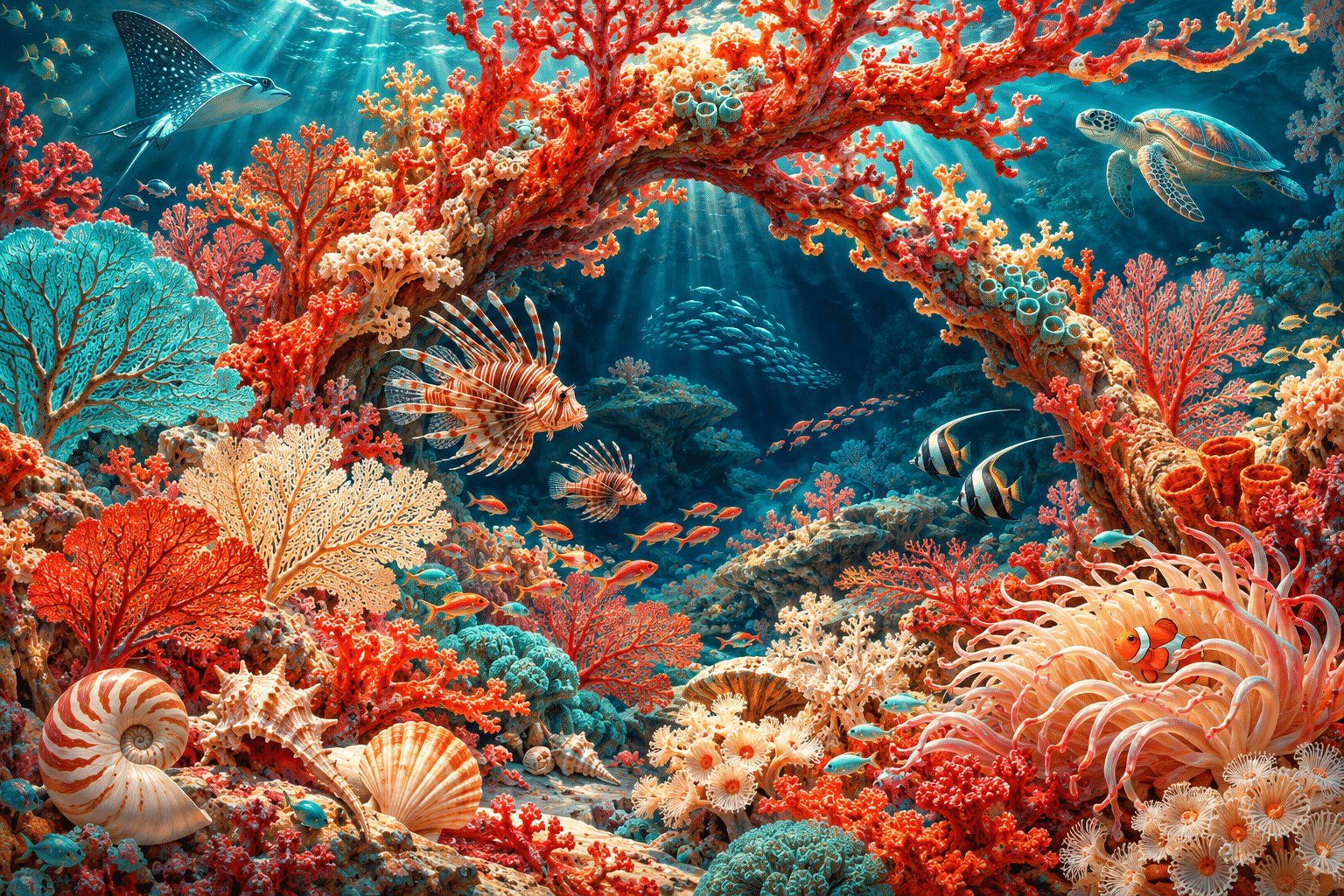
Seven original AI-generated interpretations: a dedicated banner, an artistic title collage and five standalone examples. The studies explore different subjects and compositional problems.
Select an image for a closer look. Use the thumbnails, arrow keys or a swipe to compare examples. Zoom in to inspect details, or share the image that inspires you.
Creative toolbox · take this style further
Choose an input and a destination. Search sends your words to the chosen site; Copy & open puts them on your clipboard to paste there.
Create with AI
Turn your chosen input into an image prompt or a new creative direction.
ChatGPT
Copy your input and paste it into a ChatGPT conversation or image request.
Copy & open ChatGPT (new tab)Claude · Anthropic
Develop an image prompt or explore the style in a new Claude conversation.
Copy & open Claude · Anthropic (new tab)Midjourney
Paste your input into the Imagine bar on the Create page.
Copy & open Midjourney (new tab)Adobe Firefly
Copy your input, open Firefly, and paste it into the prompt field.
Copy & open Adobe Firefly (new tab)Leonardo.Ai
Copy your input, open Leonardo, and paste it into the generation field.
Copy & open Leonardo.Ai (new tab)Image search
Find visual references. Short, concrete keywords usually work best.
Lexica
Search AI images and prompts using your selected input.
Search with this input Lexica (new tab)Pexels
Search the photo and video library. Short keywords often work best.
Search with this input Pexels (new tab)Pixabay
Search photos, illustrations and other images.
Search with this input Pixabay (new tab)Unsplash
Search photographs using the style name or your own keywords.
Search with this input Unsplash (new tab)Wikimedia Commons
Search photographs, artworks and historical images. Check each file for its source and reuse terms.
Search with this input Wikimedia Commons (new tab)Art & research
Explore artists, collections and the ideas behind a style.
Wikipedia
Search for background reading. A style may not have its own article.
Search with this input Wikipedia (new tab)WikiArt
Copy your input into WikiArt’s search to explore artists and artworks.
Copy & open WikiArt (new tab)Europeana
Paste your keywords into the search to explore European museum, library and archive collections.
Copy & open Europeana (new tab)Inspiration
Discover portfolios and visual ideas from creative communities.
Instagram hashtags
Search a hashtag made from your input: spaces and punctuation are removed. Instagram may require sign-in.
Search with this input Instagram hashtags (new tab)ArtStation
Paste your input into artwork search for concept art, environments, characters and visual development.
Copy & open ArtStation (new tab)Behance
Paste your input into project search for illustration, design and visual storytelling.
Copy & open Behance (new tab)A closer look
Layer motifs at different scales, repeat selected colors or contours and make overlaps legible. Choose either a dominant focal route or an intentional all-over field. Dense areas can coexist with quieter intervals; abundance may come from shape and texture even when the palette is restrained.
A compositional approach within a wider aesthetic
Maximalist Composition is the arrangement of visual abundance. The broader Maximalism entry concerns the aesthetic across subjects and media; this page concentrates on the decisions inside an image. A dense still life, patterned portrait, collage or abstract field may all use maximalist composition without sharing the same historical identity, materials or message.
The Museum at FIT describes maximalism in fashion through spectacle, intricacy and varied references, while warning against treating the word as one definitive art movement. That supports a flexible use of the term here. It does not establish a single origin for every richly decorated work, nor does it make all ornate historical art part of a retrospective Maximalist school. [1]
Give the abundance a structure
Choose a large arrangement before choosing all the small things. A spiral can pull motifs toward a center; a diagonal procession can connect several focal points; a framed central shape can hold a dense perimeter. Alternatively, make an all-over field in which attention moves among repeated units. The choice is between different kinds of order, not a compulsory single focal object versus failure.
For a focal composition, vary three levels of scale: one or two large anchors, a middle layer of supporting motifs and a smaller connective texture. These are practical roles rather than fixed percentages. If every flower, badge or face is the same size and contrast, the intended hierarchy may disappear. If an all-over effect is intentional, regulate repetition and variation so the field rewards looking without accidentally creating a distracting isolated accent.
Pattern can carry complexity
William Morris's wallpaper designs offer a comparison in the control of abundant organic forms. The V&A describes how stylized plants and an understanding of pattern balance figuration with order. This does not make Morris a founder of Maximalist Composition. It provides a useful question: what recurring stem, curve or interval helps a crowded surface hold together? [2]
Tony Bechara's Abstract Composition (1970–71) offers a geometric comparison. The Metropolitan Museum of Art describes his method of painting sequences of small squares on a taped grid, linking systematic color decisions with an unpredictable overall effect. It demonstrates how many parts can emerge from a disciplined procedure. This is an AOI compositional comparison, not a claim that the museum classifies the painting as maximalism. [3]
Color, overlap and the places to breathe
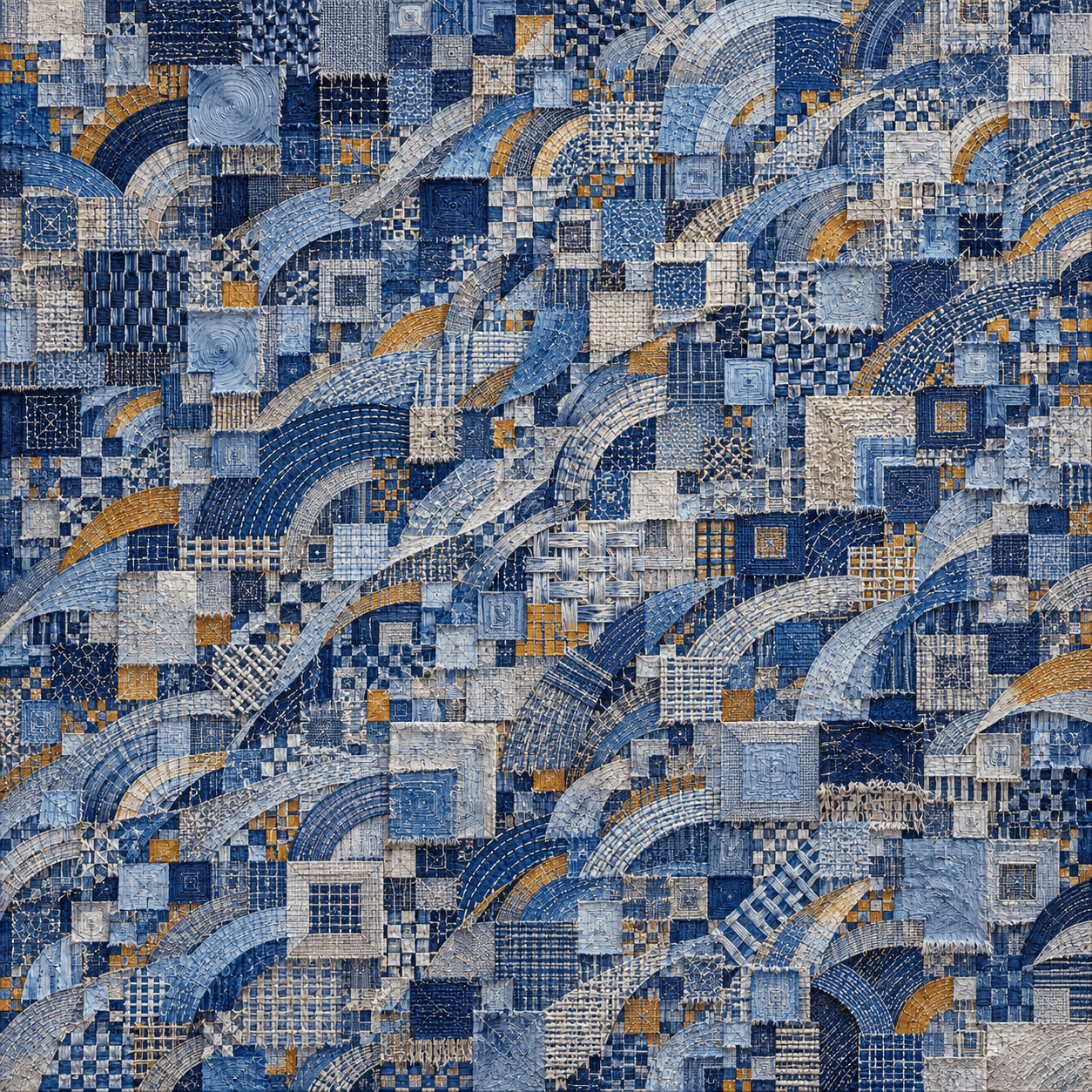
Abundance does not require every hue at maximum saturation. A mostly blue composition can be maximalist through its range of patterns, textures and shapes. In a multicolored work, repeat a few hues across separate zones so the eye finds connections. Reserve a particular contrast for the desired focal area, or distribute it deliberately if the aim is an all-over rhythm.
Treat overlap as information. One edge crossing another should clarify which object is in front; a vague tangent can make two objects fuse unintentionally. In collage, decide whether cuts are crisp, torn or blended and use those edge types consistently enough to create relationships. Small pauses might be a plain face, a dark opening, a broad fabric fold or a simple background interval. They need not be blank white space.
Three useful variants
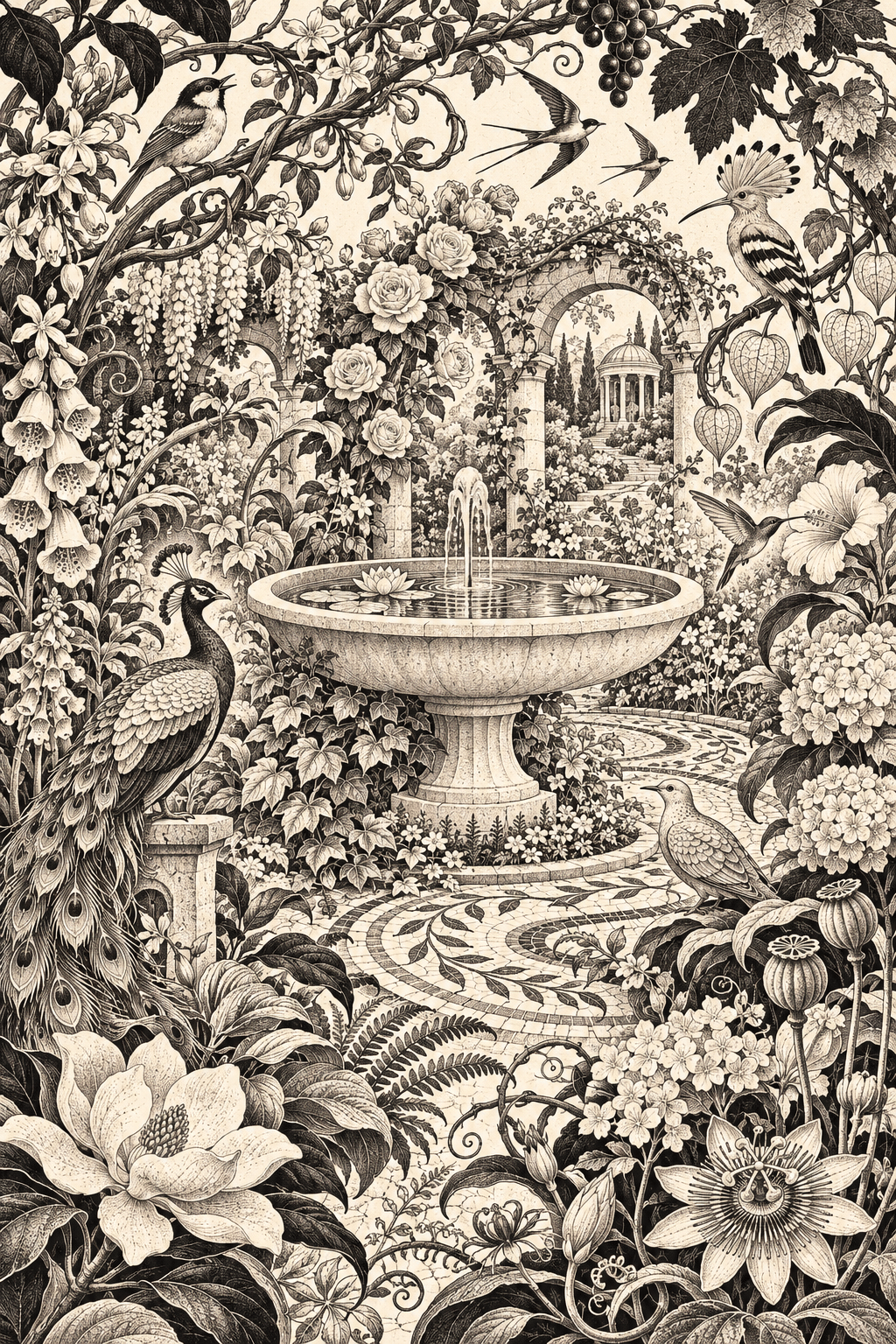
A botanical arrangement can use curling stems to connect unlike flowers, fruit and small creatures while keeping one vessel or silhouette as an anchor. A narrative collage can juxtapose different scales and moments, using a recurring color or shape to make the sequence legible. An abstract field can build density through many similar units, allowing local changes to form larger currents.
These variants make different promises. The botanical arrangement invites recognition and material pleasure; the narrative collage invites associations; the abstract field asks the eye to compare rhythm and variation. Choose which kind of attention matters before adding more content. A scene may combine them, but each additional visual system needs a reason to be there.
Where the approach fails
The most common failure is undifferentiated detail. Added objects keep increasing the amount to inspect without changing the meaning or movement of the image. Another failure is accidental sameness: repeated generated faces, identical leaves or duplicated objects turn richness into a visible pattern of errors. Inspect the focal area at full size and scan the rest for unintended copies and broken forms.
Legibility matters when an artwork also carries information. Set necessary lettering apart from competing texture and inspect it at the actual display size. A highly detailed poster may be enjoyable up close but ineffective as a small thumbnail. For a purely decorative or contemplative field, a slower reading may be the intention; judge the result against that purpose instead of applying a universal demand for instant clarity.
Edit for relationships, not just quantity
Build the large shapes, then add the middle motifs, then test whether finer texture helps. Reduce the work to a thumbnail and check its value structure in grayscale. Return to full size to inspect transitions. Temporarily remove a cluster: if the composition becomes both clearer and richer in meaning, that cluster was probably competing without contributing.
Maximalist Composition measures density and interaction, while Epic Monumentalism emphasizes scale and consequence. A colossal empty gate can be monumental with very little visual density; a small jewel-like collage can be maximalist without depicting anything enormous. Neither approach requires a particular medium. Their combination works best when the main scale relationship survives the surrounding abundance.
Positive editorial perspective
AOI editorial perspective (AI-authored). Organized abundance can reward both the first glance and sustained looking. Repeated color, varied scale and meaningful juxtaposition let small discoveries contribute to a larger visual rhythm.
Negative editorial perspective
AOI editorial perspective (AI-authored). Quantity alone is a weak editing principle. Repeated assets, uncertain overlaps and equal contrast everywhere can flatten the composition into noise, especially when information must remain legible at small sizes.
Neutral editorial perspective
AOI editorial perspective (AI-authored). This entry treats maximalism as a compositional approach that can be focal or all-over, colorful or restrained. It complements the broader Maximalism entry and does not rename its historical references as members of a new movement.
A small poetic detour
Original words from the AOI studio.
Poetry
A blue cup borrows red from an apple.
A leaf repeats the curve of a stair.
Small gold squares gather at the border
as if they have heard music elsewhere.
Nothing here is silent,
but one dark corner listens.
Through it the eye returns
and finds another way across the room.
The prompt workshop
Original creative exercises. These prompts create new illustrations, not documentary evidence.
One vessel, many voices
Create a rich botanical still life with one tall cobalt vase as the main anchor, surrounded by varied flowers, curled leaves, citrus and patterned fabric. Arrange the stems into an asymmetrical spiral. Use large, medium and small motifs; repeat cobalt, saffron and coral across separate areas. Keep the vase silhouette clear and leave one quieter dark interval. Distinct plant forms, coherent overlaps, no text or signature.
A focal composition: abundance should reinforce the vessel and spiral rather than conceal them.
An atlas of a remembered city
Create an original artistic collage of an imaginary city remembered through doorways, bridges, windows, market fruit and fragments of patterned fabric. Mix scales deliberately along a rising diagonal, with three larger architectural anchors. Repeat one red curve across the composition. Use crisp paper cuts and occasional torn edges, varied textures and clear overlap, with no legible signs, logos or copied artworks.
A narrative composition: connect the fragments through recurrence rather than giving every object equal emphasis.
The all-over tide
Create a dense abstract composition of interlocking small squares, arcs and woven-looking marks. Use indigo, pale blue, silver-gray and sparse warm ochre; let subtle changes of scale and spacing form broad diagonal currents across an all-over field. No single emblem or centered focal object. Maintain deliberate variation, consistent edge language and a few lower-contrast intervals. No lettering, watermark or signature.
An all-over composition: test distributed attention instead of a mandatory central focal point.
A smile from the studio
Jokes
The maximalist asked the composition what it needed. 'A focal point,' it replied. The artist added twelve. After a difficult meeting, eleven agreed to become supporting motifs. One demanded a gold frame, a patterned hat and its own accent color. It was appointed the focal point immediately: clearly it had prepared for the role.