
Game illustration reference
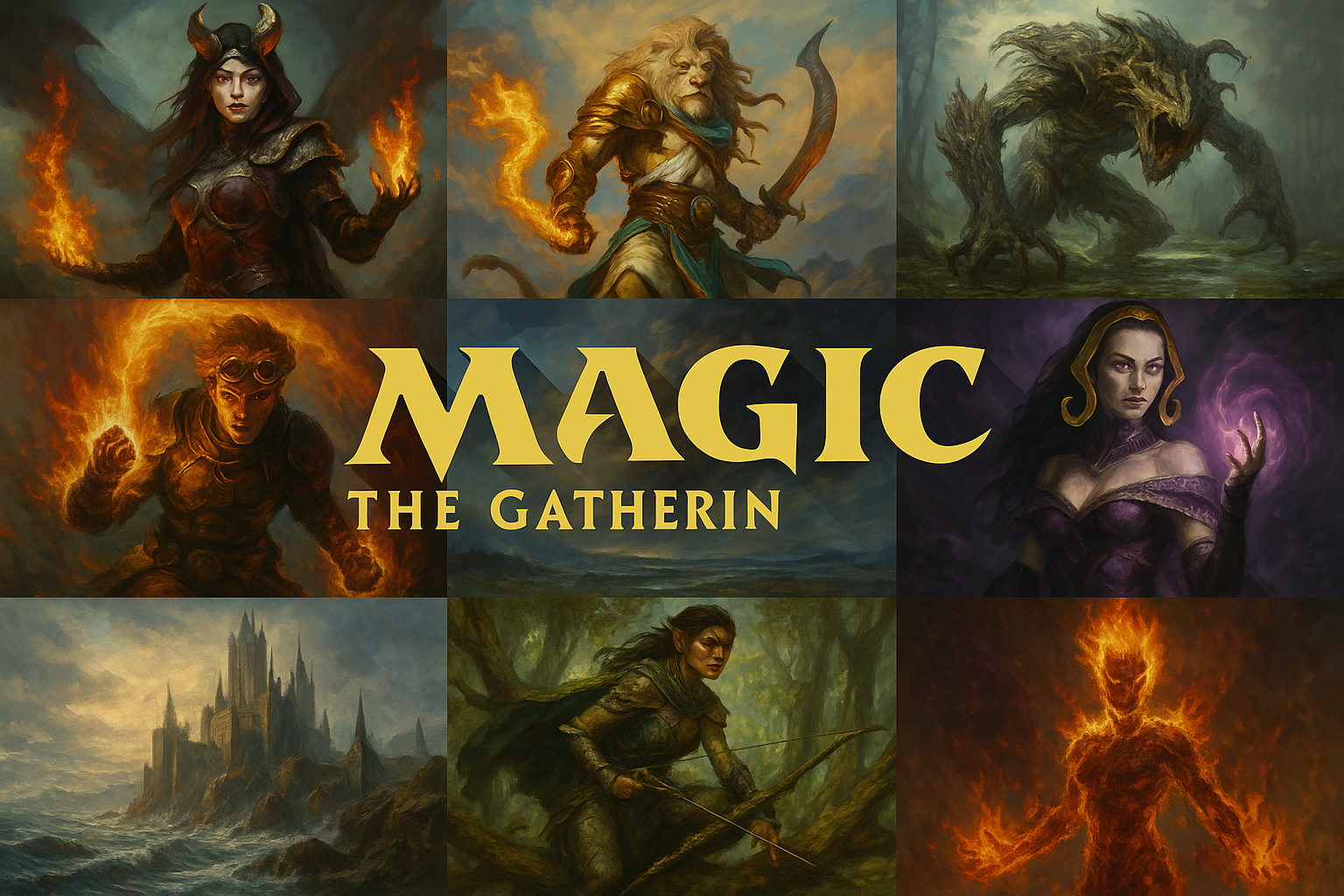
Magic: The Gathering brings together many artists and visual approaches within a game and its worlds. Its art should be studied as commissioned illustration with particular briefs and formats, not as one uniform painting style.
A visual introduction
Select an image for a closer look. Use the thumbnails, arrow keys or a swipe to compare examples. Zoom in to inspect details, or share the image that inspires you.
Creative toolbox · take this style further
Choose an input and a destination. Search sends your words to the chosen site; Copy & open puts them on your clipboard to paste there.
Create with AI
Turn your chosen input into an image prompt or a new creative direction.
ChatGPT
Copy your input and paste it into a ChatGPT conversation or image request.
Copy & open ChatGPT (new tab)Claude · Anthropic
Develop an image prompt or explore the style in a new Claude conversation.
Copy & open Claude · Anthropic (new tab)Midjourney
Paste your input into the Imagine bar on the Create page.
Copy & open Midjourney (new tab)Adobe Firefly
Copy your input, open Firefly, and paste it into the prompt field.
Copy & open Adobe Firefly (new tab)Leonardo.Ai
Copy your input, open Leonardo, and paste it into the generation field.
Copy & open Leonardo.Ai (new tab)Image search
Find visual references. Short, concrete keywords usually work best.
Lexica
Search AI images and prompts using your selected input.
Search with this input Lexica (new tab)Pexels
Search the photo and video library. Short keywords often work best.
Search with this input Pexels (new tab)Pixabay
Search photos, illustrations and other images.
Search with this input Pixabay (new tab)Unsplash
Search photographs using the style name or your own keywords.
Search with this input Unsplash (new tab)Wikimedia Commons
Search photographs, artworks and historical images. Check each file for its source and reuse terms.
Search with this input Wikimedia Commons (new tab)Art & research
Explore artists, collections and the ideas behind a style.
Wikipedia
Search for background reading. A style may not have its own article.
Search with this input Wikipedia (new tab)WikiArt
Copy your input into WikiArt’s search to explore artists and artworks.
Copy & open WikiArt (new tab)Europeana
Paste your keywords into the search to explore European museum, library and archive collections.
Copy & open Europeana (new tab)Inspiration
Discover portfolios and visual ideas from creative communities.
Instagram hashtags
Search a hashtag made from your input: spaces and punctuation are removed. Instagram may require sign-in.
Search with this input Instagram hashtags (new tab)ArtStation
Paste your input into artwork search for concept art, environments, characters and visual development.
Copy & open ArtStation (new tab)Behance
Paste your input into project search for illustration, design and visual storytelling.
Copy & open Behance (new tab)A closer look
A clear focal subject, readable action and a coherent setting help an illustration work at small scale; distinctive handling can coexist with those shared demands.
Many artists, many solutions
Wizards of the Coast's discussion of showcase sketches describes an iterative process between artists and the creative team. It also emphasizes the variety of artists' working methods. There is no single brush, rendering technique or level of realism that defines all Magic art.
When studying a card, credit the named artist and identify the specific image. A comparison between sketch and final can reveal how composition and emphasis developed. Avoid attributing the work of many contributors to an imaginary single house artist.
Write the visual brief first
For an original fantasy-card exercise, specify the subject, action, setting and emotional emphasis. Decide what a viewer should recognize at a glance. A brief that merely asks for something “epic” leaves too many important decisions unresolved.
Try several small compositions that solve the brief differently. One may emphasize a gesture, another a scale relationship and another the environment. Compare the clarity of the central idea before choosing the most detailed option.
Design for the actual viewing size
An illustration that looks impressive enlarged may lose its focal point when reduced. Group values and simplify the silhouette so that the main action survives. Fine textures can reward closer inspection, but should not carry essential information alone.
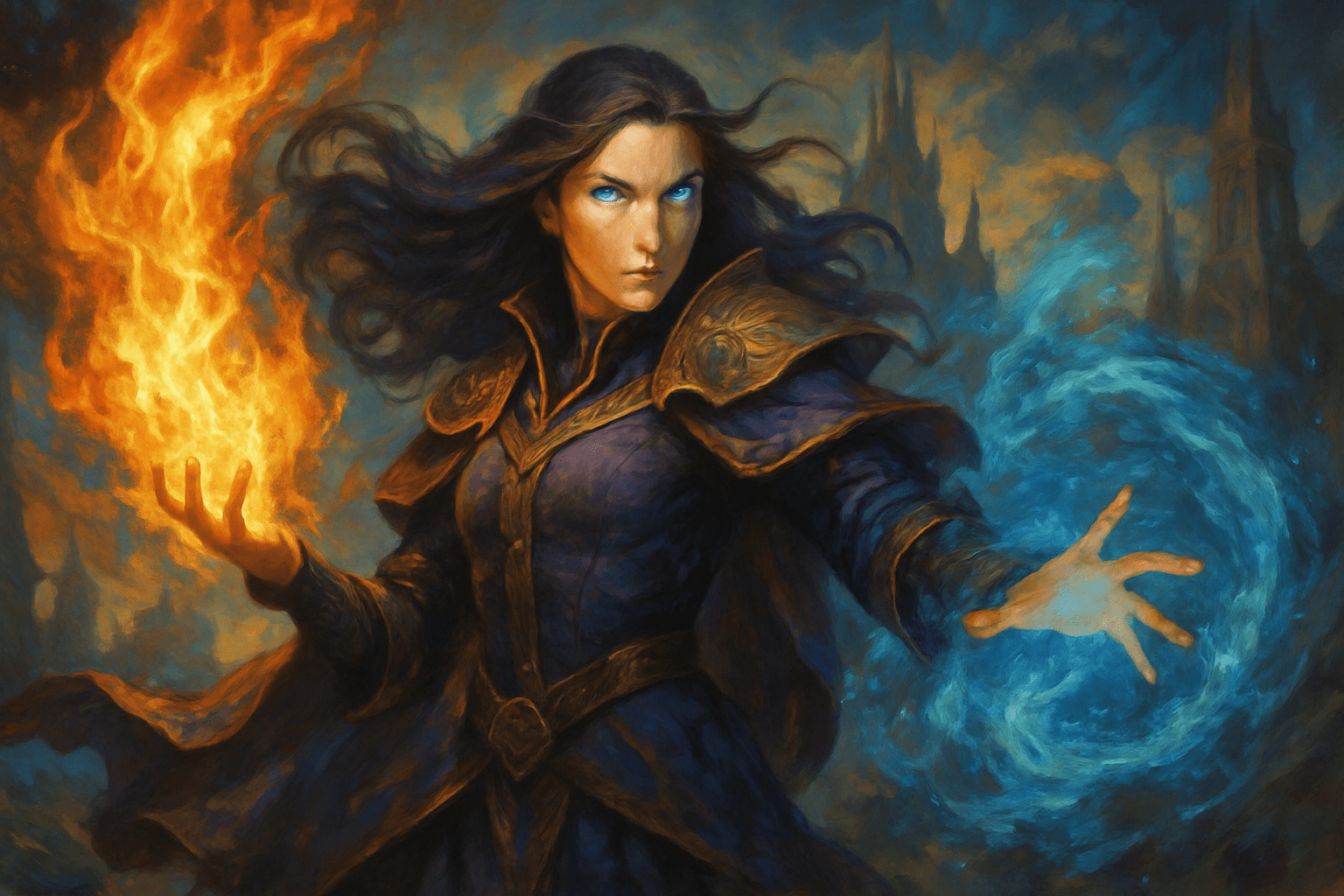
Control the relationship between character and setting. A background can establish a world without competing with the foreground. An effect such as fire or magic should clarify the action rather than obscure the anatomy, object or event it is meant to explain.
An original exercise is not an official card
The prompts below develop invented subjects and worlds. They do not reproduce card frames, logos, rules text or established characters, and they should not be presented as official commissions. Studying the format is different from implying affiliation.
Evaluate the final image against its own brief: is the action clear, the world consistent and the subject distinctive? A coherent small image is a stronger outcome than a collection of fantasy details that only works when viewed at poster size.
The prompt workshop
Original creative exercises. These prompts create new illustrations, not documentary evidence.
One clear action
Original fantasy-card illustration of an invented marsh guardian lifting a damaged bridge plank, strong silhouette and readable action at small size, no card frame or logo.
World in the background
Original fantasy illustration of a traveling seed keeper in a coherent invented mountain culture, distinct focal figure and restrained environmental detail.
A controlled effect
Original small-format fantasy illustration of a craftsperson shaping a ribbon of water into a tool, clear hands and action, limited magical particles and no franchise characters.