
Arrangement and photographic technique
Knolling organizes separate objects in parallel or at right angles, usually with deliberate gaps. Photographed from above, the arrangement becomes both an inventory and a composition.
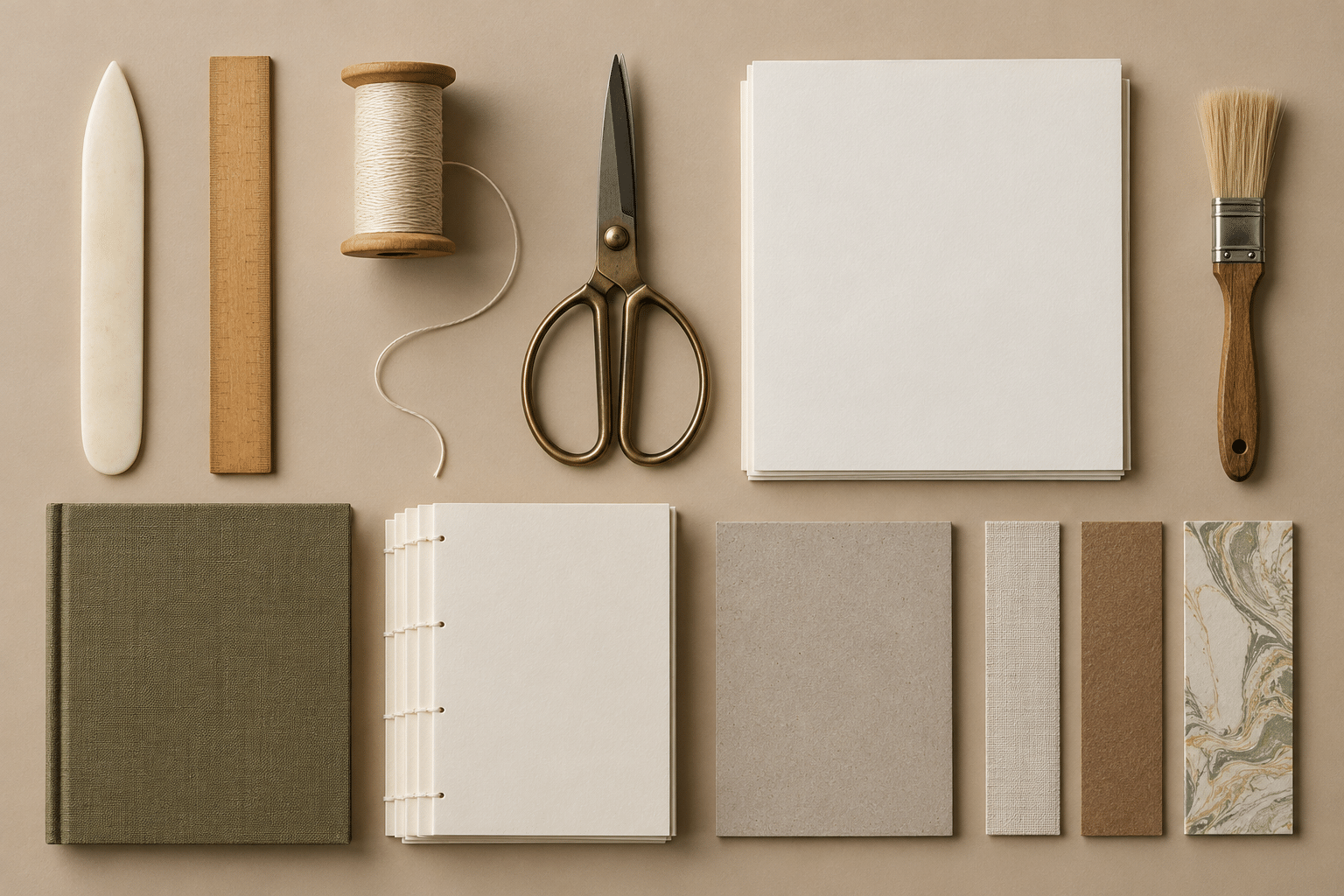
A visual introduction
Select an image for a closer look. Use the thumbnails, arrow keys or a swipe to compare examples. Zoom in to inspect details, or share the image that inspires you.
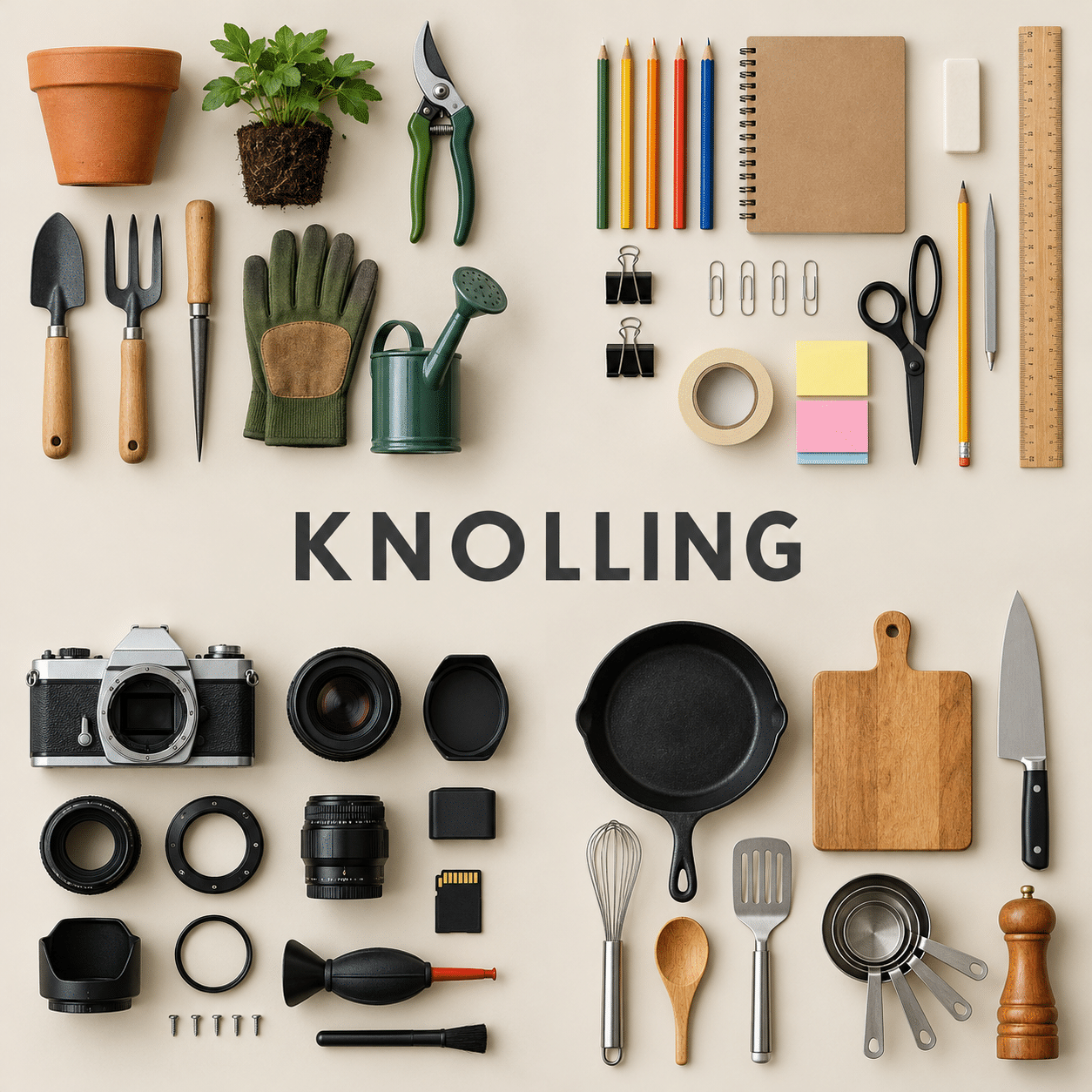
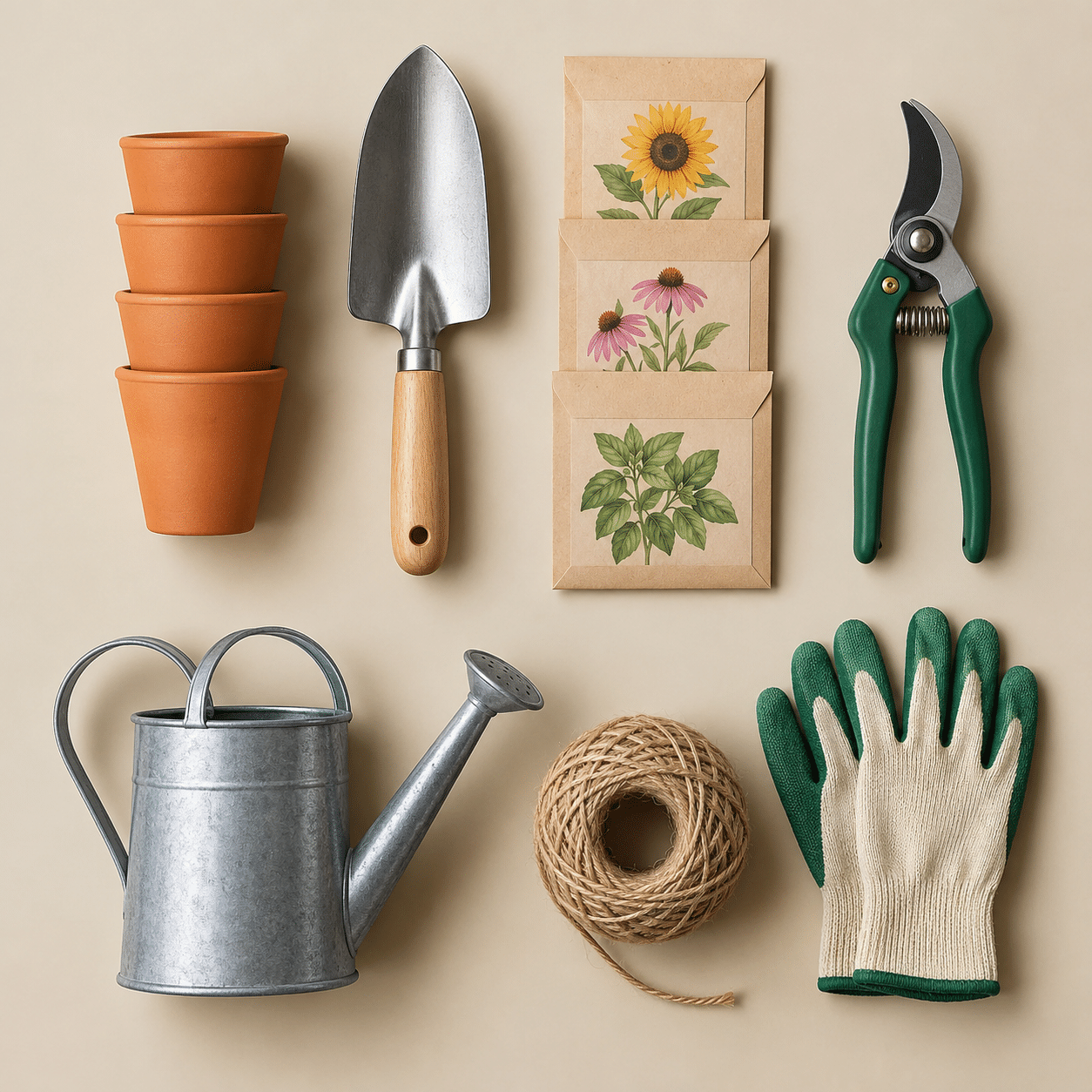
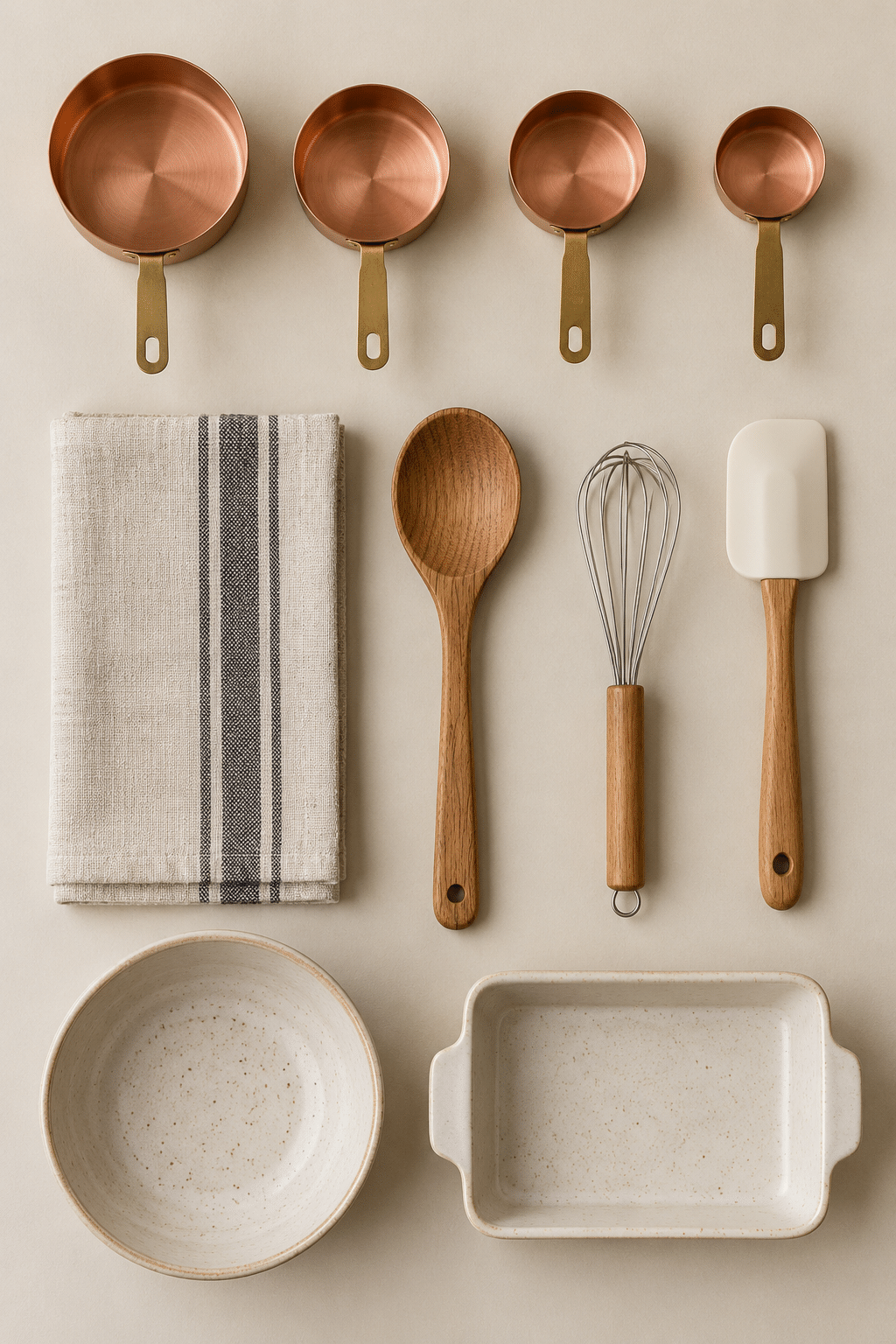
Creative toolbox · take this style further
Choose an input and a destination. Search sends your words to the chosen site; Copy & open puts them on your clipboard to paste there.
Create with AI
Turn your chosen input into an image prompt or a new creative direction.
ChatGPT
Copy your input and paste it into a ChatGPT conversation or image request.
Copy & open ChatGPT (new tab)Claude · Anthropic
Develop an image prompt or explore the style in a new Claude conversation.
Copy & open Claude · Anthropic (new tab)Midjourney
Paste your input into the Imagine bar on the Create page.
Copy & open Midjourney (new tab)Adobe Firefly
Copy your input, open Firefly, and paste it into the prompt field.
Copy & open Adobe Firefly (new tab)Leonardo.Ai
Copy your input, open Leonardo, and paste it into the generation field.
Copy & open Leonardo.Ai (new tab)Image search
Find visual references. Short, concrete keywords usually work best.
Lexica
Search AI images and prompts using your selected input.
Search with this input Lexica (new tab)Pexels
Search the photo and video library. Short keywords often work best.
Search with this input Pexels (new tab)Pixabay
Search photos, illustrations and other images.
Search with this input Pixabay (new tab)Unsplash
Search photographs using the style name or your own keywords.
Search with this input Unsplash (new tab)Wikimedia Commons
Search photographs, artworks and historical images. Check each file for its source and reuse terms.
Search with this input Wikimedia Commons (new tab)Art & research
Explore artists, collections and the ideas behind a style.
Wikipedia
Search for background reading. A style may not have its own article.
Search with this input Wikipedia (new tab)WikiArt
Copy your input into WikiArt’s search to explore artists and artworks.
Copy & open WikiArt (new tab)Europeana
Paste your keywords into the search to explore European museum, library and archive collections.
Copy & open Europeana (new tab)Inspiration
Discover portfolios and visual ideas from creative communities.
Instagram hashtags
Search a hashtag made from your input: spaces and punctuation are removed. Instagram may require sign-in.
Search with this input Instagram hashtags (new tab)ArtStation
Paste your input into artwork search for concept art, environments, characters and visual development.
Copy & open ArtStation (new tab)Behance
Paste your input into project search for illustration, design and visual storytelling.
Copy & open Behance (new tab)A closer look
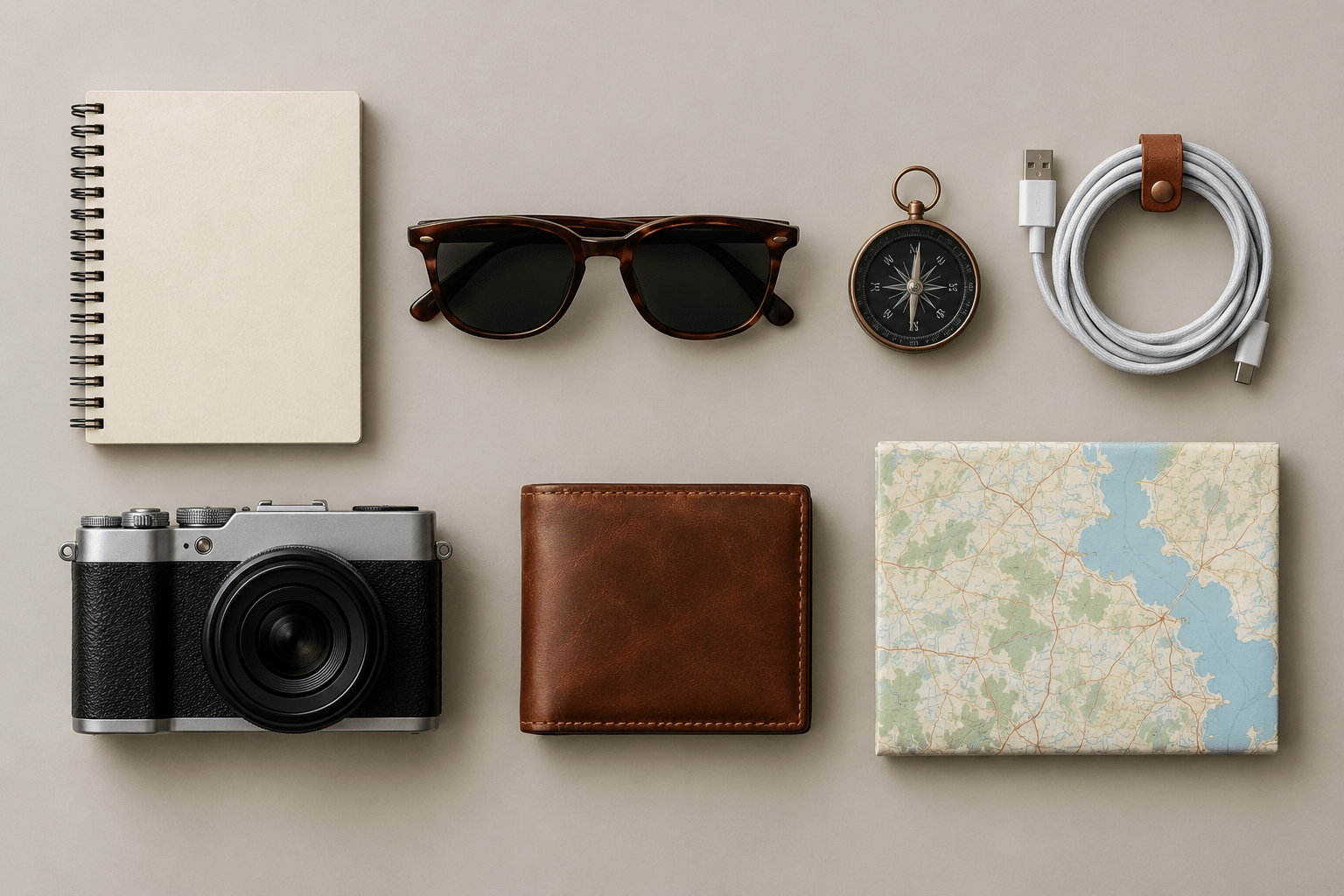
Orthogonal alignment, repeated intervals, visible object silhouettes and a consistent background turn a collection into a readable field.
Order with a specific rule
Knolling is more specific than a neat flat lay. Its defining relationship is alignment: objects are parallel or perpendicular to one another, with spaces that make their outlines legible. The Nasher Sculpture Center’s teaching resource discusses knolling in relation to Tom Sachs’s studio practices and the name’s association with Knoll furniture.
This page treats it as an arrangement and image-making technique, rather than asserting an independent historical art movement. An overhead view makes the geometry especially clear, but the underlying order exists before the photograph. A camera records the arrangement; it does not create alignment that was never established.
Select a meaningful collection
A group can represent a task, a person, a journey or a material process. Bookbinding tools suggest a sequence of work; a travel kit can become a compact portrait of its owner’s habits. Select objects because their relationships are worth looking at, not simply because enough items are available to fill the frame.
Completeness is a choice. An inventory may aim to show every necessary component, while an editorial photograph may select only representative objects. Make the purpose clear. A beautiful arrangement of tools is not automatically a complete instructional kit, and a generated collection should not be used as evidence that real equipment was present.
Spacing does the quiet work
Begin with the largest objects and establish an outer boundary. Align the major axes, then place smaller pieces where they clarify a group or balance an open region. Consistent gaps help the eye compare shapes. Equal spacing is useful, but mathematical uniformity can become awkward when an object has a handle, tapered end or irregular outline.
Judge the visible negative space rather than only measuring bounding boxes. A curved spoon beside a square container creates a different gap from two straight rulers. Leave room around these changes. Overcrowding makes the collection feel compressed; excessive spacing can break it into unrelated islands.
Light, background and camera
A matte background reduces distracting reflections and gives small edges a stable field. Soft directional illumination usually makes materials readable without allowing long shadows to merge neighboring objects. Keep the light consistent across the collection, especially when reflective metal and pale paper appear together.
A camera placed square to a flat arrangement helps preserve right angles. Check the frame edges and avoid unnecessary perspective distortion. If depth is part of the subject, allow it deliberately: stacked bowls or a raised camera body may cast useful shadows, but they should not obscure the objects beside them. Surface order and height variation can coexist.
Color and hierarchy
A neutral palette emphasizes silhouette, scale and material. A restricted accent color can connect a subset of objects, while a broader palette can make a kit feel lively. Neither approach changes the basic alignment rule. Avoid letting one bright package dominate unless it is meant to be the main subject.
Sort by function, size or material, then compare the results. Functional grouping makes the image easy to interpret; size-based order can produce a satisfying gradient; material grouping can reveal texture. Combining every sorting system at once often creates confusion. Choose a principal rule and let the others support it.
Distinctions and limitations
A flat lay may use diagonal piles, overlapping objects or a loose radial arrangement. Those can be excellent compositions, but they do not necessarily demonstrate knolling. Minimalism can reduce the number of objects, while knolling can organize a very large collection. The two ideas overlap without being interchangeable.
The technique can imply control and completeness, which may conceal the disorder of an actual process. Use that tension thoughtfully in editorial work. The new gallery is AI-generated and demonstrates possible arrangements; it is not a record of a real workshop. Check generated tools and components before treating any image as practical technical instruction.
Try a small set first
Start with six objects used for one activity. Make an arrangement with clear right angles, photograph it, then remove the least informative object. Compare whether the remaining group becomes clearer or loses an important connection. Next change only the spacing and observe how the rhythm changes.
This exercise keeps the subject manageable and exposes the central skill: making separate things feel deliberately related. The most effective knolling image is not necessarily the fullest or most symmetrical. It is the one in which alignment, selection and spacing help the viewer understand the collection.
The prompt workshop
Original creative exercises. These prompts create new illustrations, not documentary evidence.
A six-object kit
Create an overhead photograph-like interpretation of six bookbinding tools aligned parallel or perpendicular, equal deliberate gaps, matte cream surface and soft coherent shadows. No labels or brands.
A material rhythm
Create a knolling arrangement of copper measuring cups, wooden utensils and pale ceramic dishes. Separate every object, use orthogonal alignment and restrained color, overhead view.
A portrait through objects
Create a carefully spaced overhead travel kit with notebook, camera, folded map, wallet and cable. Build a readable orthogonal arrangement that suggests a journey without text or branding.
A smile from the studio
Jokes
The spoon wanted to lie diagonally. The rest of the kit requested a right-angle discussion.
Sources and further exploration
Nasher Sculpture Center: Tom Sachs teaching resource — studio practice and knolling