
Mood-led creative direction
An AOI creative direction for shared energy, movement and rhythmic colour in an oil-painting interpretation. A courtyard dance, wind moving cloth or a lively abstract sequence can carry the mood through relationships, varied marks and a clear visual rhythm.
A visual introduction
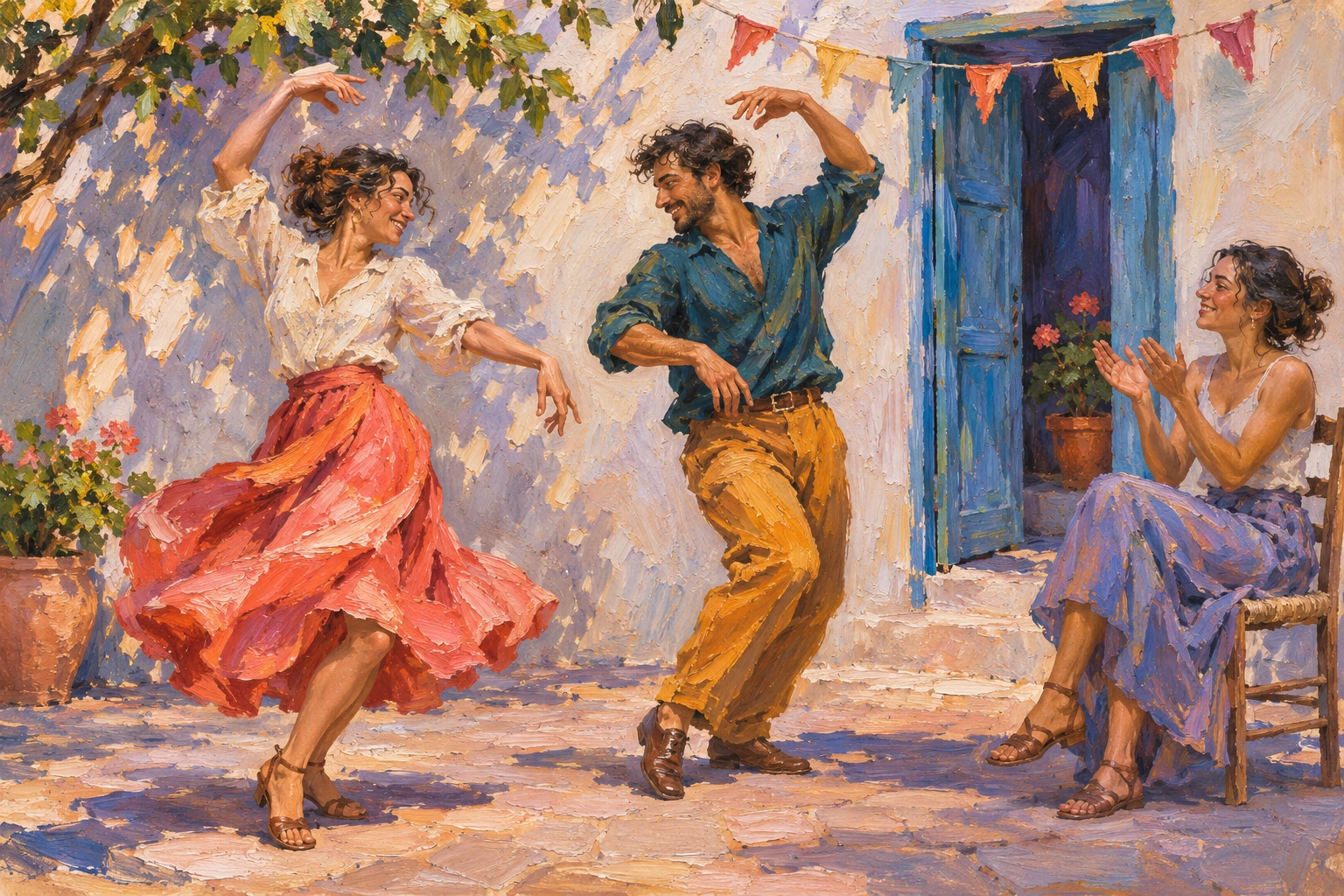
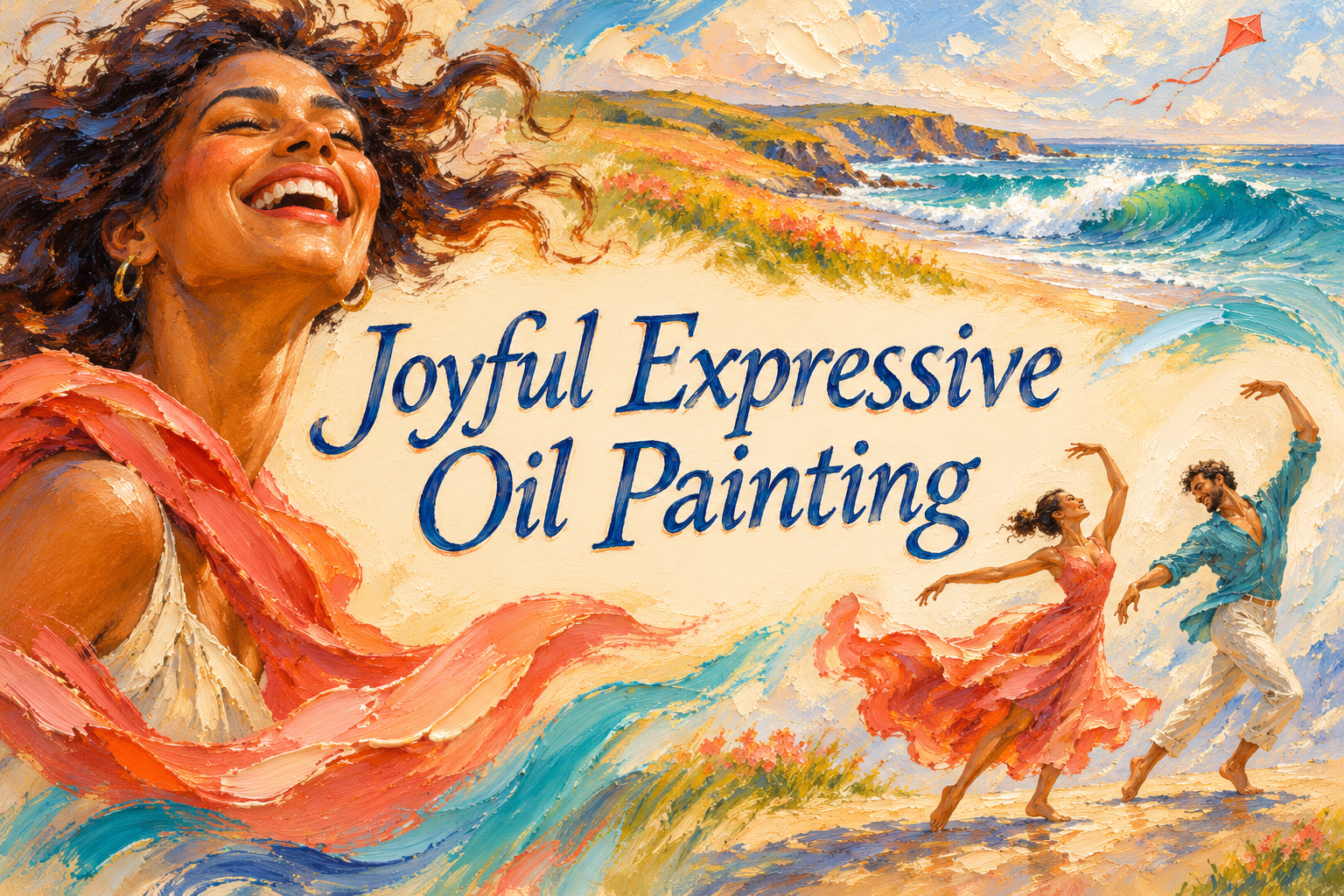
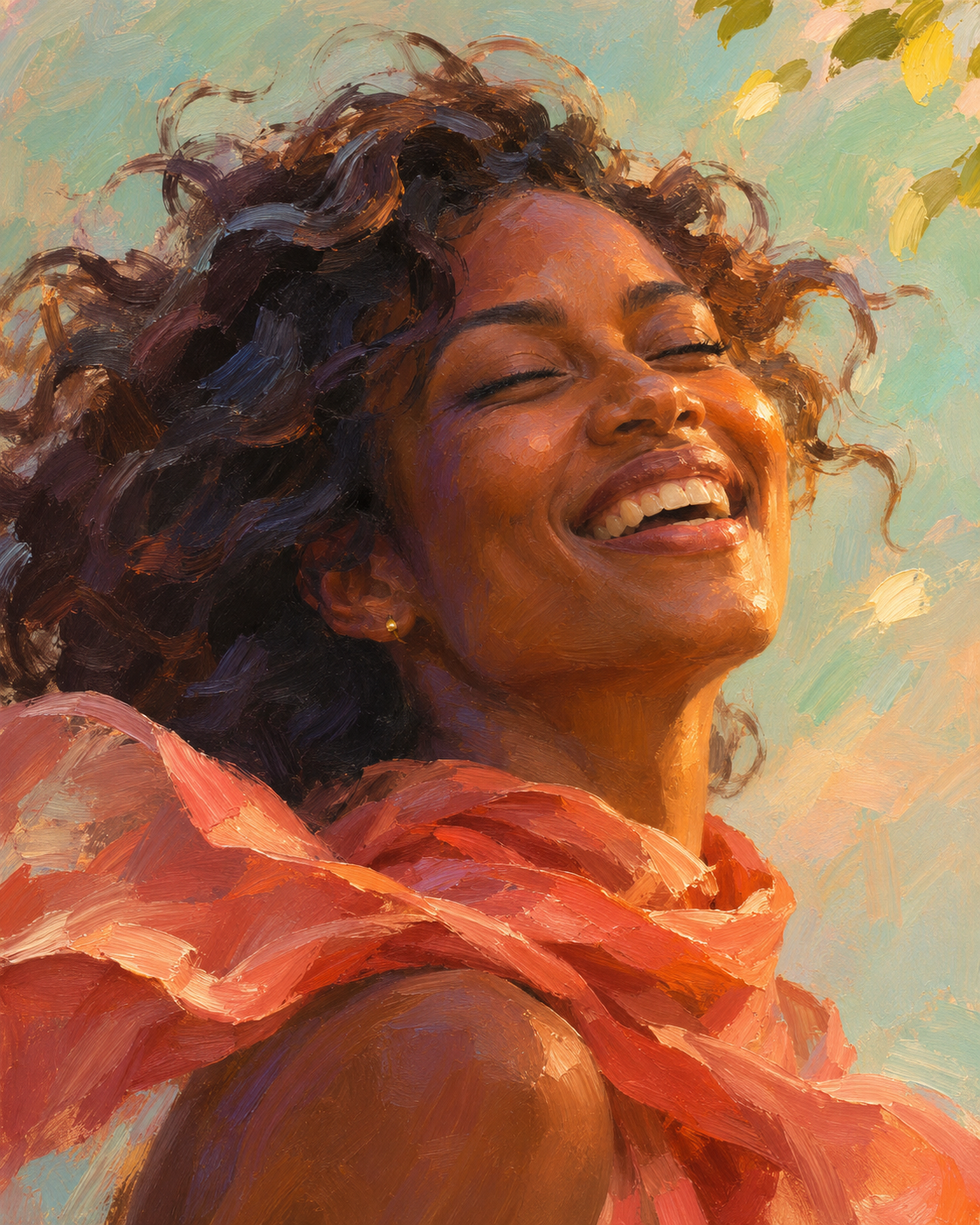
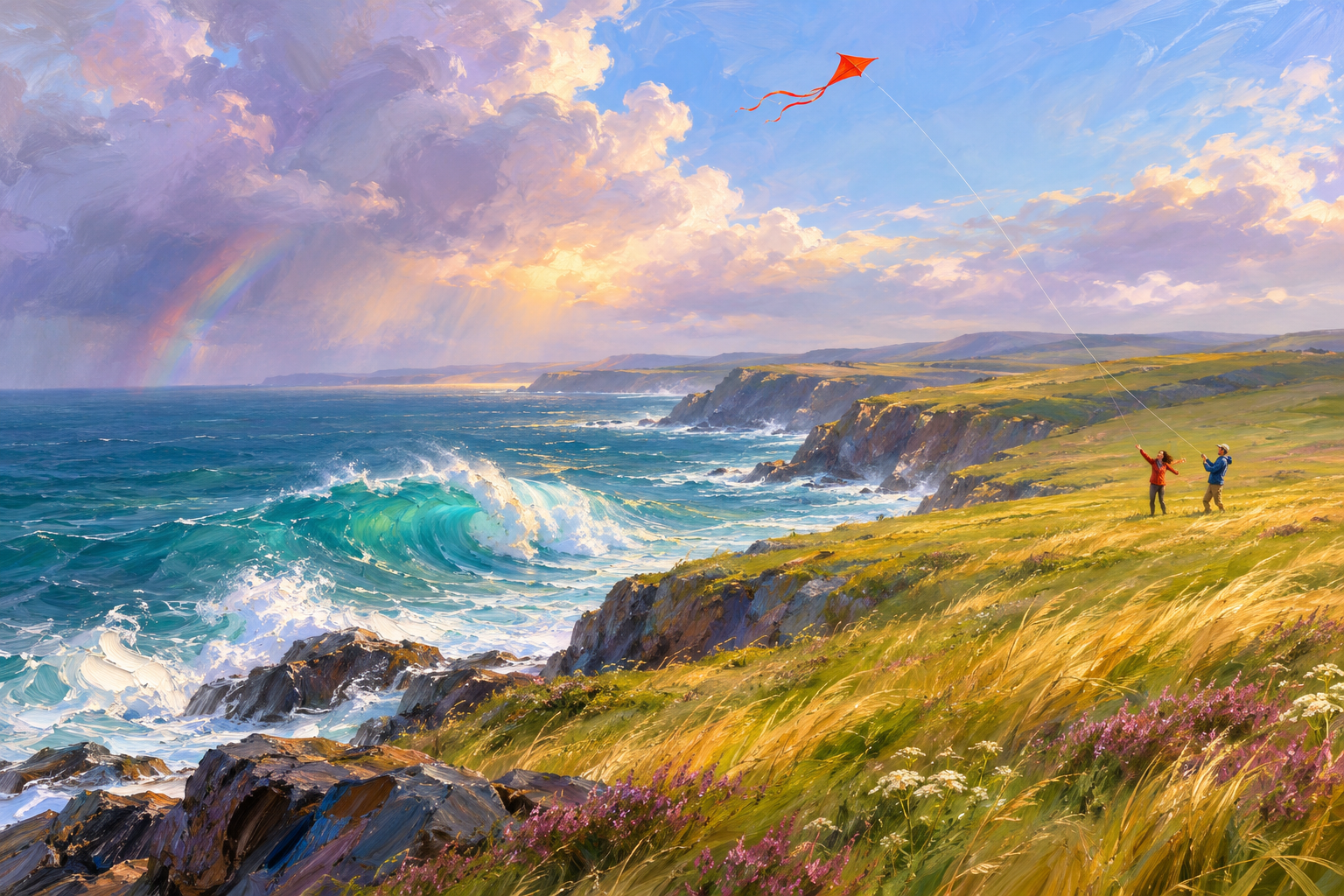
Five AI-generated interpretations: a shared courtyard dance, a unified artistic title collage, and standalone studies of joy through portraiture, landscape and abstraction. Select an artwork to inspect its brushwork and composition at full size.
Select an image for a closer look. Use the thumbnails, arrow keys or a swipe to compare examples. Zoom in to inspect details, or share the image that inspires you.
Creative toolbox · take this style further
Choose an input and a destination. Search sends your words to the chosen site; Copy & open puts them on your clipboard to paste there.
Create with AI
Turn your chosen input into an image prompt or a new creative direction.
ChatGPT
Copy your input and paste it into a ChatGPT conversation or image request.
Copy & open ChatGPT (new tab)Claude · Anthropic
Develop an image prompt or explore the style in a new Claude conversation.
Copy & open Claude · Anthropic (new tab)Midjourney
Paste your input into the Imagine bar on the Create page.
Copy & open Midjourney (new tab)Adobe Firefly
Copy your input, open Firefly, and paste it into the prompt field.
Copy & open Adobe Firefly (new tab)Leonardo.Ai
Copy your input, open Leonardo, and paste it into the generation field.
Copy & open Leonardo.Ai (new tab)Image search
Find visual references. Short, concrete keywords usually work best.
Lexica
Search AI images and prompts using your selected input.
Search with this input Lexica (new tab)Pexels
Search the photo and video library. Short keywords often work best.
Search with this input Pexels (new tab)Pixabay
Search photos, illustrations and other images.
Search with this input Pixabay (new tab)Unsplash
Search photographs using the style name or your own keywords.
Search with this input Unsplash (new tab)Wikimedia Commons
Search photographs, artworks and historical images. Check each file for its source and reuse terms.
Search with this input Wikimedia Commons (new tab)Art & research
Explore artists, collections and the ideas behind a style.
Wikipedia
Search for background reading. A style may not have its own article.
Search with this input Wikipedia (new tab)WikiArt
Copy your input into WikiArt’s search to explore artists and artworks.
Copy & open WikiArt (new tab)Europeana
Paste your keywords into the search to explore European museum, library and archive collections.
Copy & open Europeana (new tab)Inspiration
Discover portfolios and visual ideas from creative communities.
Instagram hashtags
Search a hashtag made from your input: spaces and punctuation are removed. Instagram may require sign-in.
Search with this input Instagram hashtags (new tab)ArtStation
Paste your input into artwork search for concept art, environments, characters and visual development.
Copy & open ArtStation (new tab)Behance
Paste your input into project search for illustration, design and visual storytelling.
Copy & open Behance (new tab)A closer look
Connect gestures and colour accents along a readable arc. Balance moving forms with stable shapes and quieter passages; let selective brushwork reinforce the action rather than obscure it.
A creative direction for shared energy
Joyful expressive oil painting is a creative brief, not a named historical movement. It differs here from quiet happiness by emphasizing outward movement and connection: people dancing, wind moving flags or a group working together. Visible paint can reinforce that energy, but a busy surface does not automatically feel joyful. The arrangement of forms and the clarity of the action remain central.
AOI uses this name as a descriptive workshop direction combining mood, handling and medium. No founding date or historical school is asserted. Expressive handling need not identify a painting with historical Expressionism. The related Happy expressive oil painting page gives more space to contentment and everyday ease; the emphasis here is on an exchange between people, objects or marks. These briefs overlap, and their distinction is an editorial choice.
Two ways to organise movement
Auguste Renoir’s Bal du moulin de la Galette (1876) offers a useful social comparison. The Musée d’Orsay describes a lively dance garden in Montmartre, a moving crowd and the interaction of natural and artificial light. Its account connects the atmosphere with bright, active brushwork. For this workshop, ask how gestures, glances and patches of light connect a group without making every figure equally prominent. [1]
Henri Matisse’s Dance (I), painted in early 1909, offers a different route. MoMA identifies it as a compositional study for the later commissioned Dance and describes an expressive reduction to line, colour and form. Fluid contours and a small number of large colour areas can carry movement without a crowded setting or thick paint everywhere. These two works are comparisons for looking and making, not members of a historical Joyful expressive oil painting movement. [2]
Oil-painting language and selective texture
Oil paint mixes pigment with an oil medium; its slow drying supports varied handling and optical effects. Impasto means areas built up with paint, where brush or knife marks and the way the surface catches light become conspicuous. Oil painting also allows quieter, thinner passages. Treat thickness as a choice, not a formula for emotion. [3, 4]
In a physical painting, a broad stroke can establish a sleeve while smaller turns describe a wrist. In a digital study, directional marks and selective raised-looking highlights can suggest that handling. The generated images here do not have actual oil paint or physical impasto. Let the marks follow the action, changing their direction and scale as forms change.
AOI looking and making workshop
Build the composition around a rhythm that links its parts. Repeated arcs can connect dancing figures, while alternating warm and cool marks can move the eye across a table. Keep a few stable shapes so motion has something to play against. Let color intensify near the main exchange rather than everywhere at once. In generated work, check that limbs and gestures remain coherent beneath loose handling. A convincing scene offers a specific reason for the energy, allowing the viewer to share the moment instead of merely receiving a command to feel cheerful.
The new courtyard study uses two dancers facing each other and a seated friend clapping nearby. Curving arms and a moving coral skirt establish the rhythm; the blue doorway and pale wall provide steadier shapes. Warm accents stand against cooler shadows, and the faces share attention rather than looking out at the viewer. This invented AI-generated scene is an original illustration, not a reproduction of either museum work.
The updated artistic collage brings a laughing portrait, two dancers and a sunlit coast into one continuous painted space. A coral scarf flows into broad turquoise strokes, while the wave and red kite carry the movement around the complete central style name. The calm ivory title area lets the richly worked edges breathe. Unlike a set of separate panels, the motifs share color, rhythm and dissolving boundaries.
Try three versions of one composition: a quiet exchange, a lively exchange and an almost abstract rhythm. Keep the main shapes in place while changing gesture, spacing and mark direction. Check each image at thumbnail size. Preserve a readable focal relationship, clear figure silhouettes and believable contact with the ground. If every area shouts, simplify one; if lively handling conceals a malformed hand or foot, resolve the form first.
Three new showcase studies: face, landscape and pure rhythm
Sunlit Laughter brings the energy close. Amber light shapes a laughing face against violet shadows, while curls and a coral scarf continue the movement. The eyes are closed, so expression depends on the relationship between cheek, mouth and posture. Broad marks in the scarf contrast with more carefully resolved facial forms. Joy here is intimate and immediate.
Room for the Wind opens the composition outward. Two small friends and a red kite give a human scale to turquoise surf, a sunlit meadow and clouds clearing after rain. The wave and kite create separate arcs across the image; quiet sky allows the stronger marks in foam and grass to remain legible. The invented coast is a visual celebration of companionship and space, not a depiction of a documented location.
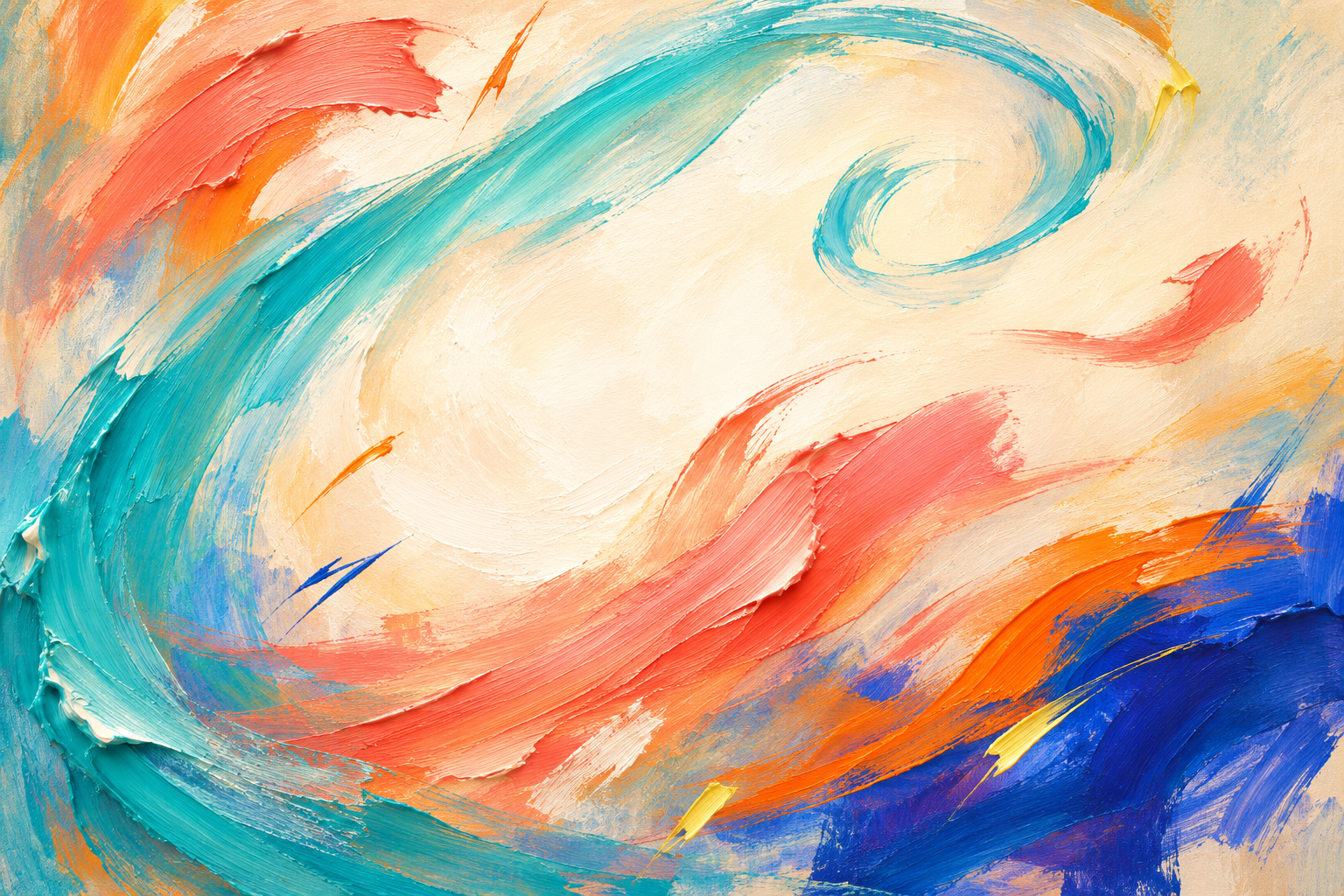
The Colour of a Yes removes the recognizable subject. Turquoise rises around an ivory interval, coral marks answer at unequal distances, and ultramarine gives the lower edge weight. The color relationships and changing stroke widths carry the feeling. Compare this open center with the title space in the artistic collage: both use a quiet interval to organize the surrounding energy.
These are digital images made with AI, not scans of physical oil paintings. Their raised-looking strokes and translucent passages are visual interpretations. View them enlarged to compare edge handling, then reduce them to a thumbnail to test whether their main relationships still hold.
A small poetic detour
Original words from the AOI studio.
Poetry
One hand rises, another answers.
The skirt takes a little air.
A friend keeps time beside the door;
the wall holds still
while afternoon moves between them.
The prompt workshop
Original creative exercises. These prompts create new illustrations, not documentary evidence.
A shared dance
Create an original expressive oil-painting interpretation of two adult friends dancing in a small courtyard, with a third friend seated nearby clapping. Connect their gestures along an asymmetrical arc; balance a moving coral skirt and teal shirt with a stable pale wall and blue doorway. Use directional marks, varied edges and selective thick-looking highlights. Keep bodies, hands and grounded feet coherent, with clearly separated silhouettes. No lettering or signature.
Wind and celebration
Create an original expressive oil-painting interpretation of colourful laundry and handmade streamers moving above a courtyard meal. Link the windblown cloth with the arc of one person passing bread to another. Keep the table stable, gestures clear and the background broad; vary the scale of brush marks and reserve strong colour for the shared action. No lettering, logos or signature.
A colour rhythm
Create an original abstract oil-painting interpretation of alternating coral, turquoise and golden strokes moving around a calm cream centre. Build a readable rhythmic sequence with varied intervals and mark scale, one deep blue anchor and selective thick-looking accents. Let broad quieter passages separate the strongest gestures. Avoid uniform visual noise, symbols, lettering and signatures.
Portrait: let the light laugh
Paint an original close portrait of an adult laughing in warm afternoon light. Use violet shadows, wind-lifted hair and one coral fabric gesture to extend the expression. Keep facial anatomy coherent and reserve the finest edges for the face. Let broad quiet color surround the focal area. Expressive oil-painting interpretation, no text or signature.
Landscape: leave room for joy
Paint a luminous invented coast after rain: two small friends flying a red kite above a broad meadow, turquoise surf below and pearl-lavender clouds opening to sunlight. Echo the kite arc in a breaking wave, vary the brush scale and keep the figures distinct. Original oil-painting interpretation, no lettering.
Abstraction: compose a joyful interval
Create an asymmetrical abstract oil-painting interpretation: one rising turquoise gesture, answering coral and orange strokes, an ultramarine anchor and a large warm ivory pause. Vary spacing, thickness and edges. Make the eye travel without filling every gap. No symbols, lettering or signature.
A smile from the studio
Jokes
The ultramarine complained that the painting was getting too cheerful. “Someone has to provide depth,” it said. The coral proposed a dance, the turquoise immediately swept across the canvas, and the ivory refused to join in. By the end, everyone agreed the ivory had made the best contribution: it had left them enough room to move.