
Art history · broad cultural overview
Japanese art encompasses many periods, regions, materials and institutions. Ceramics, Buddhist sculpture, narrative scrolls, ink painting, decorated screens, prints, design and experimental contemporary practices do not share one compulsory aesthetic. This overview offers ways into that variety while resisting the idea that an entire culture can be reduced to minimalism, serenity or a handful of familiar motifs.
A visual introduction
Select an image for a closer look. Use the thumbnails, arrow keys or a swipe to compare examples. Zoom in to inspect details, or share the image that inspires you.
Creative toolbox · take this style further
Choose an input and a destination. Search sends your words to the chosen site; Copy & open puts them on your clipboard to paste there.
Create with AI
Turn your chosen input into an image prompt or a new creative direction.
ChatGPT
Copy your input and paste it into a ChatGPT conversation or image request.
Copy & open ChatGPT (new tab)Claude · Anthropic
Develop an image prompt or explore the style in a new Claude conversation.
Copy & open Claude · Anthropic (new tab)Midjourney
Paste your input into the Imagine bar on the Create page.
Copy & open Midjourney (new tab)Adobe Firefly
Copy your input, open Firefly, and paste it into the prompt field.
Copy & open Adobe Firefly (new tab)Leonardo.Ai
Copy your input, open Leonardo, and paste it into the generation field.
Copy & open Leonardo.Ai (new tab)Image search
Find visual references. Short, concrete keywords usually work best.
Lexica
Search AI images and prompts using your selected input.
Search with this input Lexica (new tab)Pexels
Search the photo and video library. Short keywords often work best.
Search with this input Pexels (new tab)Pixabay
Search photos, illustrations and other images.
Search with this input Pixabay (new tab)Unsplash
Search photographs using the style name or your own keywords.
Search with this input Unsplash (new tab)Wikimedia Commons
Search photographs, artworks and historical images. Check each file for its source and reuse terms.
Search with this input Wikimedia Commons (new tab)Art & research
Explore artists, collections and the ideas behind a style.
Wikipedia
Search for background reading. A style may not have its own article.
Search with this input Wikipedia (new tab)WikiArt
Copy your input into WikiArt’s search to explore artists and artworks.
Copy & open WikiArt (new tab)Europeana
Paste your keywords into the search to explore European museum, library and archive collections.
Copy & open Europeana (new tab)Inspiration
Discover portfolios and visual ideas from creative communities.
Instagram hashtags
Search a hashtag made from your input: spaces and punctuation are removed. Instagram may require sign-in.
Search with this input Instagram hashtags (new tab)ArtStation
Paste your input into artwork search for concept art, environments, characters and visual development.
Copy & open ArtStation (new tab)Behance
Paste your input into project search for illustration, design and visual storytelling.
Copy & open Behance (new tab)A closer look
Begin with the actual object: its material, scale, format, use and viewing conditions. A handscroll unfolds through time, a screen divides and changes a room, and a print circulates differently from a unique painting.
A long history with many points of entry
The Tokyo National Museum's chronological overview moves from Jōmon-period objects through Buddhist art, courtly arts, ink painting, screens and ukiyo-e. Its timeline also places Japanese developments beside Chinese and Korean histories. That structure is useful because it makes both change and exchange visible instead of presenting an isolated national essence. [1]
Treat a broad survey as a map, not a claim that each period has one look. Materials, patrons, religious settings, workshops and audiences shape what is made. Several traditions can coexist, and an artist can work across inherited categories.
Material and format change the encounter
A ceramic vessel has weight, an interior and a surface that turns away from the viewer. A sculpture occupies shared space. A painted screen has folds that alter its rhythm as it is positioned. These features are not secondary to the image; they help determine how the work is experienced.
When studying a reproduction, ask what the photograph leaves out. A flattened screen image removes changes in angle; a single detail of a scroll omits the sequence; a close crop of a bowl obscures its size. Seek object records and installation views before treating a digital rectangle as the complete artwork.
Religious and courtly contexts
Buddhist images, calligraphy and narrative painting involve distinct practices of making and viewing. A religious figure should be identified through reliable records rather than generic visual resemblance. A courtly narrative may require knowledge of a text or episode to understand why a gesture or setting matters.
For a first analysis, separate what you can observe from what needs research. You can describe a figure's placement, a line's direction or a relationship between colour fields immediately. Identifying the subject, function or patron calls for further evidence. That distinction makes interpretation more precise without making looking inaccessible.
Ink, colour and spatial construction
Japanese painting includes more than monochrome ink and empty space. Compare how different works use opaque colour, patterned surfaces, washes, contour and the ground itself. Ask whether space is built through overlap, changes of scale, architectural divisions or the sequence of a format.
Do not assume that an empty area always means tranquillity or that a dense pattern always means excess. The surrounding forms and the work's context determine its role. A quiet interval can separate episodes, intensify a shape or make a material surface visible.
Prints and the circulation of images
Ukiyo-e belongs to a particular history of image production and audiences, not a synonym for all Japanese art. A print also invites questions about design, cutting, printing, publishing and repeated circulation. The named artist is important, but the finished object can reflect a collaborative process.
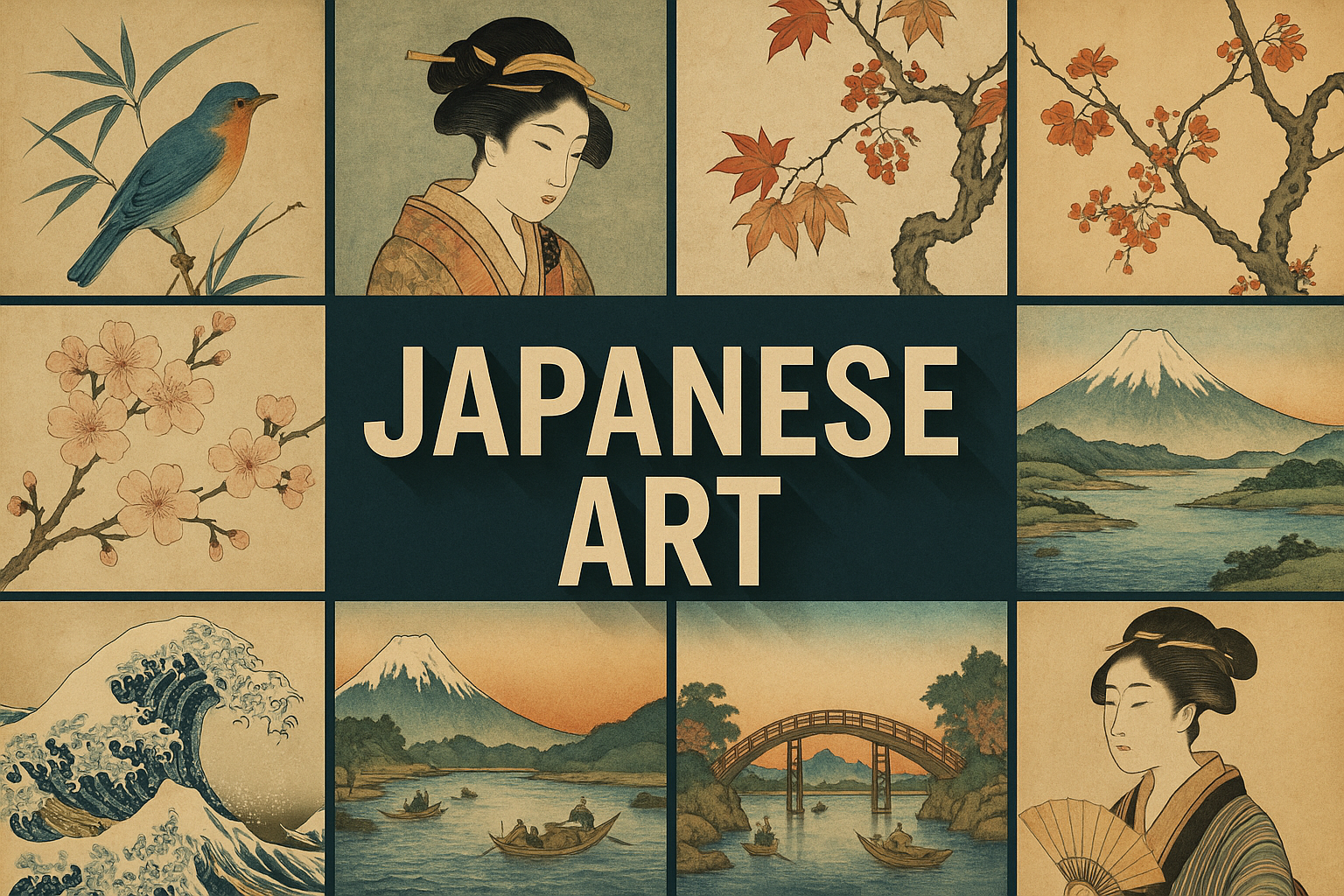
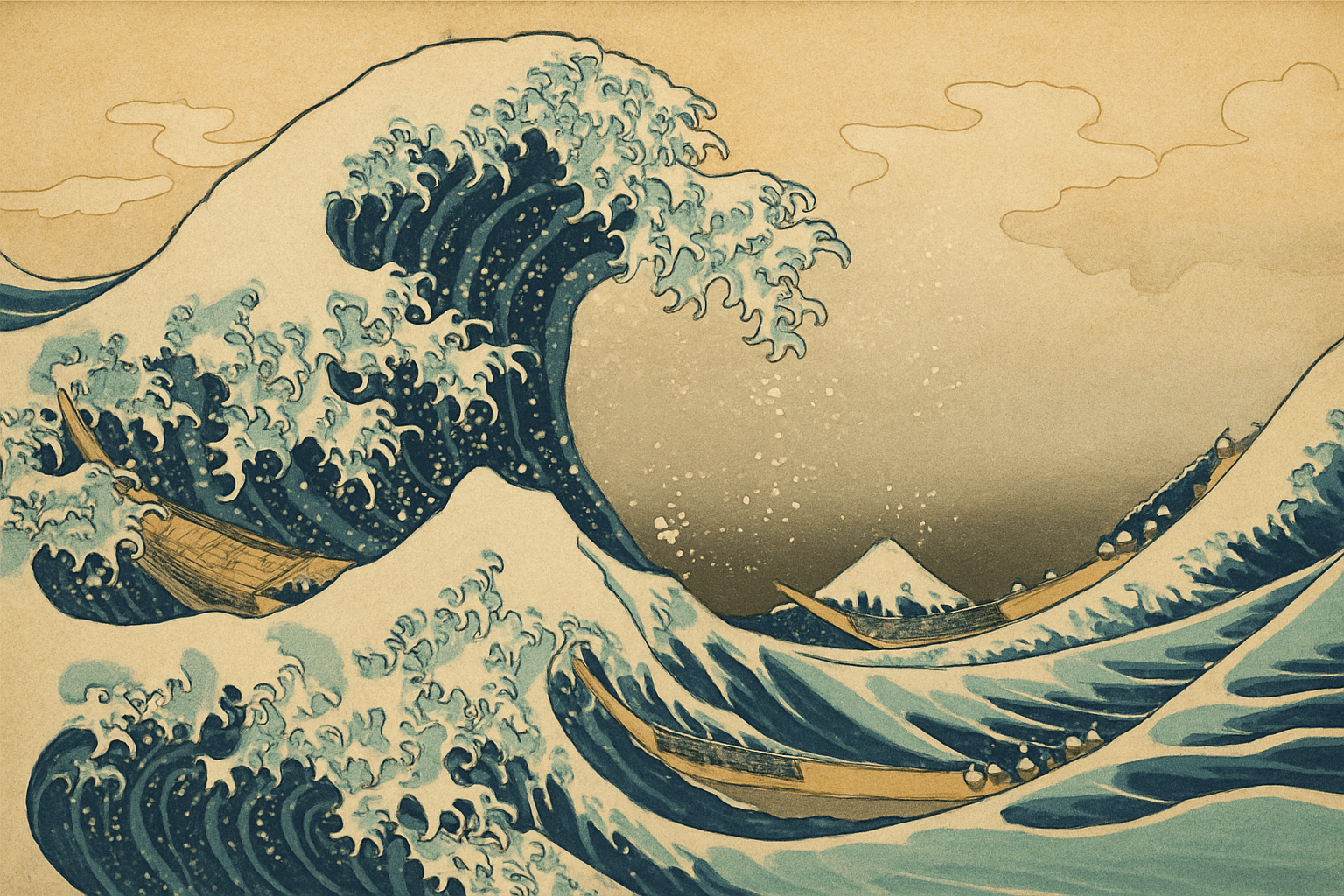
Use the more focused articles on genres such as bijinga when a particular subject is the goal. Their distinctions between formats, artists and periods are more informative than combining a wave, a cherry blossom and a figure into a generic national mood board.
Modern and experimental work expands the picture
The Guggenheim's account of Gutai describes a group active from 1954 to 1972 whose experiments involved materials, bodies, time, space and public encounters. MoMA's record of Kazuo Shiraga's Untitled (1964) offers one specific painting through which to investigate action and process. These examples complicate any claim that Japanese art is inherently quiet or restrained. [2][3]
They also show why a national overview should remain open-ended. Contemporary artists work through many media and international networks; they need not quote historical motifs to belong in the discussion. Research specific practices rather than measuring their authenticity against a decorative stereotype.
A better way to begin a creative project
Choose one format and one visual problem: a folding screen whose rhythm changes across panels, a short narrative sequence or a ceramic form with a deliberate surface pattern. Research relevant objects, then make an original response with a clear account of what you have borrowed and changed.
Do not combine sacred imagery or identifiable historical dress merely because it looks recognisable. If the project depends on that context, investigate it. Generated illustrations should be labelled as contemporary interpretations, and broad cultural claims should remain grounded in identified works rather than the appearance of a synthetic image.
A small poetic detour
Original words from the AOI studio.
Poetry
Under painted skies,
Cherry blossoms whisper tales—
Timeless drift of art.
The prompt workshop
Original creative exercises. These prompts create new illustrations, not documentary evidence.
Format shapes the image
Design an original six-panel folding-screen study of reeds and moving water. Let the rhythm respond to the folds and alternate dense colour with open ground. Present it as a contemporary interpretation, not a historical Japanese object.
A sequence of attention
Create an original horizontal narrative study of a person crossing a garden through three successive moments. Use overlap and changing intervals to guide the eye; avoid invented calligraphy and mixed historical costumes.
Material before motif
Design an original ceramic vessel with a surface pattern that changes as the form turns. Show its scale, opening and side profile in neutral light. Prioritise material and construction over generic national symbols.