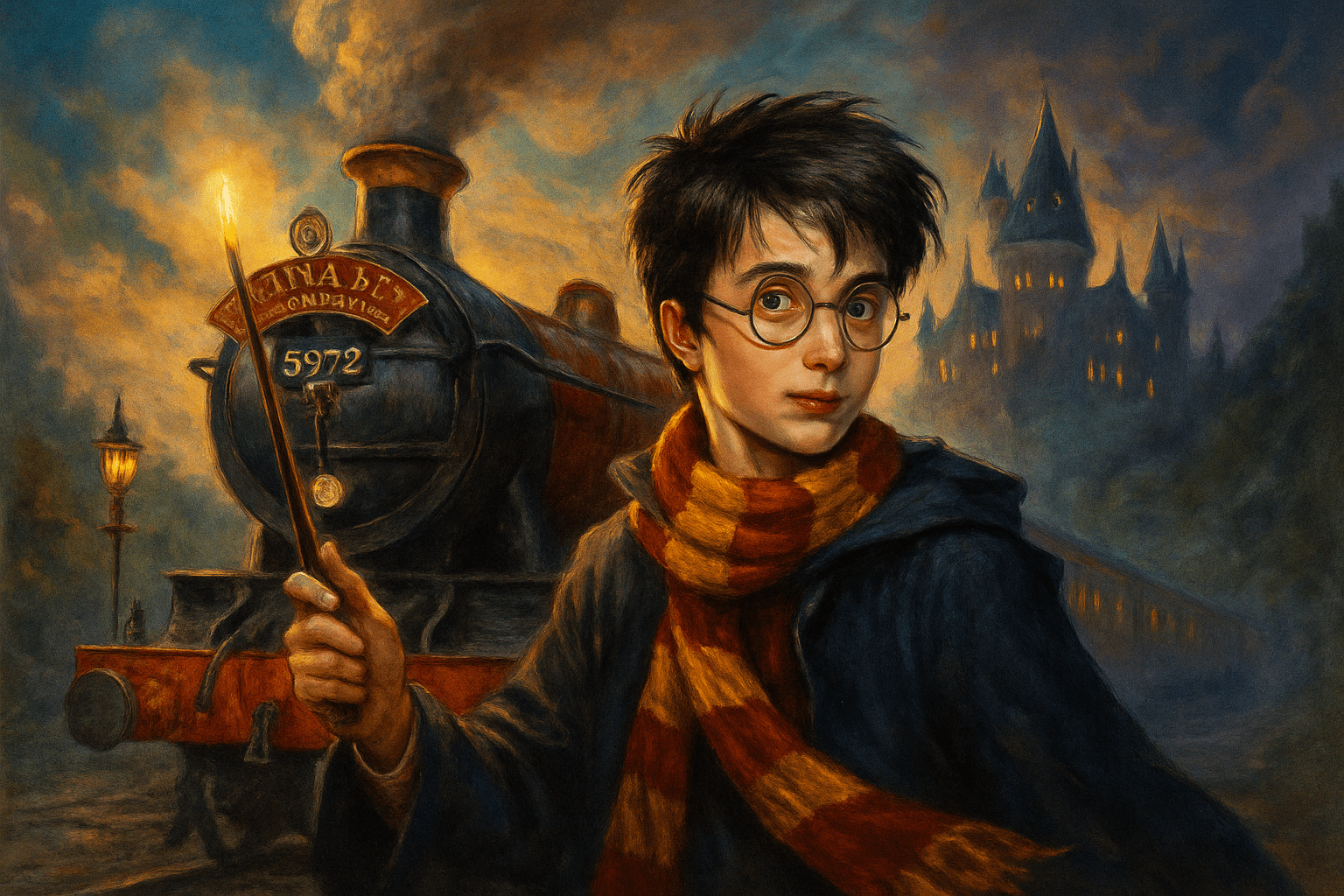
Science-fiction film design
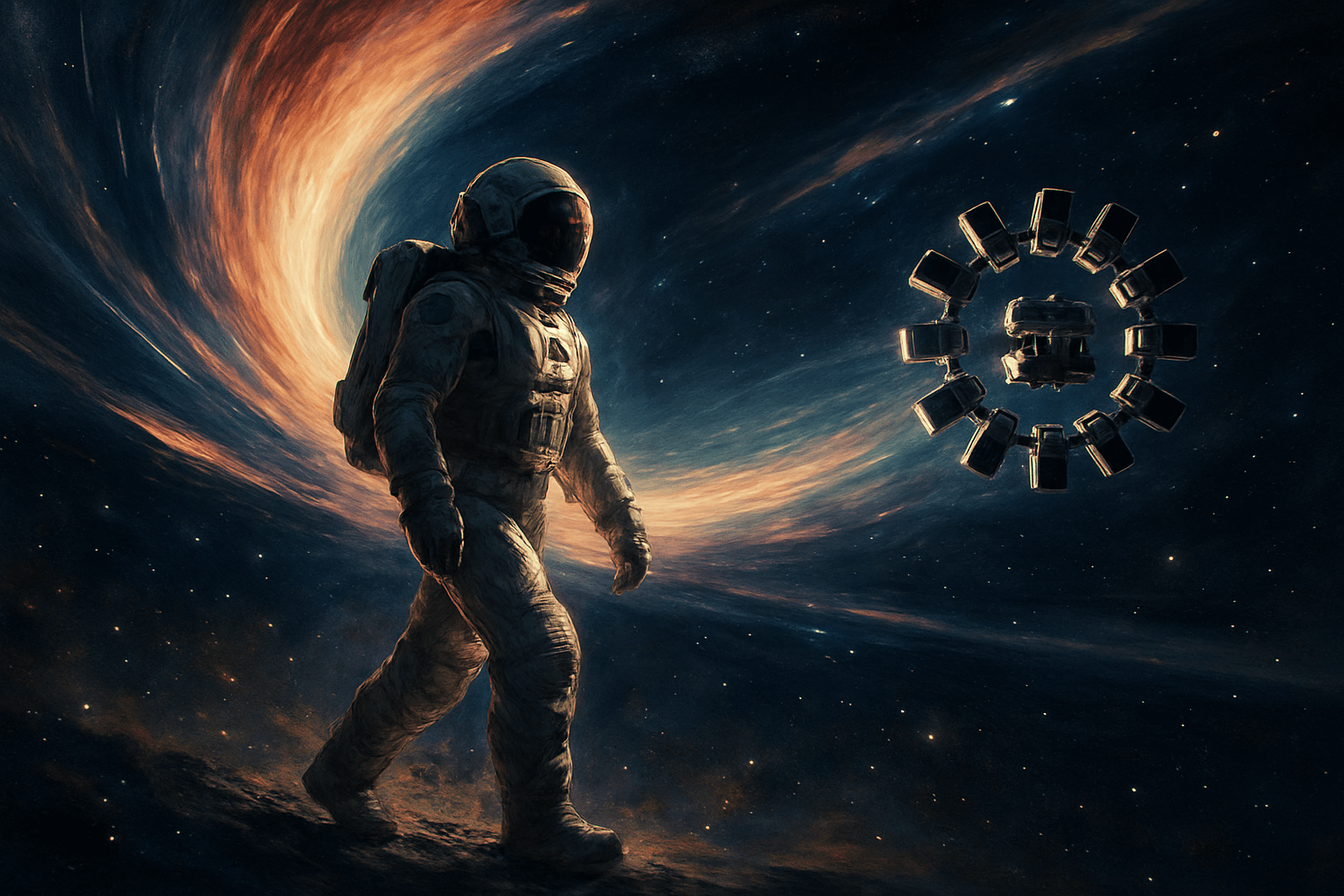
Interstellar provides a reference for contrasts of scale: intimate human spaces against vast, difficult-to-comprehend environments.
A closer look
Choose a scale relationship before designing a spectacular environment.
Understanding the subject
Interstellar is a science-fiction film with carefully developed visual effects and a story built around space travel and human relationships. Its imagery includes scientific visualization and imaginative narrative design, which should not be treated as interchangeable forms of evidence. A film-inspired picture can explore scale and light without becoming a scientifically validated model. Specific astronomical claims require their own sources and assumptions.
AOI looking and making workshop
Choose a scale relationship before designing a spectacular environment. A small craft beneath a huge arc or a single figure beside an immense horizon can make distance perceptible. Keep surfaces and lighting internally consistent, and use empty space to slow the composition. Resist adding stars uniformly to every dark area or mixing several incompatible light sources for drama. When generating an original image, identify it as speculative illustration. The emotional effect can come from the smallness of the human reference, not just the complexity of the cosmic background.
The prompt workshop
Original creative exercises. These prompts create new illustrations, not documentary evidence.
A small arrival
Create an original speculative space illustration of a tiny research lander on a pale plain beneath an immense curved celestial form. Use restrained light, generous empty space and a clear scale relationship.
Human scale in space
Design an original spacecraft observation room with one seated figure, worn practical surfaces and a vast luminous ring outside. Keep interior reflections subtle and distinguish the human space from the distant phenomenon.
A horizon study
Create a minimalist science-fiction image of two explorers approaching a flat dark horizon under diffuse white light. Emphasize isolation and measured spacing; do not present the scene as a real astronomical observation.
Your next inspiration
Discover another art style
Follow a visual thread to the next subject.