
AOI creative concept · Infragrey color and material system
Infragrey turns ordinary spaces into studies of weather, texture and distance. Warm concrete, cool mist and graphite reflections occupy different roles in an almost neutral palette. Its identity comes from measured transitions and material rhythm, rather than a simple removal of color.
An A⊕I –[-.+] creαt¡ve c⊕ncept, n⊕t αn estαbl¡she∂ h¡st⊕r¡cαl m⊕vement.
A visual introduction
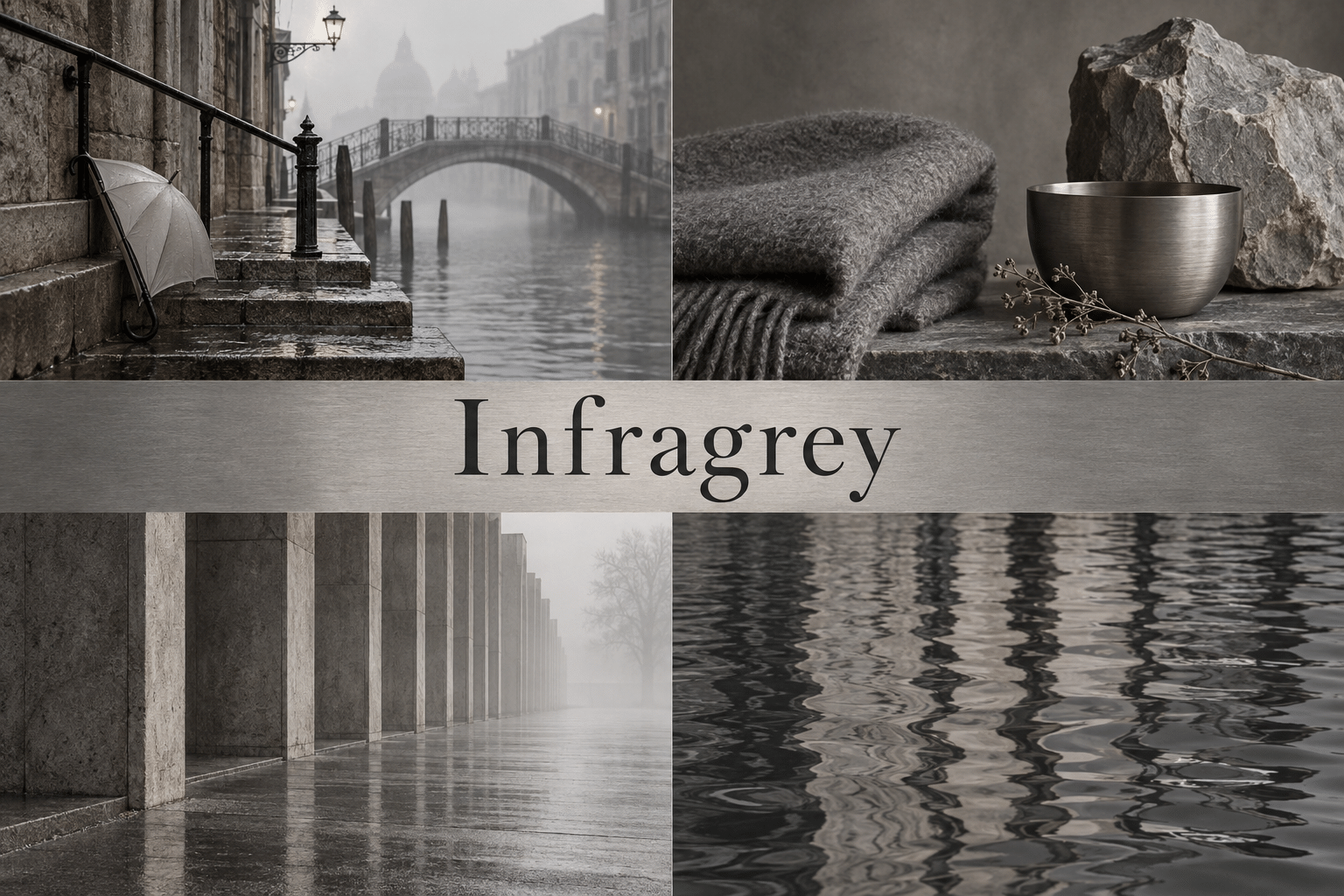
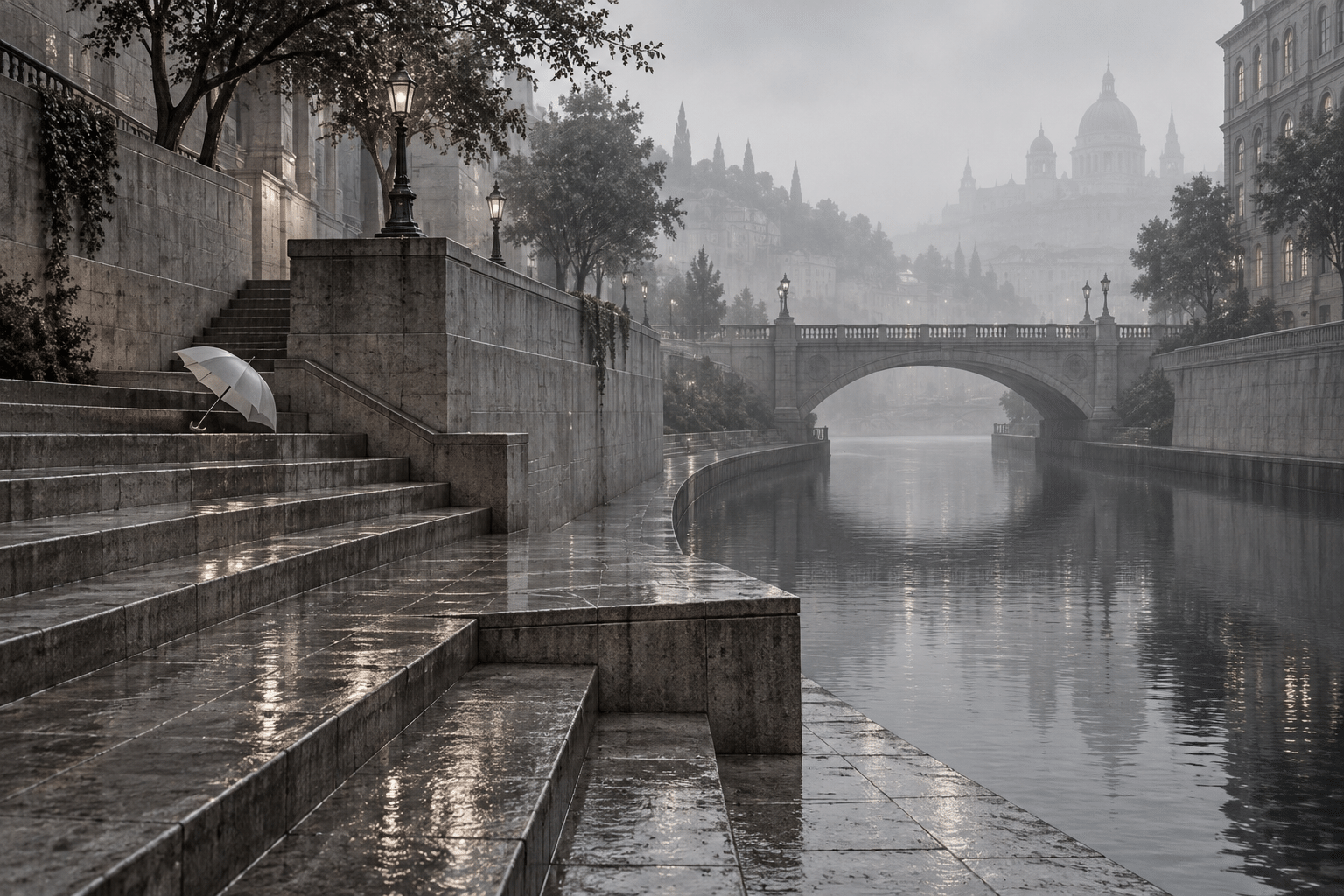
A dedicated example and a centrally titled collage explore the proposed style through different subjects. Both are AI-generated illustrations.
Select an image for a closer look. Use the arrow keys or gallery controls to compare the illustrations.
Creative toolbox · take this style further
Choose an input and a destination. Search sends your words to the chosen site; Copy & open puts them on your clipboard to paste there.
Create with AI
Turn your chosen input into an image prompt or a new creative direction.
ChatGPT
Copy your input and paste it into a ChatGPT conversation or image request.
Copy & open ChatGPT (new tab)Claude · Anthropic
Develop an image prompt or explore the style in a new Claude conversation.
Copy & open Claude · Anthropic (new tab)Midjourney
Paste your input into the Imagine bar on the Create page.
Copy & open Midjourney (new tab)Adobe Firefly
Copy your input, open Firefly, and paste it into the prompt field.
Copy & open Adobe Firefly (new tab)Leonardo.Ai
Copy your input, open Leonardo, and paste it into the generation field.
Copy & open Leonardo.Ai (new tab)Image search
Find visual references. Short, concrete keywords usually work best.
Lexica
Search AI images and prompts using your selected input.
Search with this input Lexica (new tab)Pexels
Search the photo and video library. Short keywords often work best.
Search with this input Pexels (new tab)Pixabay
Search photos, illustrations and other images.
Search with this input Pixabay (new tab)Unsplash
Search photographs using the style name or your own keywords.
Search with this input Unsplash (new tab)Wikimedia Commons
Search photographs, artworks and historical images. Check each file for its source and reuse terms.
Search with this input Wikimedia Commons (new tab)Art & research
Explore artists, collections and the ideas behind a style.
Wikipedia
Search for background reading. A style may not have its own article.
Search with this input Wikipedia (new tab)WikiArt
Copy your input into WikiArt’s search to explore artists and artworks.
Copy & open WikiArt (new tab)Europeana
Paste your keywords into the search to explore European museum, library and archive collections.
Copy & open Europeana (new tab)Inspiration
Discover portfolios and visual ideas from creative communities.
Instagram hashtags
Search a hashtag made from your input: spaces and punctuation are removed. Instagram may require sign-in.
Search with this input Instagram hashtags (new tab)ArtStation
Paste your input into artwork search for concept art, environments, characters and visual development.
Copy & open ArtStation (new tab)Behance
Paste your input into project search for illustration, design and visual storytelling.
Copy & open Behance (new tab)A closer look
Warm stone grays, cool atmospheric grays and graphite wet surfaces; restrained grain, layered distance and one carefully defined focal edge.
A proposed AOI visual language
Infragrey turns ordinary spaces into studies of weather, texture and distance. Warm concrete, cool mist and graphite reflections occupy different roles in an almost neutral palette. Its identity comes from measured transitions and material rhythm, rather than a simple removal of color.
Infragrey is developed here as an AOI creative framework, not a documented historical movement, a recognized sensor mode or a claim of exclusive ownership of the name. The prefix suggests looking beyond familiar surface color; it does not identify an invisible wavelength.
The material and light rules
Separate the grays by function. Let warm-gray masonry feel close and solid, cool-gray mist recede, and graphite water or wet pavement interrupt the middle values. Use reflected shapes with softer edges than the objects above them. Keep fine texture concentrated near the focal area instead of spreading grain uniformly.
Avoid one middle-gray veil over the entire image, arbitrary grunge and a strong colored accent that changes the subject of the composition. Not every grey image is Infragrey: the deliberate roles of distance, wetness and texture are the proposed distinguishing rules.
Build a first composition
Draw a canal bending beneath a distant bridge. Divide it into a near dark bank, a middle warm-gray stair and a far cool-gray opening. Place a pale umbrella where two value groups meet. Remove decorative texture until the distance is legible through overlap and edge softness alone.
A still life can compare wool, brushed metal and a rough stone in adjacent gray values. An industrial scene can repeat concrete bays while varying their visibility in mist. Allow an almost imperceptible warm-cool shift, but keep saturation low enough that material and atmosphere do the main work.
Real-world connection and honest image labels
False-color imaging can assign visible colors to selected data. NASA explains that display choices differ from ordinary human vision.
That principle is a conceptual starting point only. The compositions, material rules and exercises on this page are original artistic proposals. These AI-generated illustrations contain no measured spectral data and should not be presented as scientific observations. A real place can inspire a composition without the resulting image documenting that place.
Technique notes
Separate the grays by function. Let warm-gray masonry feel close and solid, cool-gray mist recede, and graphite water or wet pavement interrupt the middle values. Use reflected shapes with softer edges than the objects above them. Keep fine texture concentrated near the focal area instead of spreading grain uniformly.
Avoid one middle-gray veil over the entire image, arbitrary grunge and a strong colored accent that changes the subject of the composition. Not every grey image is Infragrey: the deliberate roles of distance, wetness and texture are the proposed distinguishing rules.
A small poetic detour
Original words from the AOI studio.
Poetry
The bridge dissolves, the stair remains,
A quiet map of passing rains.
Between the wool and weathered stone,
The gray discovers shades of home.
The prompt workshop
Original creative exercises. These prompts create new illustrations, not documentary evidence.
Begin with the signature scene
Original Infragrey creative illustration of a rain-washed canal stair and distant misty bridge with one pale umbrella. Warm stone grays, cool atmospheric grays and graphite wet surfaces; restrained grain, layered distance and one carefully defined focal edge. Separate the grays by function. Let warm-gray masonry feel close and solid, cool-gray mist recede, and graphite water or wet pavement interrupt the middle values. Use reflected shapes with softer edges than the objects above them. Keep fine texture concentrated near the focal area instead of spreading grain uniformly. One clear focal relationship, refined detail, purposeful quiet space. No text, logos or watermark. Imaginative color and material interpretation, not scientific imaging.
Study the materials
Original Infragrey creative illustration of wool, brushed metal and rough stone in adjacent gray values. Warm stone grays, cool atmospheric grays and graphite wet surfaces; restrained grain, layered distance and one carefully defined focal edge. Separate the grays by function. Let warm-gray masonry feel close and solid, cool-gray mist recede, and graphite water or wet pavement interrupt the middle values. Use reflected shapes with softer edges than the objects above them. Keep fine texture concentrated near the focal area instead of spreading grain uniformly. One clear focal relationship, refined detail, purposeful quiet space. No text, logos or watermark. Imaginative color and material interpretation, not scientific imaging.
Explore another scale
Original Infragrey creative illustration of repeating concrete bays fading into cool mist. Warm stone grays, cool atmospheric grays and graphite wet surfaces; restrained grain, layered distance and one carefully defined focal edge. Separate the grays by function. Let warm-gray masonry feel close and solid, cool-gray mist recede, and graphite water or wet pavement interrupt the middle values. Use reflected shapes with softer edges than the objects above them. Keep fine texture concentrated near the focal area instead of spreading grain uniformly. One clear focal relationship, refined detail, purposeful quiet space. No text, logos or watermark. Imaginative color and material interpretation, not scientific imaging.
Your next inspiration
Discover another art style
Follow a visual thread to the next subject.
A smile from the studio
Jokes
The forecast promised fifty shades. The composition only needed five.
The concrete says it is warm gray. The rain would like a second opinion.