
Textile traditions · Hmong paj ntaub and pattern construction
Explore Hmong textile patterns through named makers, paj ntaub, embroidery, appliqué and batik, with researched examples and AI interpretation guidance.
A visual introduction
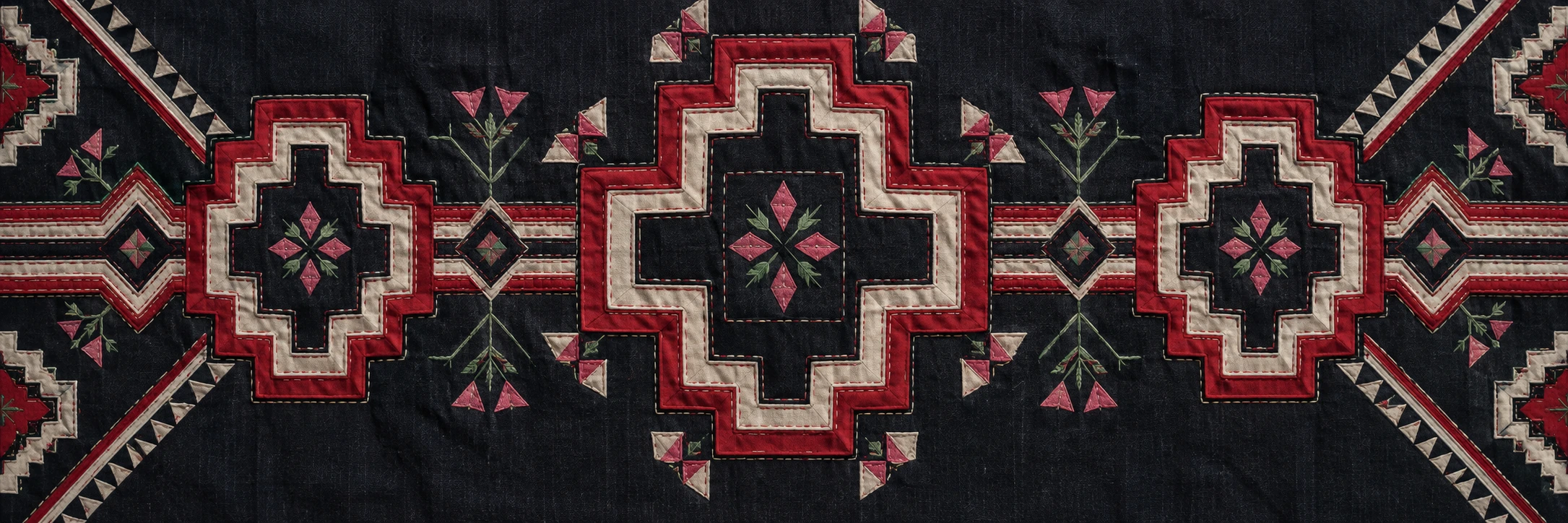
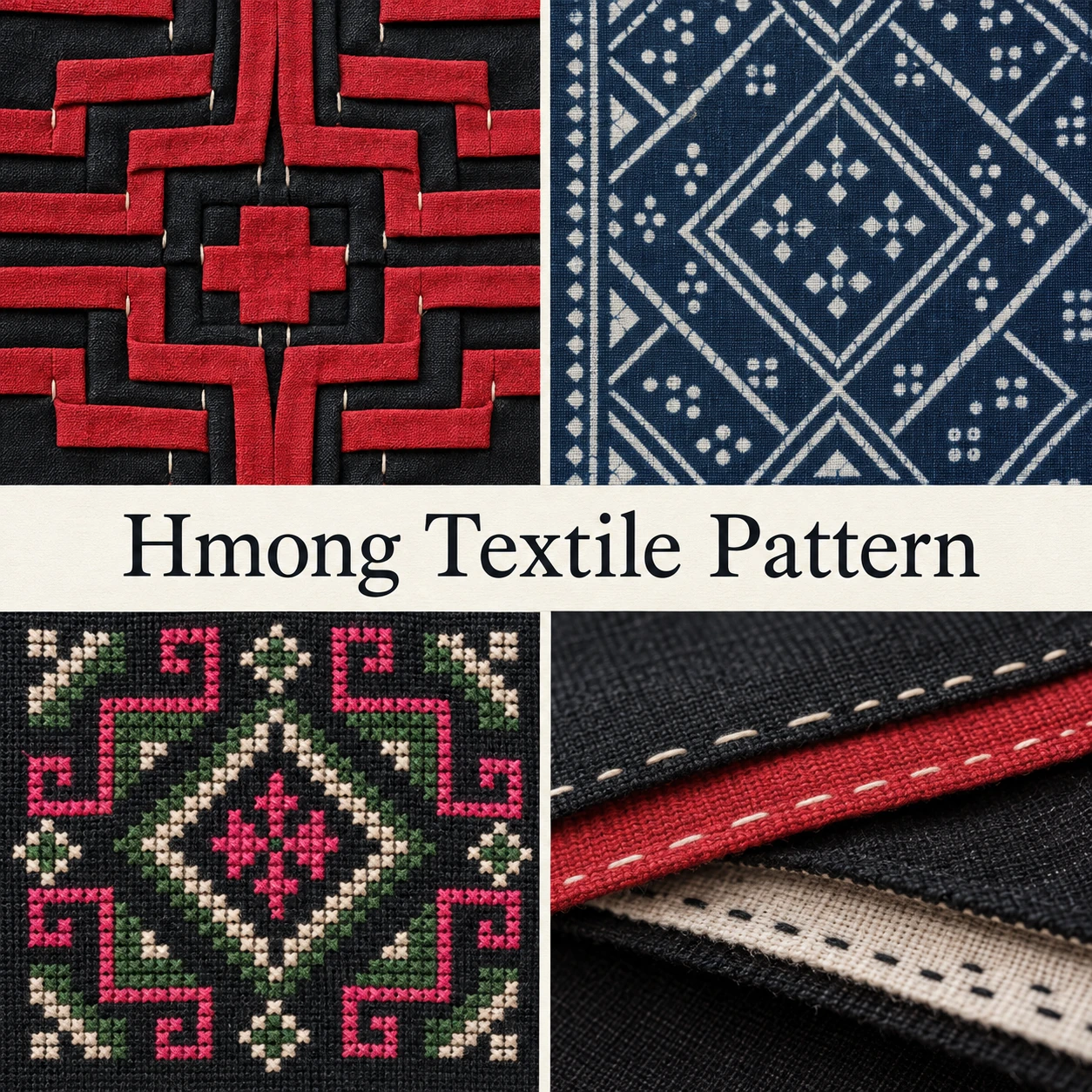
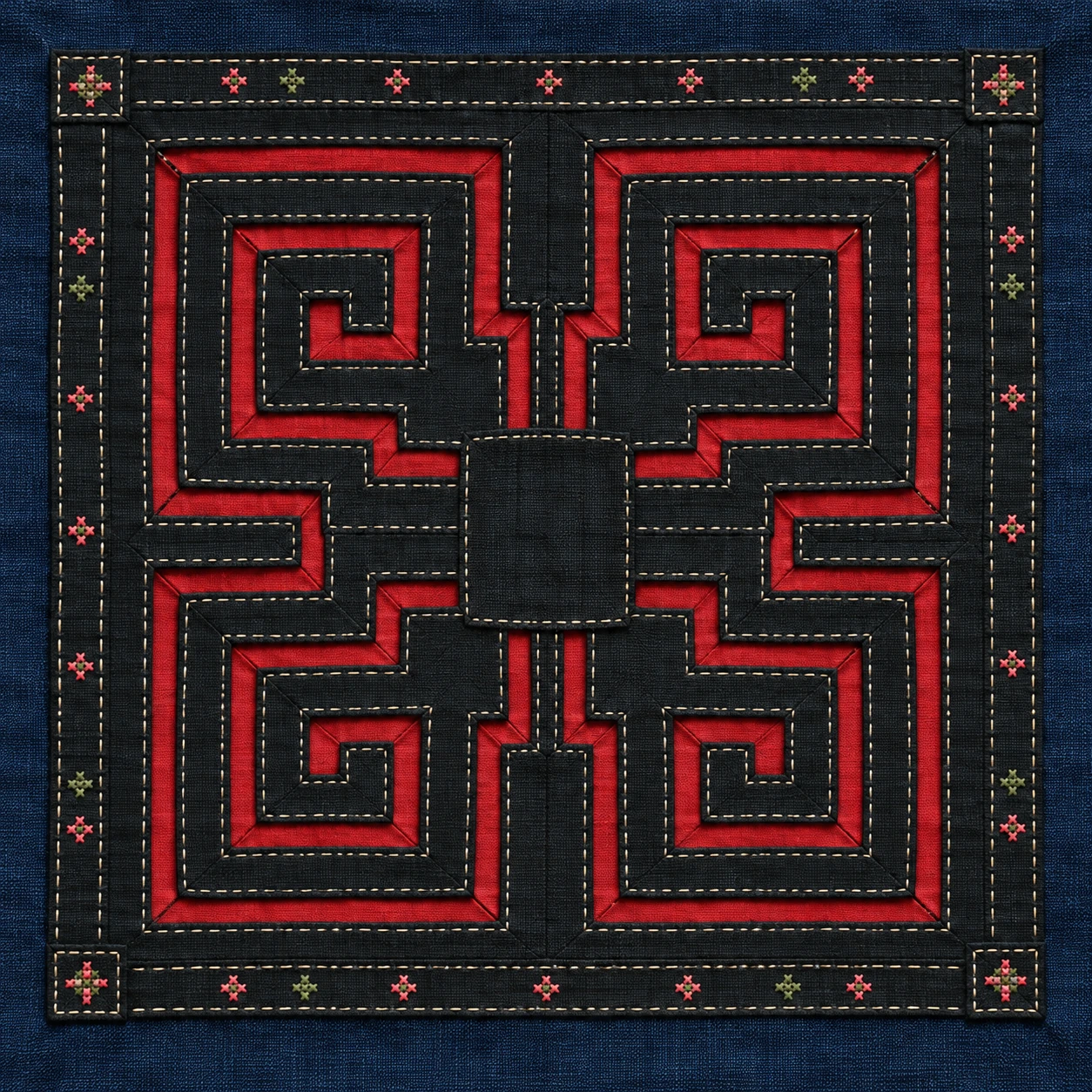
Three original AI-generated illustrations: a panoramic header, a collage with the style name at its center, and a standalone example. Captions distinguish these studies from historical objects and technical documentation.
Select an image for a closer look. Use the thumbnails, arrow keys or a swipe to compare examples. Zoom in to inspect details, or share the image that inspires you.
Creative toolbox · take this style further
Choose an input and a destination. Search sends your words to the chosen site; Copy & open puts them on your clipboard to paste there.
Create with AI
Turn your chosen input into an image prompt or a new creative direction.
ChatGPT
Copy your input and paste it into a ChatGPT conversation or image request.
Copy & open ChatGPT (new tab)Claude · Anthropic
Develop an image prompt or explore the style in a new Claude conversation.
Copy & open Claude · Anthropic (new tab)Midjourney
Paste your input into the Imagine bar on the Create page.
Copy & open Midjourney (new tab)Adobe Firefly
Copy your input, open Firefly, and paste it into the prompt field.
Copy & open Adobe Firefly (new tab)Leonardo.Ai
Copy your input, open Leonardo, and paste it into the generation field.
Copy & open Leonardo.Ai (new tab)Image search
Find visual references. Short, concrete keywords usually work best.
Lexica
Search AI images and prompts using your selected input.
Search with this input Lexica (new tab)Pexels
Search the photo and video library. Short keywords often work best.
Search with this input Pexels (new tab)Pixabay
Search photos, illustrations and other images.
Search with this input Pixabay (new tab)Unsplash
Search photographs using the style name or your own keywords.
Search with this input Unsplash (new tab)Wikimedia Commons
Search photographs, artworks and historical images. Check each file for its source and reuse terms.
Search with this input Wikimedia Commons (new tab)Art & research
Explore artists, collections and the ideas behind a style.
Wikipedia
Search for background reading. A style may not have its own article.
Search with this input Wikipedia (new tab)WikiArt
Copy your input into WikiArt’s search to explore artists and artworks.
Copy & open WikiArt (new tab)Europeana
Paste your keywords into the search to explore European museum, library and archive collections.
Copy & open Europeana (new tab)Inspiration
Discover portfolios and visual ideas from creative communities.
Instagram hashtags
Search a hashtag made from your input: spaces and punctuation are removed. Instagram may require sign-in.
Search with this input Instagram hashtags (new tab)ArtStation
Paste your input into artwork search for concept art, environments, characters and visual development.
Copy & open ArtStation (new tab)Behance
Paste your input into project search for illustration, design and visual storytelling.
Copy & open Behance (new tab)A closer look
Read the method as well as the motif: thread, applied cloth, cut-and-folded layers and wax-resist marks behave differently. A pattern’s meaning belongs with its maker and context, not a universal decorative code.
A family of practices, not one universal pattern
Hmong Textile Pattern is a broad database heading for studying visual organization in Hmong textiles. It does not name one pattern used by every Hmong community or one technique that explains every object. Paj ntaub is often rendered in English as flower cloth; the term opens a field of textile work rather than a requirement that every design depict flowers. The Hmong Embroidery virtual museum provides a useful starting point through the collections of the Hmong Cultural Center and Hmong Archives in Saint Paul. [1]
This guide keeps named makers and specific records in view. It also separates Hmong material from the Dong embroidery discussed elsewhere in our database. Similar-looking geometry, a dark ground or a shared textile technique does not make distinct communities interchangeable.
The strongest first question is physical: how was this surface made? A red shape might be thread, an applied piece of cloth or a lower fabric exposed by a cut upper layer. In a small photograph those possibilities can collapse into the same colored patch. Look again before naming the technique.
Embroidery, appliqué, reverse appliqué and batik
Embroidery places stitches on a support. Appliqué attaches pieces of fabric to it. Reverse appliqué reveals lower material through openings in an upper layer, with the cut edges secured. Batik uses a resist process rather than a field of raised stitches. These methods can be combined; the name of one does not exclude the others.
The virtual museum’s batik collection describes Shoua Vang’s B5 using hot wax, a copper-tipped tracer and indigo dyeing, with additional blue appliqué. Its B1 record identifies work by Chong Vang in which red appliqué is visually prominent over batik. The point is not to turn two records into a universal recipe. It is to notice that a single object can have several layers of making. [2]
For close observation, compare surface height and edge behavior. A dyed line belongs within the cloth’s visual field; a folded fabric edge can cast a small shadow; a stitch can catch light along its length. An illustration that makes all three equally raised has made them easier to see by making them less accurate.
Named makers and careful attribution
The reverse-appliqué collection records R1 under Mai Thao, showing black overlay cloth against a red foundation with additional stitched details. R2 is attributed to Mai Cha and combines cut-and-folded work with satin-stitch embellishment. These names matter. “Traditional pattern” should not become a way of removing the person from the description. [3]
The same source provides a useful restraint on overinterpretation: for Lee Moua’s R10, it identifies certain T shapes as decoration without assigned meaning. Not every mark is a secret message. Where a record names a motif, report that identification in context; where it leaves uncertainty, do not fill the gap with a confident symbolic story. [3]
Dates also need their field labels. A year in a collection record can refer to manufacture, purchase or acquisition. This guide avoids converting ambiguous dates into exact creation years. A named maker and a careful description are more valuable than a tidy timeline built from assumptions.
Pattern can also tell a story
The textile field extends beyond geometric repetition. The virtual museum’s story collection includes embroidered narratives and an embroidered storybook credited to Ziag Yaj, catalogued with Laos and 2012. Its account distinguishes surface stitching for the pictures from double running stitches used for English text. A textile can function as a sequence of pages as well as a bounded decorative panel. [4]
This distinction changes how we look. A repeating field invites comparison among similar units; a narrative asks us to follow events, figures and relations. Do not infer a particular family’s history from a generic village scene. Read the supplied account, preserve its attribution and identify what is interpretation.
For a new AI illustration, invent your own clearly labeled subject rather than generating a supposed historical testimony. A pleasing scene of fields and houses cannot stand in for the experience or knowledge of a named maker. The visual system and the story being told both deserve attention.
How to read the geometry
Look first at the largest divisions: center, border, quadrants and channels. Then trace the repeated units and the spaces between them. Symmetry can be built through folding or repeated arrangement, but small variations can remain important to the surface. Perfect digital regularity is not the only measure of accomplished work.
Color often clarifies construction. A bright lower layer can make a dark cut edge readable; pale running stitches can follow a channel; a narrow accent can prevent a border from becoming visually heavy. Study where contrast is concentrated. If every part is equally intense, the eye has nowhere to settle.
A motif’s outline and the method used to construct it are related but separable. The same stepped shape could be stitched, applied, cut or printed. That is precisely why a generic “intricate ethnic pattern” prompt is too vague for useful study. It leaves the most interesting decisions to chance.
Reading our three contemporary studies
Our banner explores a dark textile field with stepped red-and-ivory forms and small accent stitches. The titled collage separates layered fabric, wax-resist-like marks, cross-stitch-like geometry and a close view of edges. It compares appearances without presenting its four panels as a standard inventory of Hmong designs.
The standalone square uses mirrored angular channels around a quiet center, with visible pale stitches along the fabric edges. These are original AI-generated interpretations informed by documented techniques, not Hmong-made textiles, authenticated motifs or museum reproductions. Some generated layers resemble applied strips more than technically exact reverse appliqué. The guide retains that distinction rather than treating visual plausibility as proof of construction.
Usability in AI art generation
AI can help explore border proportions, color relationships and the visual contrast between cloth layers and thread. Specify the intended technique and describe an original arrangement. For a wax-resist study, ask for marks within dyed cloth; for a layered study, ask for folded edges and restrained stitch detail. Separate these briefs before deliberately combining them.
Check for beads masquerading as stitches, impossible fabric interweaving, inconsistent repeats and surface textures that contradict the requested method. A generated pattern is not automatically seamless, stitchable or suitable for cutting. Production work needs a separate drawing, repeat test and material sample.
Keep attribution honest. Use “Hmong-textile-inspired AI study” for an interpretation and link to the records that informed it. For instruction in the actual practice or a culturally grounded commission, seek the knowledge and work of Hmong makers. The image can help formulate a question; it cannot manufacture the answer’s authority.
An exercise: keep method and motif separate
Choose a simple original stepped shape. Explore it as stitched line, as an applied fabric shape and as a resist-like mark. Keep the palette and overall scale comparable. Which changes are necessary for each material treatment to remain intelligible?
Then compare those experiments with one attributed object in the sources. Write down what you learned about construction and what you still cannot identify. A pattern becomes more interesting when looking closely produces a better description—not merely a louder adjective.
A small poetic detour
Original words from the AOI studio.
Poetry
Follow the edge.
A fold becomes a line.
Someone’s patience
made the turn.
The prompt workshop
Original creative exercises. These prompts create new illustrations, not documentary evidence.
Study a layered surface
Original contemporary Hmong-textile-inspired AI study, black cotton upper cloth with folded-edge channels exposing red beneath, pale small securing stitches, simple stepped geometry and quiet central space, no authenticity or symbolic claim, no words.
Original AOI creative exercise; inspect the result against the guide rather than assuming the model followed every instruction.
Separate resist from stitch
Contemporary textile illustration informed by documented Hmong batik, fine white geometric resist-like marks within indigo cloth, visible woven support, matte surface, no raised beads or embroidery, original composition, not an attributed traditional pattern.
Original AOI creative exercise; inspect the result against the guide rather than assuming the model followed every instruction.
A small border experiment
Original counted-stitch-like border study on dark cotton, restrained pink green and cream angular accents, consistent thread scale, clear corners and generous unworked center, contemporary AI interpretation, not a sewing chart, no lettering.
Original AOI creative exercise; inspect the result against the guide rather than assuming the model followed every instruction.
Your next inspiration
Discover another art style
Follow a visual thread to the next subject.
People & works to explore
References discussed in this article. Consult the sources below for context.
Artists and practitioners
Mai Thao and Mai Cha — attributed textile makers in the reverse-appliqué collection [3]
Chong Vang and Shoua Vang — attributed makers in the batik collection [2]
Ziag Yaj — embroidered storybook credited in the narrative collection [4]
Paintings and other works
R1 and R2 — layered and stitched works recorded under Mai Thao and Mai Cha [3]
B5 — batik and appliqué recorded under Shoua Vang [2]
ES6 — embroidered storybook recorded under Ziag Yaj [4]