
Historical visual system
Heraldry is a system for designing, describing and identifying armorial bearings. Its visual strength comes from clear divisions, recognizable charges and disciplined relationships between colors and metals.
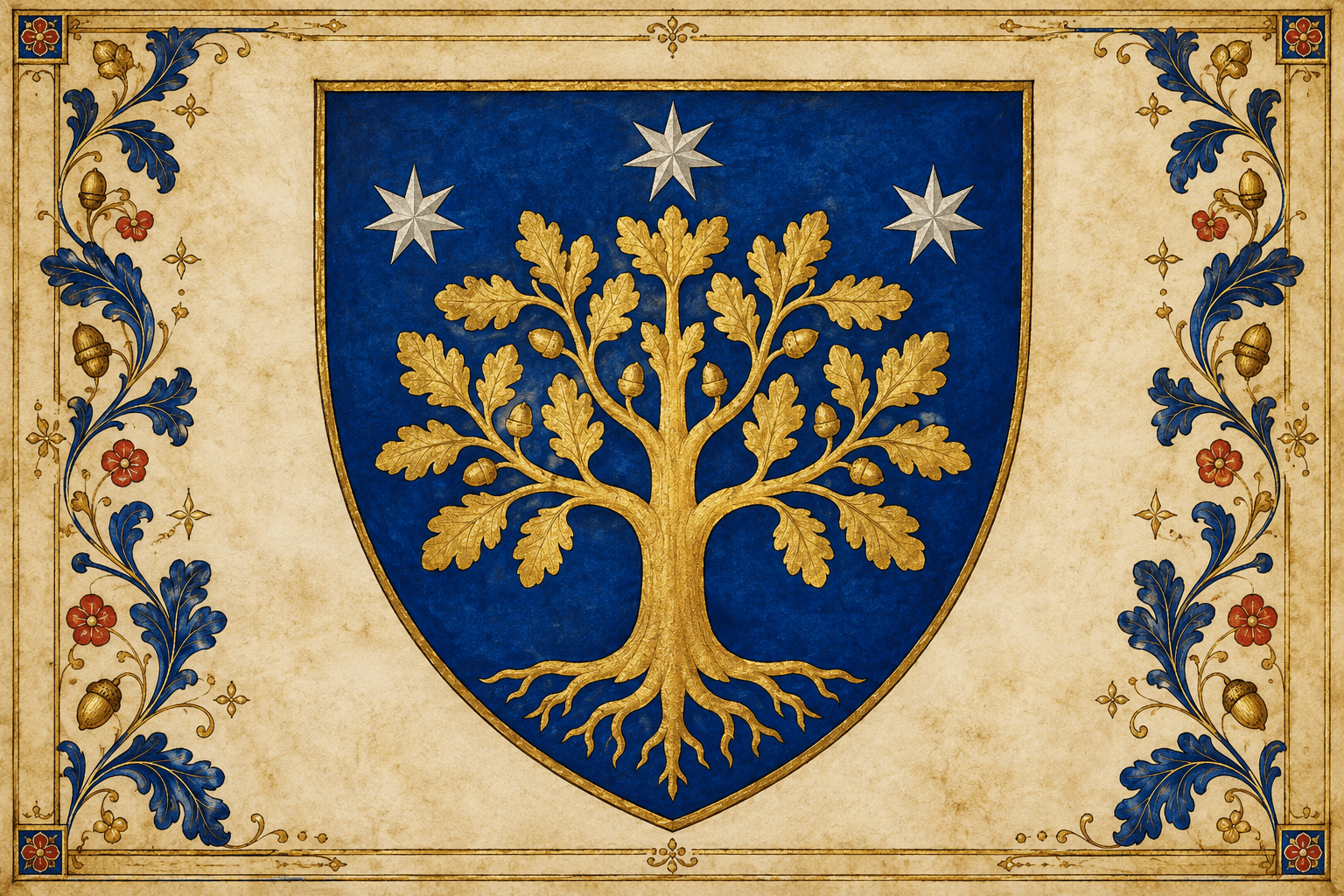
A visual introduction
Select an image for a closer look. Use the thumbnails, arrow keys or a swipe to compare examples. Zoom in to inspect details, or share the image that inspires you.
Creative toolbox · take this style further
Choose an input and a destination. Search sends your words to the chosen site; Copy & open puts them on your clipboard to paste there.
Create with AI
Turn your chosen input into an image prompt or a new creative direction.
ChatGPT
Copy your input and paste it into a ChatGPT conversation or image request.
Copy & open ChatGPT (new tab)Claude · Anthropic
Develop an image prompt or explore the style in a new Claude conversation.
Copy & open Claude · Anthropic (new tab)Midjourney
Paste your input into the Imagine bar on the Create page.
Copy & open Midjourney (new tab)Adobe Firefly
Copy your input, open Firefly, and paste it into the prompt field.
Copy & open Adobe Firefly (new tab)Leonardo.Ai
Copy your input, open Leonardo, and paste it into the generation field.
Copy & open Leonardo.Ai (new tab)Image search
Find visual references. Short, concrete keywords usually work best.
Lexica
Search AI images and prompts using your selected input.
Search with this input Lexica (new tab)Pexels
Search the photo and video library. Short keywords often work best.
Search with this input Pexels (new tab)Pixabay
Search photos, illustrations and other images.
Search with this input Pixabay (new tab)Unsplash
Search photographs using the style name or your own keywords.
Search with this input Unsplash (new tab)Wikimedia Commons
Search photographs, artworks and historical images. Check each file for its source and reuse terms.
Search with this input Wikimedia Commons (new tab)Art & research
Explore artists, collections and the ideas behind a style.
Wikipedia
Search for background reading. A style may not have its own article.
Search with this input Wikipedia (new tab)WikiArt
Copy your input into WikiArt’s search to explore artists and artworks.
Copy & open WikiArt (new tab)Europeana
Paste your keywords into the search to explore European museum, library and archive collections.
Copy & open Europeana (new tab)Inspiration
Discover portfolios and visual ideas from creative communities.
Instagram hashtags
Search a hashtag made from your input: spaces and punctuation are removed. Instagram may require sign-in.
Search with this input Instagram hashtags (new tab)ArtStation
Paste your input into artwork search for concept art, environments, characters and visual development.
Copy & open ArtStation (new tab)Behance
Paste your input into project search for illustration, design and visual storytelling.
Copy & open Behance (new tab)A closer look
Bold shield fields, strong contrasting tinctures, simplified charges and structured arrangements remain readable across changes of scale and artistic execution.
A system, not just a decorative shield
Heraldry combines visual design with conventions of description and identification. A coat of arms is not simply any ornate emblem, and a crest is not another name for the entire achievement. The College of Arms distinguishes the crest, which appears above the helmet, from the arms themselves. A shield can be shown without a helmet or crest.
Different heraldic traditions have their own practices and authorities. This introductory art guide focuses on widely used design vocabulary rather than pretending that one rulebook governs every place and period. Its new illustrations are fictional studies, not granted arms, authenticated family emblems or representations of a public authority.
Read the field and its charges
The field is the background of the shield. A charge is a figure or shape placed on it, such as an animal, plant, wheel or star. Broad geometric forms commonly called ordinaries, including bands and crosses, can organize the design with great economy. Divisions of the field introduce another layer of structure.
Begin with the largest relationship: one broad band across a contrasting field, or one principal charge with generous space around it. Small details should support recognition rather than compete with the main form. The shield’s taper changes the available area, so a composition that works in a square may need substantial adjustment.
Tincture is a relationship
Heraldic tinctures include colors and metals, with gold and silver often represented by yellow and white. Strong contrast is a central practical concern. The Society for Creative Anachronism’s introductory resource explains the familiar color-and-metal distinction within its own armorial practice; its rules should not be presented as universal law.
The College of Arms notes that heraldic colors do not require one fixed commercial color specification. That flexibility allows an armorial design to be painted, embroidered, engraved or rendered digitally while retaining its identity. The important artistic question is whether the intended tincture and its contrast remain recognizable in the chosen material.
Blazon and artistic interpretation
A blazon is a formal verbal description of arms. It identifies essential design relationships rather than prescribing every brushstroke. An artist may vary the curve of a shield, the treatment of fur or foliage and the handling of texture while preserving the described arrangement.
For an original design exercise, first write a plain-language description of the field, main charge and placement. Then draw the design at a very small size. If it becomes unreadable, simplify the silhouette or reduce competing elements. Formal blazon requires specialist vocabulary; avoid presenting an improvised sentence as an authoritative grant or registration.
Meaning depends on evidence
A tree may suggest growth to a contemporary viewer, but there is no reliable universal dictionary in which every heraldic figure has one compulsory meaning. The history of a particular design can depend on documented choices, names, local associations or later interpretation. Explain a new emblem’s intended meaning as your own design rationale.
The College of Arms also cautions against the idea that everyone sharing a surname automatically shares the same arms. For research into an actual family or institution, consult the relevant documented record. An attractive online shield and a matching surname are not sufficient evidence of entitlement or provenance.
Make an original visual study
Choose one field, one main charge and at most a few secondary elements. Use clear silhouettes and deliberate margins. Try the design in flat color before adding parchment, metallic effects or sculptural depth. Surface richness should enhance an already readable design, not conceal an uncertain arrangement.
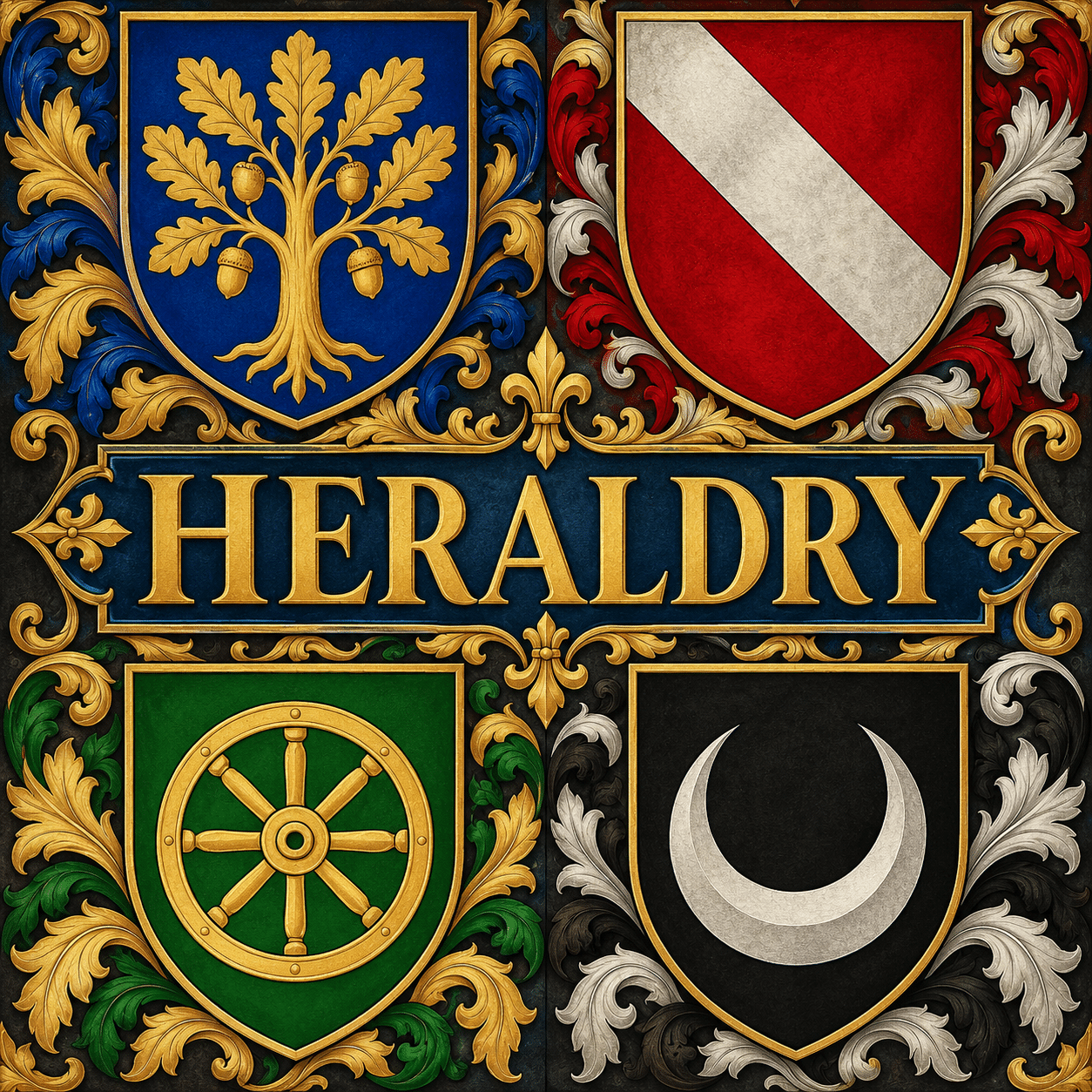
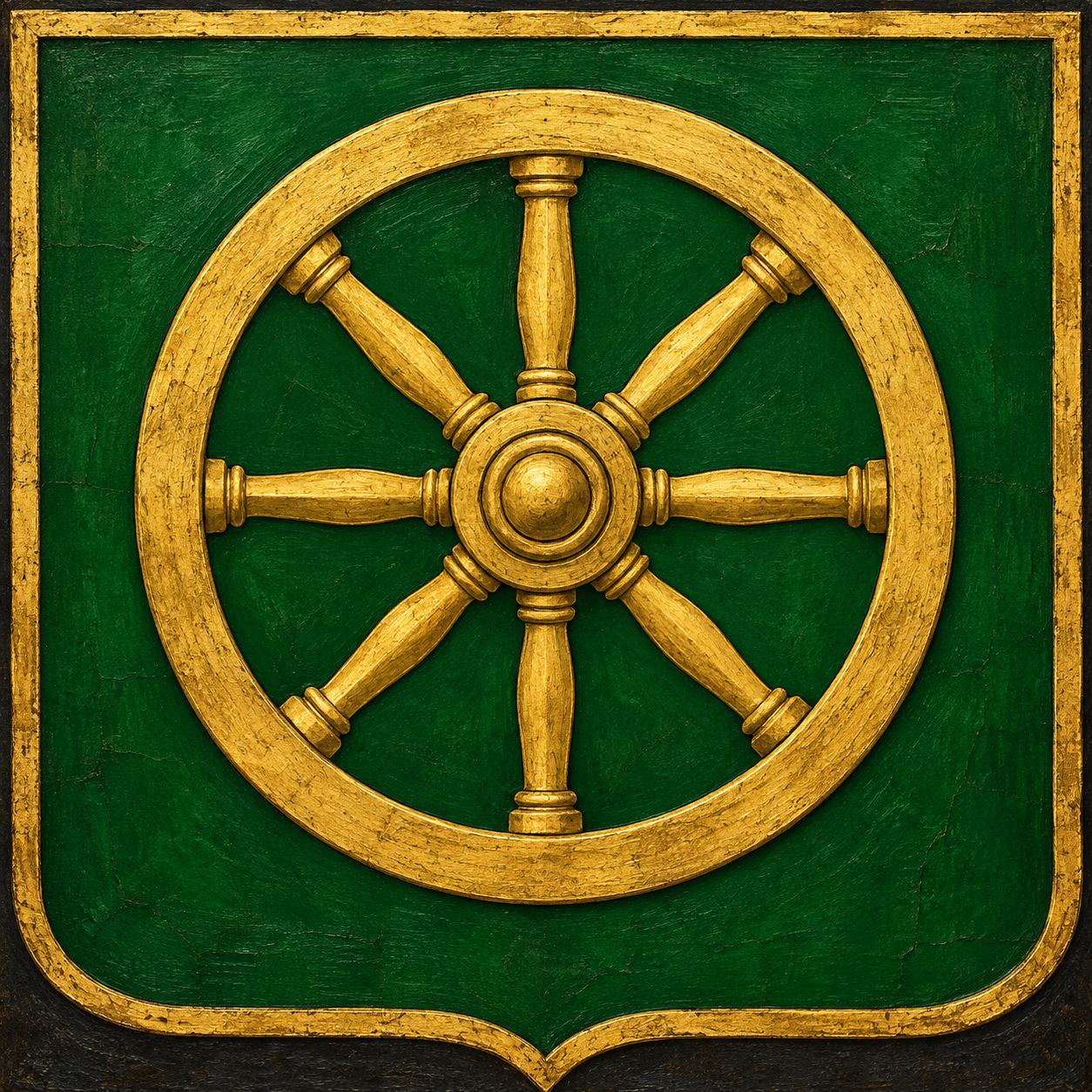
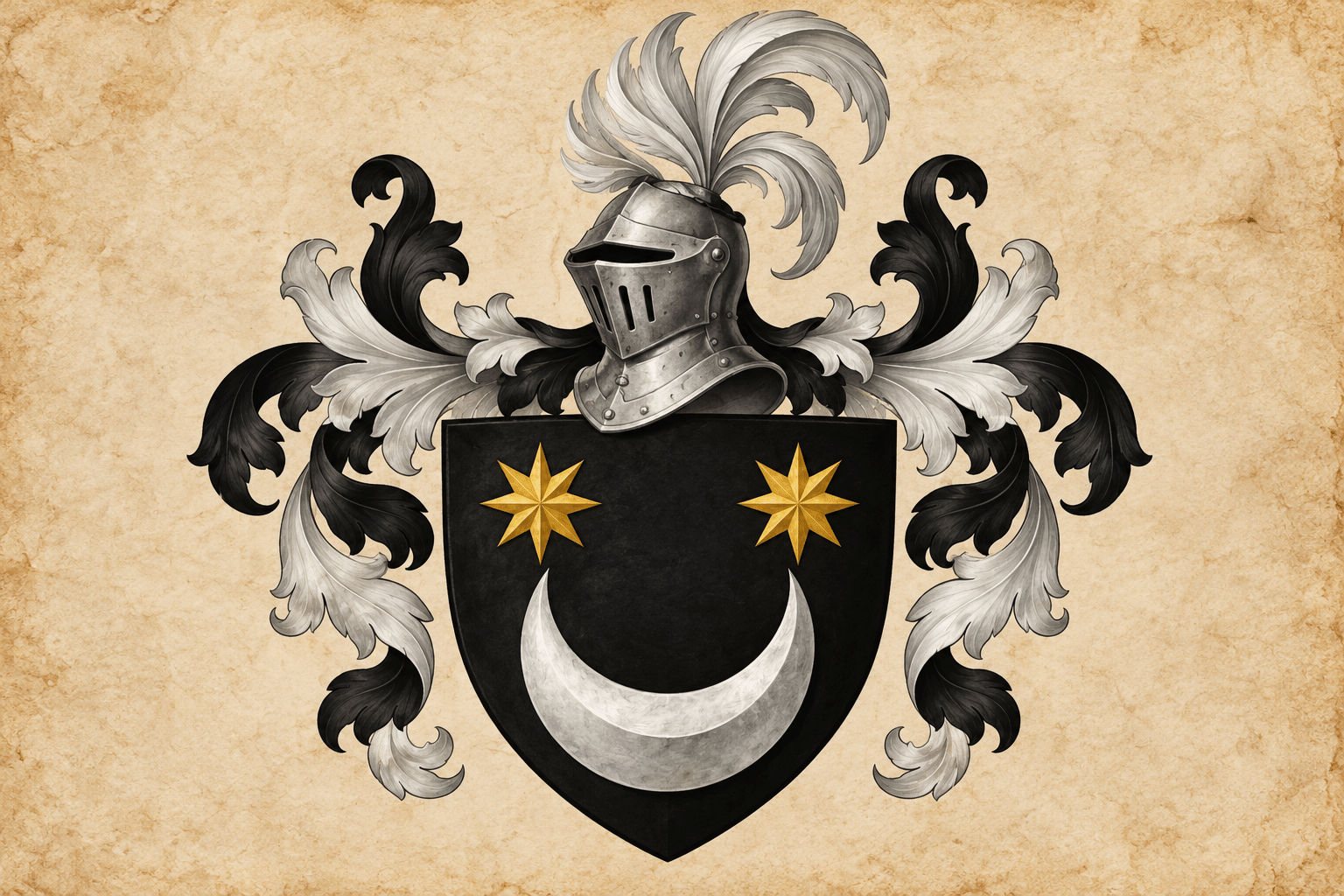
The gallery varies shields, charges and presentation to demonstrate these principles. It includes a fictional oak, geometric bands, a wheel and a crescent, with one study separating shield, helmet and crest. These AI-generated interpretations are artistic examples. They make no claim to official status, historical ownership or a right to use an existing institution’s arms.
Where the approach is useful
Heraldic thinking can inform fictional world-building, book illustration, ceremonial graphics and emblem design. Its useful lesson is economy: a small set of strongly related shapes can carry identity across different materials. A logo may borrow this clarity without becoming a coat of arms.
When designing for a real organization, distinguish inspiration from representation. A crown, official-looking seal or copied national charge can imply an association that the project does not have. Original symbols and an explicit fictional context are especially useful for exploratory work, allowing the design to be judged on its own visual structure.
A small poetic detour
Original words from the AOI studio.
Poetry
The Small Shield
A field of blue, a branch of gold,
a shape the distant eye can hold.
No crowded tale in letters small—
one tree stands clear enough for all.
The painter changes leaf and line;
the ordered colors keep the sign.
The prompt workshop
Original creative exercises. These prompts create new illustrations, not documentary evidence.
One clear charge
Create an original fictional blue shield bearing a large gold branching oak and three small silver stars, simple readable shapes and a cream ground. No crown, motto, official seal or copied arms.
A geometric shield
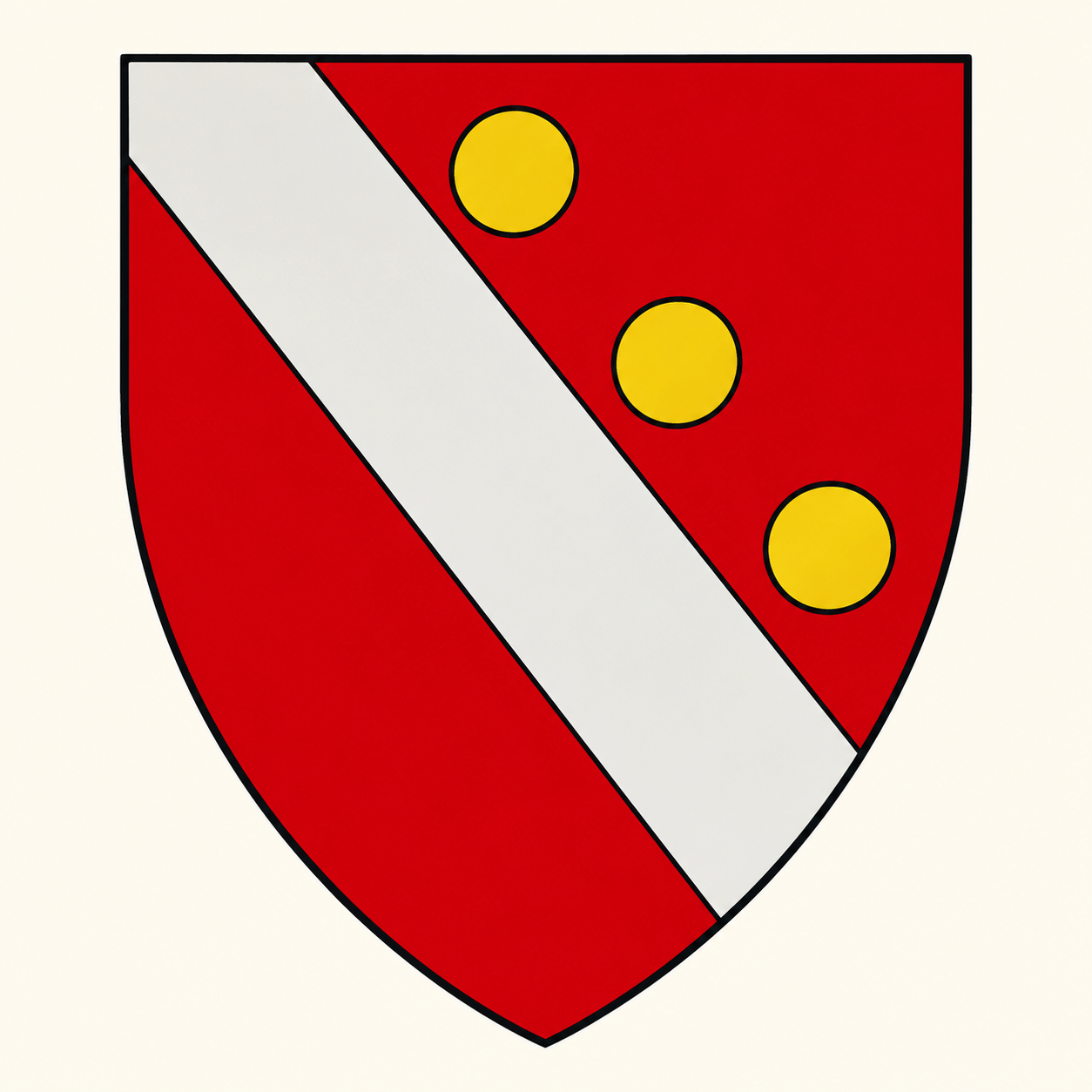
Create an invented red shield with a broad silver diagonal band, restrained secondary gold circles and crisp flat color. A fictional heraldic design study, no claims of grant or ancestry.
Shield and crest distinguished
Create a fictional black shield with silver crescent and two gold stars, a plain steel helmet above it and a separate abstract silver feather crest. Clear visual hierarchy, no royal crown or text.
A smile from the studio
Jokes
The shield brought its whole family history. The designer asked it to start with one charge.