
Historical family of styles
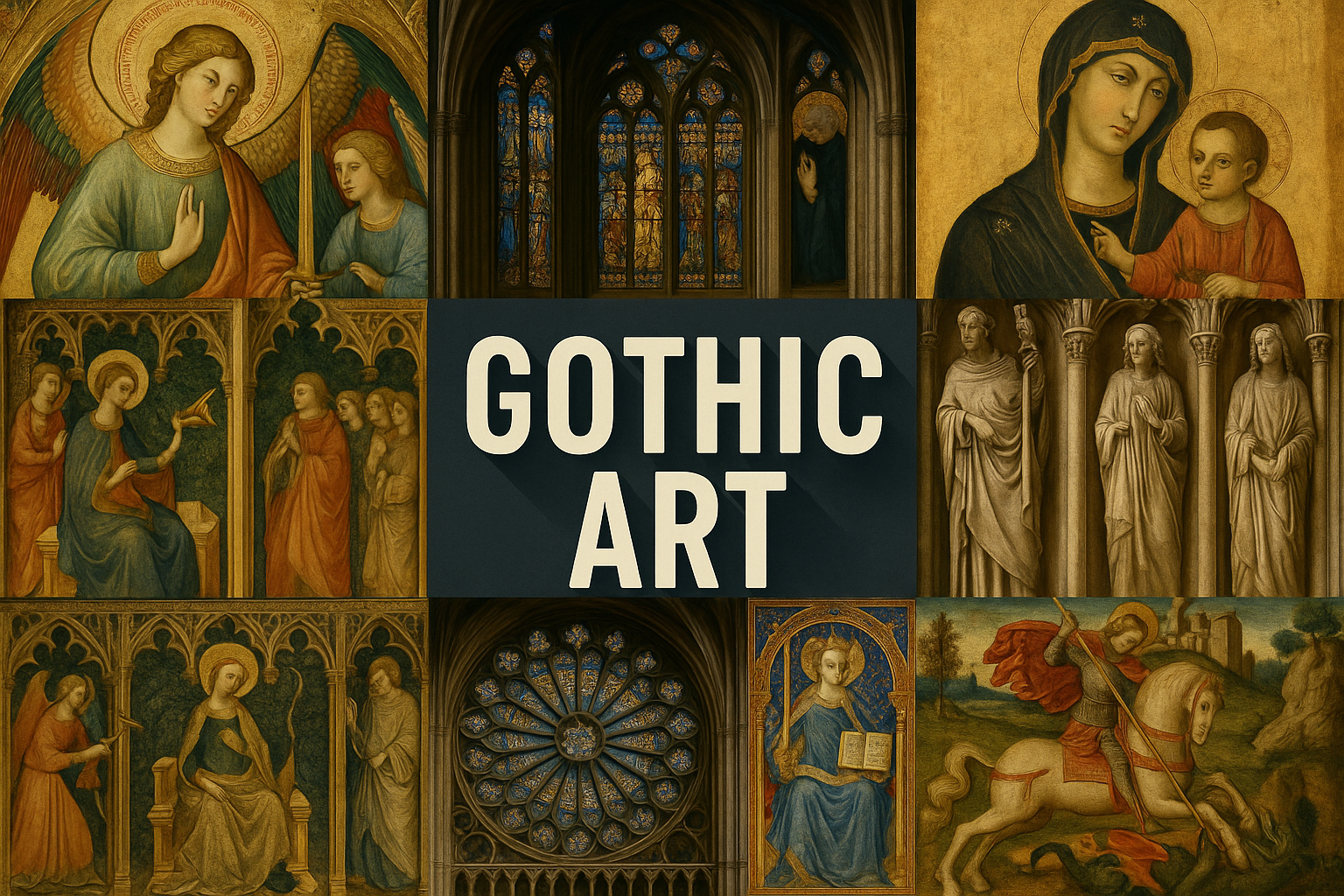
Gothic art developed in medieval Europe across architecture, sculpture, manuscripts, stained glass and other media. It is a historical field with regional changes, not simply a synonym for darkness, horror or modern goth culture.
A visual introduction
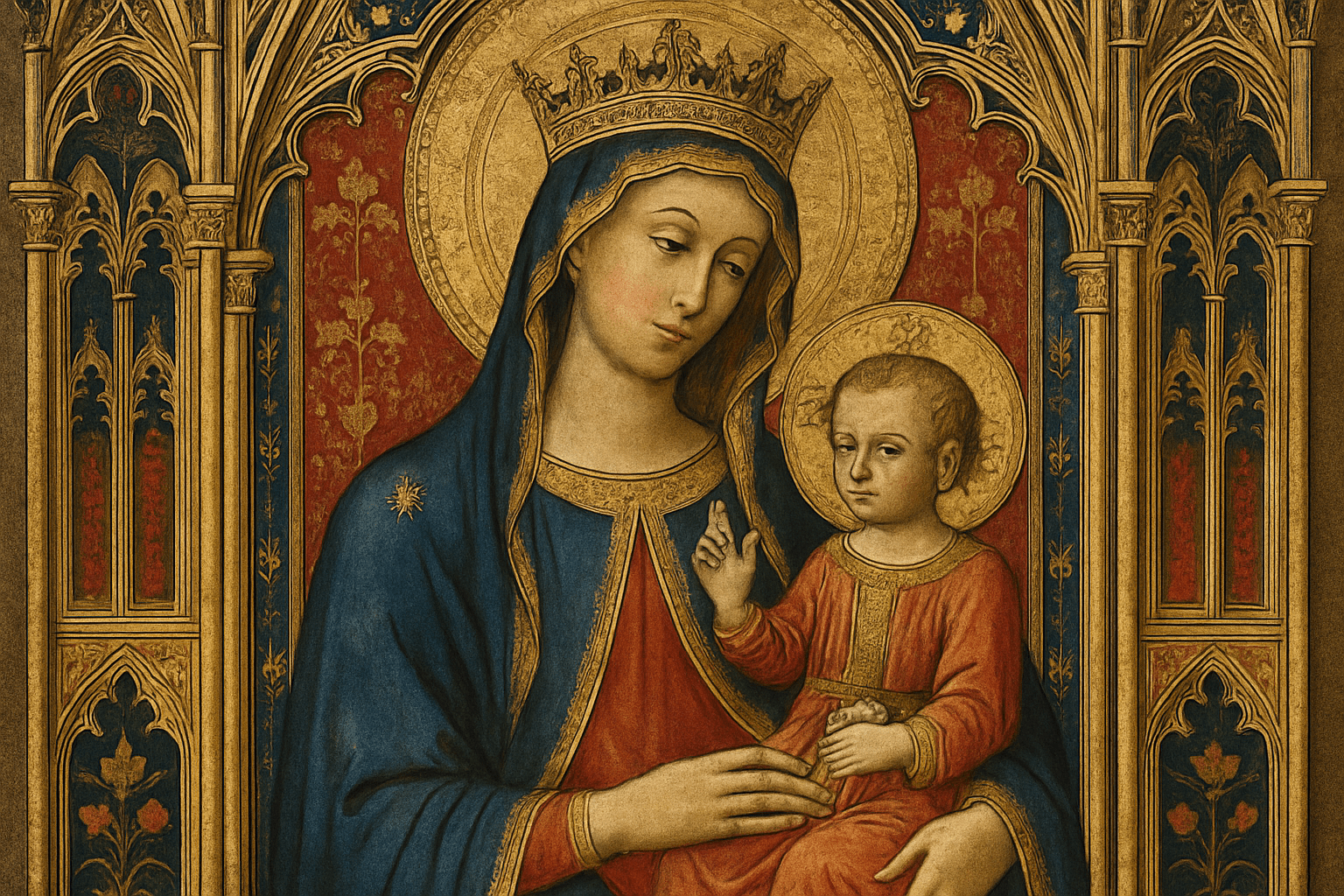
Select an image for a closer look. Use the thumbnails, arrow keys or a swipe to compare examples. Zoom in to inspect details, or share the image that inspires you.
Creative toolbox · take this style further
Choose an input and a destination. Search sends your words to the chosen site; Copy & open puts them on your clipboard to paste there.
Create with AI
Turn your chosen input into an image prompt or a new creative direction.
ChatGPT
Copy your input and paste it into a ChatGPT conversation or image request.
Copy & open ChatGPT (new tab)Claude · Anthropic
Develop an image prompt or explore the style in a new Claude conversation.
Copy & open Claude · Anthropic (new tab)Midjourney
Paste your input into the Imagine bar on the Create page.
Copy & open Midjourney (new tab)Adobe Firefly
Copy your input, open Firefly, and paste it into the prompt field.
Copy & open Adobe Firefly (new tab)Leonardo.Ai
Copy your input, open Leonardo, and paste it into the generation field.
Copy & open Leonardo.Ai (new tab)Image search
Find visual references. Short, concrete keywords usually work best.
Lexica
Search AI images and prompts using your selected input.
Search with this input Lexica (new tab)Pexels
Search the photo and video library. Short keywords often work best.
Search with this input Pexels (new tab)Pixabay
Search photos, illustrations and other images.
Search with this input Pixabay (new tab)Unsplash
Search photographs using the style name or your own keywords.
Search with this input Unsplash (new tab)Wikimedia Commons
Search photographs, artworks and historical images. Check each file for its source and reuse terms.
Search with this input Wikimedia Commons (new tab)Art & research
Explore artists, collections and the ideas behind a style.
Wikipedia
Search for background reading. A style may not have its own article.
Search with this input Wikipedia (new tab)WikiArt
Copy your input into WikiArt’s search to explore artists and artworks.
Copy & open WikiArt (new tab)Europeana
Paste your keywords into the search to explore European museum, library and archive collections.
Copy & open Europeana (new tab)Inspiration
Discover portfolios and visual ideas from creative communities.
Instagram hashtags
Search a hashtag made from your input: spaces and punctuation are removed. Instagram may require sign-in.
Search with this input Instagram hashtags (new tab)ArtStation
Paste your input into artwork search for concept art, environments, characters and visual development.
Copy & open ArtStation (new tab)Behance
Paste your input into project search for illustration, design and visual storytelling.
Copy & open Behance (new tab)A closer look
Pointed architectural frameworks, articulated vertical rhythms, expressive figures and detailed ornament appear in different combinations; the medium determines how these elements work.
Begin with a medium and a place
The V&A traces Gothic's emergence in northern France in the early twelfth century and its spread into multiple arts. A cathedral, small devotional object and manuscript page solve different problems. Their shared vocabulary does not make them interchangeable.
Choose a specific reference before designing an interpretation. The scale of a portal calls for a different hierarchy from a page held in the hands. Regional and chronological differences are part of the subject, not inconsistencies to be removed.
Structure makes ornament intelligible
In architecture, pointed arches, rib vaults and supporting systems help organize height and space. In smaller objects, related forms can frame figures or separate episodes. The useful design lesson is the relationship between a framework and what it contains.
Establish the main divisions first. Repeated verticals can create rhythm, while a larger central opening supplies emphasis. If every border and figure receives equal intricacy, the result may become an undifferentiated pattern rather than a legible composition.
Light and color are active materials
Gothic does not mean uniformly black. Stained glass makes transmitted light part of the work, while illuminated pages and other objects can use strong color. Consider whether the viewer sees light passing through a material or reflecting from its surface.
In an original window concept, draw the divisions before adding color. Larger areas should remain readable from a distance. Small details can reward closer attention without being responsible for the whole image's meaning.
Figures connect form and feeling
The V&A emphasizes expressive gesture and close attention to natural forms. For a new study, let a turn of the head, the direction of a hand or a fold in clothing contribute to the action. Decoration should support the encounter rather than overwhelm it.
Keep medieval Gothic distinct from later Gothic Revival, Gothic fiction and present-day subcultures. They can be compared, but their dates and purposes differ. A generated interpretation should identify its chosen reference and remain clearly separate from documentation of an actual medieval object.
The prompt workshop
Original creative exercises. These prompts create new illustrations, not documentary evidence.
An architectural framework
Original Gothic-inspired portal study with coherent pointed arches, clear structural hierarchy and restrained carved foliage, believable stone depth and no invented historical attribution.
Color through glass
Original stained-glass concept of an orchard, strong lead-line structure, large readable color fields and a few carefully placed small details, daylight transmitted through the glass.
An intimate page
Original medieval-Gothic-inspired illustrated page with one expressive human encounter, an architectural border and selective botanical detail, no illegible imitation text.