
Historical artistic and cultural movement
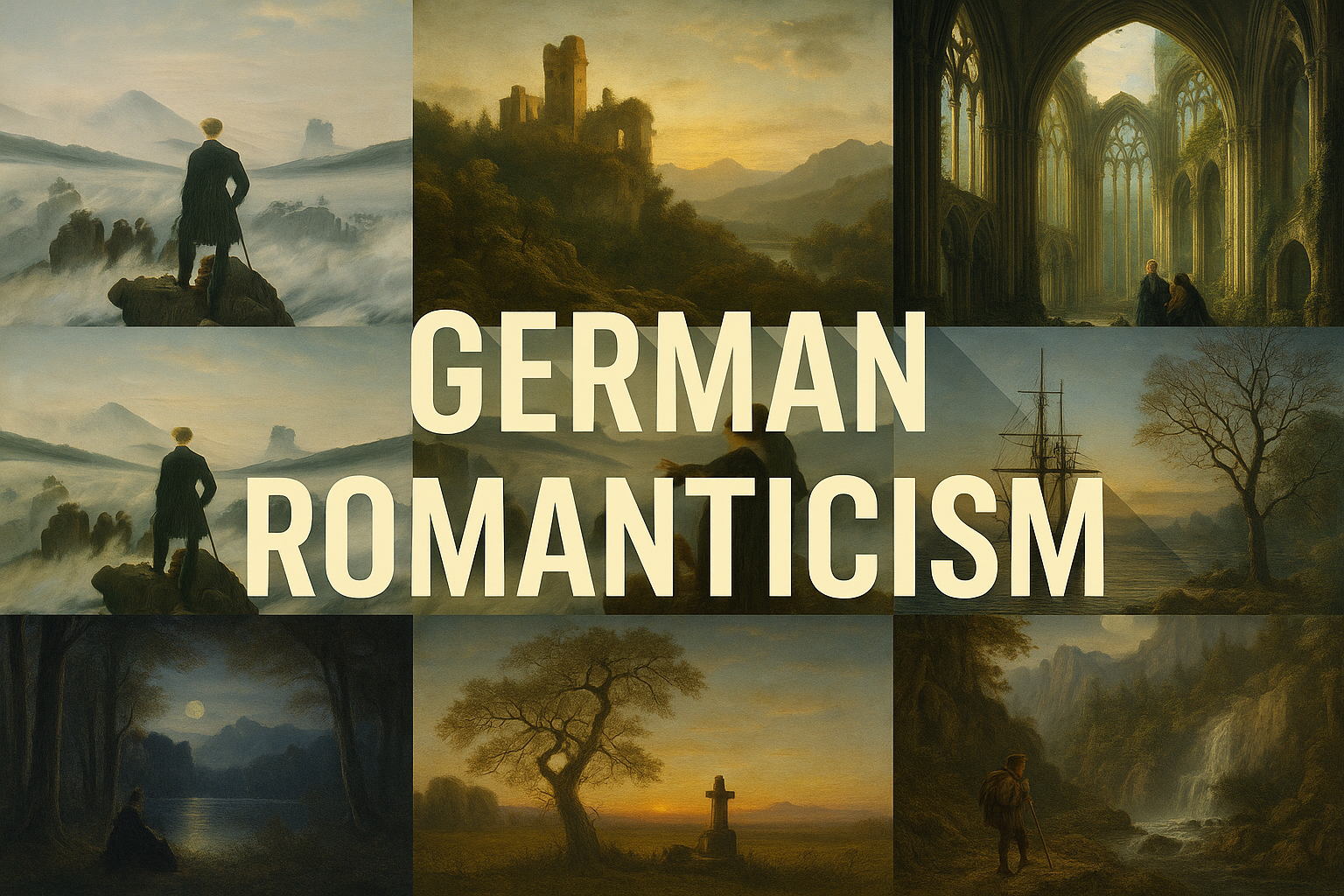
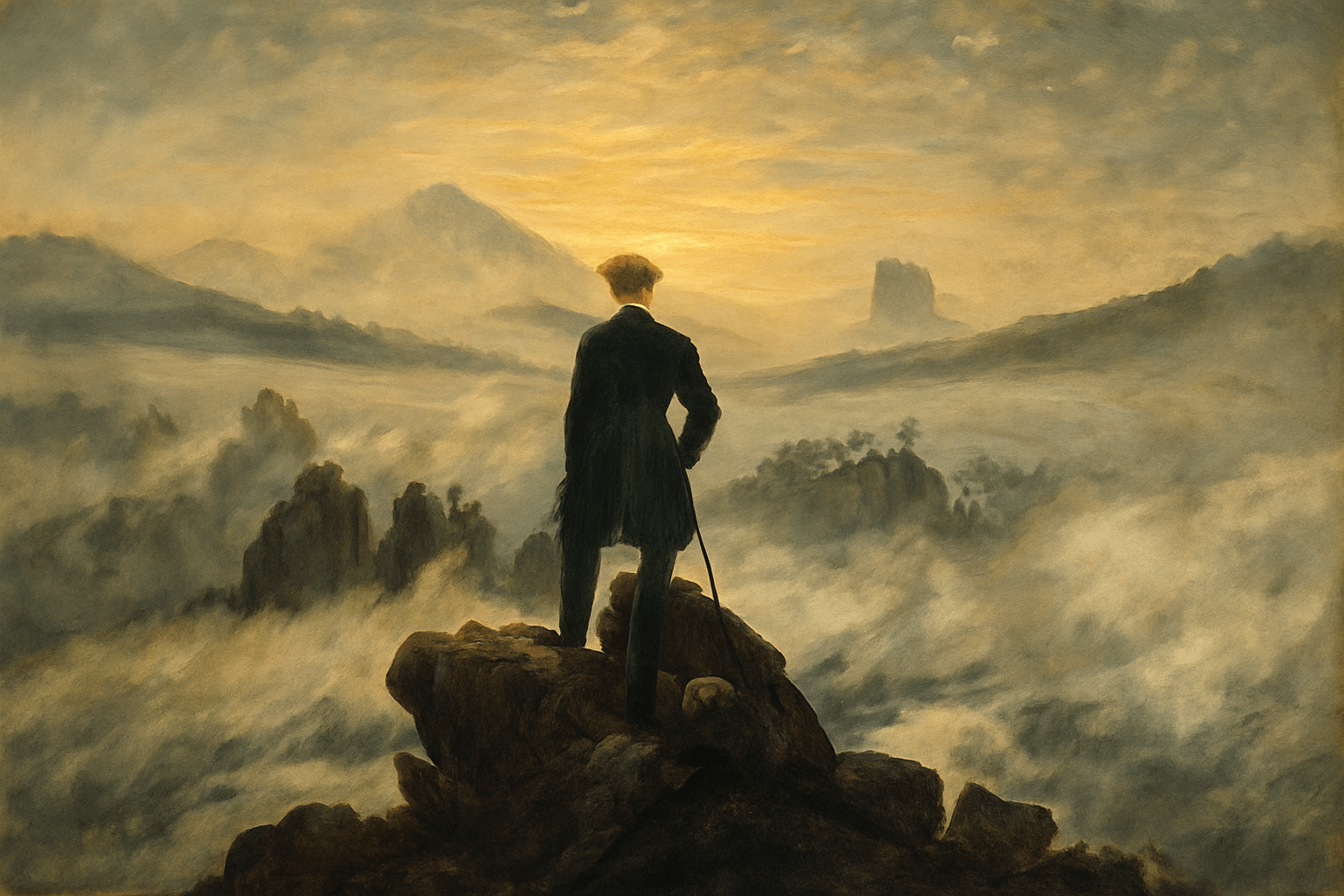
German Romanticism connects artistic invention with questions of nature, imagination and inward experience. In painting, Caspar David Friedrich offers a particularly influential approach, but his work should not stand for every artist or every aspect of the movement.
A visual introduction
Select an image for a closer look. Use the thumbnails, arrow keys or a swipe to compare examples. Zoom in to inspect details, or share the image that inspires you.
Creative toolbox · take this style further
Choose an input and a destination. Search sends your words to the chosen site; Copy & open puts them on your clipboard to paste there.
Create with AI
Turn your chosen input into an image prompt or a new creative direction.
ChatGPT
Copy your input and paste it into a ChatGPT conversation or image request.
Copy & open ChatGPT (new tab)Claude · Anthropic
Develop an image prompt or explore the style in a new Claude conversation.
Copy & open Claude · Anthropic (new tab)Midjourney
Paste your input into the Imagine bar on the Create page.
Copy & open Midjourney (new tab)Adobe Firefly
Copy your input, open Firefly, and paste it into the prompt field.
Copy & open Adobe Firefly (new tab)Leonardo.Ai
Copy your input, open Leonardo, and paste it into the generation field.
Copy & open Leonardo.Ai (new tab)Image search
Find visual references. Short, concrete keywords usually work best.
Lexica
Search AI images and prompts using your selected input.
Search with this input Lexica (new tab)Pexels
Search the photo and video library. Short keywords often work best.
Search with this input Pexels (new tab)Pixabay
Search photos, illustrations and other images.
Search with this input Pixabay (new tab)Unsplash
Search photographs using the style name or your own keywords.
Search with this input Unsplash (new tab)Wikimedia Commons
Search photographs, artworks and historical images. Check each file for its source and reuse terms.
Search with this input Wikimedia Commons (new tab)Art & research
Explore artists, collections and the ideas behind a style.
Wikipedia
Search for background reading. A style may not have its own article.
Search with this input Wikipedia (new tab)WikiArt
Copy your input into WikiArt’s search to explore artists and artworks.
Copy & open WikiArt (new tab)Europeana
Paste your keywords into the search to explore European museum, library and archive collections.
Copy & open Europeana (new tab)Inspiration
Discover portfolios and visual ideas from creative communities.
Instagram hashtags
Search a hashtag made from your input: spaces and punctuation are removed. Instagram may require sign-in.
Search with this input Instagram hashtags (new tab)ArtStation
Paste your input into artwork search for concept art, environments, characters and visual development.
Copy & open ArtStation (new tab)Behance
Paste your input into project search for illustration, design and visual storytelling.
Copy & open Behance (new tab)A closer look
Scale, distance, framing and interrupted visibility can turn a landscape into a place of contemplation; atmosphere serves the relationship between the viewer and the world.
Beyond a picturesque destination
The Met's Friedrich exhibition describes landscape as a setting for spiritual and emotional encounters. Nature becomes more than scenery surrounding an incident. A horizon, tree or stretch of water can organize a sustained experience of looking.
This is a useful starting point, but German Romanticism is broader than a set of solitary mountain scenes. Read individual works within their historical circumstances and avoid treating a modern mood board as a complete account of the movement.
Position the viewer deliberately
Ask where the viewer stands and what remains inaccessible. A foreground barrier, a path that disappears or a figure looking away can keep the eye moving without supplying a final destination. Distance can become an active subject rather than empty background.
For an original composition, test three versions of the horizon. A high horizon compresses the foreground; a low one gives the sky greater presence. Compare whether a figure helps establish scale or merely explains an emotion that the landscape already conveys.
Let atmosphere organize the image
Mist, dusk and moonlight should change the relationships between forms. They can soften distant edges, isolate a silhouette or make a small light carry unusual weight. An overall blue tint alone does not establish a convincing nocturnal space.
Build distinct foreground, middle distance and far distance, then decide where those divisions should merge. Preserve a few stable forms so that uncertainty has something to work against. Too many equally mysterious details can weaken the central encounter.
Interpretation remains open
Friedrich's landscapes invite sustained readings, but an invented image should not come with fabricated symbolism attributed to him. Distinguish historical interpretation supported by scholarship from the choices made in a new study.
Try a landscape without a person, then a version containing one small observer. Explain what changed in scale, identification and emotional distance. This is a more useful exercise than copying a famous pose and assuming that the result conveys the entire movement. The goal is a precise relationship between space and attention, not a compulsory mood of melancholy.
The prompt workshop
Original creative exercises. These prompts create new illustrations, not documentary evidence.
A distant opening
Original contemplative landscape with a dark foreground grove opening toward pale distant water, restrained color, clear spatial layers and no copied historical composition.
The scale of a person
Original landscape with one small adult beside a broad quiet shore, a low horizon and carefully separated values, emotional ambiguity rather than theatrical gesture.
Moonlight as structure
Original nocturnal study of bare branches and a path ending beyond view, moonlit intervals organizing space, selective detail and credible darkness.
Sources and further exploration
The Met — Friedrich, nature and individual experience
Friedrich anniversary museums — drawings, observation and historical context