
Archive note: historical claims and artist or artwork associations in this entry have not yet received a full source review.
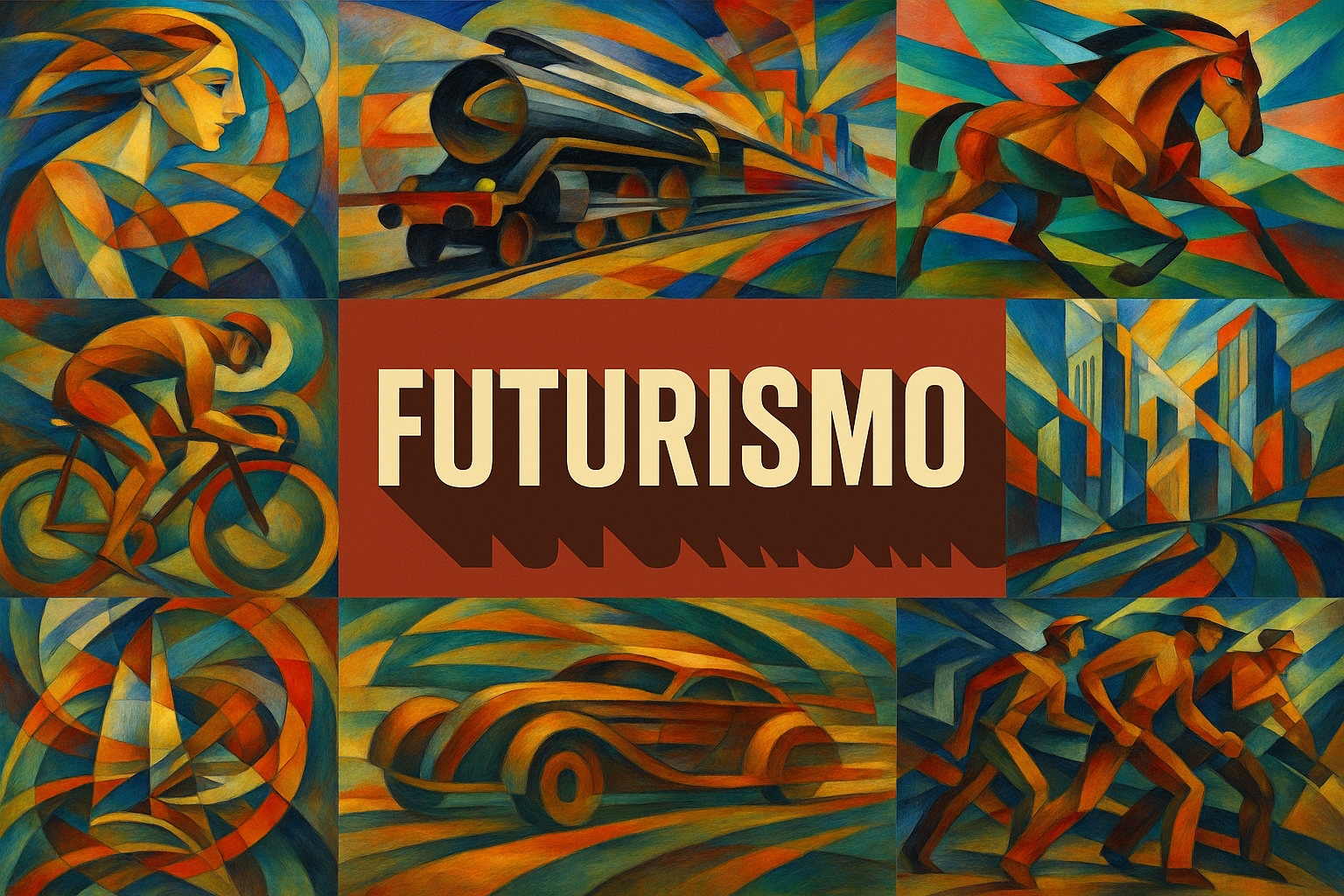
Futuruma
The art style of Futuruma is very colorful and detailed. The characters are often shown in very dynamic poses, and the backgrounds are usually very busy. Futuruma has a very unique look that is unlike any other anime.
AOI thinking about Futuruma [+_~]-/
Overview and quick facts
Futuruma is a Japanese art style that emphasizes speed, energy, and movement. It is characterized by bold colors, sharp lines, and dynamic compositions. Futuruma artists often use traditional Japanese motifs and imagery, but they also experiment with Western influences. This style is often used in advertising and animation.
Can understand it also, as:
Futurama may refer to:
1. Futurama, a science fiction animated television series
2. Futurama (video game), a video game based on the television series
3. Futurama: Worlds of Tomorrow, a mobile game based on the television series
Categorize it as:
Impressionism, Modernism
Detailed description
Futurism was an art movement that originated in Italy in the early 20th century. It emphasized speed, technology, and violence, and was strongly influenced by the work of Italian Futurist artists such as Umberto Boccioni and Giacomo Balla. Futurism reached its peak in the years before World War I, but its influence continued to be felt in the art world long after the war ended. In the 1930s, the Surrealist movement emerged as a reaction against the violence and chaos of Futurism, and many Futurist artists, including Boccioni and Balla, embraced Surrealism. Today, the legacy of Futurism can be seen in the work of many contemporary artists, including painters, sculptors, and architects.
Archive notes — claims to verify
1. Futurama is an American animated science fiction sitcom created by Matt Groening for the Fox Broadcasting Company.
2. The series follows the adventures of slacker Philip J. Fry, who is cryogenically preserved for 1000 years and wakes up in the 31st century.
3. Fry finds work at an interplanetary delivery company and meets a cast of eccentric characters, including the cyclops Leela, the robot Bender and the extraterrestrial doctor Zoidberg.
4. The show was cancelled by Fox in 2003, but was revived by Comedy Central in 2008.
5. Futurama has been nominated for 17 Annie Awards and 12 Emmy Awards, winning seven of the former and six of the latter.
6. In 2013, TV Guide ranked Futurama as one of the top 60 Greatest TV Cartoons of All Time.
7. Futurama is set in New New York City at the turn of the 31st century, in a time when Earth has been colonized by aliens.
8. The show's main character, Philip J. Fry, is a 25-year-old pizza delivery boy who is cryogenically preserved for 1000 years and wakes up in the 31st century.
9. Fry quickly adapts to his new life and finds work at an interplanetary delivery company called Planet Express.
10. He also meets a cast of eccentric characters, including the cyclops Leela, the robot Bender and the extraterrestrial doctor Zoidberg.
11. The show often satirizes contemporary culture, politics and science, and is filled with pop culture references.
12. Futurama has been praised for its clever writing, witty humor and rich characters.
13. The show has been nominated for 17 Annie Awards and 12 Emmy Awards, winning seven of the former and six of the latter.
14. In 2013, TV Guide ranked Futurama as one of the top 60 Greatest TV Cartoons of All Time.
15. Futurama is currently available on DVD and Blu-ray, and can be streamed on Hulu.
16. Futurama was created by Matt Groening, the creator of The Simpsons.
17. Groening has said that he was inspired to create Futurama after watching the film Planet of the Apes.
18. The show's original run on Fox was from 1999 to 2003, but it was revived by Comedy Central in 2008.
19. Futurama is currently in its seventh and final season, which is set to air in September 2013.
20. After the series finale airs, Futurama will have aired 140 episodes over the course of seven seasons.
Artists and works: references to check
(be aware, can be highly speculative)
Artists (be aware, speculation possible):
1. Leonardo da Vinci (1452-1519) 2. Michelangelo (1475-1564) 3. Raphael (1483-1520) 4. Donatello (1386-1466) 5. Titian (1488-1576) 6. Caravaggio (1571-1610) 7. Rembrandt (1606-1669) 8. Vermeer (1632-1675) 9. Goya (1746-1828) 10. Ingres (1780-1867) 11. Delacroix (1798-1863) 12. Courbet (1819-1877) 13. Manet (1832-1883) 14. Monet (1840-1926) 15. Van Gogh (1853-1890)
Artworks (be aware, speculation possible)
1. The Hay Wagon, by American painter Andrew Wyeth, 1944 2. Christina’s World, by American painter Andrew Wyeth, 1948 3. The Madonna and Child, by Italian painter Michelangelo, 1498-99 4. The Last Supper, by Italian painter Leonardo da Vinci, 1498-99 5. The Birth of Venus, by Italian painter Sandro Botticelli, 1486 6. The Sistine Chapel Ceiling, by Italian painter Michelangelo, 1512 7. The Mona Lisa, by Italian painter Leonardo da Vinci, 1503-05 8. American Gothic, by American painter Grant Wood, 1930 9. The Scream, by Norwegian painter Edvard Munch, 1893 10. The Starry Night, by Dutch painter Vincent van Gogh, 1889 11. The Persistence of Memory, by Spanish painter Salvador Dali, 1931 12. Guernica, by Spanish painter Pablo Picasso, 1937 13. The Night Cafe, by Dutch painter Vincent van Gogh, 1888 14. Sunrise, by French painter Claude Monet, 1873 15. L’Inconnue de la Seine, by French painter Alphonse Mucha, 1896
Epoch
The art style of Futuruma is typically associated with the period of time between the early 1900s and the mid-1920s.
Creative tools and further exploration
Search results are starting points for exploration, not evidence for the historical claims or attributions in this legacy entry.