
Artist study · fantasy illustration
Frank Frazetta (1928–2010) gave fantasy illustration a forceful visual language of charged gestures, dramatic light and imagined worlds. This artist study examines how bodies, silhouettes and concentrated action make a scene feel larger than the frame.
A visual introduction
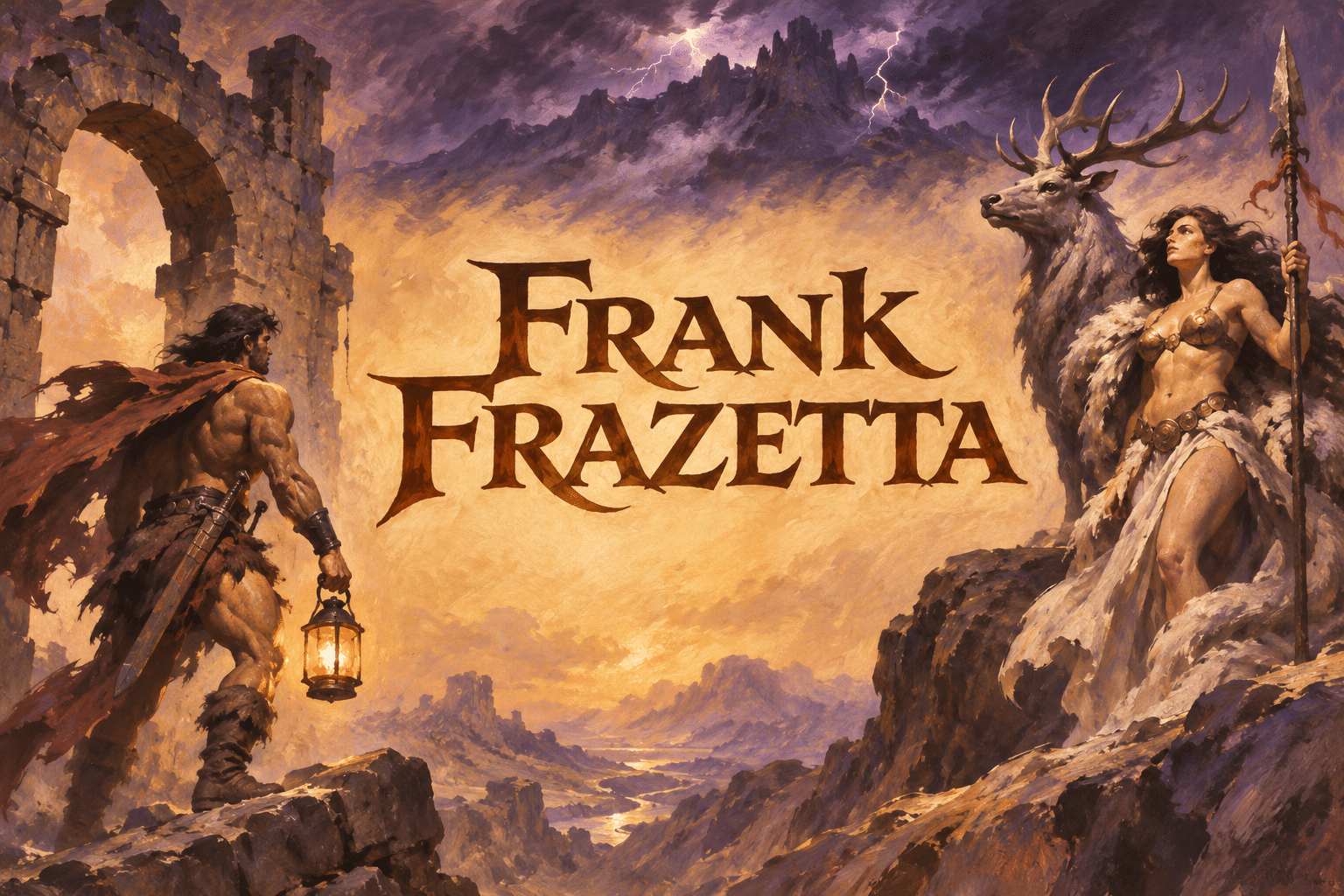
Seven original AI-generated interpretations: a dedicated banner, an artistic title collage and five standalone examples. The studies explore different subjects and compositional problems.
Select an image for a closer look. Use the thumbnails, arrow keys or a swipe to compare examples. Zoom in to inspect details, or share the image that inspires you.
Creative toolbox · take this style further
Choose an input and a destination. Search sends your words to the chosen site; Copy & open puts them on your clipboard to paste there.
Create with AI
Turn your chosen input into an image prompt or a new creative direction.
ChatGPT
Copy your input and paste it into a ChatGPT conversation or image request.
Copy & open ChatGPT (new tab)Claude · Anthropic
Develop an image prompt or explore the style in a new Claude conversation.
Copy & open Claude · Anthropic (new tab)Midjourney
Paste your input into the Imagine bar on the Create page.
Copy & open Midjourney (new tab)Adobe Firefly
Copy your input, open Firefly, and paste it into the prompt field.
Copy & open Adobe Firefly (new tab)Leonardo.Ai
Copy your input, open Leonardo, and paste it into the generation field.
Copy & open Leonardo.Ai (new tab)Image search
Find visual references. Short, concrete keywords usually work best.
Lexica
Search AI images and prompts using your selected input.
Search with this input Lexica (new tab)Pexels
Search the photo and video library. Short keywords often work best.
Search with this input Pexels (new tab)Pixabay
Search photos, illustrations and other images.
Search with this input Pixabay (new tab)Unsplash
Search photographs using the style name or your own keywords.
Search with this input Unsplash (new tab)Wikimedia Commons
Search photographs, artworks and historical images. Check each file for its source and reuse terms.
Search with this input Wikimedia Commons (new tab)Art & research
Explore artists, collections and the ideas behind a style.
Wikipedia
Search for background reading. A style may not have its own article.
Search with this input Wikipedia (new tab)WikiArt
Copy your input into WikiArt’s search to explore artists and artworks.
Copy & open WikiArt (new tab)Europeana
Paste your keywords into the search to explore European museum, library and archive collections.
Copy & open Europeana (new tab)Inspiration
Discover portfolios and visual ideas from creative communities.
Instagram hashtags
Search a hashtag made from your input: spaces and punctuation are removed. Instagram may require sign-in.
Search with this input Instagram hashtags (new tab)ArtStation
Paste your input into artwork search for concept art, environments, characters and visual development.
Copy & open ArtStation (new tab)Behance
Paste your input into project search for illustration, design and visual storytelling.
Copy & open Behance (new tab)A closer look
Build the scene around a strong figure-and-ground relationship: a compact dark mass, a lit torso or face, a diagonal gesture and a quieter atmospheric setting. Use selective edges and a limited family of warm earth colors against cooler shadow. The subject needs weight and intention before it needs more armor, monsters or surface detail.
An artist, not a generic fantasy filter
Frank Frazetta was an American artist whose life dates are recorded by the National Gallery of Art as 1928–2010. His name identifies a particular body of work, not a medium or a historical movement called Frazettaism. His fantasy illustrations are a useful subject for studying how a single image can suggest a much larger story. The artist's career also extended beyond the muscular warrior imagery most readily associated with him. [1, 2]
The Society of Illustrators describes his progression from comics into book illustration and emphasizes action, lighting, composition and color in his storytelling. It discusses covers for Edgar Rice Burroughs's Tarzan books and the Conan series. AOI's workshop below turns those broad concerns into exercises; its compositional recipes are teaching proposals, not claims that every Frazetta picture follows one formula. [2]
Two useful historical anchors
Frazetta Girls' family chronology identifies Conan the Adventurer, published by Lancer Books in 1966, as a major cover commission. It records Death Dealer I as a 1973 oil painting and dates its appearance on Molly Hatchet's debut album to 1978. Keep these identities separate: Frazetta illustrated Conan, while Death Dealer was his own character. A later reproduction on an album is not the painting's creation date. [3, 4]
The Frazetta Art Museum preserves oil paintings alongside pencil, pen-and-ink and watercolor work. That range matters when using the artist as a visual reference: expressive drawing and an economical arrangement of values can be more instructive than copying the surface appearance of oil paint. This entry concentrates on fantasy composition while acknowledging the broader practice. [5]
Make the gesture carry the story
Start with an action that can be read without costume: a person bracing against wind, turning toward an unseen presence or lowering a weapon after danger has passed. Place the weight over a believable supporting leg. Let the shoulders and pelvis turn against each other only as far as the pose can sustain. A heroic figure becomes unconvincing when the feet float or the hands cannot hold the object assigned to them.
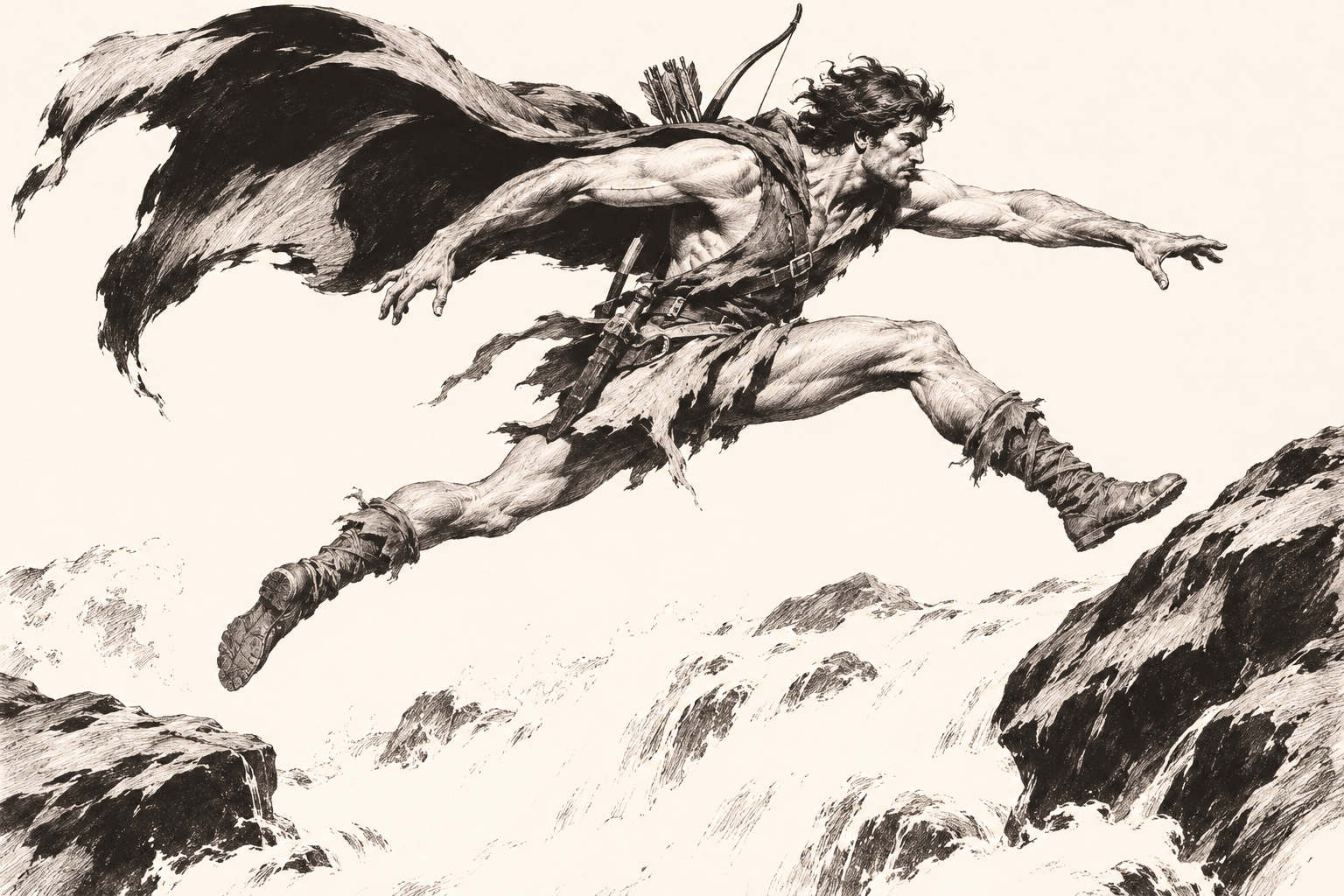
For a first study, gather the main figure and its immediate setting into one large dark shape, then open a smaller passage of light through it. A diagonal arm, blade or branch can lead toward that opening. For a second study, make the figure still and move the energy into the surrounding wind or creature. This comparison separates narrative pressure from simple physical activity: waiting can be as charged as striking.
Light, color and edges
Try an earth-color family with a restrained cool counterpoint: ochre light on skin or stone, deep brown-violet shadow and a muted blue-green atmosphere. This is one useful workshop palette, not a mandatory Frazetta color chart. Concentrate the lightest value at the narrative hinge rather than outlining every object with the same bright rim. A lamp, clearing sky or reflected ground light should explain the direction of illumination.
Use hard edges where a hand meets a weapon, a face turns into light or a silhouette must read cleanly. Allow selected edges to disappear into shadow. A uniformly crisp image can feel like a collection of cutouts; excessive softness dissolves the action. Thick-looking marks are optional. Keep the distinction between an actual oil painting and a digital interpretation explicit when captioning later generated examples.
Power, atmosphere and the risk of cliché
A useful critical reading asks who is allowed to act, who is reduced to scenery and what the image asks us to admire. An original study can give a woman, an older traveler or a noncombatant a decisive role without losing physical presence or dramatic tension. This is an AOI choice for new work, not a revision of the historical pictures. Anatomy, gesture and attention do more work than an inventory of familiar fantasy props.
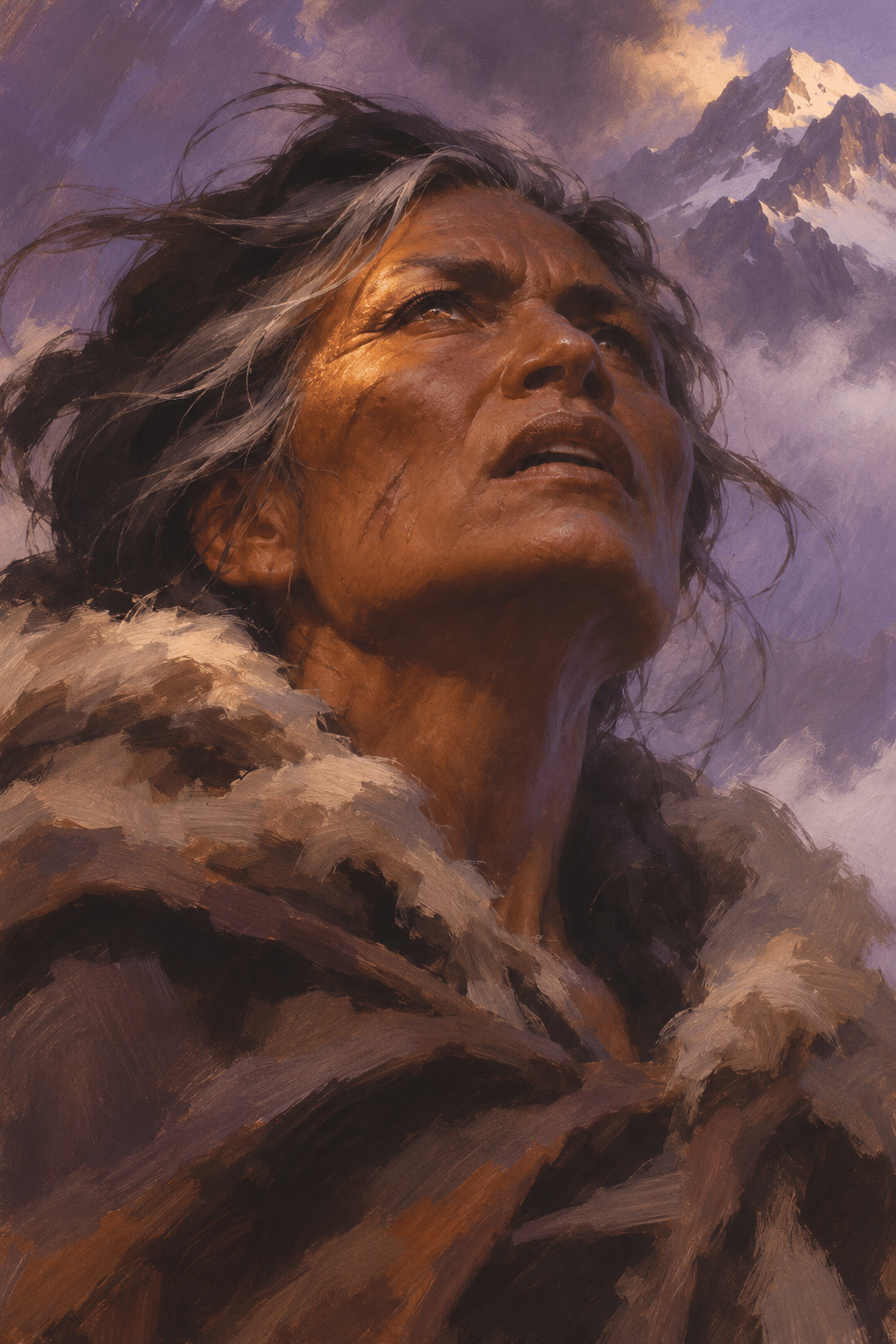
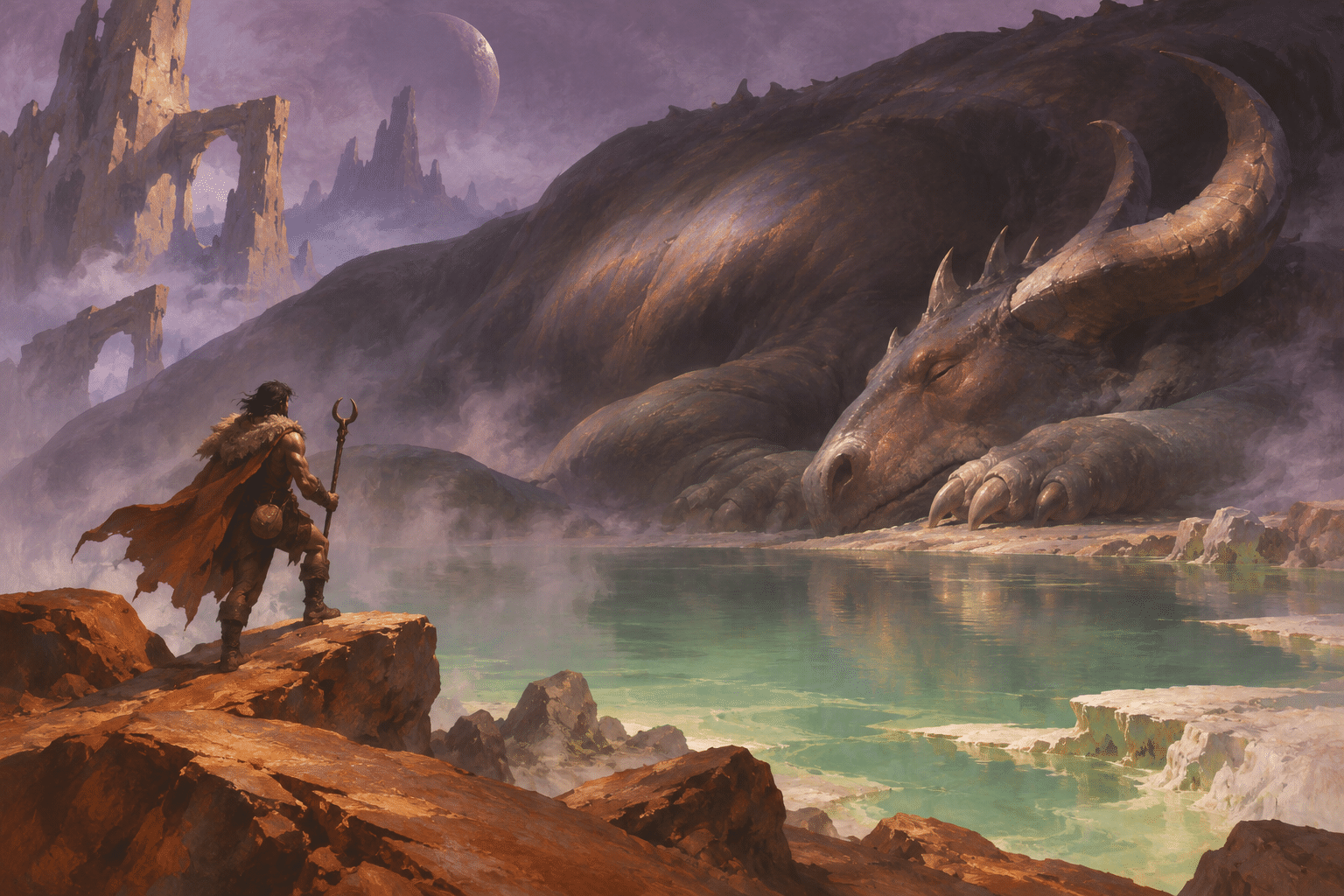
Avoid treating Frazetta as a shortcut for one repeated warrior pose. Vary the emotional problem: resolve, exhaustion, curiosity, apprehension. Try a close portrait, an encounter at a threshold and a distant journey. Keep these new scenes distinct from named paintings and characters. A source reference explains the study; it does not make a generated picture an authentic Frazetta work.
A practical study sequence
Begin with three small black-and-white thumbnails, each using the same figure but a different distribution of shadow. Choose the one whose action is clearest when reduced. Add a restrained color plan, then resolve the focal anatomy and only the background details that explain the place. Check the image again small, in grayscale and at full size. If the drama survives only at full resolution, simplify the large shapes.
For illustration and concept development, decide where a title would eventually go before making the picture, even when the artwork itself contains no lettering. An uncluttered sky or a dark shoulder of landscape can hold that space. For an independent artwork, use the same pause to slow the eye. The goal is a scene with a convincing center of gravity and a question the viewer wants to follow.
Positive editorial perspective
AOI editorial perspective (AI-authored). The strongest lesson is narrative concentration: a decisive gesture, a legible silhouette and a few changes of light can imply action beyond the frame. Studying those relationships is more useful than collecting fantasy accessories.
Negative editorial perspective
AOI editorial perspective (AI-authored). A superficial imitation can exaggerate muscles and menace while losing believable weight, agency and atmosphere. Familiar props quickly become interchangeable when every scene has the same pose and lighting.
Neutral editorial perspective
AOI editorial perspective (AI-authored). This artist study supports fantasy illustration and expressive figure composition. Its exercises are original AOI interpretations, and the named historical works remain references rather than generated deliverables.
Pocket-sized facts
Frank Frazetta lived from 1928 to 2010. [1]
Conan the Adventurer was a Lancer Books cover commission in 1966. [3]
Death Dealer I dates to 1973; its use on Molly Hatchet's debut album dates to 1978. [4]
A small poetic detour
Original words from the AOI studio.
Poetry
The hill is dark before the rider comes.
A sliver of light finds the knuckles,
then the tired edge of steel.
Beyond the shoulder, weather gathers
like a thought not yet spoken.
We enter by the smallest brightness:
a lifted hand, a turn of breath.
The painted world holds still
where the next decision should be.
The prompt workshop
Original creative exercises. These prompts create new illustrations, not documentary evidence.
The threshold
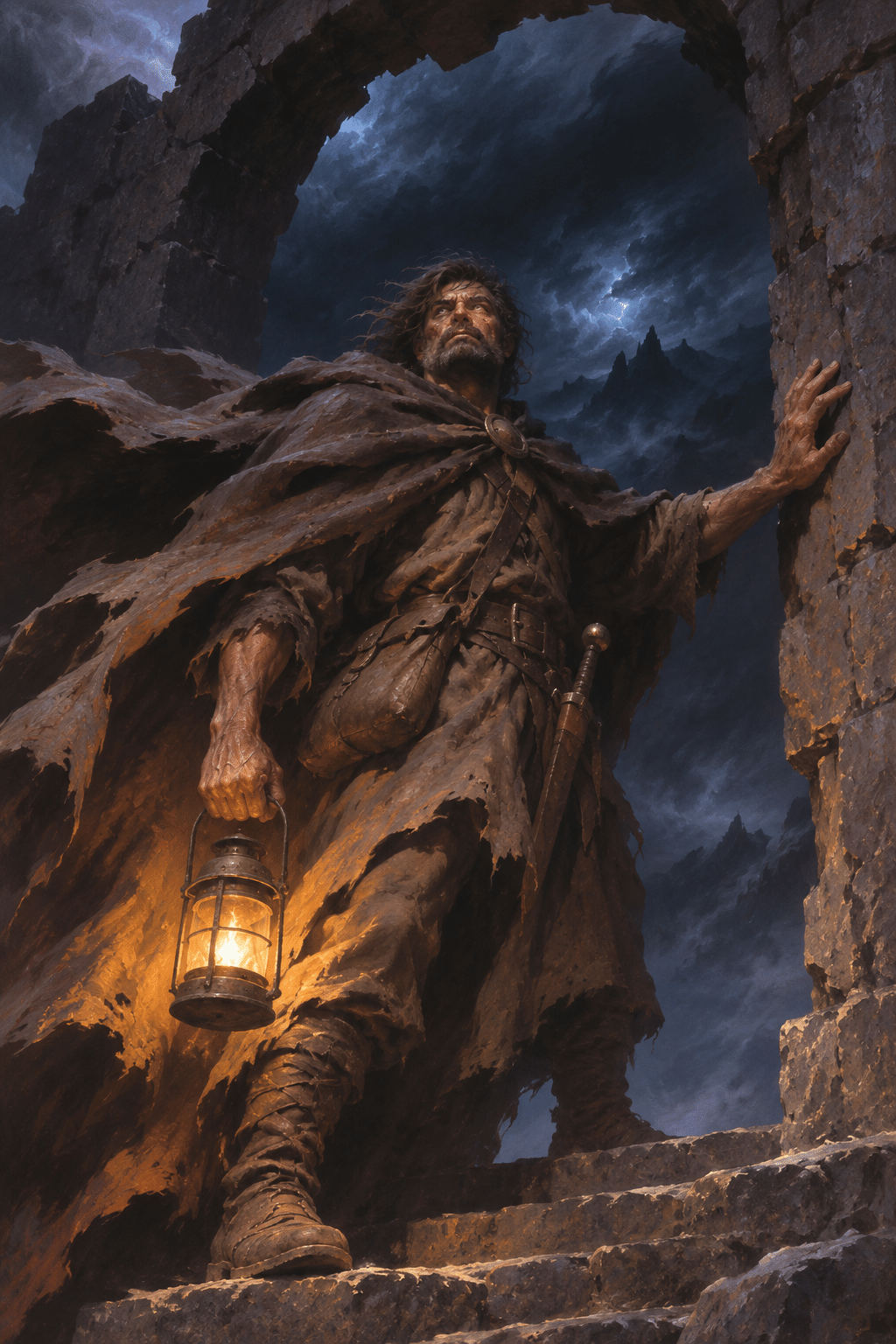
Create an original fantasy illustration of an adult traveler pausing at a broken stone gateway. A storm lifts the cloak while one hand steadies a lantern. Build a compact triangular silhouette, a believable planted stance and a single diagonal leading toward a distant opening. Use ochre light, brown-violet shadows and muted blue-green distance. Concentrate clear edges on face, hand and lantern; let the outer cloak dissolve into darkness. Painterly surface, no lettering or signature.
Test whether the pause feels charged before adding secondary creatures or ornaments.
The guardian's decision
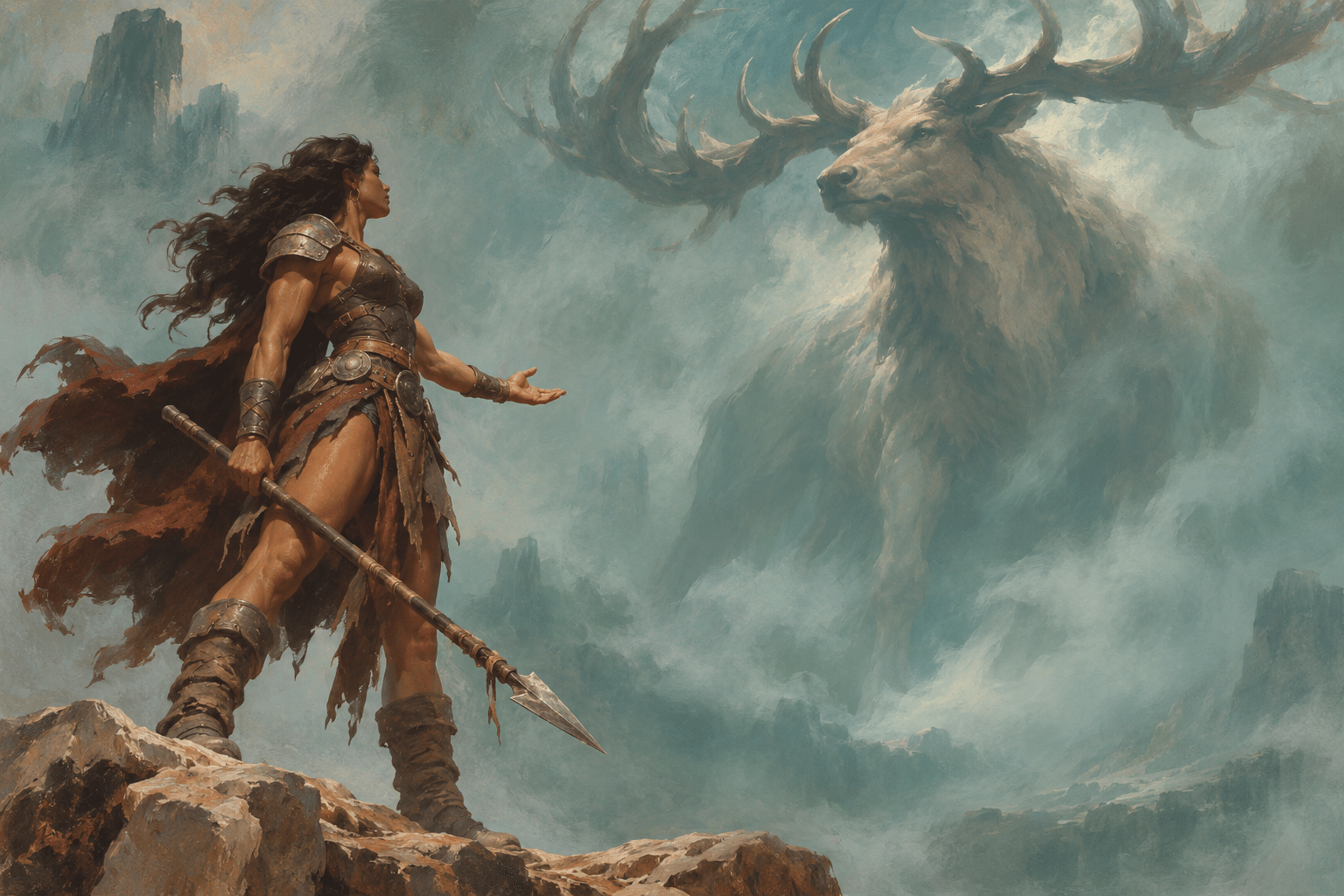
Paint an original heroic-fantasy encounter at a ravine: an adult woman in weathered practical armor lowers a spear while a vast antlered creature watches from mist. Her open hand and stable stance carry the decision. Use a low viewpoint, one broad diagonal and a strong dark-to-light hierarchy; keep the creature partly lost in atmosphere. Resolve coherent hands, spear grip and ground contact. Restrained earth colors with cold mist, no gore, text or signature.
Use agency and a readable exchange to create drama; avoid reproducing a named painting or character.
The journey without a battle
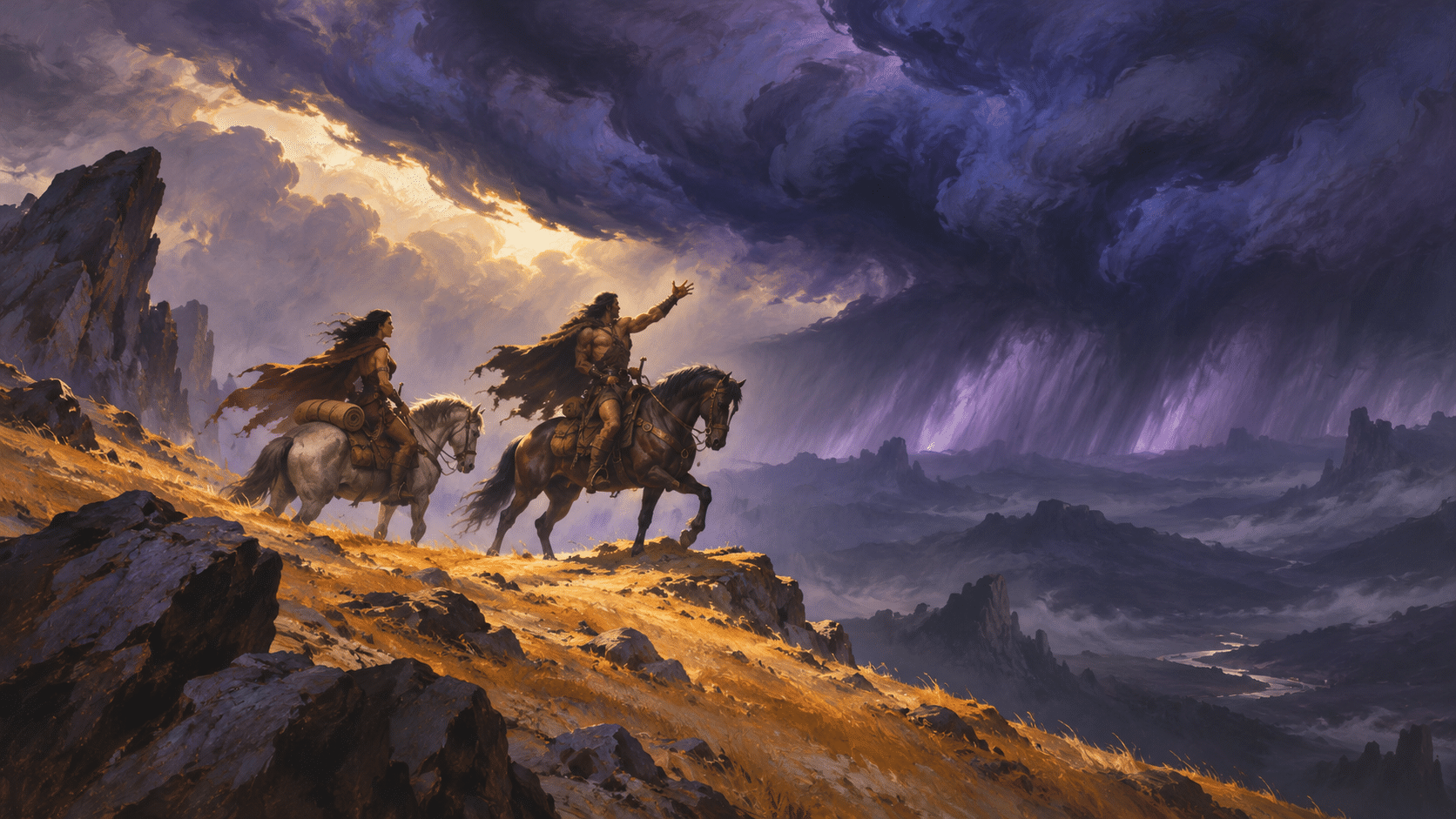
Create a quiet but powerful fantasy landscape with two adult riders crossing a narrow sunlit ridge above a dark valley. The riders are small yet legible, the horses move naturally, and a sweeping cloud echoes the ridge. Keep most detail in the nearest silhouette and allow the distant country to remain broad. Use warm stone against a cool storm, selective lost edges and economical painterly marks. No lettering, watermark or signature.
An experimental study in tension through spacing, direction and scale rather than combat.
People & works to explore
References discussed in this article. Consult the sources below for context.
Artists and practitioners
Frank Frazetta — the artist studied here; see the institutional and family sources below.
Paintings and other works
Conan the Adventurer — book-cover illustration, Lancer Books, 1966. [3]
Death Dealer I — oil painting, 1973. [4]
A smile from the studio
Jokes
The fantasy illustrator gave the hero a sword, a storm and a mountain of impossible odds. The hero requested a chair. 'It will ruin the dynamic pose,' said the illustrator. 'Then put it on a diagonal,' said the hero. 'I have been maintaining this silhouette since the first thumbnail.'
Sources and further exploration
[1] National Gallery of Art — artist record and life dates
[2] Society of Illustrators — Nick Meglin on Frazetta's career and visual storytelling
[3] Frazetta Girls — 1960s chronology, including Conan the Adventurer
[4] Frazetta Girls — Death Dealer I and its later album-cover use
[5] Frazetta Art Museum — the range of media preserved in its collection